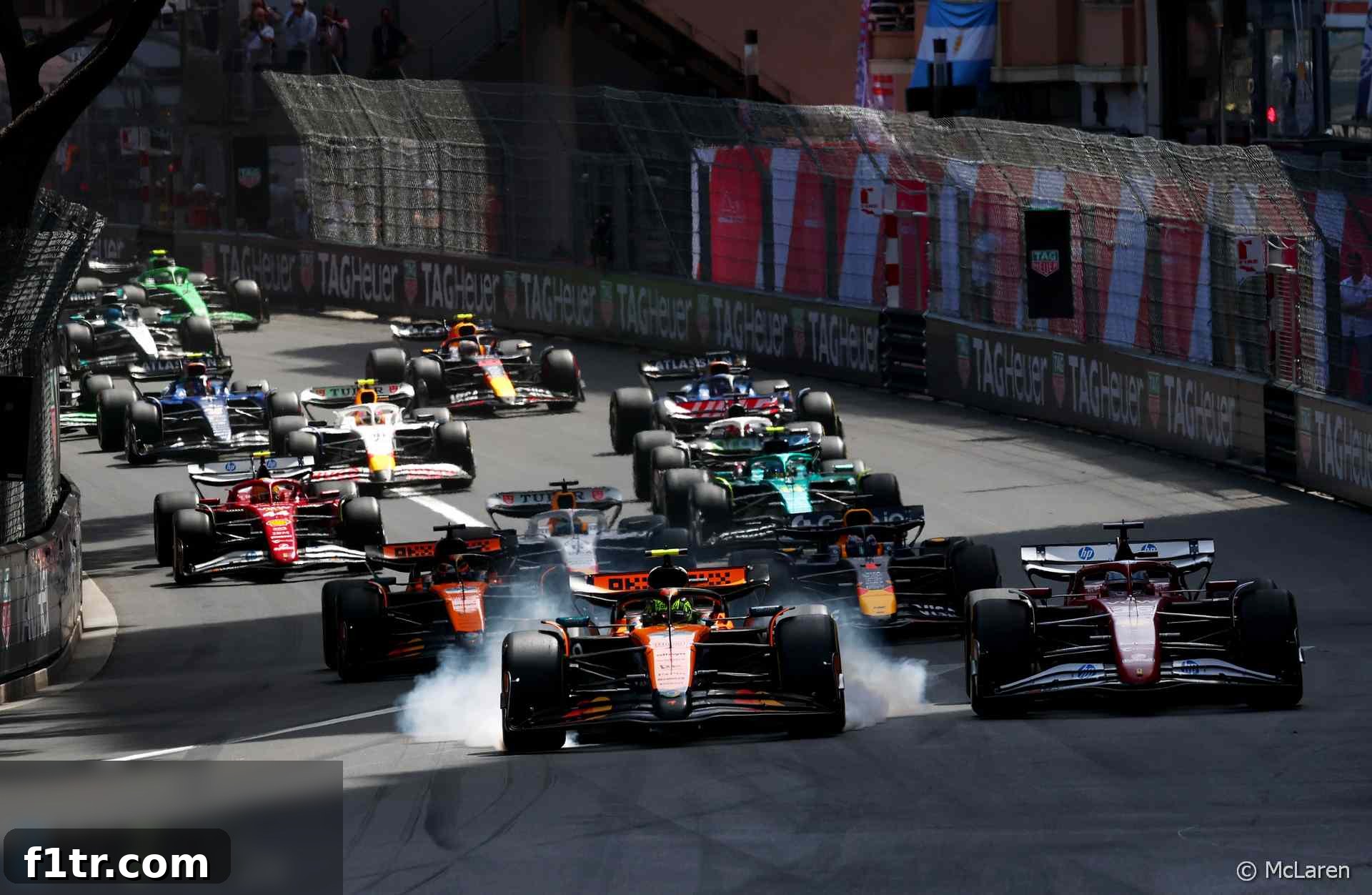
Formula 1 has introduced a mix of long-term and one-off rule changes for the Monaco Grand Prix. The aim is to address safety and competition concerns, but the question remains: can these adjustments make overtaking — historically rare around the principality — any more likely?
Below are the key talking points for this weekend’s race.
Will passing be possible?
The 2026 cars are 5% narrower than last year, which could help on Monaco’s famously tight streets. Even so, at 1.9 metres wide they remain about 10cm wider than cars a decade ago, when overtaking was already difficult. That suggests passing will still be a major challenge.
Drivers may be able to use electrical power deployment to attempt overtakes, but deploying large bursts of power on a low-grip circuit increases the risk of losing control or making contact when closing speeds are high. Whether overtaking becomes less of a virtual impossibility will depend on how drivers manage those power surges and on the other temporary measures introduced by the FIA for this weekend.
One-off rules for Monaco
Because Monaco presents unique safety and sporting challenges, the FIA has applied some unusual one-off restrictions for this event. Adjustable wings will be disabled, preventing drivers from trimming down drag in acceleration zones to gain straight-line speed. In addition, the FIA has moved to directly limit top speeds for safety reasons.
The change alters the threshold at which maximum electrical power is reduced: the cut now begins at 200 kph instead of 290 kph. That is a substantial shift intended to lower peak speeds through the principality’s narrow and unforgiving streets.
These bespoke restrictions raise questions about consistency in F1’s rulemaking and whether bespoke, circuit-specific measures should be used regularly. For Monaco, however, the priority has been safety and reducing the risk posed by very high closing speeds.
A sensible reversal
The FIA has also dropped a rule that was widely unpopular: the requirement for drivers to use three different tyre compounds specifically for the Monaco race. The regulation, introduced last year and heavily publicised beforehand, was criticised by drivers and teams as artificial and detrimental to the spectacle.
Following extensive negative feedback, the rule was quietly shelved during the off-season. This reversal aligns with other examples where the current administration has retracted measures after observing their undesirable effects in practice.
Power unit compliance changes
A change to how engine cylinder compression ratios are tested comes into effect this weekend. The maximum allowed compression ratio remains at 16:1, but a new compliance regime will add a “hot” test at operating temperatures in addition to the existing “cold” test.
Previously, checks were performed only on cold engines. Concerns that some manufacturers might be exploiting temperature-related differences prompted the introduction of the hot test. Both cold and hot tests will apply from Monaco; from next year the hot test alone will be used.
It remains to be seen whether any manufacturer will be disadvantaged. Monaco’s low-speed, low-reliance-on-power layout is the least likely venue to expose differences stemming from this change.
Which team stands the best chance?
Mercedes have been the dominant force this season, but Monaco’s unique characteristics give rivals hope. Ferrari could be competitive here: the track’s lack of emphasis on top speed plays to their strengths and reduces the penalty from any speed deficit. A home win would be an ideal way for Charles Leclerc to celebrate his newly announced Ferrari contract.
McLaren have been the closest challengers to Mercedes this year and showed strong pace in several events, though reliability and operational setbacks have cost them. Red Bull and Max Verstappen remain threats, as racecraft and a single inspired performance can change the outcome at a street circuit.
Additionally, Monaco’s short run and narrow approach to the first corner may blunt Mercedes’ notable weakness in race starts, offering other teams a better chance to capitalise.
Are you attending the Monaco Grand Prix?
If you’re heading to Monaco for the race, readers are invited to share their plans and experiences. Who do you expect will be the team to beat this weekend? Please share your thoughts in the site’s discussion forum if you’re visiting.
We’ll be watching how the combination of temporary speed limits, wing restrictions, tighter cars and new engine testing procedures affect racing in Monaco — and whether they change the fortunes of any team this weekend.