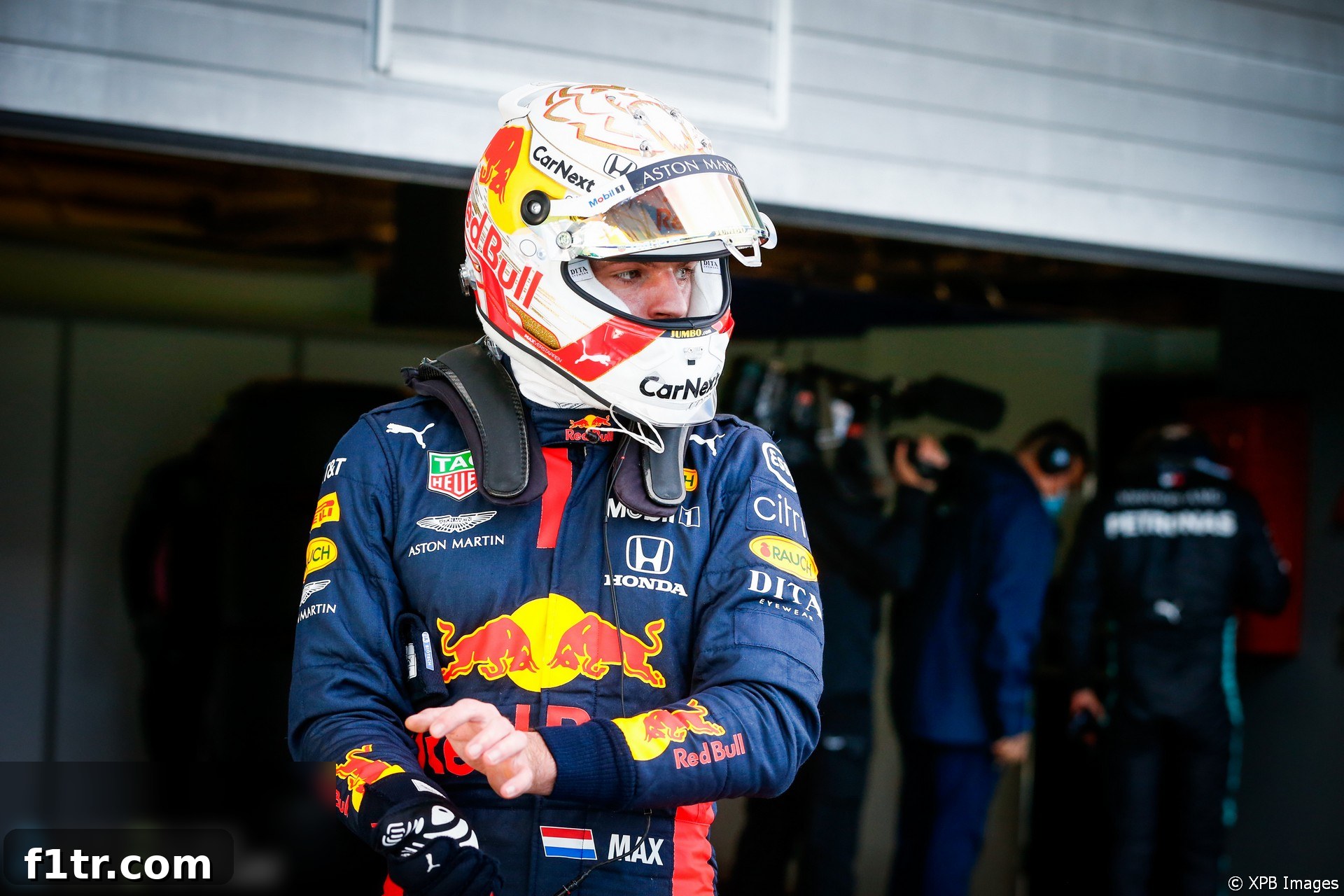
The iconic Nürburgring circuit played host to the 2020 Eifel Grand Prix, a highly anticipated return to a classic venue that saw intense competition and crucial developments in the Formula 1 season. For Max Verstappen and Red Bull Racing, this particular weekend marked a significant turning point, offering a renewed sense of optimism amidst Mercedes’ dominant run. Verstappen, known for his relentless pursuit of perfection and his ability to extract every ounce of performance from his machinery, articulated a clear improvement in the Red Bull car, evidenced by their closest qualifying performance to Mercedes all year. This development sparked conversations throughout the paddock, hinting at a potential tightening of the championship battle as the season progressed.
Red Bull’s Promising Step Forward at the Nürburgring
The Eifel Grand Prix qualifying session provided a fascinating glimpse into the evolving pecking order at the sharp end of the grid. While Mercedes ultimately secured the pole position, the gap to their closest rivals, Red Bull Racing, was notably smaller than in previous rounds. Max Verstappen, demonstrating his raw speed and aggressive driving style, initially topped the timesheets during the early stages of Q3, sending a clear signal of Red Bull’s intent. Although he eventually slipped to third place, behind both Mercedes drivers, his final lap time was a mere 0.256 seconds off the quickest Mercedes. This fraction of a second represented Red Bull’s most competitive showing against the Silver Arrows throughout the 2020 season, a testament to the hard work and continuous development efforts back at their Milton Keynes factory.
For a team consistently striving to challenge the reigning champions, such a reduction in the performance deficit is monumental. It’s not just about the absolute lap time, but the psychological boost it provides and the validation of their development path. This closer proximity to Mercedes suggested that the upgrades introduced by Red Bull were genuinely effective, transforming the car’s behavior and allowing Verstappen to push the limits even further. The high-speed nature of the Nürburgring, combined with its technical sections, demands a well-balanced and aerodynamically efficient car, making Red Bull’s improved performance particularly significant. It signaled a potential shift in momentum, hinting that the second half of the season might offer more thrilling battles for supremacy.
Verstappen’s Quest for Perfect Balance Amidst Understeer Challenges
Despite the undeniable progress and the narrower gap to Mercedes, Max Verstappen, ever the perfectionist, expressed a degree of dissatisfaction with his car’s balance during qualifying. While acknowledging that “overall today’s been pretty OK” and feeling “quite comfortable” initially, he pinpointed a specific issue that prevented him from unlocking the car’s full potential: understeer. For a driver like Verstappen, who thrives on a sharp, responsive front end, understeer can be particularly frustrating. It describes a condition where the front wheels lose grip, causing the car to turn less sharply than intended and effectively push wide through corners. This characteristic forces a driver to “freestyle it a bit more,” as Verstappen put it, requiring compensatory actions that inevitably cost precious tenths of a second.
Verstappen elaborated on the impact of this balance issue, explaining, “When you’re understeering you can’t carry that mid-corner speed through the corners, you have to freestyle it a bit more and you lose a bit of time.” This inability to maintain optimal mid-corner speed is detrimental, especially on a circuit like the Nürburgring, which features several fast, sweeping corners where apex speed is critical for a good lap time. The cold track temperatures prevalent at the Nürburgring during the Eifel Grand Prix weekend exacerbated the problem, making it harder for the tires to generate sufficient heat and grip, particularly on the front axle. Verstappen noted that while the car felt “fine in the beginning,” the understeer “just slipped away a bit” as the qualifying session progressed, indicating a struggle to maintain consistent front-end bite. Even with this challenge, his ability to keep the gap to Mercedes within a quarter of a second underscores his extraordinary talent and adaptability behind the wheel.
The Impact of Red Bull’s Targeted Upgrades
The tangible improvement in Red Bull’s performance at the Nürburgring was not a stroke of luck but a direct result of their relentless development program. Max Verstappen explicitly attributed this step forward to “a few upgrades” that the team had introduced. Crucially, he clarified that “the engine is the same,” indicating that the gains were primarily mechanical or aerodynamic, rather than stemming from a power unit upgrade. This distinction is vital, as it highlights Red Bull’s ability to refine their chassis and aero package, an area where they historically excel.
Formula 1 is an evolutionary sport, with teams constantly bringing new parts to the track in their bid for performance. These upgrades can range from subtle aerodynamic tweaks to more significant modifications of the car’s floor, diffuser, or suspension components. For Red Bull, known for their aggressive development cycles, these new parts likely targeted specific areas of weakness, aiming to enhance overall grip, stability, and aerodynamic efficiency. However, integrating new components also comes with its own set of challenges. As Verstappen noted, “with only having run today there is still a lot of things to go through and analyse and optimise because of the understeer I can in the car.” This statement reflects the ongoing process of understanding how new parts interact with the car’s existing setup and fine-tuning them to achieve optimal balance and performance. The limited practice time due to adverse weather conditions at the Nürburgring further complicated this optimization process, making Red Bull’s immediate gains even more impressive.
Paving the “Right Way” Forward for Red Bull Racing
Despite the lingering balance issues, Max Verstappen’s overall sentiment was one of clear optimism and determination. He firmly believes that Red Bull is “definitely a good step forward so we are in the right way,” expressing his hope that the team “can keep heading into that direction and keep improving.” This forward-looking perspective is crucial for any top-tier F1 team. The ability to identify weaknesses, implement effective solutions, and consistently find performance gains is what separates championship contenders from the rest of the pack. For Red Bull, narrowing the gap to Mercedes isn’t just about a single race result; it’s about building momentum and confidence for the remainder of the season and beyond.
The pursuit of perfection in Formula 1 is a never-ending cycle of design, simulation, manufacturing, testing, and analysis. Each upgrade, each tweak, is part of a larger strategy to outdevelop rivals. Verstappen’s comments suggest that Red Bull’s current development trajectory is aligned with his driving style and the car’s potential. If they can continue to address the remaining balance issues, such as the understeer he experienced at the Nürburgring, the team stands a stronger chance of challenging Mercedes on a more consistent basis. This renewed competitiveness not only fuels Verstappen’s championship ambitions but also adds an exciting dynamic to the sport, promising more enthralling contests as the season heads towards its climax. The Eifel Grand Prix might just be remembered as the race where Red Bull truly began to close the distance, setting the stage for more dramatic finishes in the future.
2020 Eifel Grand Prix Coverage
- Renault “not scared of anywhere” in remaining races
- Bottas “needs a miracle” to overturn Hamilton’s 69-point lead
- 2020 Eifel Grand Prix Star Performers
- Leclerc sees ‘quite a few positives’ in Ferrari’s Nurburgring weekend
- Mercedes relied on DAS “more than ever” at cold Nurburgring
Browse all 2020 Eifel Grand Prix articles