2020 F1 Season Qualifying Analysis: Unpacking Team Performance and Pace
As the final qualifying session of the unique and unprecedented 2020 F1 season concluded, a clear and comprehensive picture emerged regarding the competitive hierarchy and raw speed of each team over a single lap. This season delivered a captivating blend of engineering dominance at the very front of the grid, alongside an intensely fought and exceptionally tight midfield battle, providing rich insights into the ever-evolving landscape of Formula 1.
Mercedes: Architects of Unrivalled Single-Lap Pace
Despite experiencing a spirited resurgence from Ferrari in the preceding year, highlighted by an impressive streak of six consecutive pole positions, Mercedes-AMG Petronas F1 Team emphatically reaffirmed its status as the constructor boasting the fastest car on average over a single qualifying lap in 2020. The silver arrows consistently showcased their superior design and meticulous engineering, exhibiting remarkable aerodynamic efficiency and power unit integration across a diverse range of circuits, an advantage that proved decisive throughout the championship.
The margin of their supremacy, though numerically slender, was profoundly impactful. On a typical qualifying lap, Mercedes’ cars were, on average, just 0.16% quicker than their closest rivals. To contextualize this precision, across a lap time averaging 90 seconds, this equates to a critical advantage of approximately 0.14 to 0.15 seconds. In the high-stakes environment of Formula 1 qualifying, such a fractional lead translates into a significant advantage, often allowing drivers Lewis Hamilton and Valtteri Bottas to consistently secure front-row lockouts. This performance underscored the team’s relentless pursuit of perfection and their exceptional capability to extract peak performance precisely when it mattered most.
This sustained dominance was not merely a function of raw engine output; it was a testament to a superbly integrated package encompassing chassis design, state-of-the-art aerodynamics, and sophisticated tire management strategies. Mercedes’ unparalleled ability to consistently find the optimal tire temperature window and car balance across varying track conditions was a cornerstone of their qualifying supremacy, solidifying their position as a formidable force week after week.
Red Bull Racing: Flashes of Brilliance and Unfulfilled Potential
Red Bull Racing, powered by their Honda engine, showcased compelling flashes of single-lap pace throughout the 2020 campaign, proving their potential to challenge the Mercedes stronghold. The team secured two impressive pole positions, demonstrating their capacity to be the quickest on circuits that particularly suited their high-rake aerodynamic philosophy and chassis characteristics. However, their overall pole position tally could have been even higher, hinting at moments of unfulfilled potential.
A prime example of Red Bull’s raw speed was evident at the Mexican Grand Prix. Max Verstappen delivered an electrifying qualifying lap that was undeniably rapid enough to secure what would have been his third pole position of the year. Regrettably, a yellow flag infringement during that session led to a post-qualifying penalty, ultimately costing him the top spot. Nevertheless, his searing performance that weekend served as a potent reminder of the potent combination of Verstappen’s exceptional talent and the capabilities of the RB16 chassis. It highlighted that under the right circumstances, Red Bull possessed a car capable of being the absolute benchmark on the grid over a single lap, even if consistency across all track types remained a persistent challenge against the formidable Mercedes.
The Red Bull-Honda partnership continued its development trajectory, with noticeable improvements in both power unit delivery and overall chassis responsiveness. While they occasionally struggled to match Mercedes’ all-round balance and adaptability, their peak performance moments provided thrilling competition and underscored their unwavering ambition to close the gap at the very forefront of the grid.
The Intensifying Midfield Battle: Margins Shrink Dramatically
One of the most compelling and exciting narratives of the 2020 F1 season was the dramatic intensification of competition within the midfield pack. The once substantial gap separating the traditional ‘big three’ teams (Mercedes, Ferrari, Red Bull) from the rest of the field visibly narrowed, leading to incredibly tense and unpredictable qualifying sessions where multiple cars were separated by mere milliseconds.
In the preceding season, the competitive range for the next six teams – which included formidable contenders such as Racing Point (now Aston Martin), McLaren, Renault (now Alpine), AlphaTauri, Alfa Romeo, and Haas – typically spanned between 1.9% to 2.9% of the fastest overall lap time. However, in 2020, this range contracted significantly, tightening to a more competitive band of 1.6% to 2.3%. This notable reduction in the percentage gap signifies a clear and progressive convergence of performance across the grid, making the battle for entry into Q3 and subsequent points-paying positions more volatile and thrilling than ever before. Teams like Racing Point, with their “pink Mercedes” concept, and McLaren, demonstrating consistent and effective in-season development, frequently positioned themselves at the sharp end of this midfield pack, fiercely contending for the prestigious ‘best-of-the-rest’ honors.
This heightened competition compelled every team to optimize their packages with microscopic precision, from intricate aerodynamic refinements to strategic engine mode deployment, all in pursuit of every conceivable hundredth of a second. The strategic ramifications were profound, as even minor errors in car setup or driver execution could lead to significant drops in grid position, directly impacting race outcomes. This vibrant and highly competitive midfield was a consistent highlight for fans, delivering engaging on-track action and brilliantly showcasing the depth of driving talent and technical expertise across the entire Formula 1 grid.
Williams Racing: A Season of Unyielding Perseverance
At the opposite end of the competitive spectrum, Williams Racing continued to navigate a challenging period, consistently registering as the slowest team over a single qualifying lap at virtually every race venue throughout the 2020 season. Despite the tireless efforts of their dedicated team personnel and the clear commitment to progress, the Grove-based outfit struggled to discover the necessary pace to consistently compete with the wider field.
However, amidst these persistent struggles, there were moments of undeniable brilliance and burgeoning potential. The Hungarian Grand Prix stood out as a particular highlight for Williams, a race weekend where the prodigious talent of George Russell truly shone. In an exceptional display of raw skill and precise car control, Russell managed to heroically out-qualify two Racing Points cars – a team that was consistently fighting at the very top of the midfield. This singular yet remarkable achievement powerfully underscored Russell’s immense potential and offered a rare, inspiring glimpse of the team’s latent ability to perform beyond its immediate competitive weight on specific occasions. It served as a poignant reminder that even during the most arduous of seasons, individual driver performance can significantly elevate a team’s standing and ignite hope for substantial future improvements.
The profound challenges encountered by Williams vividly illustrated the immense financial and technical pressures that independent teams face in the ultra-competitive landscape of modern Formula 1. Nevertheless, their unwavering commitment to the sport and their continuous quest for enhanced performance remained a testament to their enduring spirit within the pinnacle of motorsport.
Setting New Benchmarks: Lewis Hamilton’s Yas Marina Masterclass
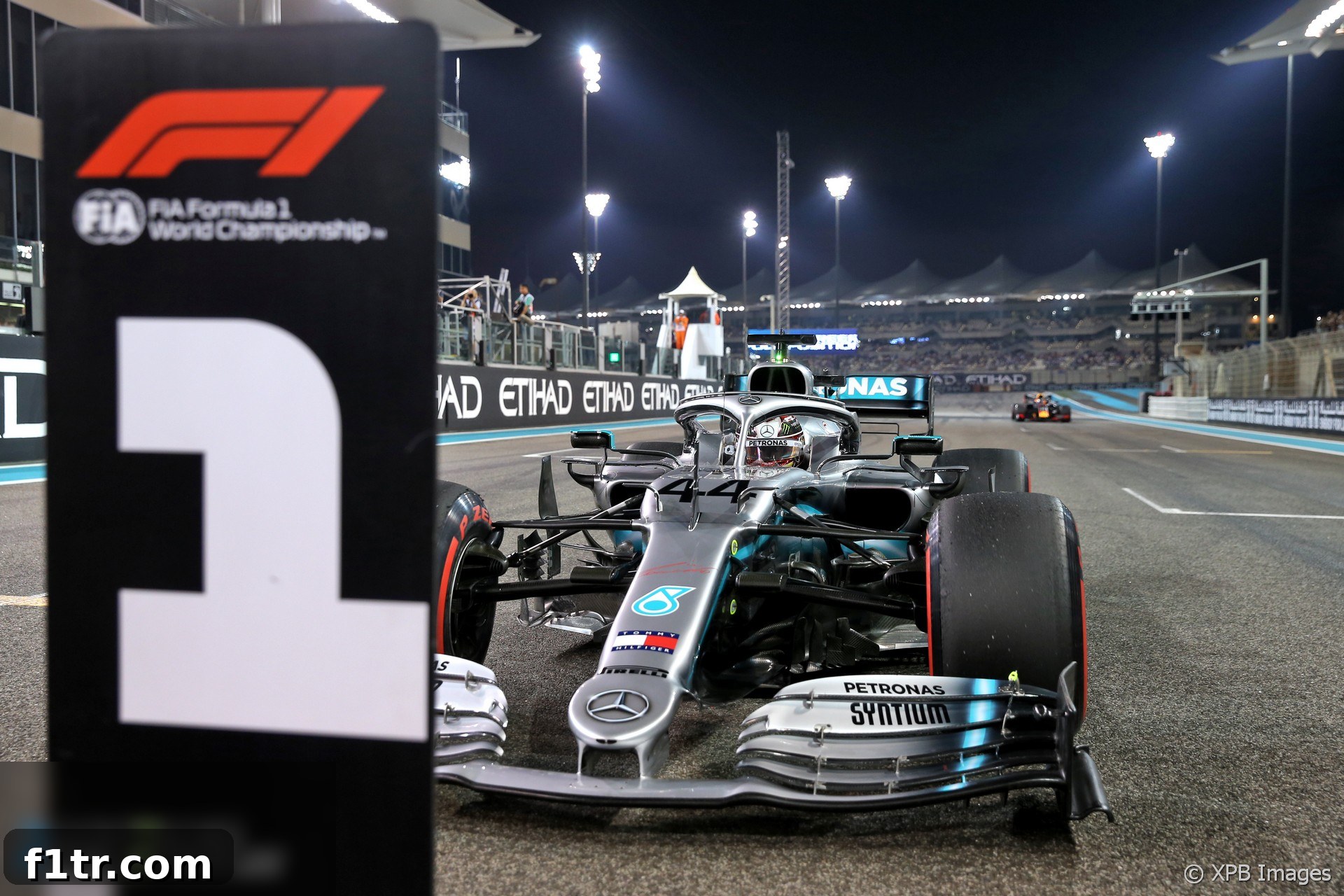
The culminating qualifying session of the season, held at the visually stunning Yas Marina circuit in Abu Dhabi, witnessed a quintessential display of pure driving artistry from Lewis Hamilton. The reigning World Champion not only masterfully secured pole position for the event but also narrowly eclipsed his own track record that he had established in the previous year. Hamilton’s breathtakingly fast lap of 1 minute, 34.779 seconds managed to beat his personal best by an astonishingly slim margin of just 15 thousandths of a second. This microscopic yet significant improvement on an already record-breaking lap speaks volumes about the relentless and continuous evolution of Formula 1 machinery and the unwavering pursuit of absolute perfection by its elite drivers.
Such marginal gains are a definitive hallmark of contemporary F1, where engineers and drivers collaboratively push the absolute boundaries of physics, engineering, and human capability. Hamilton’s innate ability to consistently unearth those critical extra hundredths of a second, even on a circuit where he had previously demonstrated immense proficiency, powerfully underscores his unparalleled skill, acute adaptability, and unwavering focus. It also meticulously highlights the intricate array of details that coalesce into crafting a perfect qualifying lap – encompassing everything from precisely calibrated braking points and nuanced throttle application to optimal gear selection and the masterful management of tire degradation over a single, all-out effort.
A Season of Performance Flux: Who Gained, Who Lost?
The 2020 season was notably characterized by significant and often unexpected performance swings across various teams on the grid. While some teams managed to make considerable strides forward in their competitive standing, others appeared to experience a regression in their relative pace. For instance, Alfa Romeo Racing experienced a substantial dip in qualifying performance, finding themselves a remarkable 1.8 seconds slower per lap at specific venues when compared to their impressive performance in the previous year. Similarly, Haas F1 Team struggled considerably to replicate their 2018 pace, registering a significant deficit of approximately one second per lap.
Intriguingly, the grid presented a fascinating dichotomy of fortunes: roughly half of the participating teams managed to visibly improve their relative lap times compared to the preceding year. This demonstrated effective car development, astute adaptation to the evolving technical regulations, or superior power unit integration. Conversely, the other half of the grid found themselves comparatively slower, suggesting underlying struggles with their car concept, challenges in engine development, or perhaps less effective in-season upgrade paths. This mixed bag of results brilliantly illustrates the complex challenges and myriad opportunities inherent within Formula 1’s highly dynamic and competitive environment, where even subtle changes in regulations, tire compounds, or power unit performance specifications can drastically alter a team’s competitive standing.
These pronounced performance variances vividly underscore the perpetual technological arms race that defines F1, where any stagnation in development inevitably results in falling behind the curve. Teams continually invest monumental resources in research and development, ceaselessly striving to unlock every conceivable fraction of extra speed. The 2020 season served as a compelling demonstration of how some teams succeeded brilliantly in this relentless endeavor, while others found themselves grappling with unforeseen and persistent difficulties, thereby setting the stage for intriguing competitive narratives in the subsequent seasons.
Support independent F1 journalism and enjoy an ad-free experience.
Become a supporter today to unlock exclusive benefits and uninterrupted F1 content!
Experience F1 Ad-FreeUnlock exclusive benefits and support independent F1 journalism.
Beyond the 2020 Season: What the Data Tells Us About F1’s Future
The comprehensive qualifying data gleaned from the 2020 F1 season offers invaluable insights not only into that particular year’s competitive dynamics but also into the broader, underlying trends that are actively shaping the future of Formula 1. It vividly highlights the relentless pressure exerted on teams to innovate, adapt, and continually push the boundaries of performance. Furthermore, it underscores the profound impact of even marginal gains and the absolutely critical role that exceptional driver talent plays in meticulously extracting maximum performance from cutting-edge machinery under immense pressure. The notable shrinking of the midfield gap, in particular, strongly points towards a healthier and more competitively balanced landscape for the sport, promising more unpredictable, exhilarating, and strategically rich races in the years to come.
As Formula 1 continues its evolutionary journey with the introduction of new technical regulations, a renewed global focus on sustainability, and an overarching drive for enhanced competition, the fundamental lessons learned from meticulously analyzing single-lap pace and intricate team dynamics in 2020 will undoubtedly inform strategic decisions and technological developments for many seasons ahead. Despite the profound global challenges that impacted its scheduling and execution, the 2020 season nonetheless delivered a fascinating and compelling study in competitive motorsport, powerfully reaffirming why Formula 1 continues to captivate and inspire millions of fans worldwide.
Related F1 Content and Archives
- Dive deeper into the 2019 Abu Dhabi Grand Prix: Star Performers Analysis
- Explore driver opinions: Leclerc on welcoming Hamilton as a Ferrari teammate
- Read about driver aspirations: Sebastian Vettel’s goals for the 2020 F1 season
- Relive race action: Sergio Perez praises Lando Norris’s driving after last-lap pass
- Analyse championship conclusions: Dominant Lewis Hamilton shows the way in the 2019 F1 finale
Browse all articles related to the 2019 Abu Dhabi Grand Prix for more historical insights