Enhancing Driver Identification in Formula 1: The Halo’s Unexpected Role
In the high-speed, technologically advanced world of Formula 1, identifying individual drivers has become an increasing challenge for fans. While dedicated enthusiasts can distinguish their heroes, the casual viewer often struggles to put a face to the helmet or a name to the car. Addressing this long-standing issue, influential figures like Fernando Alonso and FIA president Jean Todt have recently voiced their support for an innovative solution: utilizing the Halo cockpit protection device to help fans more easily identify who is behind the wheel of each F1 car.
This proposition represents a fascinating evolution for the Halo, a safety feature initially met with widespread aesthetic criticism upon its introduction. Now, it stands poised to potentially serve a dual purpose, enhancing both driver safety and fan engagement. The idea stems from a broader push within motorsport to make the sport more accessible and visually intuitive for its global audience.
Jean Todt’s Vision: A Clearer View for Fans
FIA president Jean Todt has been a vocal proponent of using the Halo as a visual aid for driver identification. This isn’t his first foray into this concept; he previously suggested employing the Halo to indicate which driver was leading the championship, a subtle but significant way to keep fans engaged with the season-long narrative. Building on that idea, Todt has now expanded his vision to encompass the identification of all drivers on the grid.
“I read sometime that we don’t see who is driving,” Todt remarked at a recent media briefing, highlighting the core problem. “We are complaining since years that we don’t see who is driving the car. We don’t see the name, you need to be a big expert.” His observation resonates with many who feel that modern F1 cars, with their closed cockpits and increasingly complex liveries, obscure the individuality of the drivers. Todt believes that harnessing the Halo could offer a straightforward solution to this persistent visual conundrum.
The president’s rationale is simple: if the current visual cues are insufficient for even seasoned experts to immediately recognize every driver, then a significant barrier exists for new or casual fans. “So I mean the Halo for me could be a facilitator to know better who is driving the car,” he concluded, envisioning a future where a quick glance at the cockpit protection device instantly reveals the driver’s identity.
Potential Methods for Halo Identification
Several methods could be explored to implement Todt’s vision. The Halo could feature specific driver numbers, distinct colour schemes linked to individual helmets or national flags, or even small, stylized logos. For instance, the championship leader’s Halo could be emblazoned with gold accents, while other drivers might have a unique identifier prominently displayed. The key would be consistency and clarity, ensuring that the chosen method is easily discernible at speed, even on smaller screens.
Such an initiative would require careful planning and collaboration between the FIA, teams, and drivers to ensure aesthetic integration and practical visibility. The aim would be to enhance the viewing experience without compromising the primary safety function or cluttering the car’s existing sponsorship real estate. The challenge lies in finding a balance that is both effective and visually appealing, turning a previously controversial element into a universally accepted and beneficial feature of F1 design.
Fernando Alonso’s Perspective: A Driver’s Take
Fernando Alonso, a two-time world champion and one of F1’s most experienced drivers, acknowledges the merit of the suggestion. When asked about the idea of using driver helmet colours on the Halo to aid identification, he described it as “a good question.” Alonso recognizes the importance of connecting fans with the athletes, understanding that clearer identification could foster greater engagement.
“I think the fans maybe can help in that aspect and make some suggestions, or F1 could have research on what the fans would like,” Alonso commented, advocating for a fan-centric approach. He emphasizes that from a driver’s perspective, such a modification would not significantly alter their experience within the cockpit. “Obviously on our side it would not make any difference but if that can help the fans it’s OK.” This pragmatic stance underscores the drivers’ willingness to support initiatives that benefit the sport’s global fanbase, provided they do not hinder performance or safety.
However, Alonso also expressed a degree of skepticism regarding the ultimate impact on identification, adding: “I don’t know if that would change much in terms of identification.” His doubt might stem from the sheer speed of the cars, the viewing angles, and the relatively small surface area of the Halo itself. While a unique identifier could be present, its visibility at 300 km/h or from a distant grandstand might still pose a challenge. This highlights the need for rigorous testing and fan feedback to ensure any proposed solution genuinely makes a difference.
Real-World Precedents and the Halo’s Evolution
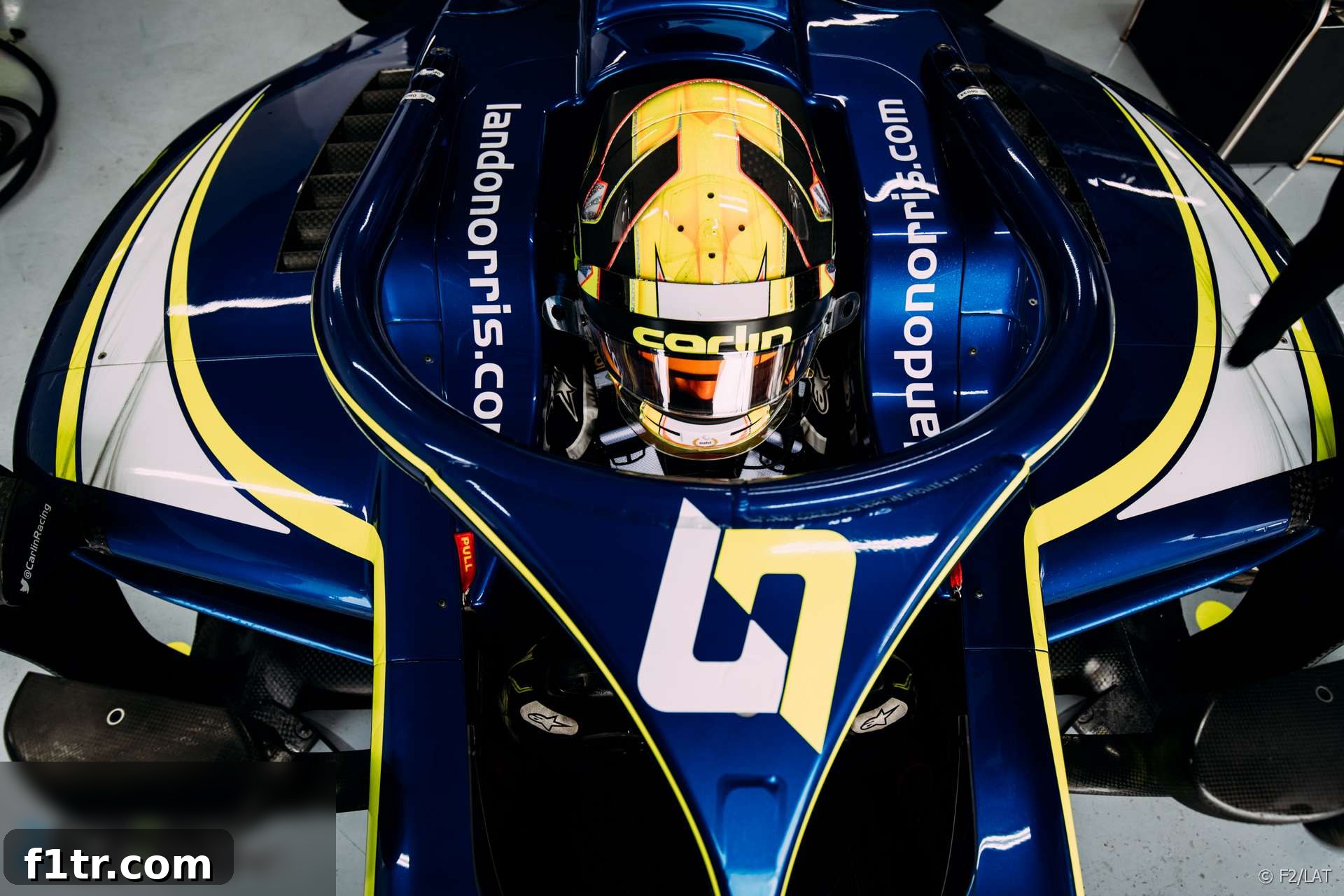
The concept of using visible markings for driver identification is not entirely new in motorsport. In Formula 2, for instance, driver Lando Norris has been seen sporting his own distinctive logo on the front of his car’s Halo, a clear example of how this space can be utilized for personalization and recognition. This precedent demonstrates the practical feasibility of incorporating such design elements onto the safety device, suggesting that F1 could indeed adopt a similar strategy.
Historically, F1 cars have often featured driver names or national flags, albeit in positions that are not always easily visible to viewers, especially in the modern era of sleeker designs and tightly packed sponsor logos. The Halo, positioned prominently above the cockpit, offers a unique and unobstructed canvas that could be dedicated solely to driver identification, making it a potentially more effective solution than previous attempts.
Beyond identification, the Halo has already undergone a remarkable journey in terms of public perception. Initially derided for its imposing structure and impact on the aesthetic purity of F1 cars, it has since proven its worth countless times by saving drivers from serious injury, if not worse. This safety record has gradually softened criticism, transforming it from a controversial addition into an accepted, even celebrated, component of modern F1. Adding an identification function could further cement its role, giving it an additional purpose beyond its critical safety mandate.
Support Independent F1 Journalism>> Discover how you can contribute to our work
The Future of Cockpit Protection and F1 Aesthetics
The discussion around the Halo also inevitably leads to its long-term future. Despite its success as a safety device, it is not necessarily considered the final solution for cockpit protection. Jean Todt openly admitted that if a superior alternative emerges, F1 would be open to replacing the current design.
“If we are able to find something which is better, I’m sure over the years we will be able [to],” Todt stated, underscoring the FIA’s continuous commitment to research and development in driver safety. The pursuit of “better” implies a solution that could offer enhanced protection, improved visibility, or a more aesthetically integrated design, addressing some of the initial criticisms without compromising on safety.
Interestingly, Todt also drew a comparison with Formula E, which also adopted the Halo but with a generally more positive reception. “[In] Formula E, everybody said it was the nicest car they’ve ever seen with the Halo. I did not see in real life the Formula One [cars], I saw some photos, honestly I’m not at all disturbed with what I see.” This observation suggests that design integration plays a crucial role in public perception. Formula E’s cars were designed with the Halo in mind from the outset, potentially allowing for a more seamless visual blend compared to F1, where it was retrofitted onto existing chassis designs.
The conversation around the Halo, driver identification, and future cockpit protection underscores a broader theme in Formula 1: the constant evolution of the sport. It’s a delicate balance between preserving the spectacle, ensuring driver safety, and adapting to the demands and preferences of a global audience. Whether through a modified Halo or a future, yet-to-be-developed device, the quest for a more engaging and identifiable F1 experience will undoubtedly continue.
2018 F1 Season Insights
- F1 feared “death knell” for Drive to Survive after Ferrari and Mercedes snub
- McLaren staff told us we were “totally crazy” to take Honda engines in 2018 – Tost
- ‘It doesn’t matter if we start last’: How Red Bull’s junior team aided Honda’s leap forward
- Honda’s jet division helped F1 engineers solve power unit problem
- McLaren Racing losses rise after Honda split
Browse all 2018 F1 season articles