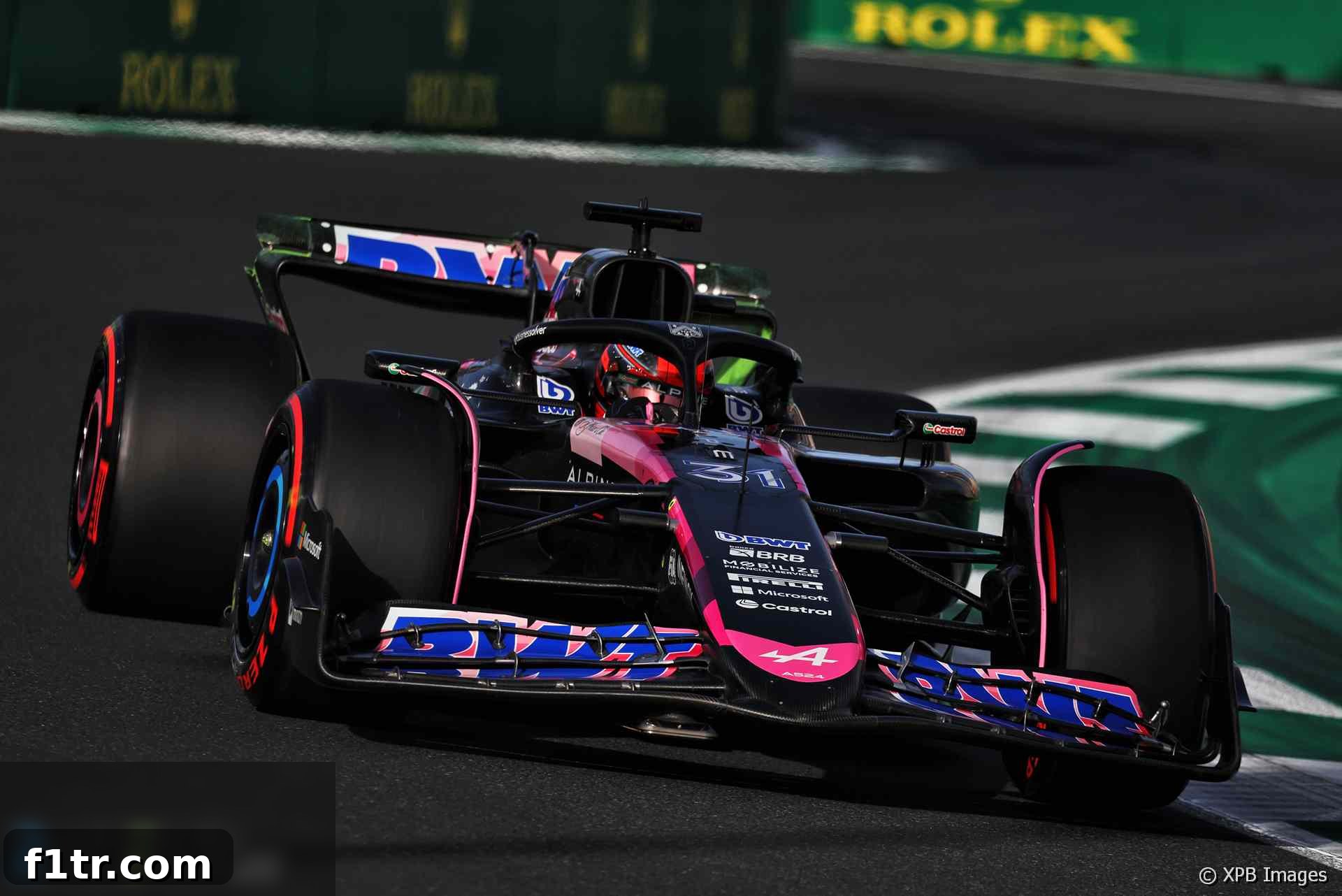
Esteban Ocon, the seasoned driver for the Alpine Formula 1 team, voiced the team’s initial expectations for a more competitive showing at the recent Saudi Arabian Grand Prix. This sentiment emerged in the wake of a deeply frustrating start to their 2024 F1 season, which saw the French outfit grappling with a significant performance deficit from the very first race. The team, along with its drivers, had hoped that the unique challenges of the Jeddah Corniche Circuit might offer a slight reprieve or, at the very least, reveal some encouraging glimmers of progress. However, the reality proved to be a stark continuation of their struggles, amplifying concerns about their competitive position in the fiercely contested world of Formula 1.
Advert | Become a Supporter & go ad-free
Both Ocon and his teammate, Pierre Gasly, found themselves in an all too familiar and unwelcome position during qualifying for the Saudi Arabian race. For the second consecutive event, neither driver managed to advance beyond the initial Q1 session, a clear indicator of the car’s fundamental lack of pace. This back-to-back disappointment underscored the severity of Alpine’s struggles, especially when contrasted with the performance of their rivals. What made Alpine’s situation even more concerning was a telling statistic: they stood as the sole team on the grid that had failed to record a faster lap time around the challenging Jeddah Corniche Circuit compared to their own performance in the previous year. In a sport where year-on-year development is paramount and every team strives for incremental gains, this regression sent a clear message about the scale of the task ahead for the Enstone-based squad.
Despite the disheartening qualifying results, Ocon offered a sliver of guarded optimism, suggesting that the team found themselves in a “slightly better shape” than they had been during the season-opening Bahrain Grand Prix. This cautious assessment hinted at minor improvements or perhaps a better understanding of their problematic A524 chassis, even if it wasn’t enough to translate into meaningful qualifying positions.
Alpine’s Persistent Pace Deficit: A Deep Dive into Early Season Struggles
Speaking to the official F1 channel following qualifying, Ocon openly conveyed his frustration. “It’s been a difficult session,” he admitted. “Obviously I’m frustrated to [drop out in Q1] once again.” This candid statement resonated deeply with the collective sentiment surrounding Alpine’s performance. The team had entered the weekend with aspirations of a turnaround, or at least a visible step forward. “We were expecting a little bit better,” Ocon continued, acknowledging the team’s internal targets. His assessment of their overall standing was equally telling: “I think it was a little bit better than Bahrain in general, but we still lacked some pace ultimately and that’s why we are here today.” This encapsulates the core of Alpine’s predicament: marginal improvements are being made, but the fundamental speed necessary to compete in the midfield, let alone at the front, remains elusive. The A524 appears to be suffering from a significant performance deficit across various aspects, whether it’s aerodynamic efficiency, mechanical grip, or possibly even the integration of the power unit. The competitive nature of Formula 1 means that even small gaps in performance can lead to vast differences in grid positions and, consequently, scoring opportunities.
Back-to-Back Q1 Exits: The Harsh Reality of the 2024 Season
The implications of consecutive Q1 exits are profound for a team like Alpine, which has aspirations of fighting for podiums and championships in the long run. Finishing 17th, with Gasly just behind in 18th (out-qualifying only one driver who set a time, Zhou Guanyu, who unfortunately failed to set a representative lap), places them firmly at the back of the grid. This position drastically reduces any realistic chance of scoring points in the race, which is typically reserved for the top ten finishers. For Ocon, this grim outlook meant a shift in perspective for the main event. With points seemingly out of reach, he suggested a pragmatic approach for the team: treating the race as an extended test session. “We’re going to go to the race fighting like no tomorrow, like always, see what we get out of that race,” he affirmed. “If it’s just some data that we gather then we will gather it well and keep the work going.” This mindset highlights the difficult choices teams face when competitive pace is lacking; every lap becomes an opportunity to understand the car better, gather crucial aerodynamic and mechanical data, and prepare for future upgrades and developments. In the relentless pursuit of performance, even a P17 start can contribute valuable insights for engineers back at the factory.
Drivers’ Perspective: Frustration Meets Pragmatism
Pierre Gasly echoed his teammate’s frustration but also provided further insight into the team’s current situation and their pre-weekend expectations. He frankly admitted that he “didn’t expect a better round for the team,” acknowledging the stark reality that Alpine was one of only three teams on the grid that hadn’t introduced any significant upgrades for the Jeddah weekend. “We obviously knew there would not be any big change for the weekend, the car is the same,” Gasly stated, underscoring the static nature of their package compared to rivals who brought development parts. This lack of in-season development at such an early stage of the championship is a red flag, as Formula 1 is a continuous arms race where standing still means falling behind. Gasly delved into the specifics of his qualifying performance, revealing a mixture of promise and disappointment. “I think on our side, we did a strong first run. It was a pretty strong lap,” he recounted, suggesting that the baseline performance might not be entirely catastrophic. However, disaster struck on his crucial second flying lap: “On the second lap, unfortunately, I had a massive snap and just no rear grip from the start of the lap. So we’ll have to analyse for next weekend.” This loss of rear grip, commonly referred to as a “snap,” can be incredibly unsettling for a driver, making the car unpredictable and untamable at high speeds. It points towards potential issues with mechanical balance, aerodynamic stability, or even tire management, all areas Alpine will need to scrutinize intensely as they prepare for the upcoming races. The consistency of performance across laps and different tire compounds is vital, and Gasly’s experience highlights a critical area for improvement.
The Critical Upgrade Dilemma: A Stalled Development Race
The fact that Alpine, a factory team with significant resources, arrived in Jeddah without any meaningful upgrades is particularly concerning. In modern Formula 1, the development race is relentless. Teams introduce new parts, often referred to as “upgrades,” almost every weekend, from minor aerodynamic tweaks to major chassis components, all aimed at finding crucial milliseconds. To be among the few teams without any new developments at the second race of the season suggests either a fundamental issue with their current car concept that requires a complete overhaul, or a significant delay in their development pipeline. This stagnation leaves them vulnerable to rivals who are constantly pushing forward, widening the performance gap with each passing Grand Prix. The longer Alpine operates with a static package, the harder it will be to catch up, making the early season even more challenging and putting immense pressure on the technical departments to fast-track viable solutions. The lack of upgrades directly impacts both driver confidence and the team’s morale, as visible progress is a key motivator in such a high-pressure environment. It also suggests a strategic crossroads: does the team continue to try and extract performance from the current concept, or do they pivot to a more radical design for future updates? This decision will be pivotal for their 2024 campaign and potentially beyond.
Behind the Scenes: Alpine’s Strategic Crossroads and the Road Ahead
The current struggles are not just about raw pace; they also reflect on the broader strategic direction of the Alpine F1 team. A team that finished fourth in the Constructors’ Championship just two seasons ago (2022) is now languishing at the very back. This dramatic regression has inevitably led to scrutiny and internal changes, as alluded to by Famin’s earlier comments about the “shock” of their poor start showing a need for change. The leadership and technical departments are under immense pressure to identify the root causes of their underperformance and implement effective solutions quickly. The long-term vision for Alpine in Formula 1 is at stake, and how they navigate this challenging period will define their trajectory for the coming seasons. The team needs to not only understand what is wrong with the A524 but also how to efficiently develop and introduce improvements that genuinely move them up the grid. This includes optimizing their aero program, refining their simulation tools, and ensuring a seamless integration of all car components. While the immediate focus is on data gathering and understanding the current car, the clock is ticking for Alpine to demonstrate a clear path back to competitiveness. The talent and resources are undoubtedly present within the team, but unlocking their potential is proving to be a formidable challenge in the hyper-competitive F1 landscape.
Looking Ahead: Hopes for Improvement Amidst Challenges
Despite the current bleak picture, the spirit within Alpine, as articulated by Ocon, remains one of resilience and determination. The focus has undeniably shifted from immediate points-scoring to a more fundamental understanding and development of the car. The data gathered from races, even those at the back of the grid, provides invaluable information that can feed into simulation models and design iterations back at the factory. The upcoming races in Australia and beyond will continue to test Alpine’s resolve. While immediate breakthroughs are unlikely without significant upgrades, every track presents different characteristics that might expose or mask the A524’s weaknesses. The team will be meticulously analyzing every sensor reading, every driver feedback note, and every lap time in their relentless pursuit of performance. The Formula 1 season is long, offering many opportunities for recovery, but the initial deficit means Alpine has a monumental task ahead to climb back into contention for regular points finishes. Their ability to innovate, adapt, and execute a robust development plan will be the defining factor in whether they can salvage their 2024 campaign and build a stronger foundation for the future.
2024 Saudi Arabian Grand Prix Analysis and Updates
- Bearman’s 2024 Jeddah debut performance makes him ‘feel like an absolute idiot’
- Vowles being patient with Sargeant but expects to see “progress”
- “So I’ve got nothing to worry about?” – The best unheard team radio from Jeddah
- “Shock” of poor start to season showed need for change at Alpine – Famin
- “My tyres are dying”: Stroll’s short-lived struggle until he hit the wall
Browse all 2024 Saudi Arabian Grand Prix articles