Isack Hadjar Impresses in Red Bull F1 Practice, Igniting Hopes for a Grand Prix Future
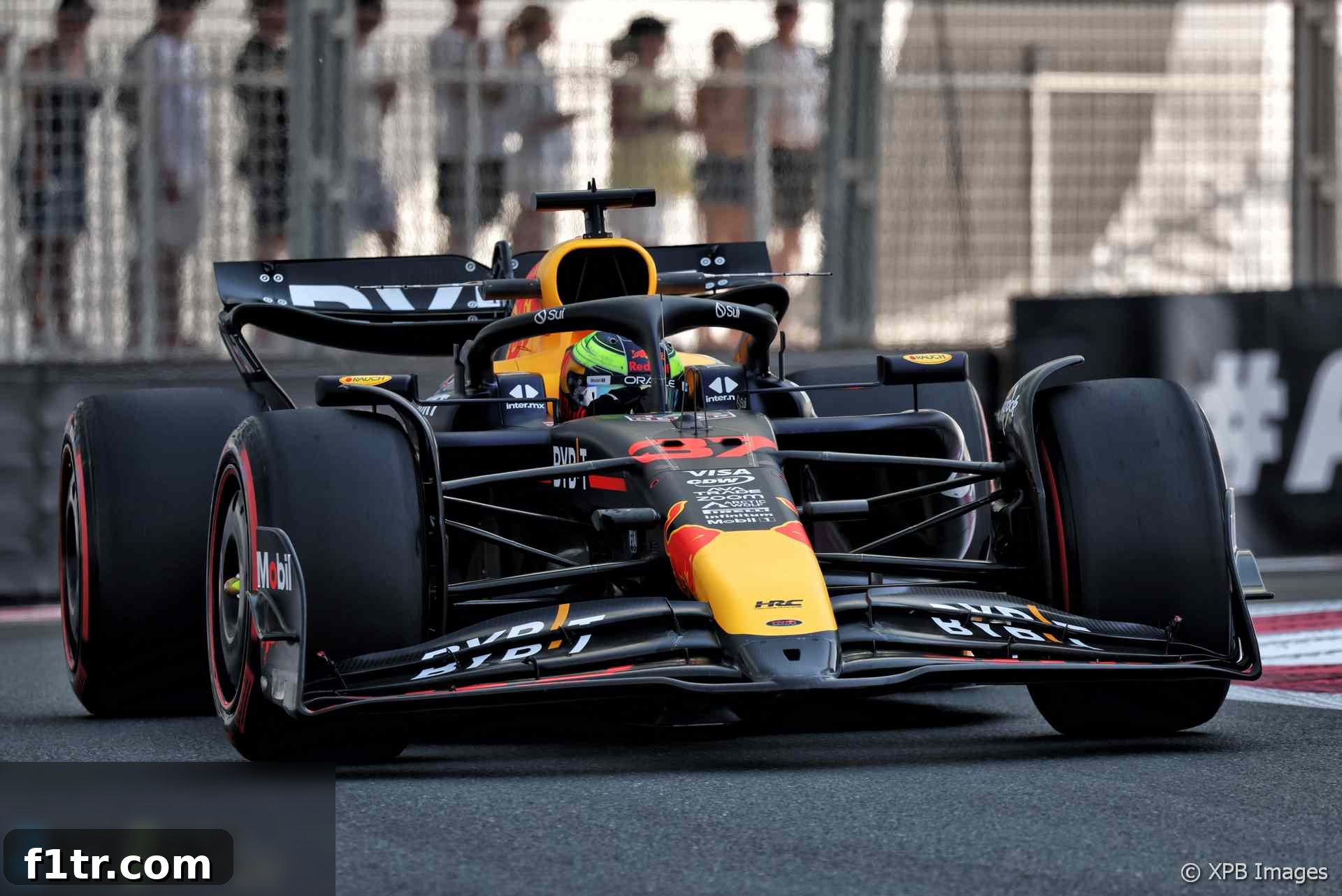
Red Bull Junior Team sensation Isack Hadjar recently took centre stage at the iconic Yas Marina Circuit, delivering a standout performance during a Formula 1 practice session for the dominant Red Bull Racing team. Entrusted with the formidable RB20 of reigning world champion Max Verstappen, Hadjar showcased remarkable talent, speed, and adaptability. This crucial outing was more than just a routine practice; it served as a significant audition for the 20-year-old French driver, especially amidst growing speculation regarding a potential promotion to Red Bull’s sister F1 team, currently known as RB (formerly AlphaTauri), for the upcoming Formula 1 season. His display provided a clear signal of his readiness to compete at the sport’s highest level, drawing considerable attention from within the paddock and among motorsport enthusiasts.
A Competitive Debut in Elite F1 Machinery
The Abu Dhabi Grand Prix weekend presented the ideal setting for Hadjar to demonstrate his capabilities. Stepping into the cockpit of the championship-winning RB20 for the first free practice session, Hadjar faced the immediate, high-pressure task of adapting to a car renowned for its intricate technology and immense power. Early in the session, Hadjar experienced a spin – a not uncommon occurrence for any driver, particularly a rookie pushing the limits in an unfamiliar car. However, his swift and composed recovery highlighted a maturity and resilience beyond his years. He proceeded to complete a significant 22 laps, accumulating valuable mileage that is crucial for young drivers in limited FP1 sessions. More impressively, his best lap time positioned him within a mere four-tenths of a second of Red Bull’s experienced full-time driver, Sergio Perez. This narrow gap to a proven Grand Prix winner speaks volumes about Hadjar’s raw pace and his rapid ability to extract performance from one of the most sophisticated machines on the planet.
Reflecting on his demanding yet rewarding experience, Hadjar shared his satisfaction with the official F1 channel. “It was intense,” he stated. “I’ve done much more laps than usual. It was a great run plan, honestly I really enjoyed the session. I got plenty of laps. It didn’t start really well for me, but I improved quite rapidly and I was happy with the long run performance. And I was competitive as well in the short run. So it was not bad.” His words underscore a methodical approach, focusing not only on raw speed in qualifying-style runs but also on understanding the car’s behavior and tire degradation over a simulated race stint. This ability to deliver consistent performance and gather crucial data across different race scenarios is a vital asset for any driver aspiring to a full-time F1 seat. Overcoming an initial mishap to then post competitive times further cemented the impression of a driver with strong mental fortitude and exceptional natural talent.
Navigating the Steep Learning Curve of Formula 1
This appearance at Yas Marina marked Hadjar’s second Formula 1 outing of the season in the RB20, following his earlier session at Silverstone where he also took over Sergio Perez’s car. While each session provides invaluable hands-on experience, Hadjar candidly acknowledged that he is still very much in the early stages of truly pushing the formidable limits of a Formula 1 car. “It was my fourth time in an F1 car today,” he revealed. “I’ve done four FP1 sessions, so I’m still new to it. I haven’t done any private tests, so every time I jump in, I feel like it’s the first time.” This honest assessment offers a critical insight into the monumental learning curve faced by young drivers transitioning to the pinnacle of motorsport. Unlike seasoned professionals who benefit from extensive private testing, simulator work, and years of experience, junior drivers often receive limited track time, making every single lap a fresh and intense learning opportunity.
The sheer velocity, incredible G-forces, and technological complexity of a modern F1 car demand significant time and repeated exposure for a driver to fully grasp its capabilities. “Everything comes at you so fast. I still didn’t explore all the limits of the car, so just on feeling, I can learn a lot still,” Hadjar added. This sentiment is commonly expressed by rookies, who often prioritize bringing the car back safely, gathering essential data for the engineering team, and steadily building confidence, rather than immediately pushing to the absolute ragged edge. His disciplined and incremental approach suggests a highly intelligent driver who understands the paramount importance of consistent progress and reliability, particularly when entrusted with priceless championship-contending machinery.
The Stark Contrast: F1 vs. F2 – Worlds Apart
Adding another layer of challenge and comparison to his already demanding day, Hadjar immediately transitioned from his Formula 1 duties back into the cockpit of his Formula 2 car for its crucial qualifying session. This unique double-duty provided him with an unparalleled, real-time experience of the stark performance differential between the two premier single-seater categories. Despite the rapid transition, Hadjar performed admirably in F2 qualifying, securing an impressive fourth position on the grid with a best time of 1’35.873. This time, while strong for F2 standards, was almost exactly 10 seconds slower than his best F1 lap earlier in the day – a vivid and compelling illustration of the immense performance gap between the two series.
When pressed to articulate the profound difference between the categories after a day of switching between them, Hadjar’s response was immediate and unequivocal: “They’re worlds apart.” He elaborated on the dramatic shift in sensory experience, explaining, “When I went back to the F2 car, it felt just super-slow. Everything comes at you slowly, but at the same time it’s incredibly physical without power steering. So I had to get back to it and get used to it, which was really tough. They are 15 seconds a lap slower – it’s huge.” This candid assessment from a driver who has just experienced both provides invaluable insight for fans and aspiring racers alike, highlighting the monumental leap required to reach Formula 1.
Delving into Technical and Physical Disparities
The phrase “worlds apart” is not a mere exaggeration; it encapsulates fundamental differences in engineering philosophy, technological sophistication, and driver demands. Formula 1 cars represent the absolute pinnacle of automotive engineering, featuring immensely powerful hybrid power units capable of generating over 1,000 horsepower, revolutionary aerodynamic packages that create staggering levels of downforce, and highly advanced electronic systems, including sophisticated power steering. These elements coalesce to create a machine that delivers unparalleled acceleration, braking efficiency, and cornering speeds, pushing the boundaries of what is mechanically possible.
In contrast, Formula 2 cars, while still incredibly potent and challenging racing machines, are intentionally designed as a crucial stepping stone. They are equipped with less powerful, non-hybrid engines (typically around 620 horsepower), simpler aerodynamic designs, and critically, they lack power steering. This absence of power steering fundamentally alters the physical demands on the driver, requiring immense upper body strength, core stability, and endurance to wrestle the car through corners, particularly over a full race distance. For Hadjar, the rapid transition back to F2 meant not only recalibrating his perception of speed and braking points but also re-engaging different muscle groups and adapting his driving technique to a far more physically strenuous machine. The sensory overload of F1 followed by the intense, raw physical battle of F2 within a matter of hours speaks volumes about the extraordinary versatility, mental agility, and physical stamina required at the elite levels of motorsport.
The “15 seconds a lap slower” delta, as pointed out by Hadjar, is far more than a simple numerical difference. It symbolizes a monumental chasm in performance across every single aspect of the vehicle – from blistering straight-line speed and explosive acceleration to crushing cornering velocity, immense braking forces, and overall chassis responsiveness. It vividly underscores why Formula 1 remains the ultimate technical and sporting challenge in global motorsport, and why even marginal gains of a few tenths of a second per lap are considered colossal achievements in the relentless pursuit of Grand Prix victory.
The Road Ahead: A Red Bull Seat within Reach?
Hadjar’s deeply impressive performance at Yas Marina significantly fuels the ongoing speculation about his future trajectory within the highly competitive Red Bull motorsport empire. The Red Bull Junior Team is globally renowned for its rigorous, albeit often ruthless, driver development program, which has successfully nurtured and propelled an array of generational talents, including multiple world champions like Sebastian Vettel and Max Verstappen, as well as Grand Prix winners such as Daniel Ricciardo. Hadjar’s consistent and strong performances throughout his Formula 2 campaign, coupled with his impactful and professional FP1 outings, firmly position him as a prime candidate for a coveted full-time F1 seat.
Current whispers and paddock rumours suggest that Hadjar is a leading contender for a spot at Red Bull’s second Formula 1 team, RB, for the rapidly approaching season. Such a significant promotion would mark a truly pivotal moment in his burgeoning career, offering him the unparalleled opportunity to compete against the world’s most elite drivers on a consistent basis. Securing an F1 seat, especially one under the intensely scrutinising gaze of the Red Bull umbrella, is a complex, multifaceted process that extends far beyond mere raw speed and natural talent. It demands unwavering consistency, the ability to seamlessly integrate with a high-performance team, provide precise and valuable technical feedback to engineers, demonstrate exceptional race craft under pressure, and often, possess a strong commercial appeal.
Hadjar’s demonstrable composure under immense pressure, coupled with his articulate and insightful communication, as observed in his post-session interviews, are additional attributes that will undoubtedly be meticulously noted and highly valued by the stringent Red Bull management. While his continued development and performance in Formula 2, where he is actively honing his race craft, strategic thinking, and tire management skills, remains vitally important, these Formula 1 practice sessions serve as the ultimate live audition for the main stage. The Yas Marina performance stands as a powerful statement of intent from Isack Hadjar, reinforcing the widespread belief that he possesses the requisite talent, the steely temperament, and the relentless drive to not only succeed but to truly thrive in Formula 1. As the global motorsport community watches with keen anticipation, Hadjar’s career trajectory appears firmly and confidently pointed towards a future among the absolute elite of Grand Prix racing, solidifying his position as one of the most exciting and promising prospects to emerge from the formidable Red Bull stable in recent years.