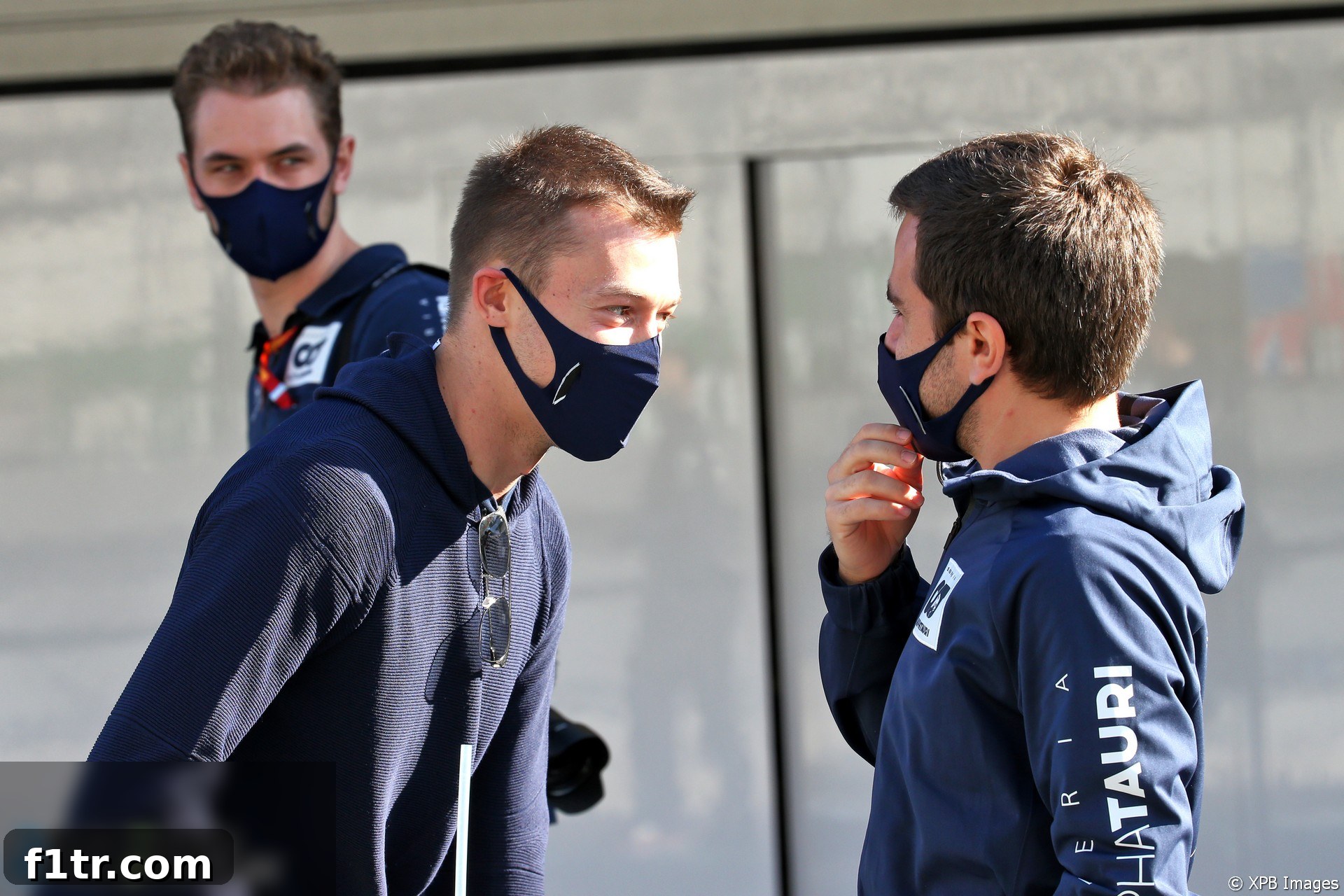
In the dynamic world of Formula 1, driver careers can turn on a dime, and the high-stakes environment for the 2021 F1 season has placed many talents in a precarious position. Among them, Daniil Kvyat found himself navigating a particularly uncertain future, a situation that encapsulates the cutthroat nature of motorsport’s pinnacle. As teams finalize their lineups, the pressure intensifies, and every race becomes a crucial audition, not just for points, but for a coveted seat on the grid.
The Driver Market and Daniil Kvyat’s Uncertain Future
Daniil Kvyat’s journey in Formula 1 has been a rollercoaster of highs and lows, marked by moments of brilliance and spells of misfortune. A product of the Red Bull junior program, Kvyat made his F1 debut with Toro Rosso in 2014, quickly earning a promotion to Red Bull Racing. However, a demotion back to the junior team in 2016, followed by a period away from the grid, highlighted the brutal demands placed on young drivers in this elite sport.
His return to AlphaTauri (formerly Toro Rosso) in 2019 brought a renewed sense of purpose and a podium finish at the German Grand Prix. Yet, the 2020 season, like many for Kvyat, was marred by a string of unfortunate events and challenging circumstances. A particularly notable incident occurred at the Nürburgring, where a clash with Red Bull stablemate Alexander Albon further compounded a difficult run of form. This contrasted sharply with the fortunes of his AlphaTauri teammate, Pierre Gasly, who delivered a sensational and emotional victory at Monza, elevating his profile significantly within the Red Bull hierarchy and the wider F1 community.
Amidst these fluctuating performances, rumors began to intensify regarding the potential promotion of Japanese talent Yuki Tsunoda to AlphaTauri for the 2021 season. Tsunoda, a Honda-backed driver who had impressed in Formula 2, represented the kind of promising young talent Red Bull often seeks to bring into its F1 teams. This speculation inevitably cast a long shadow over Kvyat’s position, leading to an open acknowledgment of his precarious state in the driver market.
When asked about his prospects, Kvyat’s response reflected a pragmatic realism combined with a steely determination:
I haven’t got many ideas, so far, about it. All I know is that there are six races remaining this season and I’ll do my best in the six races remaining and that’s the best thing I can do right now.
I’m aware that the situation isn’t very easy. And, of course, that there are not very many seats available. But from my side I can only do the best in this races remaining.
This statement underscores the immense pressure F1 drivers face, where their performance in every single session can influence their career trajectory. Kvyat’s focus on maximizing his output in the remaining races was his only recourse, a testament to the competitive spirit that defines these athletes. The scarcity of available seats in Formula 1 means that even highly capable drivers with Grand Prix experience can find themselves on the sidelines, making every opportunity to prove worth invaluable.
Quotes: Dieter Rencken
Advert | Become a RaceFans supporter andgo ad-free
Social Media Pulse: Connecting with Formula 1 Fans
In the digital age, social media has become an indispensable tool for Formula 1 teams, drivers, and fans alike. It offers an immediate and unfiltered glimpse into the sport, from behind-the-scenes content to real-time reactions and technical deep-dives. This direct line of communication fosters a vibrant community, allowing fans to engage with their heroes and understand the intricacies of F1 beyond the race track.
Notable posts from Twitter, Instagram and more showcase the diverse ways F1 leverages these platforms:
Bitumen. Asphalt. Vehicle Dynamics. 🤓 We’re geeking out about @F1 tyres with Mike, learning all about the crazy amount of work that goes into preparing for racing at a new track! 👇 pic.twitter.com/JJFrKi6OUQ
— Mercedes-AMG PETRONAS F1 Team (@MercedesAMGF1) October 22, 2020
The Mercedes-AMG Petronas F1 Team, renowned for its technical prowess, often shares educational content that demystifies the complex world of Formula 1. A post discussing “Bitumen. Asphalt. Vehicle Dynamics.” and F1 tyres with a team expert like Mike highlights the incredible engineering and strategic depth behind every race. Understanding tyre compounds, track surface interaction, and their impact on vehicle dynamics is critical for performance, and such content brings fans closer to the cutting-edge technology that defines F1.
Beyond official team accounts, drivers and personalities also offer unique perspectives. For instance, posts from individuals like Nico Rosberg (via @rosbergxracing) often provide insights into driver life, racing culture, or sustainability initiatives within motorsport. Instagram, with its visual focus, becomes a canvas for drivers to share personal moments, training regimens, or artistic takes on the sport. Examples like a photo post or an IGTV video could feature anything from a post-race debrief, a behind-the-scenes look at a factory, or a driver showcasing their passions outside of racing, all contributing to a richer fan experience.
- Find more official F1 accounts to follow in the F1 Twitter Directory, a valuable resource for any fan looking to stay connected with the pulse of the sport.
Beyond Formula 1: A Glimpse into the Wider World of Motorsport
While Formula 1 commands the spotlight, the broader landscape of motor racing is rich with diverse championships, emerging talents, and compelling narratives. These curated links offer a window into other significant developments across various racing series, showcasing the depth and breadth of global motorsport.
Advert | Become a Supporter & go ad-free
Renault Sport Academy drivers to test F1 car in Bahrain (Renault Sport)
“The four-day R.S.18 testing programme in Bahrain will feature newly-crowned FIA Formula 3 Champion Oscar Piastri and 2020 FIA Formula 2 race winners, Christian Lundgaard and Guanyu Zhou.”
This announcement from Renault Sport highlights the crucial role of junior academies in nurturing future Formula 1 stars. Providing young talents like Oscar Piastri, Christian Lundgaard, and Guanyu Zhou with an opportunity to test a contemporary F1 car (the R.S.18) is an invaluable step in their development. It allows them to experience the sheer power, sophisticated aerodynamics, and intricate systems of an F1 machine, bridging the gap between feeder series and the pinnacle of motorsport. This investment in talent pipeline development is vital for the long-term health of Formula 1, ensuring a continuous supply of highly skilled drivers.
Road to Indy presented by Cooper Tires unveils 2021 schedule (Indy Lights)
“The Indy Lights schedule is boosted by an expanded calendar of 10 events and 20 races. For the first time since 2012, the series will return to The Raceway at Belle Isle Park in Detroit, Mich., for a double-header round, and will cap off the year with a West Coast swing at Portland International Raceway in Portland, Oregon, and the season finale at Laguna Seca in Monterey, California, the following weekend.”
Indy Lights, a critical step on the “Road to Indy” ladder system, plays a pivotal role in preparing drivers for the NTT IndyCar Series. The unveiling of an expanded 2021 calendar, featuring 10 events and 20 races, signifies a strong resurgence for the series. The return to iconic venues like Belle Isle Park in Detroit, a challenging street circuit, and the inclusion of a West Coast swing at Portland International Raceway and the legendary Laguna Seca circuit, promises a thrilling season. This robust schedule offers invaluable track time and diverse racing experiences for aspiring IndyCar drivers, ensuring a competitive and engaging championship.
The best of Radio Lundgaard (Formula 2)
“Some of Christian Lundgaard’s best radio hits, from tyres to backseat driving.”
Team radio communications are a fascinating element of modern motorsport, offering a raw and often humorous insight into a driver’s personality and the intense dynamics within a racing team. Christian Lundgaard, a promising talent in Formula 2, clearly provides plenty of memorable moments over the airwaves. Discussions ranging from critical tire management strategies to playful “backseat driving” comments from his engineer illustrate the complex relationship between driver and team, and the constant flow of information and emotion during a high-pressure race. These snippets highlight the human element within the highly technical world of racing.
WRT Audi tops qualifying as super pole places decided at 24h of Spa (Sportscar365)
“Audi Sport Team WRT’s number 31 car driven by Dries Vanthoor, Christopher Mies and Kelvin van der Linde set the pace in qualifying for the 24 Hours of Spa as the top 20 finishers advanced to Friday’s Super Pole shootout.”
Endurance racing is a cornerstone of global motorsport, and the 24 Hours of Spa-Francorchamps stands as one of its most iconic challenges. This report details the qualifying sessions, where Audi Sport Team WRT showcased its strength, with the number 31 car leading the charge. The “Super Pole” shootout format, where only the fastest cars get a final chance to set their grid position, adds an extra layer of drama and excitement to these gruelling events. The combination of speed, strategy, and relentless teamwork required to excel in a 24-hour race makes events like Spa a true test of man and machine, offering a different but equally compelling spectacle compared to sprint races like Formula 1.
Young, Black and British – Hear Us: A Newsround Special (BBC Newsround)
“Teenagers Zionne, Isaiah and Mandi have spoken to Newsround about how racism has affected them growing up. They’ve also come up with a manifesto about what they want to change, including asking people to break down stereotypes, teach more black history and hire more black people. They enlisted their celebrity heroes, Lewis Hamilton, Nissy Tee, DJ Ace and DJ Sideman, to help get their message out there.”
This powerful BBC Newsround special, “Young, Black and British – Hear Us,” underscores the growing importance of social justice and representation within and beyond the sporting world. Featuring the impactful voices of teenagers Zionne, Isaiah, and Mandi, the program tackles the profound effects of racism on young lives and champions a manifesto for change, advocating for the dismantling of stereotypes, enhanced black history education, and increased black representation across various sectors. The involvement of celebrated figures like seven-time Formula 1 World Champion Lewis Hamilton, alongside other prominent personalities such as Nissy Tee, DJ Ace, and DJ Sideman, amplifies this crucial message. Hamilton, a vocal advocate for diversity and inclusion in motorsport, has consistently used his platform to address systemic racism and inspire positive change, making his participation in this special particularly resonant. This initiative exemplifies how sports figures can transcend their athletic achievements to become powerful agents of social progress, fostering a more inclusive society for future generations.
We always endeavour to credit original sources. If you have a tip for a link to feature in the next RaceFans round-up please send it in via the contact form.
Advert | Become a RaceFans supporter andgo ad-free
Comment of the Day: Haas’s Driver Dilemma and F1’s Future
The intricate balance between securing funding and maximizing on-track performance is a perennial challenge for many Formula 1 teams, particularly those in the midfield or at the back of the grid. Haas F1 Team’s driver lineup decisions often spark considerable debate among fans, and the prospect of appointing a pair of rookie drivers solely for financial reasons raised significant concerns.
Phil Norman articulated these worries eloquently, suggesting that while financial injection is crucial, a team composed entirely of F1 newcomers could pose long-term risks:
I just really hope that Haas don’t appoint two young drivers, completely new to F1 just for the extra funding they can bring to the team.
As others have pointed out, this does not really benefit Haas in the long run or the sport as a whole. There has been too much of this in recent years by either choice or necessity. Quite frankly there’s no point in having these teams in the sport if they purely rely on pay drivers unless they are exceptional talents as well. We might even be better off with the better funded teams running three cars. Something I never thought I would say.
I hope they bring in at least one driver with some experience e.g. Perez or Hulkenberg. Perez ticks both boxes as he brings funding as well.
Phil Norman
Phil Norman’s comment taps into a broader discussion about the sustainability and integrity of Formula 1. While “pay drivers” have always been a part of motorsport, the concern arises when a team’s entire strategy appears to hinge on financial contributions rather than pure merit. A rookie pairing, despite potentially bringing significant sponsorship, lacks the vital experience necessary for car development, data analysis, and consistent performance under pressure. This could hinder a team’s progress, making it difficult to climb the constructor standings and secure more substantial prize money in the future. The argument suggests that such a strategy ultimately disadvantages both the team and the sport by diluting the talent pool at the highest level.
The radical suggestion of allowing better-funded teams to run three cars, though controversial and against current F1 regulations, highlights the frustration some fans feel about the current grid structure and the struggles of smaller teams. While three-car teams could potentially offer more seats for talented drivers, it would also significantly impact the competitiveness and identity of independent teams.
Phil’s call for at least one experienced driver, citing Sergio Perez and Nico Hulkenberg, offers a practical solution. Drivers like Perez, known for his consistent points scoring and ability to manage tires, also brought substantial sponsorship, making him a commercially attractive and highly capable option. Hulkenberg, a driver of immense talent despite never securing a podium, represented pure performance and valuable technical feedback. Such drivers provide a crucial benchmark, aid in car development, and can consistently extract the maximum from the machinery, qualities that are indispensable for any team striving for long-term success in Formula 1.
Happy Birthday!
A warm wish goes out to Manatcna on their special day!
If you’d like a birthday shout-out in our future round-ups, be sure to let us know when yours is via the contact form or by adding your details to our dedicated list here. We love celebrating with our community!
On This Day in F1 History
- 10 years ago today, Sebastian Vettel took pole for South Korea’s first ever grand prix, marking a significant moment in the sport’s expansion into new territories. The inaugural Korean Grand Prix in 2010 was a highly anticipated event, bringing the thrill of Formula 1 to a new audience. Vettel’s pole position, driving for Red Bull Racing, showcased the dominance of his era and set the stage for what would be an eventful race at the challenging Yeongam International Circuit. This historic qualifying session cemented its place in F1’s growing almanac of memorable firsts.