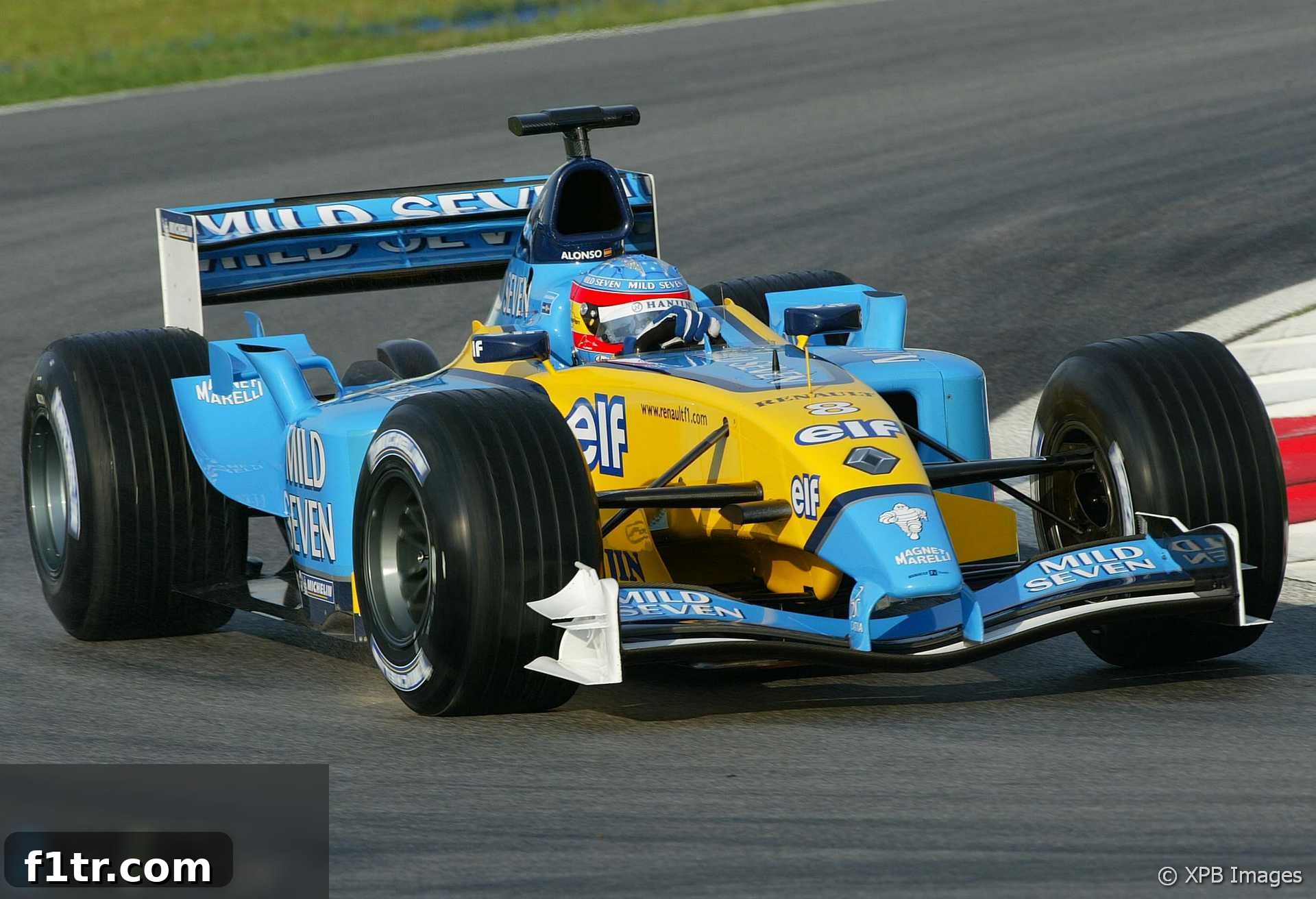
The exhilarating world of Formula 1, renowned for its relentless pursuit of speed and precision, constantly seeks to optimize every aspect of its race weekends. A recurring challenge, particularly pronounced on shorter circuits, is the issue of traffic congestion during qualifying sessions. This often leads to frustrating near-misses, compromised lap times, and potential safety hazards. In response to this growing concern, several prominent drivers, spearheaded by two-time world champion Fernando Alonso, have vocalized a strong desire to revive the “one-shot qualifying” format, a system last seen in F1 between 2003 and 2005.
The call for this format change gains particular urgency around events like the Austrian Grand Prix, hosted at the iconic Red Bull Ring. Known for its incredibly short lap times, the Red Bull Ring naturally becomes a crucible for traffic problems. Over the years, this circuit has witnessed numerous heart-stopping incidents in its final sector, where cars frequently bunch up. A prime example occurred in 2021 when Alonso himself narrowly avoided a collision with then-Aston Martin driver Sebastian Vettel, an incident that ultimately thwarted his chances of advancing to Q3. The complexity of managing track space is further exacerbated when a sprint event is on the schedule, as was the case at the Austrian round this season, requiring two distinct qualifying sessions and effectively doubling the traffic challenge for drivers.
Advert | Become a Supporter & go ad-free
The Resurgence of One-Shot Qualifying: A Solution to Gridlock?
Fernando Alonso, a veteran of the sport and a driver known for his strategic thinking, openly shared his views on how Formula 1 could effectively address the persistent traffic conundrum in qualifying. His primary suggestion points directly to a return to the single-lap qualifying system. “It is a topic every weekend, especially at short circuits,” Alonso acknowledged. “There are a few options to improve this. One is single-lap qualifying, like in the past. That would be ideal in my opinion, because only one car is on track.”
Alonso articulated several compelling advantages beyond just traffic mitigation. He highlighted the potential for “full TV coverage for that lap for everyone’s sponsors and things like that.” This would provide unparalleled exposure for team partners, ensuring every single qualifying attempt receives undivided attention from broadcasters and viewers alike. Furthermore, Alonso reminisced about the “little bit of drama” this format introduced, particularly when weather conditions shifted during a session. Such changes could lead to “different cars on pole position, different names,” injecting an unpredictable element that often thrilled fans and challenged teams. For Alonso, this blend of safety, spectacle, and sponsor value makes one-shot qualifying his “preferred option.”
Drivers Unite: A Chorus for Change
Alonso is far from alone in his advocacy for the one-shot format. Several other high-profile drivers have echoed his sentiments, demonstrating a growing consensus within the paddock. Among them is Ferrari’s Carlos Sainz Jnr, who enthusiastically supports the idea, particularly as a potential trial for sprint weekends.
“Single-lap qualifying is maybe something to experiment with, as Fernando said, also maybe in sprint weekends as to try if it would work,” Sainz commented. The Spanish driver elaborated on the unique thrill it would offer from a competitor’s perspective: “I personally was a big fan of it, because I do like that feeling of suddenly having the whole track for you and having the pressure to perform only in one lap. I think that would be really good fun for us. I think for our sponsors and for everyone.” This sentiment underscores the pure, unadulterated challenge that a single qualifying lap presents – a true test of a driver’s ability to extract maximum performance under immense pressure.
Advert | Become a RaceFans supporter andgo ad-free
Sainz also touched upon the technological advancements that could transform one-shot qualifying into an even greater spectacle for television audiences. He envisioned broadcasters leveraging modern graphics to enhance the viewing experience. “Maybe for the TV it would be a bit boring for you, I don’t know, it depends on the technology. You also have to animate that single lap, if you can put a ghost car of the fastest lap,” he suggested. He believes that with “the technology that we have nowadays, something like that could be achievable with the mini sectors, with the ghost cars, with that kind of stuff that I think we should look into.” This forward-thinking approach suggests that the format, if reintroduced, could be significantly more engaging than its previous iteration, using real-time data and visual aids to immerse viewers in the drama of each individual qualifying attempt.
Beyond One-Shot: Exploring Alternative Solutions
While one-shot qualifying garners significant support, Carlos Sainz has also persistently championed another innovative solution to manage traffic in the initial phase of qualifying, particularly on confined circuits. He advocates for splitting Q1 into two distinct groups, a system successfully employed by Formula 2 in challenging venues like Monaco. Sainz previously raised this idea, though it was met with some skepticism from other drivers. Nevertheless, he firmly believes the concept holds considerable merit and offers a more immediate, “shorter-term solution.”
“I think the shorter-term solution would be to at least do Q1 in a split qualifying group – ten cars, one from each team,” Sainz explained. His reasoning is sound: “I think by Q2 the traffic already improves quite a bit. Q3 is not a problem, so it would be only short tracks in Q1, maybe divide the session by half and do eight minutes with one group, eight minutes with another group.” This targeted approach would specifically address the most congested part of qualifying on the most problematic tracks, potentially offering a safer and fairer environment without overhauling the entire format.
Advert | Become a RaceFans supporter andgo ad-free
Adding to the chorus for single-lap qualifying, Valtteri Bottas sees it as an ideal format specifically for setting the grid for sprint races. The current sprint qualifying arrangement, while shorter than traditional qualifying, still follows a similar multi-car-on-track structure, which means it inherits the same traffic woes. Bottas’s vision for sprint qualifying is straightforward: “I would be personally a big fan of just one lap qualifying, like everyone would do one lap in maybe a random order or something.” This would differentiate the sprint weekend experience and potentially offer a more thrilling and less chaotic preamble to the sprint race itself.
The Counterpoint: Concerns and Traditional Perspectives
Despite the growing enthusiasm for one-shot qualifying, not all drivers are convinced it is the optimal solution for Formula 1. Reigning world champion Max Verstappen, while acknowledging the “quite cool” aspect of the format, expressed significant reservations. His primary concern revolves around the concept of “track evolution.”
Track evolution refers to the phenomenon where the racing surface progressively becomes faster as more rubber is laid down by cars, and debris is cleared. This means that drivers setting laps later in a qualifying session often benefit from a ‘greener’ and faster track compared to those who ran earlier. In a one-shot format, this could lead to significant unfairness, where a driver’s potential qualifying position is dictated more by their randomly assigned slot than their pure pace. Verstappen highlighted this potential imbalance, stating he is “not sure it’s the best idea.”
Verstappen also offered a more traditional perspective on the traffic issue. “There is always traffic, but this has been Formula 1 as well – you just have to try and manage it,” he asserted. While acknowledging that “some tracks of course are a bit better than others,” he concluded by describing it as “a tricky one.” This view suggests that managing traffic is an inherent skill and challenge within Formula 1, and perhaps not something that requires a complete overhaul of the qualifying structure. It highlights the tension between preserving the existing challenges of the sport and implementing changes for perceived improvements in safety or spectacle.
Become a RaceFans Supporter
RaceFans is run thanks in part to the generous support of its readers. By contributing £1 per month or £12 per year (or the same in whichever currency you use) you can help cover the costs of creating, hosting and developing RaceFans today and in the future.
Become a RaceFans Supporter today and browse the site ad-free. Sign up or find out more via the links below:
- Become a RaceFans Supporter
- RaceFans Supporter FAQ
The Ongoing Debate: Balancing Tradition, Safety, and Spectacle
The discussion surrounding qualifying formats in Formula 1 is a perennial one, reflecting the sport’s continuous effort to find the perfect balance between preserving its rich history and adapting to modern demands. The call for one-shot qualifying, spearheaded by experienced drivers like Fernando Alonso and passionately supported by others like Carlos Sainz and Valtteri Bottas, underscores a genuine concern about driver safety and the quality of the sporting spectacle. Traffic management, particularly on compact circuits and during congested sprint weekends, remains a significant challenge that compromises both performance and safety.
While the arguments for a return to single-lap qualifying are compelling – promising clear tracks, enhanced TV coverage, and a dramatic test of individual skill – Max Verstappen’s counterarguments regarding track evolution and the inherent challenge of traffic management highlight the complexities of such a decision. Any significant format change in Formula 1 must navigate a delicate balance of driver preference, fan engagement, team logistics, and fairness across all conditions. The FIA and Formula 1 management face the unenviable task of weighing these diverse perspectives to forge a qualifying system that is not only thrilling and safe but also equitable and reflective of the pinnacle of motorsport. As the sport continues to evolve, the debate over the optimal qualifying format will undoubtedly persist, shaping the future landscape of Grand Prix weekends.
Advert | Become a RaceFans supporter andgo ad-free
2023 Austrian Grand Prix
- Mercedes left scratching heads by lack of performance at Austrian GP
- Verstappen’s determination to grab every point makes him a record-breaker
- Austrian GP track limits farce was avoidable like ‘IndyGate’ and Spa 2021 – Brown
- Alpine now “definitely beatable” for McLaren after upgrade – Brown
- Paddock Diary: 2023 Austrian Grand Prix
Browse all 2023 Austrian Grand Prix articles