WEC Hypercar Grid Expands to 13 Cars for Thrilling Spa Showdown
The highly anticipated third round of the FIA World Endurance Championship (WEC), the Six Hours of Spa-Francorchamps, is poised to be an even more electrifying event than initially expected. Endurance racing enthusiasts are abuzz with the news that the prestigious Hypercar class will swell to an impressive 13 entries for the Belgian endurance classic. This significant expansion marks a pivotal moment for the burgeoning top tier of sports car racing, showcasing its growing appeal and the fierce competition ahead, especially as teams gear up for the ultimate challenge: the 24 Hours of Le Mans.
Two new contenders are set to join the fray at Spa, adding considerable depth and intrigue to an already star-studded grid. These additional entries come from the renowned privateer outfit Jota Sport, bringing a further Porsche 963, and a strategic second car from the factory Cadillac team. Their inclusion underscores a dynamic shift in the WEC landscape, promising an unforgettable battle on one of the world’s most iconic circuits. While 11 hypercars set the stage at the season-opening 1000 Miles of Sebring and are confirmed for the upcoming Six Hours of Portimão on April 16th, the Spa event on April 29th will offer a tantalizing glimpse into the future of the Hypercar class, particularly with the expanded field serving as crucial preparation for the legendary Le Mans 24 Hours in June.
Advert | Become a Supporter & go ad-free
Jota Sport’s Bold Leap into the Hypercar Realm
Jota Sport has long been a formidable name in endurance racing, with a decorated history in the LMP2 class, including multiple championship wins and victories at Le Mans. Their transition to the Hypercar class with the Porsche 963 marks an ambitious and exciting new chapter for the British squad. This move signifies a burgeoning trend where established privateer teams, known for their operational excellence and strategic acumen, are stepping up to challenge factory giants in the pinnacle of endurance racing.
The team’s journey to their Hypercar debut has been meticulously planned. While awaiting the delivery and comprehensive testing of their brand-new Porsche 963 LMDh machine, Jota Sport continued to demonstrate their prowess in the LMP2 category. They competed in and ultimately triumphed at the 1000 Miles of Sebring, participating as a non-points scoring entry with a stellar driver lineup featuring David Beckmann, the seasoned Will Stevens, and promising talent Yifei Ye. This strategic decision allowed the team to remain sharp, test their operational structure, and ensure their drivers were fully integrated into the WEC rhythm.
The same approach will be applied for the second round at the Algarve International Circuit in Portimão. For this event, Formula E champion Antonio Felix da Costa will replace Beckmann in the LMP2 car, further showcasing Jota’s ability to attract top-tier talent. Da Costa’s inclusion is particularly significant as he, alongside Stevens and Ye, will form the highly anticipated driver trio for Jota’s Porsche 963 when it makes its official Hypercar debut at Spa-Francorchamps. This driver lineup brings a potent mix of speed, experience, and championship-winning pedigree, making Jota a team to watch closely as they enter the hyper-competitive class.
The anticipation surrounding Jota’s top-class debut at Spa was widely held, given the logistical challenges and delivery timings associated with acquiring and preparing a cutting-edge Hypercar. Their commitment to meticulous preparation, even if it meant delaying their entry into the top tier, speaks volumes about their professionalism and ambition to be competitive from day one. This strategic delay, now culminating in the Spa debut, positions them as a credible threat rather than a mere participant.
Cadillac’s Strategic Double-Down for Le Mans Preparation
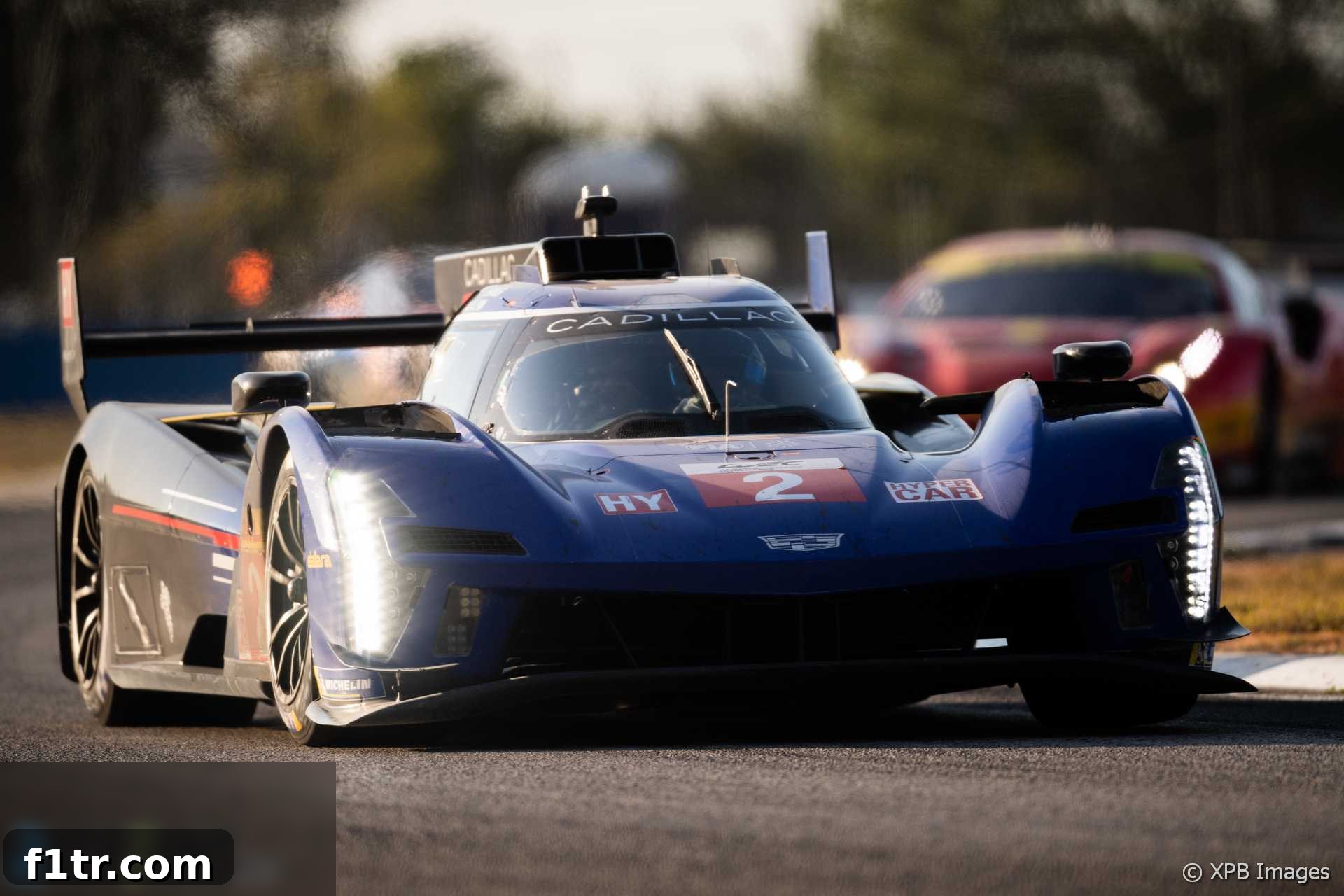
While Jota’s entry was expected, the second addition to the Hypercar entry list for Spa comes as a strategic surprise, signaling Cadillac’s intensified commitment to their global endurance racing program. The Chip Ganassi Racing-run works Cadillac team embarked on this year with an ambitious dual-series strategy: deploying two of its formidable Cadillac V-Series.R LMDh cars in the IMSA WeatherTech SportsCar Championship, while simultaneously fielding one vehicle full-time in the WEC. The initial plan also included bringing the second IMSA-based Cadillac to the most prestigious race of all, the 24 Hours of Le Mans, in June.
However, demonstrating remarkable agility and a proactive approach to maximizing their Le Mans readiness, Cadillac has now opted to enter that second car, chassis number 02, into the Six Hours of Spa. This decision significantly elevates their presence and testing opportunities. This car, which has already showcased its pace and reliability in IMSA races, is regularly piloted by an all-star lineup comprising the experienced Sébastien Bourdais, four-time IndyCar champion Scott Dixon, and the highly consistent Renger van der Zande. Their collective talent and deep understanding of endurance racing mechanics make this second Cadillac a formidable entry, immediately raising the competitive bar for the Spa event.
The rationale behind this expanded effort was articulated by Laura Wontrop Klauser, sports car racing program manager for General Motors, Cadillac’s parent company. “We’re excited for the opportunity to bring another Cadillac to the race at Spa,” Klauser stated. “Any opportunity that we have to prepare for Le Mans within the WEC rules and regulations is great. This will get the team even more ready to tackle that race as well as an opportunity to bring more Cadillac participation to the European race.” Her words underline the immense value of gaining additional track time and operational experience within the specific WEC environment and against its unique set of competitors and regulations. Spa, with its challenging layout and often unpredictable weather, offers an ideal simulated environment for Le Mans, allowing the team to fine-tune strategies, pit stop procedures, and driver changes under race conditions.
This strategic decision by Cadillac is not without its logistical complexities. The Spa round takes place on April 29th, creating a direct clash with the IndyCar Series event at Barber Motorsports Park, where Scott Dixon is a key contender for Chip Ganassi Racing. Consequently, Dixon will be unavailable to race the Cadillac at Spa, necessitating a substitute driver. While the identity of Dixon’s replacement alongside Bourdais and van der Zande has not yet been announced, this situation highlights the intense demands on top-tier drivers who often balance multiple high-profile racing commitments. The choice of replacement driver will be critical, as they will need to quickly integrate into the team and adapt to the Cadillac V-Series.R on a challenging circuit, all while contributing to vital Le Mans preparation.
Spa-Francorchamps: The Ultimate Le Mans Proving Ground
The Circuit de Spa-Francorchamps is revered worldwide as one of motorsport’s most demanding and iconic venues. Known as the “Ardennes Rollercoaster,” its undulating terrain, high-speed sections like Eau Rouge and Radillon, and technical corners such as Pouhon, present an unparalleled test of both car and driver. For the Hypercar class, especially with an expanded grid of 13 entries, Spa serves as much more than just another race; it’s a critical proving ground and a vital dress rehearsal for the 24 Hours of Le Mans.
The sheer length and variety of Spa’s layout allow teams to assess their car’s aerodynamic efficiency, mechanical grip, and engine performance across a wide range of conditions. Furthermore, the often-unpredictable Belgian weather, which can switch from bright sunshine to heavy rain in a matter of minutes, adds another layer of complexity, mirroring the capricious nature of Le Mans. Successfully navigating these challenges at Spa provides invaluable data and confidence for the longer, more gruelling race at La Sarthe.
For Cadillac, in particular, running a second car at Spa offers double the data acquisition and an enhanced opportunity to evaluate different setups, tire strategies, and driver rotations in a competitive environment. For Jota Sport, it’s their crucial entry point into Hypercar, allowing them to benchmark their Porsche 963 against established competitors like Toyota, Ferrari, Peugeot, and the factory Porsche efforts. The increased car count also means more traffic management scenarios, higher strategic pressure, and an even greater spectacle for fans.
The Broader Implications for the WEC Season and Hypercar Class
The expansion of the Hypercar grid at Spa is a powerful testament to the health and growing allure of the World Endurance Championship’s top category. The convergence of regulations (LMH and LMDh) has successfully attracted a diverse array of manufacturers and privateer teams, fostering an era of unprecedented competition. This increased participation not only enhances the on-track spectacle but also elevates the series’ global profile, drawing in new fans and sponsors.
The competitive balance in WEC is largely managed through the “Balance of Performance” (BoP) system, designed to level the playing field between different car concepts and manufacturers. As more entries join the grid, the BoP calculations become even more critical and complex, ensuring that no single car holds an insurmountable advantage. The performance showcased by Jota’s Porsche and Cadillac’s second entry at Spa will undoubtedly influence future BoP adjustments, shaping the competitive landscape for the remainder of the season, particularly for Le Mans.
With major manufacturers like Toyota, Ferrari, Peugeot, and Porsche already vying for supremacy, the addition of Jota and a second Cadillac further intensifies the battle. Each race becomes a strategic chess match, not just for points, but for psychological advantage and crucial developmental data. The Spa event, therefore, is not merely a standalone race but a significant waypoint on the road to the WEC championship title and, most importantly, the coveted crown of Le Mans winner.
Conclusion: A New Era of Endurance Excitement
The Six Hours of Spa-Francorchamps is shaping up to be a landmark event for the FIA World Endurance Championship. The expansion of the Hypercar grid to 13 formidable entries, fueled by Jota Sport’s anticipated debut with the Porsche 963 and Cadillac’s strategic decision to field a second V-Series.R for Le Mans preparation, signifies a vibrant and highly competitive era for endurance racing. These developments promise an enhanced spectacle for fans, critical testing opportunities for teams, and a compelling narrative that builds towards the season’s pinnacle event, the 24 Hours of Le Mans.
As the WEC continues to attract top manufacturers, elite teams, and world-class drivers, the competition at the front of the field only intensifies. The additions at Spa are a clear indicator of this upward trajectory, setting the stage for what promises to be an unforgettable race and a thrilling conclusion to the 2023 WEC season. All eyes will be on Spa on April 29th, as the Hypercar class prepares to deliver another chapter in its burgeoning legacy.
Advert | Become a RaceFans supporter andgo ad-free
Related World Endurance Championship Articles
- WEC cancels its Qatar season-opener due to US-Iran war
- Porsche to end WEC Hypercar programme after just three seasons
- Mercedes won’t return to Le Mans because “we don’t like Balance of Performance” – Wolff
- “Luck” needed to win Le Mans because of Balance of Performance – Verstappen
- McLaren finally confirms it will enter the World Endurance Championship in 2027
Browse all World Endurance Championship articles