Formula 1 stands on the precipice of a monumental shift, potentially deviating from a cherished tradition that has defined its essence for over seven decades. Tomorrow, the sport’s governing bodies and teams are set to deliberate on a contentious proposal aimed at radically altering the qualifying format, a move that could fundamentally reshape the identity of Grand Prix weekends.
Advert | Become a Supporter & go ad-free
The concept of introducing qualifying races, championed by F1’s motorsport director Ross Brawn, seeks to replace the conventional timed qualifying session at up to three events on the 2020 F1 calendar. Under this innovative yet divisive plan, the starting grid for selected Grands Prix would be determined not by a driver’s fastest single lap, but by the outcome of a short sprint race. The starting order for these sprint races would, in turn, be controversially set as the reverse of the championship standings. Should these trials prove successful, the sport’s leadership envisions a future where more Grand Prix events might adopt this sprint race format, moving further away from traditional qualifying.
For context, consider the recent Japanese Grand Prix, the 1,014th round in the illustrious history of the world championship. Like every single event before it, from Silverstone in 1950 to Suzuka in 2019, it featured a dedicated session where drivers pushed their machines to the absolute limit in pursuit of the fastest individual lap – the ultimate determinant of their starting position. This foundational aspect of Formula 1, the pure, unadulterated quest for single-lap speed, has remained largely untouched throughout the sport’s dramatic evolution.
Indeed, while Formula 1 has periodically experimented with the minutiae of the qualifying format, the core principle of drivers battling against the clock for pole position has been an unyielding constant. We’ve witnessed various iterations, from multiple timed sessions to single-lap shootouts, but the essence has always been preserved: the opportunity for spectators to marvel as drivers extract every ounce of performance from their cars on a single flying lap. The sport briefly ventured into an unpopular aggregate qualifying format in 2005, combining two flying lap times, but this experiment was swiftly abandoned after only half a dozen races, a testament to its rejection by fans and teams alike. Even the iconic Indianapolis 500, when it formed part of the world championship, set its grid based on an average of four flying laps – a unique take on timed performance, but still firmly rooted in the concept of pure speed determining starting order.
These minor deviations aside, the pursuit of pole position stands as one of the few elements of Formula 1 that has remained fundamentally consistent since the championship’s inception in 1950. In the intervening decades, the sport has undergone profound, often revolutionary, changes. We no longer see four-car teams, races that span 500 kilometres without interruption, or the intense rivalries between multiple engine formats and tyre suppliers competing simultaneously. Yet, the thrilling spectacle of qualifying, a direct test of man and machine against the clock, has steadfastly endured.
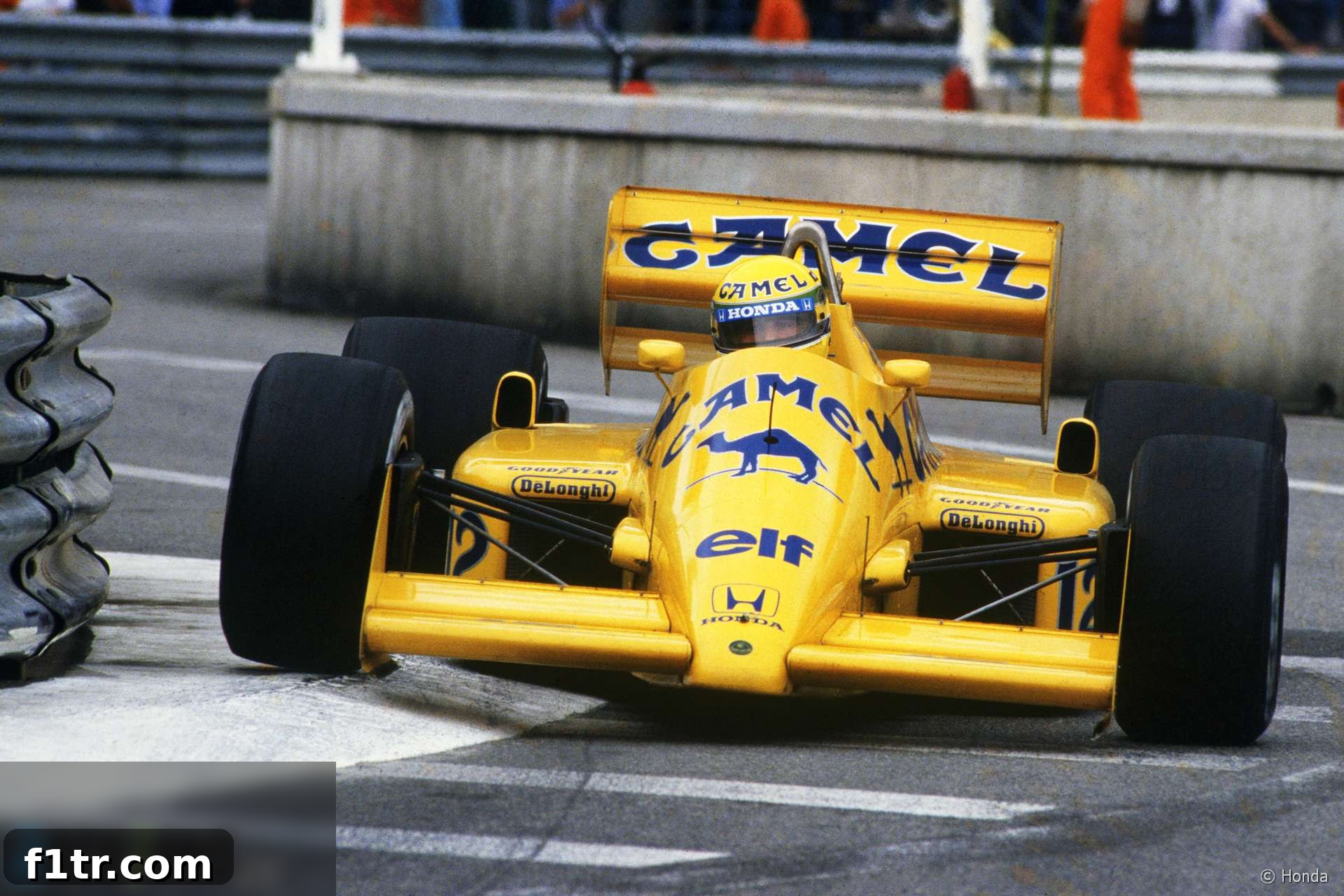
Over this vast span of time, the qualifying session has transcended its functional purpose, evolving into an indispensable part of F1’s intrinsic appeal and identity. It is inextricably linked to the legends of the sport, most notably the revered Ayrton Senna. His breathtaking qualifying laps, often bordering on transcendental, cemented his reputation and endeared him as a hero to millions worldwide. To contemplate dropping the traditional qualifying session from race weekends is to strip today’s drivers of the very stage on which they can measure their talent and courage against such a towering legacy, and to deny fans the chance to witness new legends forge their own paths through sheer speed.
Advert | Become a RaceFans supporter andgo ad-free
In the modern era of Formula 1, qualifying has become one of the rare occasions where fans truly get to see the cars driven to their absolute ultimate potential, unhindered by the strategic compromises of a race. Current regulations mandate that gearboxes must endure six races and engines seven (or even eight in some cases for the upcoming season), forcing drivers and teams to meticulously manage their machinery. During a Grand Prix, drivers are painfully aware of the need to nurse their cars whenever possible, conserving components to ensure reliability and performance over a grueling race distance. This inherent constraint means that the raw, unadulterated pace of an F1 car is seldom fully unleashed for extended periods during the main event.
However, the single, all-important flying lap that determines their grid position is simply too critical for such caution. Qualifying is the moment when we witness engines fully cranked up, operating at maximum power, and drivers putting absolutely everything on the line. They flirt with the absolute limits of grip, braking, and acceleration, demonstrating a breathtaking display of precision, courage, and car control that is unmatched at any other point during a race weekend. It’s a pure test of skill, engineering, and nerve, unfolding in a mere minute and a half of visceral excitement.
Beyond the sheer spectacle, qualifying makes an invaluable contribution to our broader understanding of the sport. It serves as the purest and most accurate means of benchmarking the performance of both teams and drivers. In Formula 1, where direct, like-for-like comparisons are incredibly difficult due to varying strategies, fuel loads, and tyre choices during a race, qualifying provides a rare and pristine opportunity. It allows us to measure pairs of the world’s best drivers against each other in identical machinery, revealing profound insights into their individual talents and adaptability. The fascinating see-sawing qualifying scoreline between Sebastian Vettel and Charles Leclerc at Ferrari, for instance, has offered a compelling narrative about the changing balance of power within the Scuderia, while one-sided contests, though less dramatic, speak volumes about dominant partnerships or underlying car characteristics.
Crucially, qualifying also unequivocally demonstrates which team has constructed the quickest car over a single lap. In a sport intrinsically driven by technological advancement and engineering prowess, what could be more fundamental to our understanding of Formula 1 than knowing, definitively, who has built the fastest machine? This insight is vital for engineers, strategists, and fans alike, forming the backbone of technical analysis and competitive intrigue.
Despite its enduring appeal and inherent value, traditional qualifying sometimes faces criticism from a vocal minority who lament its perceived predictability. “F1 lines its cars up with the fastest at the front then wonders why no one overtakes anyone,” they complain, suggesting it leads to processional races. Yet, this is a rather specious criticism, predicated on the presumption that drivers seldom qualify below their car’s true potential, or that starting at the front guarantees an easy victory. Even in an era where the top three teams might enjoy a significant performance advantage over their rivals, the facts consistently prove this assumption is inaccurate. Driver errors, unexpected car setups, changing track conditions, and moments of genius mean that the grid is rarely a perfect reflection of raw car pace alone.
Moreover, extracting the ultimate performance from a car for a single, incandescent lap and mastering a full race distance with its attendant strategic complexities, tyre management, and endurance demands are two vastly different skill sets. These distinct challenges lie at the very heart of Formula 1’s unique appeal and test of versatile talent. This crucial distinction, alongside factors like mechanical unreliability, explains why iconic figures like Senna often achieved more pole positions than race victories, while strategic masters such as Alain Prost accumulated more wins than poles. Both skills are integral to the sport’s rich tapestry.
Advert | Become a RaceFans supporter andgo ad-free
The reverse-grid qualifying races proposal has been aggressively marketed as an exciting opportunity to inject more action and unpredictability into Grand Prix weekends. The underlying motivation appears to be a desire to artificially ‘spice up’ the racing by forcing faster cars to fight through the field. Interestingly, the rather significant implication – that this scheme would involve completely scrapping traditional qualifying sessions at the races where it is introduced – has been conspicuously downplayed in official communications, almost as if to obscure the true nature of the proposed change.
However, when the full implications of this radical plan are presented clearly to the dedicated F1 fanbase, it becomes unequivocally apparent that the idea is met with significant disapproval. At the time of writing, a compelling over two-thirds of RaceFans readers have strongly voiced their opposition to the plan to scrap traditional qualifying at three races next year. This overwhelming sentiment from the most passionate segment of the F1 audience should serve as a stark warning to the sport’s decision-makers.
Formula 1 regularly conducts surveys among its fanbase via its Fanvoice website, soliciting opinions on potential rule changes and future directions. Curiously, at the time of compiling this analysis, there appears to be no official Fanvoice poll specifically addressing the highly controversial subject of qualifying races. One would be immensely interested to see the outcome of a direct, word-for-word replication of our own independent poll, as it would likely underscore the widespread fan dissent.
Ultimately, it is the teams, not the fans, who hold the power to decide whether qualifying is dropped for three races in the upcoming season. A unanimous agreement among all ten team principals is required for such a fundamental rule change to be implemented. “If it is not unanimous it will not happen,” stated Haas team principal Guenther Steiner on Sunday, highlighting the challenging hurdle facing the proposal. However, Steiner also cautioned against premature conclusions: “I don’t know if people will be convinced, but that’s a decision for Wednesday. There was more than once that somebody didn’t want something and then still it happened. So I wouldn’t get ahead of myself and say it’s not going to happen.”
He further elaborated on the complex dynamics at play: “There are people which have got opinions, concerns about it. But that decision is on Wednesday so let’s see what happens.” This suggests that despite public reservations, internal pressures and the allure of potential ‘excitement’ could sway some teams. Let us hope, fervently, that among the ten influential team principals, there is at least one who truly appreciates the profound value and historical significance of what will be irrevocably lost if Formula 1 thoughtlessly casts aside this foundational piece of its heritage, even if it is merely for a trial period of three races. The preservation of F1’s core identity demands a thoughtful, respectful approach to its defining elements, and traditional qualifying is undeniably one such pillar.
Quotes: Dieter Rencken
Go ad-free for just £1 per month>> Find out more and sign up
2019 F1 season
- Crying in the Melbourne car park at 2019 grand prix was my career low – Ocon
- McLaren Racing reports reduced £71 million loss in 2019
- Kvyat: Hockenheim podium last year was “my biggest achievement” so far
- How the FIA’s new encrypted fuel flow meter targets Ferrari’s suspected ‘aliasing’ trick
- “He smashed my office door”: 23 must-see moments from ‘Drive to Survive’ season two
Browse all 2019 F1 season articles