As the IndyCar series returns to the vibrant streets of Detroit following the grandeur of the Indianapolis 500, the motorsport world is abuzz with fresh and exciting developments. From a dominant practice performance by a seasoned champion to a rising star’s unexpected triumph in Japan and critical discussions about car dynamics, this comprehensive racing roundup brings you up to speed with the most captivating stories across the globe.
IndyCar Detroit Grand Prix: Power Dominates Practice, Alesi’s Super Formula Rise, and Aero-Screen Impact on Street Circuits
Advert | Become a Supporter & go ad-free
Will Power Sets Blistering Pace in Detroit Grand Prix Practice Session
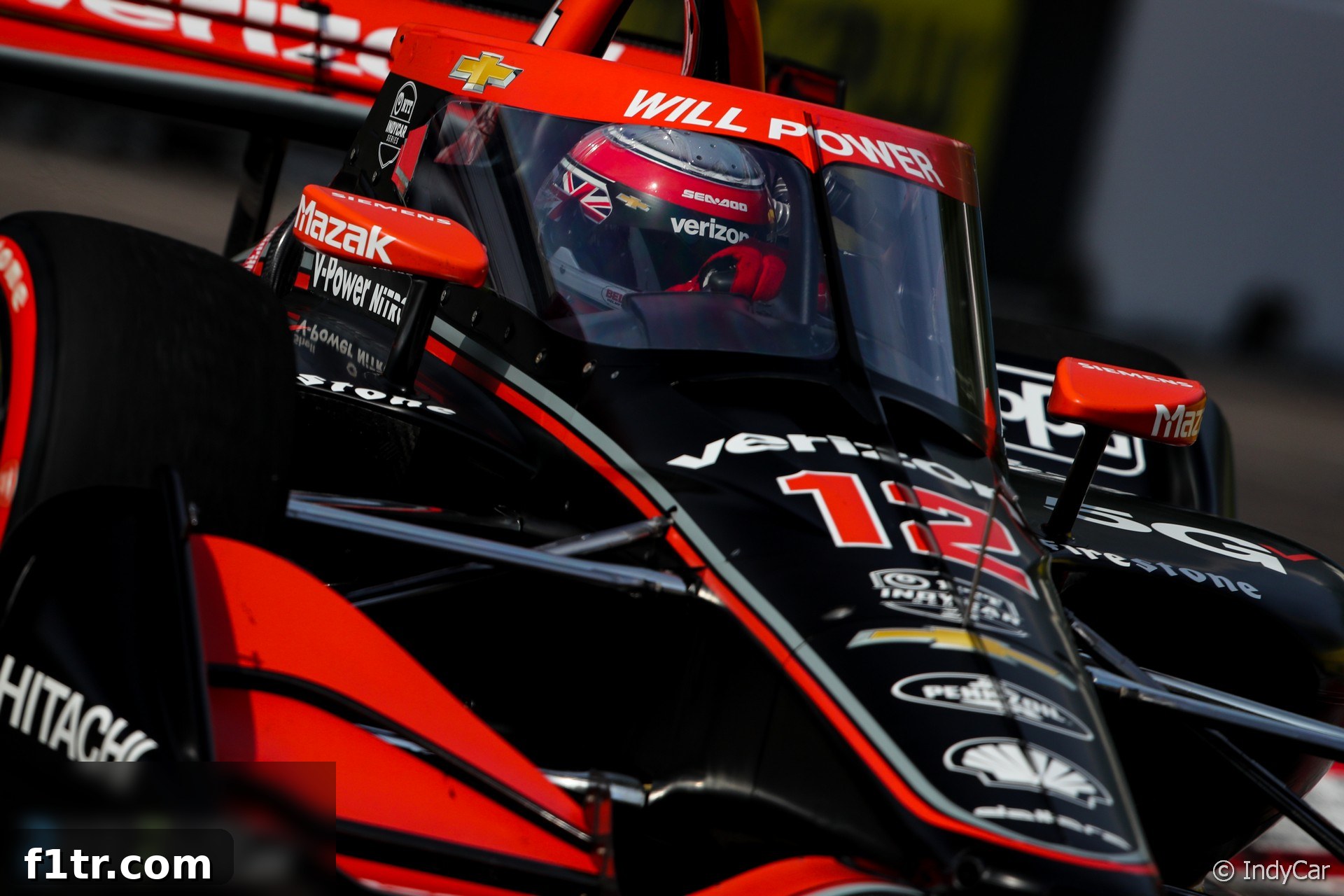
The highly anticipated Detroit Grand Prix double-header kicked off with Penske’s Will Power demonstrating formidable speed and precision, topping the single practice session by a significant margin of 0.1523 seconds. This early display of dominance sets a thrilling precedent for the challenging street circuit event, underscoring Power’s exceptional ability to master tight and technical layouts, which are a hallmark of his illustrious career.
Navigating the Demanding Detroit Street Circuit
The iconic Belle Isle street circuit in Detroit is renowned for its unforgiving nature, presenting drivers with a unique blend of tight corners, varied surface conditions, and the ever-present proximity of concrete barriers. These characteristics demand absolute precision, acute car control, and unwavering courage from every competitor. Adding a layer of complexity for this particular session were the warm afternoon temperatures and the considerable amount of rubber already laid down by preceding IMSA and Indy Lights sessions. Despite the track being “rubbered in” by other series, IndyCar drivers initially found the surface surprisingly slippery, a common phenomenon as different tire compounds deposit varying types of rubber, altering grip levels unpredictably and requiring quick adaptation.
The session was not without its early drama. Both Penske’s Scott McLaughlin and Chip Ganassi Racing’s Jimmie Johnson experienced spins that brought out the red flags, temporarily halting proceedings as the track needed to be cleared. Intriguingly, McLaughlin had actually held the top spot on the timesheets just prior to his incident, underscoring the razor-thin margins and high risks inherent in pushing the limits on a challenging street circuit. Such early disruptions are a familiar sight in motorsport, as drivers eagerly push boundaries to understand the track’s nuances and fine-tune their car setups for optimal performance.
Once the track was cleared and the session resumed, the remaining period unfolded without further major incidents, allowing drivers to settle into a rhythm. As the session progressed and the track conditions evolved, lap times tumbled rapidly. Over the course of the session, an impressive four seconds were shaved off the fastest time, a testament to the drivers’ ability to adapt swiftly and the continuous improvement of track grip. Andretti Autosport’s Ryan Hunter-Reay and Alexander Rossi, alongside McLaren SP’s Patricio O’Ward, all spent considerable time at the top of the leaderboard, showcasing the intense competition and the dynamic nature of practice sessions. O’Ward, in particular, held the provisional fastest time for an extended period while many competitors were in the pits, meticulously strategizing their final runs.
However, as the clock wound down into the crucial final 10 minutes, it was Will Power who truly found his optimal stride. His smooth, precise, and calculated driving allowed him to extract maximum performance from his Chevrolet-powered machine, ultimately securing the fastest lap of the session. Alexander Rossi briefly regained the top spot shortly before AJ Foyt Racing’s veteran Frenchman, Sébastien Bourdais, emerged as Power’s closest rival on pace, demonstrating his enduring skill and adaptability. Yet, Power maintained his slight edge, ultimately holding onto the fastest time, with O’Ward slotting back into third place behind Bourdais. This tight battle at the front promises an exhilarating and unpredictable weekend of racing on the streets of Detroit.
Giuliano Alesi’s Fairytale Victory and Continued Ascent in Super Formula
In a story that has captivated the attention of the motorsport world, Giuliano Alesi, the talented son of former Formula 1 star Jean Alesi, has been confirmed to race in the upcoming fourth round of the Super Formula season. This announcement follows his sensational and utterly unexpected victory in only his second-ever start in Japan’s premier single-seater series, a triumph that was as inspiring as it was surprising.
A New Chapter and Strategic Pivot in Japan
Alesi’s racing career took a significant and strategic turn at the beginning of this year when he made the bold decision to relocate to Japan. There, he embarked on a dual campaign, joining the ranks of Super Formula Lights, a highly competitive Formula 3-level series, and also entering the equally challenging Super GT sportscar series. His move to Japan represented a fresh start and a deliberate pivot in his racing journey after several years competing in European junior categories and his tenure with the esteemed Ferrari Driver Academy.
The opportunity to compete in Super Formula, a series renowned for its incredibly fast cars and high level of competition, arose due to the European commitments of seasoned ex-Formula 1 driver Kazuki Nakajima, who typically pilots the TOM’S team car. Alesi was called up on short notice to fill Nakajima’s seat for the second round of the season at Suzuka. Despite the significant challenge of adapting to the powerful Super Formula machinery with minimal preparation, Alesi impressed by qualifying a commendable eighth and securing a respectable ninth-place finish on his debut. This initial performance hinted at his latent potential, but few could have predicted the extraordinary outcome that was just around the corner.
From Substitute to Victor: A Stunning Autopolis Performance
With Nakajima still unavailable for the subsequent Autopolis round due to ongoing travel restrictions, Alesi was handed another precious chance to prove himself in Super Formula. What unfolded was a truly remarkable display of raw talent, unwavering composure, and exceptional racecraft. In a rain-shortened race, Alesi not only secured a sensational pole position but then masterfully converted it into a stunning victory. This unexpected win sent shockwaves through the Super Formula paddock, immediately establishing Alesi as a formidable talent capable of performing under immense pressure and in the most challenging conditions. His ability to adapt rapidly to a new car and series, coupled with his strong performance in adverse weather, unequivocally highlighted his inherent racing prowess and mental fortitude.
With ongoing international travel restrictions continuing to sideline Kazuki Nakajima, Alesi now has the invaluable opportunity to build significantly on his Autopolis success at Sportsland Sugo. This continued stint in Super Formula, running concurrently with his ongoing title bid in the SF Lights support series, provides a crucial platform for him to further develop his skills, gain invaluable experience at the highest level of Japanese motorsport, and solidify his burgeoning reputation on the international stage. His inspiring story serves as a powerful reminder that perseverance, seizing unexpected opportunities, and unwavering dedication can indeed lead to the most extraordinary and rewarding outcomes in the fiercely competitive world of professional racing.
IndyCar Drivers Anticipate Significant Driveability Shift in Detroit
The return of IndyCar to Detroit after a one-year hiatus, coupled with the permanent introduction of the revolutionary aeroscreen, is expected to create a dramatically different and challenging driving experience for competitors in this year’s double-header. Drivers from McLaren SP, Patricio O’Ward and Felix Rosenqvist, openly shared their insightful perspectives on the anticipated changes, highlighting the unique challenges of adapting to the updated track environment and car dynamics.
The Dual Impact of Time and Technological Evolution
The absence of a race in 2020 means that two full winters have passed since IndyCar last graced the storied streets of Belle Isle. This extended period without race activity often leads to significant degradation of the track surface, making it inherently bumpier, more abrasive, and ultimately more unpredictable for racing. As Patricio O’Ward elaborated, “Historically the track just keeps getting bumpier and bumpier and bumpier every year, so I feel like this year will be more of a change than what we have felt from year to year in the past because there’s been two winters on it already from the last time we were there.” This increased bumpiness will severely test car setups, driver stamina, and the integrity of the chassis, demanding a profoundly different approach to car control, suspension tuning, and optimal line choice.
The aeroscreen, a pivotal safety innovation introduced in IndyCar last year, represents another major factor influencing driveability. While it provides enhanced driver safety and has been successfully utilized on road courses and ovals, its application on tight street circuits, particularly in warm conditions, presents a distinct set of challenges. The reduced airflow inside the cockpit makes it physically tougher for drivers to manage heat and fatigue, as vividly evidenced by its impact at this year’s Grand Prix of St. Petersburg. Beyond driver comfort, the aeroscreen significantly alters the car’s aerodynamics, weight distribution, and overall center of gravity. O’Ward observed that it causes the car to “plough more than what it used to, ploughing meaning just a bunch of understeer,” indicating a noticeable shift in handling characteristics. This means the aeroscreen is “working the front axle a lot harder” than before, necessitating that teams find innovative ways to balance the car, manage tire wear (especially the front tires), and optimize their setups for a more front-biased load.
Divergent Views on the Aeroscreen’s Street Circuit Impact
Despite the general consensus that the aeroscreen fundamentally alters car dynamics, there are nuanced perspectives among drivers regarding its specific effect on the unique demands of street circuits. Felix Rosenqvist, O’Ward’s McLaren SP teammate, offered a slightly more optimistic and differentiated outlook. “I think tracks like this have been less affected by the aeroscreen,” he stated. “When we came to St. Pete for the first time, it seemed like we were going pretty quick still,” suggesting that some street circuits might inherently cope better with the changes.
Rosenqvist further elaborated that the aeroscreen’s impact might be more pronounced on faster tracks with sweeping, high-speed corners where aerodynamic balance and consistent downforce are critical over longer periods. In contrast, street circuits typically feature a series of 90-degree corners, hairpins, and relatively short straights, where the car isn’t “loaded up very long anywhere.” He concluded, “I don’t think it’s going to be a massive difference to be honest. I think it’s going to be pretty good,” implying that while engineers will undeniably need to account for the aeroscreen’s characteristics, its influence might be less disruptive on the specific stop-and-go demands of a traditional street circuit. This intriguing divergence in driver opinion sets the stage for a fascinating strategic battle over the Detroit weekend, as teams and drivers grapple with optimizing their performance under these evolving conditions.
Advert | Become a RaceFans supporter andgo ad-free
Social Media Buzz from the Motorsport World
A collection of notable posts and insightful glimpses from across Twitter and Instagram, capturing the vibrant spirit and breaking news of the motorsport community:
We’re excited to fly the Pride Flag 🏳️🌈 at 170 mph this June at the @detroitgp and @roadamerica to celebrate #pride with @DHLUS!
#DHLPRIDE #DeliveredWithPride @RyanHunterReay // @IndyCar pic.twitter.com/OLu283J33Q— Andretti INDYCAR & INDY NXT (@AndrettiIndy) June 11, 2021
Andretti INDYCAR proudly showcased their commitment to diversity and inclusion, announcing their plans to fly the Pride Flag at impressive speeds of 170 mph during the Detroit Grand Prix and Road America events in June. This initiative, in partnership with DHLUS, celebrates #pride and underscores the growing inclusivity within the fast-paced world of motorsport, championing a message of acceptance and visibility on the track.
For an intriguing behind-the-scenes look into the world of Formula 1, Williams Racing offered fans a captivating glimpse into their operations during a race weekend with their video series titled “Williams: Off Grid | Azerbaijan GP.” This feature provides an authentic perspective on the intricate planning, logistical challenges, and high-stakes decision-making that define a Grand Prix event. To experience the adrenaline and strategic depth involved, viewers can find the full video on YouTube: Watch Williams: Off Grid | Azerbaijan GP
𝗠𝗲𝗲𝘁 𝗧𝗵𝗲 𝗧𝗲𝗮𝗺 🤝
From planning and project managing to garage set-up and pack up – and all of the requests in between – meet Assistant Team Manager, @deborahlyall who makes sure @JaguarRacing crew is in top form and ready to take to the track 🙌#JaguarElectrifies pic.twitter.com/5ljUp4SXTp
— Jaguar TCS Racing (@JaguarRacing) June 11, 2021
Jaguar TCS Racing engaged with its fanbase by introducing Assistant Team Manager Deborah Lyall in their “Meet The Team” series. This feature shed light on the critical, multifaceted role she plays in ensuring the team’s seamless operations – from meticulous planning and project management to the efficient setup and pack-up of the garage. Her essential work is vital for keeping the Jaguar Racing crew in top form and ready to compete at the highest level of electric motorsport.
What a magic moment this was!
An ecstatic Jean Alesi celebrates winning his first (and only) F1 race 🤩#OnThisDay 1995 #CanadianGP 🇨🇦 pic.twitter.com/IQDIXhvRlo
— Formula 1 (@F1) June 11, 2021
Formula 1’s official account took a nostalgic turn, commemorating a truly “magic moment” in F1 history. They celebrated Jean Alesi’s ecstatic and memorable celebration after winning his first and only F1 race at the 1995 Canadian Grand Prix. This iconic victory remains a cherished highlight for many long-time fans of the sport, embodying the passion and drama of Formula 1.
For additional real-time updates and exclusive content from the pinnacle of motorsport, another F1 update could be found on Twitter, providing further insights and news from the sport’s official channels: Explore more F1 news on Twitter
- For a comprehensive guide to official F1 accounts and prominent personalities to follow and stay updated, explore the F1 Twitter Directory.
Essential Motorsport Links and News from Around the Grid
Stay informed with these captivating stories, insightful interviews, and critical updates from across the diverse world of motor racing:
Advert | Become a Supporter & go ad-free
In Conversation with Rachel Brookes (Motorsport Broadcasting)
An insightful and in-depth interview with Rachel Brookes, a pivotal and highly respected figure in Sky’s Formula 1 coverage since 2013. Now in her ninth season with the broadcast team, Brookes’s role has expanded significantly; she not only presents comprehensive coverage of Formula 2 and Formula 3 and hosts Sky’s popular magazine programme, The F1 Show, on Thursday evenings, but she also began commentating on the first Friday practice session in 2021. This compelling interview delves into the intricacies of her broadcasting career to date, explores how the unprecedented challenges of COVID-19 have impacted sports broadcasting, and covers a range of other compelling topics, offering a rare and valuable behind-the-scenes look at the demands and continuous evolution of motorsport journalism.
Read the full interview here.
Kirkwood Secures Pole Position for Indy Lights Grand Prix of Detroit (Indy Lights)
Rising star Kirkwood, a talented 22-year-old driver, continues his impressive and ambitious quest to become the first competitor in history to win championships at all three levels of the Road to Indy ladder. He laid down a dominant performance in Detroit by posting the fastest time in the morning practice session, clocking in at 1’24.2423. In the closing moments of the afternoon’s intense 30-minute qualifying session, Kirkwood found an astonishing almost full second more, ultimately topping the charts with a blistering lap of 1’23.2582, achieving an average speed of 101.612mph. This commanding performance firmly establishes him as the top contender and one to watch for the upcoming Indy Lights race in Detroit, showcasing his exceptional pace and potential.
Discover more about Kirkwood’s electrifying pole-winning effort.
Tramnitz Inherits Maiden ADAC F4 Pole After Race Control Error (Formula Scout)
A contentious and somewhat bewildering decision unfolded in ADAC F4 qualifying as Tramnitz inherited his maiden pole position following a significant error by race control. A late stoppage occurred with less than five minutes remaining in the session, at which point championship regulations explicitly dictate that on-track action should not restart. However, the race director mistakenly called for green flags, allowing drivers to return to the track for an unauthorized final push. In the ensuing scramble, Bearman capitalized, going fastest with a 1’31.021s and dramatically snatching pole from Tramnitz. The decision was later reversed by stewards, with the final result officially taken from the times set before the red flag, ensuring fairness and strict adherence to the rulebook despite the initial confusion and frustration among teams and drivers.
Uncover the full details of this race control controversy and its implications.
Meyer Shank Racing’s Meteoric Rise to the Top of IndyCar (The Checkered Flag)
Delve into the inspiring and compelling journey of Meyer Shank Racing and their remarkable, meteoric ascent in the highly competitive world of IndyCar. This insightful article highlights pivotal moments and strategic decisions that shaped their trajectory, such as the initial challenge faced by driver Harvey, who was originally slated for a coveted Indy 500 entry with Andretti in 2017. However, the unexpected announcement of Fernando Alonso securing that very seat seemed to jeopardize Harvey’s once-in-a-lifetime opportunity. Fortunately, through a crucial intervention and partnership, Harvey was informed he would still secure a ride for the iconic event with Shank, marking a pivotal moment in the team’s growing prominence and establishing their presence in the series. This piece meticulously chronicles their strategic decisions, key partnerships, and how they expertly carved out a formidable and respected presence in one of motorsport’s most challenging arenas.
Read about Meyer Shank Racing’s impressive trajectory and journey to success.
We always endeavour to credit original sources. If you have a tip for a link relating to single-seater motorsport to feature in the next RaceFans round-up please send it in via the contact form.
Advert | Become a RaceFans supporter andgo ad-free
Comment of the Day: Debating Alfa Romeo’s F1 Performance – Luck or Driver Factor?
The performance of Alfa Romeo in the current Formula 1 season has sparked considerable and passionate debate among fans and pundits alike. The team leadership firmly believes that the gains made with their C41 car this year represent a “big step forward” in terms of raw pace and potential. However, this perceived progress hasn’t been adequately reflected in the crucial points standings, with only a modest two points secured by veteran Kimi Raikkonen and Antonio Giovinazzi over the first six races of 2021. Team Principal Frédéric Vasseur attributes this disparity primarily to bad luck, suggesting their improved package is simply not yielding the deserved results due to unforeseen circumstances and unfortunate incidents on track.
Is it Luck, or Driver Performance Holding Alfa Romeo Back? A Fan’s Perspective
A compelling counter-argument, articulately put forth by RaceFans member Wsrgo, suggests that driver performance, rather than mere misfortune, might be a more significant underlying factor in Alfa Romeo’s struggle to consistently convert pace into points. Wsrgo provocatively questions whether either Kimi Raikkonen or Antonio Giovinazzi are consistently driving beyond the car’s inherent capabilities, or even consistently extracting its full potential on a semi-regular basis. This perspective draws a poignant parallel to the exceptional and often heroic performances seen from drivers like Charles Leclerc in mid to late 2018, who frequently elevated less competitive machinery with his raw talent, aggressive driving, and unwavering determination, often scoring points when least expected.
Wsrgo further contends that Alfa Romeo might have made a strategic misstep by retaining the same driver line-up for a year when technical regulations remained largely static, a period that typically rewards teams for continuity but also for incremental improvements in driver synergy and performance. This decision, it is argued, has left the team in a precarious position, potentially facing a “Haas-like choice” for the upcoming 2022 season, a period that will usher in significant rule changes and will demand not only continuity but also strong leadership and fresh talent. The commentator also raises serious concerns about the potential impact on promising young talents such as Callum Ilott and Théo Pourchaire. If experienced drivers continue to occupy seats that could otherwise be nurturing the next generation of motorsport stars, it could effectively “nix” or severely hinder the careers of these aspiring talents. The underlying sentiment is that while Kimi Raikkonen’s understandable desire to continue his “hobby” is respected, his current leadership and on-track performance might not be substantially driving the team forward, especially when weighed against the potential long-term benefits of investing in and developing fresh, hungry talent. This passionate and thought-provoking commentary highlights the complex and often difficult considerations teams face when balancing experience, current performance, and future development in the cut-throat and ever-evolving world of Formula 1.
Happy Birthday to Our Dedicated Motorsport Enthusiasts!
We extend our warmest birthday wishes to Zimkazimka and Deb Trom! We hope you both have a fantastic day filled with joy, celebration, and perhaps a touch of motorsport magic.
If you’d like to receive a special birthday shout-out in a future round-up and be celebrated by our vibrant community, please let us know your birth date by submitting it via our convenient contact form, or by adding your details to our dedicated list here. We truly love celebrating with our extended RaceFans family!
On This Day in F1: Jenson Button’s Epic 2011 Canadian Grand Prix Victory
-
A Decade Ago: Last-Lap Heroics in Montreal’s Rain-Soaked Spectacle
Ten years ago today, on June 12, 2011, motorsport fans across the globe bore witness to one of the most dramatic, unpredictable, and ultimately unforgettable races in the illustrious history of Formula 1: the Canadian Grand Prix. McLaren’s Jenson Button secured a truly sensational, last-lap victory in what transformed into an epic four-hour spectacle, indelibly marked by treacherous weather conditions, multiple incidents, and incredible twists of fate throughout the event. Starting from a lowly seventh position on a grid packed with formidable competitors, Button faced numerous setbacks and challenges during the race, including a collision with his then-teammate Lewis Hamilton and a costly drive-through penalty.
The race was famously red-flagged for over two grueling hours due to a torrential downpour, creating extremely hazardous track conditions and testing the patience of teams, drivers, and fans alike. When it finally resumed, it did so under highly challenging and slippery conditions, demanding ultimate car control and strategic brilliance. From finding himself in last place at one point, Button launched an astonishing and determined comeback drive, masterfully navigating the soaking track, executing perfectly timed strategic pit stops, and demonstrating exceptional tire management. In the frantic closing stages, he relentlessly chased down the seemingly unassailable race leader, Sebastian Vettel of Red Bull Racing. Then, on the very final lap, Vettel made a crucial and uncharacteristic error, running wide at a critical corner and allowing the opportunistic Button to seize the lead and dramatically cross the finish line for one of the most iconic and hard-fought wins of his distinguished career. This extraordinary race remains a testament to Button’s remarkable skill, unwavering resilience, and unparalleled tactical brilliance in the most adverse of conditions, solidifying its place as an undisputed classic among Formula 1 enthusiasts and a moment etched forever in motorsport lore.
Read the full, captivating race report on Jenson Button’s dramatic 2011 Canadian Grand Prix victory.