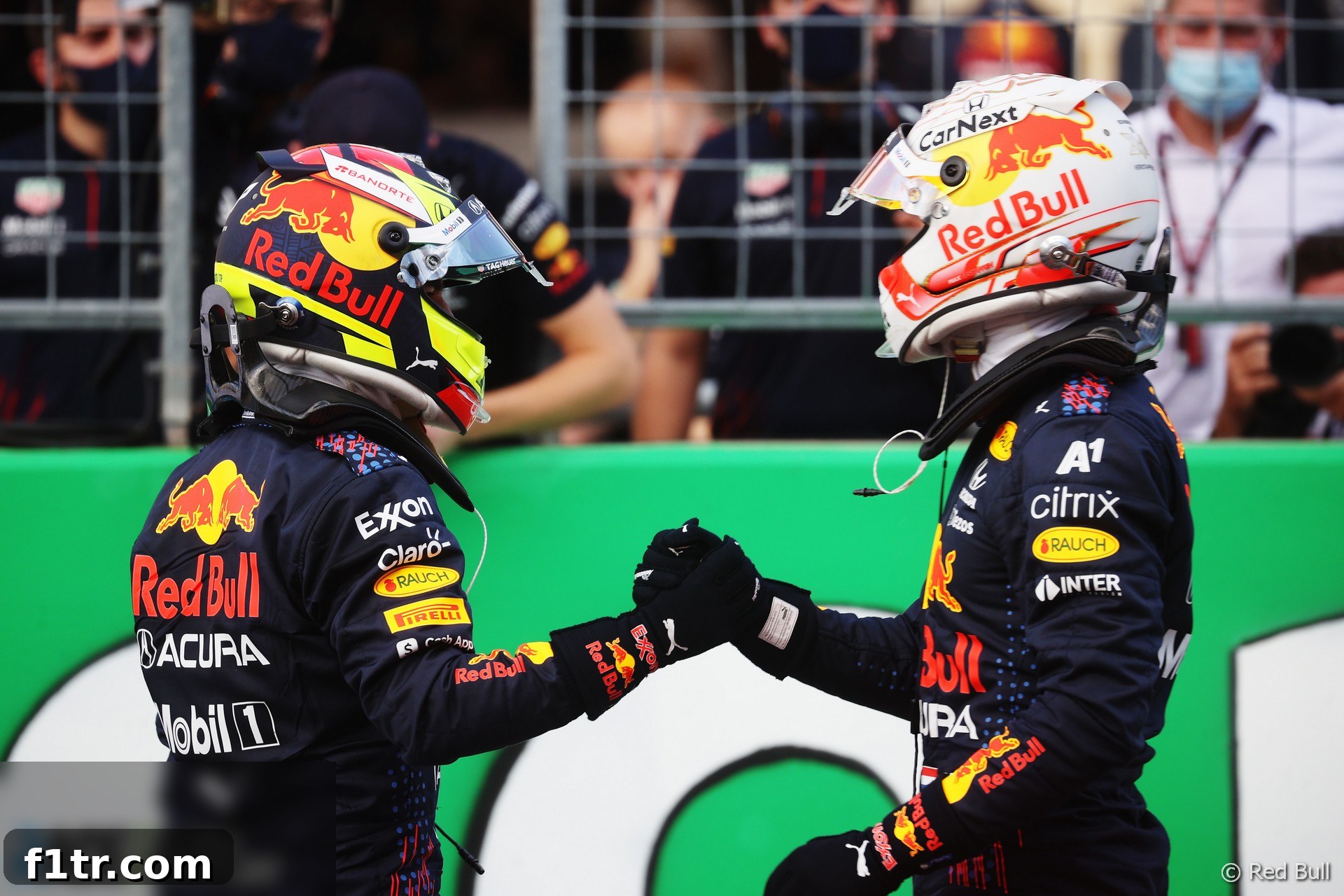
The exhilarating world of Formula 1 descends upon the vibrant capital of Mexico this weekend for the Mexico City Grand Prix, promising a high-stakes spectacle. All eyes will be on Sergio Perez, who arrives at his home race with a genuine, tangible chance to make history as the first Mexican driver to clinch victory on home soil. Yet, the grander narrative of the 2021 Formula 1 World Championship looms large, with Max Verstappen’s title aspirations taking precedence for the Red Bull Racing team. This creates a fascinating and potentially agonizing dilemma for the team, which could necessitate a difficult strategic call on Sunday.
The Autodromo Hermanos Rodriguez circuit, nestled high above sea level, presents a unique set of challenges that can shake up the established pecking order. With championships hanging in the balance and the passionate home crowd roaring for their hero, this weekend’s Mexico City Grand Prix is poised to deliver drama, strategy, and breathtaking racing action. Here are the crucial talking points that will define this highly anticipated event.
The “Brutal” Call: Red Bull’s Ultimate Loyalty Test
As the championship battle intensifies, Max Verstappen heads into the Mexico City Grand Prix with a critical 12-point advantage over seven-time world champion Lewis Hamilton. With a maximum of 133 points still available in the remaining races, the title fight remains incredibly tight, demanding perfection from both teams and drivers. Every single point gained or lost carries immense weight, and neither Red Bull nor Mercedes can afford to squander any opportunity to bolster their leading driver’s score.
Red Bull has already demonstrated their willingness to make difficult strategic decisions in pursuit of championship glory. At Silverstone, they controversially pitted Sergio Perez from a points-paying position (10th) late in the race. The sole purpose was for Perez to set the fastest lap, thereby denying Hamilton a bonus point. While a small sacrifice, it underscored Red Bull’s ruthless focus on the constructors’ and drivers’ championships. However, they drew a line at the subsequent race in Austin. A similar move there would have seen Perez drop from third to fourth, behind Charles Leclerc. Team Principal Christian Horner clarified their decision, stating, “It would have been brutal to pit Checo and take him off the podium. Leclerc obviously was too close behind. I think the collective position for the team is it’s better for Checo to take the points. So that’s what we did.” This demonstrated a calculated balance between strategic advantage and supporting their secondary driver’s morale and championship position.
The true test for Red Bull’s resolve would arise in a hypothetical, yet entirely plausible, scenario this Sunday. What if Perez is leading in the final laps at the Autodromo Hermanos Rodriguez, with Verstappen closely behind? It’s difficult to conceive of a scenario where Red Bull would pass up a seven-point swing in Verstappen’s favor in the Drivers’ Championship, especially when it would cost them nothing in the Constructors’ standings. Such a conversation has almost certainly taken place behind closed doors within the team, outlining protocols for various race situations.
However, the emotional weight of a surrendered home win for Perez would be immense. The Mexican driver enjoys an unparalleled level of support at this race, reminiscent of the fervent atmosphere Verstappen experienced at Zandvoort. Denying him a historic victory in front of his adoring fans could have significant repercussions on team morale and public perception. While such a scenario would be challenging, Red Bull remains optimistic it might not materialize. Verstappen has largely dominated his team-mate this season, and Perez has only finished ahead of his team-mate once in his five home Grand Prix appearances. There is a strong chance that Perez will not be forced to emulate Felipe Massa’s painful experience at Interlagos 14 years ago, where he had to cede a home victory to aid a team-mate’s championship.
Mercedes’ Altitude Achilles’ Heel: The High-Altitude Challenge
The Autodromo Hermanos Rodriguez in Mexico City, situated over 2,200 meters (7,200 feet) above sea level, presents a unique and formidable challenge for all Formula 1 teams. The unusually high altitude leads to a significant reduction in air pressure – approximately 25% less dense than at sea level. This thinner air has multiple cascading effects: it drastically cuts aerodynamic downforce, decreases engine performance due to less oxygen for combustion, and inhibits cooling efficiency, pushing power units and brakes to their limits. While every team grapples with these consequences, Mercedes has historically appeared particularly vulnerable to its effects.
Although Mercedes did win the last race held at this track in 2019 (the 2020 event was cancelled due to the pandemic), their victory was not entirely straightforward. Verstappen had initially secured pole position but was penalized for a yellow flag infringement, starting lower down the grid. His race pace demonstrated he clearly had the potential to win for the third consecutive year, indicating Red Bull’s inherent strength at this venue. The Red Bull cars, particularly with the Honda power unit, have often shown superior performance in high-altitude conditions, possibly due to their engine architecture and turbocharger design being more adept at compensating for the lack of oxygen. This historical trend, combined with their current strong form, makes the Mexico City Grand Prix a prime opportunity for Red Bull to potentially score their first one-two finish of the season, a result that would be invaluable in their championship quest.
For Mercedes, the thinner air means their powerful engine needs to work harder to generate equivalent horsepower, often leading to higher temperatures and increased wear. The reduced downforce means the cars are more prone to sliding, impacting tire degradation and requiring a delicate balance between aerodynamic grip and mechanical grip. This inherent weakness at altitude could prove to be a decisive factor in the championship battle, giving Red Bull a crucial edge on a weekend where every advantage counts.
The Specter of Retirement: A Championship on the Brink
At this nail-biting stage of the Formula 1 World Championship, the imperative need for both title contenders, Max Verstappen and Lewis Hamilton, to avoid a retirement could not be starker. With such a tight points differential, a single DNF (Did Not Finish) could prove catastrophic and irrevocably alter the course of the championship. The pressure on both teams to ensure absolute reliability from their cars is immense, turning every practice session and pit stop into a high-stakes endeavor to prevent any mechanical or operational failures.
Consider Hamilton’s precarious position: if he were to fail to finish the Mexico City Grand Prix and Verstappen were to secure a maximum score, the Red Bull driver would then be in a commanding position. He could effectively assure himself of the title by merely taking second place in all the remaining races, including Brazil’s sprint qualifying round which awards extra points. This would mark a significant milestone for Verstappen in a season where he has demonstrated remarkable consistency, finishing no lower than second in every race where he hasn’t suffered some form of misfortune, such as collisions or tire failures. This level of consistency highlights the devastating impact a single retirement would have on Hamilton’s chances.
Conversely, the situation is equally critical for Verstappen. A retirement for the Dutchman, or a repeat of his relatively poor result from his last appearance at this track (where he finished a distant sixth in 2019 after a penalty and contact), could swiftly see Hamilton regain the lead of the championship before heading to the Brazilian Grand Prix. The fine margins mean that caution, reliability, and calculated risk-taking are paramount for both drivers and their respective teams. Every component, every strategic decision, and every on-track maneuver will be scrutinized, as a single misstep could unravel months of relentless effort and championship aspirations.
Ferrari Poised to Overtake McLaren in the Constructors’ Battle
Beyond the intense championship battle at the front, a captivating fight for ‘best of the rest’ honors is unfolding between Ferrari and McLaren for third place in the Constructors’ Championship. Since introducing a highly anticipated new power unit at the Russian Grand Prix, Ferrari has meticulously chipped away at McLaren’s points lead. They now stand within striking distance, separated by a mere three-and-a-half points, and are exceptionally well-placed to overhaul their rivals this weekend in Mexico City.
The unique challenges presented by the Autodromo Hermanos Rodriguez circuit mean that neither car’s strengths will be exclusively favored. The track features exceptionally long straights, such as the infamous main straight leading into Turn 1, demanding high top speeds and efficient aerodynamic performance. This characteristic should, in theory, play to the strengths of the McLaren MCL35M, which has generally exhibited strong straight-line speed throughout the season. However, the circuit also boasts a predominantly very slow and intricate corner sequence, particularly in the stadium section, and overall grip levels are notoriously poor due to the thin air. These conditions, which prioritize mechanical grip, precise handling, and effective tire management, tend to suit the Ferrari SF21, as evidenced by their strong performances on similar low-grip, high-downforce tracks like Monaco and Baku.
Therefore, the battle promises to be a nuanced contest, a delicate balancing act between straight-line speed and cornering prowess. It looks set to be another enthralling head-to-head between the two legendary teams, with both Charles Leclerc and Carlos Sainz for Ferrari, and Daniel Ricciardo and Lando Norris for McLaren, eager to maximize their points haul. Adding another layer of intrigue, there’s always the potential for a cameo appearance from Pierre Gasly’s AlphaTauri, which has frequently proven to be a disruptor in the midfield battles, to further enliven proceedings and potentially influence the outcome of this crucial Constructors’ Championship fight.
Alonso’s Vigilance: The Unending Battle Over Track Limits
Veteran driver Fernando Alonso increasingly appears to be on a self-appointed mission to demand that race control and the stewards rigorously enforce letter-of-the-law penalties for breaches of the sporting regulations, particularly concerning track limits. His frustration at witnessing Kimi Raikkonen sweep past him on the outside of Turn 1 at the previous race in Austin was entirely understandable. Alonso vocally criticized what he perceived as inconsistent application of rules, claiming – not for the first time – that rival drivers had routinely exploited the run-off area at the same corner to gain positions at the start of the race, without adequate punishment.
The issue of track limits has long been a contentious topic in Formula 1, with drivers constantly pushing the boundaries and stewards striving for consistent, fair enforcement. The Autodromo Hermanos Rodriguez circuit, like many modern tracks, features numerous points where drivers could potentially run wide without immediate penalty if left unchecked. Over the years, F1 has introduced specific track limits restrictions at key corners to prevent drivers from gaining an unfair advantage by exceeding the white lines. At the Mexico City Grand Prix, these critical points are located at Turns 1, 2, 3, 8, and 11. Drivers exceeding these limits will typically have their lap times deleted or face time penalties in the race.
Given Alonso’s sharp eye for detail and his outspoken nature, if any ambiguity or scope for gain remains in the enforcement of these track limits, expect him to be among the first to spot it and bring it to the attention of race control. His ongoing crusade highlights a broader debate within the sport about balancing driver freedom, track design, and the need for clear, consistent rules, ensuring fair competition and preserving the integrity of racing.
Zandvoort’s Superior Makeover: A Contrast in Circuit Reimagination
Six years have passed since Formula 1 made its much-anticipated return to the remodelled Autodromo Hermanos Rodriguez. The drastic alterations made to the circuit for the series’ comeback stand in stark contrast to the far more sympathetic and revered modifications undertaken for the same reason at Zandvoort, which welcomed the sport back earlier this year. This comparison highlights a fundamental difference in philosophy regarding how historic tracks can be adapted for modern F1 safety standards while retaining their core character.
At the Dutch track, many of its iconic, challenging corners were largely kept intact, and its demanding mix of grass and gravel run-off areas was thoughtfully retained, preserving much of its original identity and difficulty. Mexico’s circuit, however, was treated with a completely different approach. Almost every corner was significantly slowed down, and asphalt run-off areas were widely installed, fundamentally changing its flow and dynamic. While iconic, fearsome sections like the high-speed, banked Peraltada corner were always likely to face some form of modification or even truncation due to modern safety concerns, many purists argue that more of the Mexican track’s inherent rhythm and flow could have been preserved. Even acknowledging the limited room for run-off – a challenge also faced and elegantly addressed at Zandvoort – the Mexico City Grand Prix circuit often feels unnecessarily tight and slow in various sections, notably at Turns 2, 3, 5, and 6.
The overall driving experience is also exacerbated by the reduced grip levels resulting from the high altitude. Teams are forced to run maximum downforce configurations, similar to those used in Monaco, to try and compensate for the thinner air. However, the lower atmospheric pressure means these “Monaco-spec” wings generate significantly less actual downforce than their much slimmer counterparts used at low-altitude tracks like Monza, making the cars feel incredibly light and prone to sliding. This combination of a re-profiled, slower layout and the unique aerodynamic challenges of altitude contributes to a distinctive but often criticized track characteristic, raising questions about the compromises made in modern circuit design.
Are You Heading to the Mexico City Grand Prix?
If you’re making the exciting journey to Mexico City for this weekend’s Formula 1 race, we’d love to hear about your experience! Share your thoughts, tips, and excitement with fellow fans in our dedicated forum:
- Forum: Going to the Mexico City Grand Prix at Autodromo Hermanos Rodriguez
Who do you believe will emerge as the team to beat in the Mexico City Grand Prix? Cast your predictions and join the discussion below. And don’t forget to enter your predictions for this weekend’s race in our championship. You can edit your predictions right up until the start of qualifying:
- RaceFans Predictions Championship
2021 Mexico City Grand Prix: Further Insights
- Verstappen’s Dominance: No One Will Win More F1 Races This Year
- Alfa Romeo’s Misjudgment: Giovinazzi’s Sarcastic Radio ‘Thanks’
- “Nice Catch”: How Verstappen’s Canny Bid to Thwart Bottas Almost Succeeded
- 2021 Mexico City Grand Prix: Star Performers Revealed
- Wolff “Surprised” Stewards Did Not Investigate Ricciardo Over Bottas Collision
Browse All 2021 Mexico City Grand Prix Articles