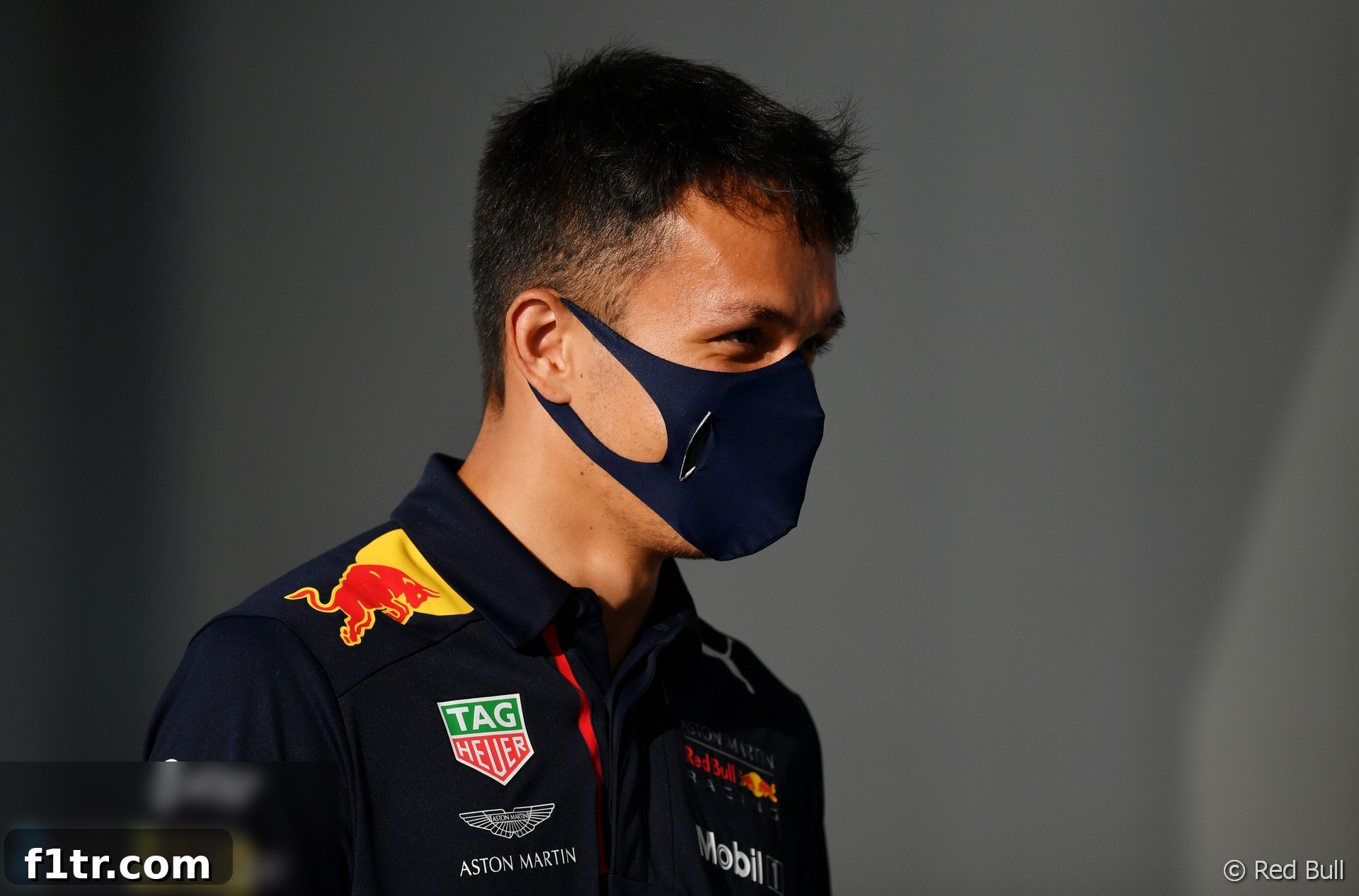
In the high-stakes world of Formula 1, every decision, every maneuver, and every incident is meticulously scrutinized. Few moments ignite as much debate as a Safety Car restart, especially when it culminates in a multi-car collision. Such was the case at the 2020 Tuscan Grand Prix in Mugello, an event that saw Red Bull driver Alexander Albon find himself embroiled in controversy following a chaotic restart. Albon unequivocally disagrees with the stewards’ verdict, which partially attributed blame to him for the pile-up that tragically ended the races of four drivers.
Advert | Become a Supporter & go ad-free
The incident in question occurred on lap seven of the inaugural Mugello race, immediately after the Safety Car had been deployed due to a separate crash. As the Safety Car prepared to pull into the pits, signaling the resumption of racing, a concertina effect triggered a terrifying accident on the main straight. In a split second, cars at the back of the pack accelerated, then braked sharply as those ahead hesitated, leading to a chain reaction of collisions. Four cars – Haas’s Kevin Magnussen, Alfa Romeo’s Antonio Giovinazzi, Williams’ Nicholas Latifi, and McLaren’s Carlos Sainz Jr. – were eliminated from the race. The dramatic nature of the crash prompted the race stewards to launch a thorough investigation, culminating in formal warnings issued to a staggering 12 of the 18 drivers involved in the restart. The official reasoning cited “inconsistent application of throttle and brake, from the final corner along the pit straight” as the primary issue. Alexander Albon, who was running in a strong fourth position at the time, was prominently named as one of the drivers receiving a warning, specifically noted as the first driver in the queue to be flagged for his driving.
However, the Thai-British driver firmly maintains his innocence, arguing that his actions were not the cause of the catastrophic event. Speaking to media outlets, including RaceFans, Albon revealed his team’s immediate response to the stewards’ decision. “We actually emailed them back about it because there was obviously nothing that I did that was strange or erratic,” Albon stated, underlining his conviction that his driving during the critical moment was consistent and predictable, in line with the intricate demands of a Safety Car restart. His disagreement stems from a nuanced understanding of the unique circumstances surrounding the Mugello circuit and the rules governing race restarts.
Albon’s perspective centers on the inherent challenges posed by the track layout and the protocol of Safety Car procedures. He attributes the incident primarily to what he describes as a “concertina effect,” a phenomenon where the sudden braking or acceleration of a leading car propagates through the following cars, causing amplified reactions down the line. This effect is particularly pronounced on circuits with long straights, such as Baku and Mugello, where drivers strategically attempt to maximize the slipstream effect by leaving acceleration to the very last moment before crossing the Safety Car line. The allure of gaining a crucial advantage through slipstreaming creates a volatile environment where the slightest misjudgment or unexpected move can have dire consequences, as witnessed at Mugello.
A key factor, according to Albon, was the extremely late notice provided by the Safety Car before it peeled off into the pits. This late signal left race leader Valtteri Bottas with precious little time to react and manage the pace of the pack behind him effectively. Under the regulations, the lead driver is required to maintain a certain distance behind the Safety Car until a designated point, typically the final corner, after which they are free to dictate the pace. Albon pointed out, “I think Valtteri had to stay within 10 car lengths up until the last corner so he didn’t have enough to create a space.” This limitation meant Bottas had a compressed window to accelerate and create a gap, an action that would typically string out the cars and minimize the concertina effect. Without this crucial space, the entire field remained tightly bunched, exacerbating the risk.
Furthermore, Albon highlighted the psychological and strategic pressures at play during these restarts. With the leader’s exact timing of acceleration being unpredictable, every driver behind is essentially “trying to guess where Valtteri is going to go.” This anticipatory guesswork leads to a collective surge of acceleration towards the Safety Car line, as drivers vie for optimal slipstream positioning. It transforms the restart into a high-speed game of chicken, where maintaining perfect spacing becomes an almost impossible task. “That’s when you get everyone trying to accelerate to the line because they know that’s where Valtteri’s going to do,” Albon elaborated, painting a vivid picture of the collective instinct to gain an advantage.
Considering these complex dynamics, Albon firmly believes that attributing blame to individual drivers for such an incident is an oversimplification. “I don’t blame any driver, I think it’s just how it is,” he asserted, advocating for a systemic review rather than individual penalties. His plea is for a fundamental “way of changing the format” of Safety Car restarts to enhance safety and prevent similar occurrences in the future. This suggests a need for F1’s governing bodies to revisit and potentially revise the rules and procedures surrounding Safety Car deployments and restarts, particularly on circuits known for long straights and pronounced slipstream advantages.
The Mugello crash underscored the delicate balance F1 strikes between exhilarating competition and driver safety. While Safety Car restarts are designed to bunch up the field for exciting racing, they inherently introduce an element of risk. The lack of standardized restart zones across all circuits, coupled with the leader’s prerogative to control the pace until the Safety Car line, creates varying degrees of challenge for the following drivers. Some argue that more defined acceleration zones or clearer guidelines for the race leader could mitigate the risks. Others propose technological solutions to aid drivers in maintaining safe distances under high-speed conditions. The debate highlights a perennial tension in motorsport: how to maximize the spectacle of racing without compromising the well-being of its participants.
Alexander Albon’s vocal disagreement with the stewards’ verdict is more than just a personal defense; it’s a critical commentary on the intricate mechanisms of F1 racing and the challenges of governing such a complex sport. His insights, rooted in firsthand experience from within the cockpit, offer a valuable perspective on the factors contributing to such incidents. The Mugello crash, and Albon’s subsequent stance, serve as a stark reminder that even the most experienced drivers operate within a highly dynamic and often unforgiving environment, where collective actions and systemic issues can sometimes outweigh individual intentions. As Formula 1 continues to evolve, the discussions sparked by incidents like Mugello will undoubtedly influence future regulations, striving to find that elusive balance between breathtaking competition and uncompromising safety for all involved.
Advert | Become a RaceFans supporter andgo ad-free