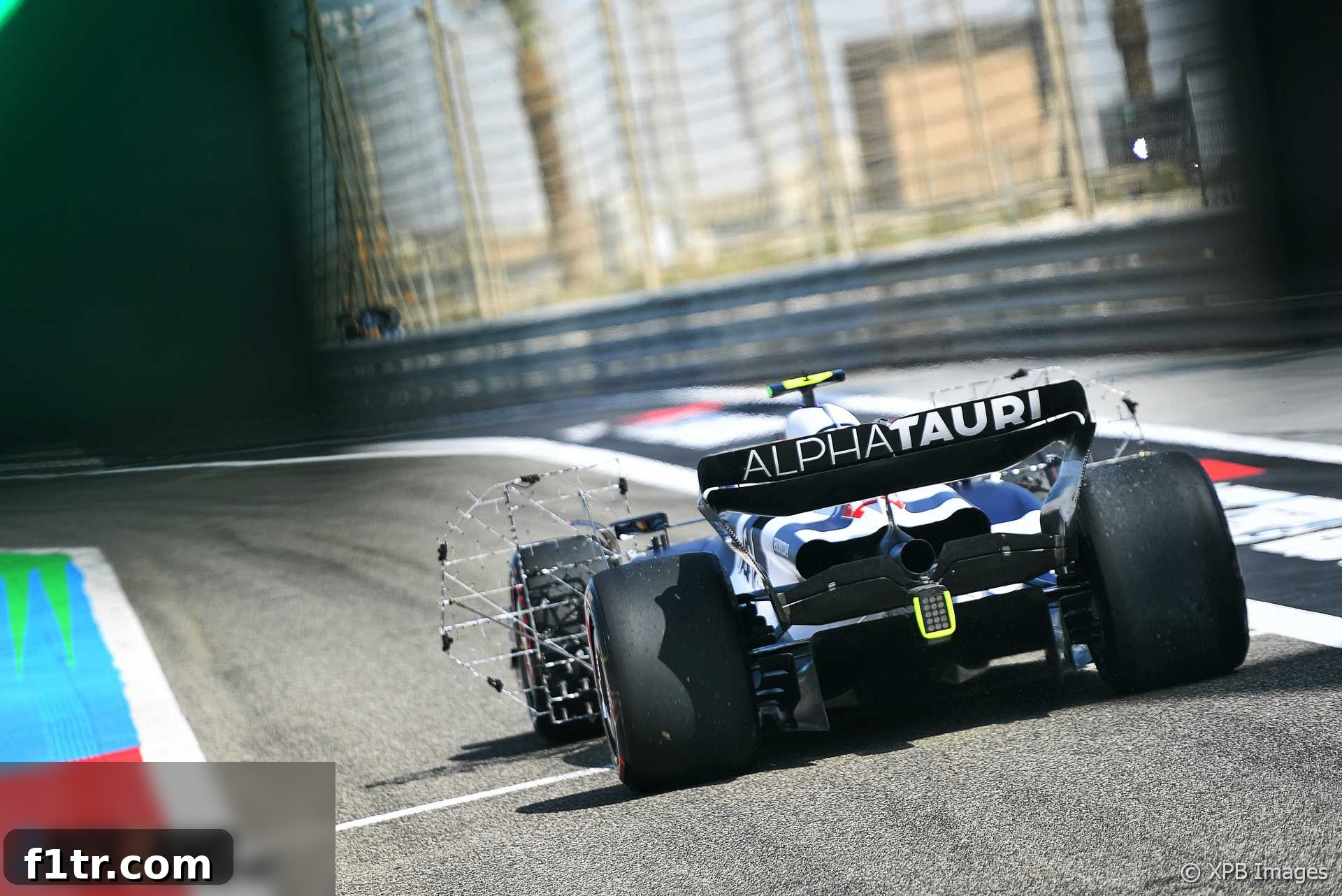
In the high-stakes world of Formula 1, where performance dictates fortunes and whispers can ignite widespread speculation, the future of Scuderia AlphaTauri has recently come under intense scrutiny. Amidst a wave of rumors regarding its potential sale or relocation, Red Bull, the parent company, has moved swiftly to address and ultimately quell these circulating reports. The narrative suggests a complex interplay between commercial strategy, on-track performance, and the foundational philosophy of Red Bull’s involvement in motorsport.
Red Bull Dismisses AlphaTauri Sale Speculation Amidst Performance Concerns
Recent reports from esteemed German publication Auto Motor und Sport had sent shockwaves through the Formula 1 community, indicating a possible change in AlphaTauri’s ownership or a move of its operations to the United Kingdom. This speculation emerged in the wake of a significant management restructuring within the broader Red Bull organization, following the passing of its co-founder Dietrich Mateschitz. Such a significant shift for a team that has been an integral part of Red Bull’s F1 structure for nearly two decades naturally sparked considerable debate and concern among fans and industry insiders alike.
However, Red Bull wasted no time in providing a clear and concise response, directly refuting the claims. In an official statement, a spokesperson for the energy drink giant categorically stated that there were “no plans to change the current set up.” This strong denial aims to stabilize the team’s position and assure its personnel and stakeholders of continuity. The statement further highlighted the intrinsic operational ties between AlphaTauri and its sister team, Red Bull Racing, emphasizing that “Red Bull Technology supply components to AlphaTauri and Red Bull Powertrains work with and alongside their team.” This symbiotic relationship, underpinning the technical and strategic framework of Red Bull’s dual F1 entries, is central to understanding the organization’s current stance.
The Legacy of Toro Rosso: A Nurturing Ground for F1 Talent
To fully grasp AlphaTauri’s significance within the Red Bull empire, one must revisit its origins. The team first entered Formula 1 in 2006, following Red Bull’s acquisition of the venerable Minardi team. Rebranded as Scuderia Toro Rosso – literally ‘Red Bull’ in Italian – its primary mandate was clear: to serve as a proving ground for young, aspiring drivers from the Red Bull Junior Team program. This innovative approach allowed Red Bull to fast-track its most promising talents into competitive Formula 1 machinery, providing invaluable experience before a potential promotion to the senior Red Bull Racing squad.
The success of this philosophy is undeniable. Toro Rosso, and subsequently AlphaTauri, played a pivotal role in shaping the careers of some of Formula 1’s most celebrated champions. Sebastian Vettel, a four-time world champion with Red Bull Racing, made his full F1 debut with Toro Rosso, even securing the team’s first-ever victory at the 2008 Italian Grand Prix – a remarkable achievement for a junior team. Similarly, Max Verstappen, the current dominant force in Formula 1 and a multiple world champion, honed his skills with Toro Rosso before his meteoric rise to Red Bull Racing. These success stories firmly cemented the junior team’s reputation as an indispensable component of Red Bull’s motorsport ecosystem.
The team’s operational base has remained firmly rooted in Faenza, Italy, maintaining a distinct cultural identity despite its Austrian ownership. In addition to its Italian headquarters, AlphaTauri also operates a crucial aerodynamic division in Bicester, UK, leveraging the rich engineering talent pool available in the heart of the “motorsport valley.”
Rebranding and Commercial Strategy: From Toro Rosso to AlphaTauri
In 2020, the team underwent a significant transformation, rebranding from Toro Rosso to AlphaTauri. This strategic move was designed to promote Red Bull’s premium fashion label, AlphaTauri, broadening its global brand recognition through the powerful platform of Formula 1. Beyond the marketing aspect, the rebrand also solidified the financial rationale for running two F1 teams. Red Bull strategically minimizes the overall cost by supplying a range of components to both operations through Red Bull Technologies and utilizing Red Bull Powertrains, thereby creating shared resources and efficiency gains.
This integrated approach allows for a streamlined development process and shared technical expertise, theoretically maximizing the competitive potential of both teams while managing expenses under the sport’s strict budget cap regulations. The vision was for AlphaTauri to not only continue its role as a talent incubator but also to establish itself as a competitive midfield contender, showcasing the capabilities of Red Bull’s engineering and commercial prowess.
Performance Under the Microscope: A Disappointing Season
Despite these strategic advantages and a clear mandate, AlphaTauri’s performance in the 2022 Formula 1 season proved to be a significant setback. The team concluded the constructors’ championship in a disappointing ninth place, a stark contrast to its previous achievements and the expectations set for a Red Bull-affiliated outfit. This dip in form inevitably led to introspection and critical evaluation within the Red Bull motorsport hierarchy.
Helmut Marko, Red Bull’s venerable motorsport consultant, openly acknowledged the team’s underperformance. While generally reluctant to comment on rumors, his statements underscored the seriousness of the situation. He told Sky, “it’s also understandable AlphaTauri cannot be satisfied with what it achieved last year, ninth place in the constructors’ championship. But such a decision rests entirely with the shareholders.” Marko’s candor highlighted the crucial intersection of sporting ambition and sound business management. Even for a team with a clear developmental mission, sustained competitive performance is non-negotiable in the cutthroat world of Formula 1.
The Dual Mandate: Talent Development Versus Competitive Results
Marko further elaborated on the inherent tension between AlphaTauri’s historical role and its current performance challenges. He reiterated the importance of the junior team concept: “As Toro Rosso, the team supplied a series of junior drivers to Red Bull, including multiple champions Max Verstappen and Sebastian Vettel. Marko said its role as a junior team was ‘part of our philosophy and Vettel and Verstappen all came to us via AlphaTauri.’” This statement firmly reaffirms the long-standing commitment to nurturing young talent.
However, he quickly qualified this by adding, “But as I said, if the team doesn’t perform properly, then it doesn’t help either.” This stark assessment reveals the growing pressure on AlphaTauri to deliver results that justify its significant investment and strategic placement within Red Bull’s motorsport portfolio. The synergy between the two Red Bull teams, while intended to be a strength, becomes problematic when one team is achieving unparalleled success as world champions, while the other languishes near the bottom of the grid.
Marko eloquently summarized this disparity: “You think about how to increase efficiency. And when you have one team that wins the world championship and the other is just about ninth place, these synergies just don’t seem to work properly.” This critical observation suggests that the expected benefits of shared technology, resources, and personnel development are diminished when the performance gap between the two outfits becomes too wide. The financial and operational advantages become less convincing if the junior team consistently underperforms, affecting brand image and overall return on investment.
The Shareholder Perspective: A Business Decision
Ultimately, the decisions regarding AlphaTauri’s future, as Marko indicated, rest with the shareholders of Red Bull. His concluding remarks underscored this business-oriented perspective: “The overall result is not satisfactory. As proper business people our shareholders will make the right decision.” This statement, while not explicitly hinting at a sale, certainly implies that all options are on the table for consideration should the team’s performance fail to meet expectations. In modern Formula 1, teams are not merely sporting entities; they are valuable assets, and their financial viability and strategic alignment are constantly under review.
An F1 entry carries immense value, both in terms of sporting prestige and commercial opportunity. The recent influx of interest from new teams and investors highlights the growing attractiveness of the sport. Should AlphaTauri continue to struggle, the shareholders might indeed explore alternatives that better align with their long-term strategic and financial objectives, even if it deviates from established traditions.
While Red Bull has decisively denied any immediate plans to sell or relocate AlphaTauri, the underlying concerns expressed by Helmut Marko regarding performance and efficiency remain. The future of the Faenza-based squad will undoubtedly depend on its ability to reverse its fortunes on track and re-establish itself as a consistent points-scorer and, critically, as a thriving platform for Red Bull’s next generation of F1 superstars. The delicate balance between preserving its heritage as a talent incubator and achieving commercial and sporting success will define its trajectory in the coming seasons.
2023 F1 Season Related Articles
- FIA president cleared of alleged interference in two 2023 races
- First week viewing figures for new Drive to Survive season fall again
- Max who? Drive to Survive season six prefers its favourite faces
- RaceFans’ complete 2023 season review
- The F1 drivers who pulled off the 10 biggest charges through the field in 2023
Browse all 2023 F1 season articles