The 2021 Italian Grand Prix at Monza, often dubbed the ‘Temple of Speed’, delivered an unforgettable weekend of thrilling Formula 1 action, dramatic clashes, and surprising victories. From breathtaking overtakes to strategic masterclasses and unfortunate incidents, the event captivated motorsport enthusiasts worldwide. This comprehensive review delves into the individual performances that defined the weekend, highlighting the standout stars who shone brightest, the drivers who faced significant hurdles, and those whose weekends were a mix of both triumphs and tribulations. We analyze how each driver navigated the unique challenges of the Monza circuit, from the intensity of sprint qualifying to the high-stakes main race, providing a detailed look at the factors that influenced their final standings.
The Autodromo Nazionale Monza always promises high-octane drama, and the 2021 edition certainly did not disappoint, especially with the added dimension of sprint qualifying. This format tested drivers’ adaptability and pure speed, setting the stage for an exhilarating Sunday race. While some drivers seized the opportunity to shine, others grappled with mechanical issues, strategic missteps, or on-track incidents that reshaped their weekend narratives. This in-depth analysis will meticulously break down the critical moments and key performances, offering insights into the exceptional skill, resilience, and occasional misfortune that characterized the Italian Grand Prix weekend.
Stars of the Italian Grand Prix: Drivers Who Mastered Monza
Advert | Become a Supporter & go ad-free
Valtteri Bottas
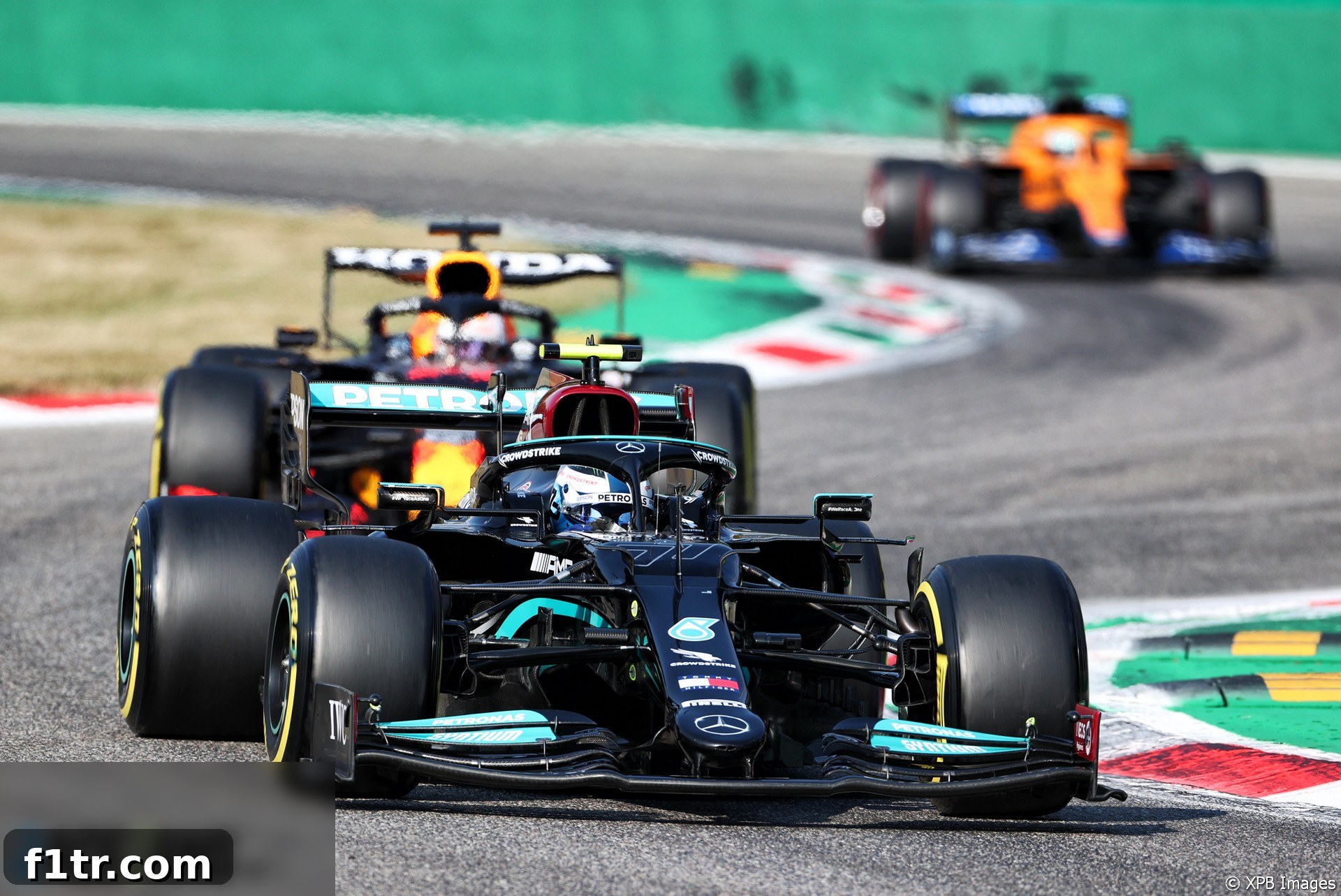
Valtteri Bottas delivered a truly commanding performance at Monza, despite facing a significant grid penalty for the main race. His weekend began on an incredibly strong note, as he convincingly outpaced his formidable teammate Lewis Hamilton to secure pole position for the sprint qualifying race. This achievement underscored his raw speed and mastery of the fast Monza circuit, setting a powerful precedent for the remainder of his weekend. Bottas then converted this pole into a dominant victory in the sprint race, skillfully managing his lead and demonstrating exceptional control. This not only earned him crucial championship points but also secured him the theoretical pole for Sunday’s Grand Prix.
However, due to multiple power unit component penalties incurred prior to the weekend, Bottas was compelled to start the main race from the very back of the grid. Undeterred by this formidable challenge, the Finn showcased a spectacular recovery drive. He carved his way through the lower and middle sections of the field with impressive ease and surgical precision, demonstrating the sheer pace of his Mercedes W12 and his own determined race craft. His relentless charge saw him rapidly ascend the ranks, making light work of numerous competitors. Towards the latter stages of the race, Bottas executed a decisive overtake on Charles Leclerc and ultimately inherited a remarkable fourth position after Sergio Perez, whom Bottas had previously challenged unsuccessfully, received a post-race penalty. This phenomenal display of speed, resilience, and strategic driving cemented Bottas’s status as a top performer of the weekend, transforming a potential washout into a significant points haul.
Daniel Ricciardo
Daniel Ricciardo’s performance at the Italian Grand Prix was nothing short of a fairy tale, culminating in a sensational victory that marked McLaren’s first win in nearly a decade. His weekend began promisingly, qualifying fifth for the sprint race, a mere six-thousandths of a second behind his teammate Lando Norris. This tight margin highlighted McLaren’s competitive package and Ricciardo’s immediate pace. In the sprint qualifying race, Ricciardo demonstrated his renowned starting prowess, gaining two crucial positions to move up to third. He then shrewdly navigated the race to ultimately secure an impressive second position on the grid for Sunday’s main event, perfectly positioning himself for a strong challenge.
The Grand Prix itself saw Ricciardo execute another superb start, deftly passing Max Verstappen to seize the lead early on. He maintained a strong pace, becoming the first of the leading pair to pit. His out-lap was exceptionally quick, particularly in the middle sector where he gained four-tenths, which would have been critical in his fight with Verstappen even before the Red Bull driver’s unusually slow pit stop. Following the dramatic safety car period and subsequent restart, Ricciardo held his nerve and his lead with remarkable composure, resisting any potential challenges to cross the finish line first. This momentous victory, his first in three years, was a testament to his enduring talent, determination, and McLaren’s brilliant execution, making him an undisputed star of the Monza weekend and a fan favorite.
Charles Leclerc
Charles Leclerc showcased remarkable resilience and skill throughout the Italian Grand Prix weekend, overcoming significant challenges to secure a strong fourth-place finish for Ferrari on home soil. His Friday was particularly demanding, as he grappled with an abnormality in his engine braking system, which severely impacted his rhythm and confidence. Despite these technical difficulties, Leclerc managed to qualify an impressive eighth, demonstrating his ability to extract performance even from an imperfect car, and staying within five-hundredths of a second of his teammate, Carlos Sainz Jnr. Adding to his Friday woes, he was forced to abandon his second practice session due to a sudden dizzy spell, further disrupting his preparation.
In the sprint qualifying race, Leclerc made steady progress, gaining a position directly and benefiting from Pierre Gasly’s retirement to secure a valuable fifth place on the grid for the main Grand Prix. This put him in a prime position to challenge for strong points. During the race, he initially found himself in a strong second place after the dramatic safety car restart. However, with several quicker cars behind him, including Lando Norris, Valtteri Bottas, and Sergio Perez, he was ultimately unable to defend his position against their superior pace. Despite slipping back, Leclerc’s consistent driving and intelligent race management ensured he kept the car in contention. His eventual fourth-place finish was secured when Sergio Perez received a penalty, elevating Leclerc one spot. Considering the difficulties faced on Friday and the competitive nature of the field, Leclerc’s tenacious performance and ability to maximize his points haul for Ferrari in front of the Tifosi marked him as a notable star of the weekend.
Advert | Become a RaceFans supporter andgo ad-free
Strugglers: Drivers Who Faced an Uphill Battle
Nikita Mazepin
Nikita Mazepin endured a challenging and ultimately disappointing Italian Grand Prix weekend. His troubles began in qualifying, where he ended up in 20th position after a critical error saw him run off track during his fastest lap, preventing him from setting a more competitive time. Despite this setback, he managed to secure 17th on the grid for the main race during sprint qualifying, placing him ahead of Robert Kubica and his teammate Mick Schumacher, which offered a glimmer of hope. However, the race itself proved disastrous. Mazepin was involved in an unfortunate incident where he made contact with his teammate, Mick Schumacher, further damaging his own race and contributing to a difficult situation for the Haas team. Shortly after, his race came to an abrupt end when he was forced to retire due to what was officially reported as a “power unit failure,” capping off a weekend fraught with errors and misfortune.
Advert | Become a RaceFans supporter andgo ad-free
And the Rest: Mixed Fortunes and Key Moments
Lewis Hamilton
Lewis Hamilton’s Italian Grand Prix weekend was a roller coaster of highs and ultimately, a significant low, playing a pivotal role in the championship narrative. He started strongly, topping every session on Friday, showcasing Mercedes’ formidable pace. However, in a surprising turn of events, he was unexpectedly beaten to pole for the sprint qualifying race by his teammate Valtteri Bottas in Q3, marking a rare instance of being outqualified by his stablemate. The sprint race saw him lose three positions at the start, struggling to make progress past Lando Norris’s McLaren, highlighting the challenge of overtaking in the sprint format.
For the main Grand Prix, Hamilton opted for hard tyres from the start, a strategic choice aimed at going longer in the first stint. He initially gained a place from Norris on lap one but then ran wide in an unsuccessful attempt to pass his championship rival, Max Verstappen, losing that advantage. As his tyre strategy began to pay off, he regained the position from Norris towards the end of his first stint, demonstrating the longevity of the hard compound. The pivotal moment arrived after his pit stop when he emerged narrowly ahead of Verstappen. However, a dramatic and much-debated collision at the Rettifilo chicane with Verstappen brought both drivers’ races to an abrupt and premature end, sending shockwaves through the paddock and significantly impacting the championship battle. Hamilton’s weekend, therefore, ended in frustration and controversy, despite moments of strong performance.
Max Verstappen
Max Verstappen’s Italian Grand Prix was defined by intense rivalry, strategic missteps, and a dramatic collision that sent ripples through the Formula 1 championship. In qualifying, he acknowledged that he couldn’t quite match the blistering pace of the Mercedes cars but was content with securing third place, just three-tenths behind Lewis Hamilton, setting him up well for the sprint. In the sprint qualifying race, Verstappen inherited pole position after expertly passing Hamilton at the start, though he couldn’t quite catch the other Mercedes of Bottas. This put him in a strong position for Sunday’s main race.
However, the Grand Prix started less favorably as he couldn’t contain Daniel Ricciardo’s rapid McLaren, losing the lead early on. A critical moment arrived during his pit stop, which was unusually slow, costing him several precious seconds and numerous places, leaving him visibly furious with his Red Bull team. This pit stop error significantly compromised his race strategy and track position. The culmination of his weekend came in a highly controversial collision with championship rival Lewis Hamilton at the Rettifilo chicane. Verstappen was subsequently judged predominantly to blame for the incident by the stewards and was handed a three-place grid penalty for the subsequent Grand Prix, making Monza a weekend of mixed fortunes and substantial repercussions for the championship leader.
Sergio Perez
Sergio Perez played a crucial role for his Red Bull team, particularly in qualifying, where he provided a valuable tow for teammate Max Verstappen in both Q2 and Q3, showcasing excellent team strategy. However, he consistently struggled for relative pace throughout qualifying, barely managing to scrape into Q3 and ultimately qualifying in ninth place, which was somewhat below expectations given the car’s potential. His difficulties continued into the sprint qualifying race, where an ordinary start saw him drop behind Lance Stroll. It took him a considerable ten laps to eventually pass the Aston Martin, demonstrating a struggle for immediate aggression and pace, ultimately securing eighth on the grid for Sunday.
In the main Grand Prix, Perez made more significant progress, steadily climbing through the field. However, his race was marred by a moment of naive judgment while battling Charles Leclerc. He went off-track during their fight but assumed he would be allowed to retain the position. The stewards, however, deemed his rejoining of the track to gain an advantage unacceptable, and he inevitably received a five-second time penalty. This penalty proved costly, as it demoted him from his on-track finishing position, impacting Red Bull’s points haul. Despite his team-oriented efforts in qualifying and some progress in the race, the penalty overshadowed his performance, marking Monza as a weekend of missed opportunities and strategic miscalculations for Perez.
Lando Norris
Lando Norris had an incredibly strong Italian Grand Prix, playing a vital supporting role in McLaren’s historic one-two finish. His weekend started with a minor frustration in qualifying, where he attributed missing out on third place to a “small mistake” in Q3, yet still secured a competitive position. In the sprint qualifying race, Norris gained a position, showcasing his consistent performance, but was ultimately passed by his teammate Daniel Ricciardo, signaling the emerging strength of the Australian. This set the stage for an intriguing intra-team battle.
In the early phase of the main Grand Prix, Norris initially lost contact with his teammate as he engaged in a spirited battle with Lewis Hamilton, demonstrating his defensive capabilities and race craft. However, following the safety car and subsequent restart, Norris immediately re-passed Charles Leclerc to resume second position, perfectly slotting in behind Ricciardo. While it appeared he might have had the pace to challenge his teammate for the lead, Norris commendably obeyed McLaren’s clear instructions for the pair to hold position and manage their pace. This strategic call was crucial to ensure their rivals, particularly Bottas who was charging, couldn’t mount a serious attack, thereby securing McLaren’s memorable one-two finish. Norris’s disciplined and rapid performance underscored his growing maturity and cemented his role in a landmark result for the team.
Lance Stroll
Lance Stroll had a commendable Italian Grand Prix weekend, displaying resilience and strong race management to secure valuable points for Aston Martin. Despite expressing frustration with traffic during qualifying, he managed to secure 12th place, just behind his teammate Sebastian Vettel, indicating a solid baseline performance. In the sprint qualifying race, Stroll, on soft tyres, demonstrated excellent defensive driving. Although he was passed by Sergio Perez, he successfully held off Fernando Alonso, ultimately securing a respectable ninth position on the grid for Sunday’s main event, showcasing effective tyre strategy in the shorter race.
In the Grand Prix itself, Stroll maintained his strong form, only losing one position to the rapidly recovering Valtteri Bottas, who was on a charge from the back of the grid. He expertly navigated the race to finish in an impressive seventh place, bringing home important points for his team. Stroll was also fortunate to avoid a penalty for his slightly slow reaction to waved yellow flags, a testament to the stewards’ interpretation of the incident. Overall, Stroll’s weekend was characterized by consistent performance, effective defensive driving, and a valuable points finish, showcasing a strong individual effort.
Sebastian Vettel
Sebastian Vettel experienced a challenging and largely unrewarding Italian Grand Prix weekend. His qualifying effort saw him narrowly miss out on Q3 by a mere three-hundredths of a second, highlighting the ultra-competitive nature of the midfield. In the sprint qualifying race, his weekend took a turn for the worse when he flat-spotted both front tyres at the start. This incident caused him to drop behind his teammate Lance Stroll and Fernando Alonso, relegating him to 12th on the grid for the main race and putting him on the back foot immediately.
The Grand Prix itself didn’t offer much relief. Vettel lost further places at the beginning, falling behind Esteban Ocon and Nicholas Latifi, indicating difficulties in the initial race phases. Later in the race, he was involved in an unfortunate incident where he was shoved off-track by Esteban Ocon, further hindering his progress and adding to his frustrations. Despite his best efforts, Vettel was unable to recover sufficiently from these setbacks to challenge for points, making Monza a weekend to forget for the four-time world champion.
Esteban Ocon
Esteban Ocon endured a mixed and somewhat controversial Italian Grand Prix weekend. He struggled for outright pace on Friday, qualifying 14th, just behind his teammate Fernando Alonso. In the sprint qualifying race, he found himself stuck behind Sebastian Vettel and was unable to find a way past, limiting his progression. The start of the main Grand Prix saw Ocon go off-track, initially relinquishing a position he had gained over his teammate. While being required to cede that position back was understandable, being asked to do the same for Latifi, whom he had passed cleanly well before the corner, seemed an excessive penalty from race control.
A contentious moment occurred during his battle with Sebastian Vettel at the Roggia chicane, where Ocon’s move resulted in contact and was deemed worthy of a penalty by the stewards. Ocon was understandably confused and frustrated by this decision, particularly given the stewards’ past failure to penalize Charles Leclerc for a similar incident two years prior, leading to questions about consistency in officiating. Despite these setbacks and the penalty, Ocon showed strong recovery pace after the restart, decisively passing Nicholas Latifi to salvage a valuable point for Alpine by finishing in tenth position. His weekend was a testament to his fighting spirit but also highlighted areas of frustration regarding race regulations.
Fernando Alonso
Fernando Alonso’s Italian Grand Prix weekend was marked by a blend of disappointment and a strong points finish, showcasing his veteran experience. In qualifying, he expressed disappointment after a lock-up in Q2 prevented him from completing a second push lap, costing him crucial time. Despite this setback, he still managed to qualify a respectable 13th, notably ahead of his teammate Esteban Ocon, demonstrating his underlying pace. In the sprint qualifying race, Alonso utilized his race craft to gain two places, securing an improved tenth position on the grid for the main Grand Prix, further enhancing his prospects for points.
The Grand Prix itself saw Alonso benefit from retirements ahead of him, allowing him to steadily climb the order. His consistent and clean driving ensured he capitalized on the attrition around him, ultimately finishing in a solid eighth place. This result brought valuable points for Alpine and underscored Alonso’s ability to maintain focus and deliver results even when the outright pace might not be there. His performance at Monza was a testament to his experience, ability to stay out of trouble, and capitalize on opportunities, contributing significantly to Alpine’s championship efforts.
Carlos Sainz Jnr
Carlos Sainz Jnr experienced a dramatic and challenging Italian Grand Prix weekend, characterized by a significant crash and a subsequent fight for confidence. His weekend started on a positive note as he out-qualified his esteemed teammate Charles Leclerc, securing an impressive seventh place in qualifying. However, this promising start was overshadowed by a heavy crash at Ascari during the second practice session, which undoubtedly impacted his confidence and set his team on a significant repair effort. In the sprint qualifying race, Sainz lost out at the start, focusing instead on rebuilding his confidence and bringing the car home safely. Despite this, he managed to secure sixth on the grid for the main race, a decent recovery given his earlier incident.
In the Grand Prix, a crucial moment occurred when the Safety Car was deployed, effectively wiping out the 10-second deficit he had to his teammate Leclerc halfway through the race, giving him a renewed opportunity. However, as the race resumed, Sainz gradually started to slip back from Leclerc once again as the chequered flag fell. While he ultimately secured a points finish, the weekend was a testament to his resilience in overcoming a major incident, but also highlighted the ongoing challenge of maintaining peak performance under immense pressure. Sainz’s Monza performance was a testament to his recovery and determination after a challenging start.
Pierre Gasly
Pierre Gasly, last year’s emotional winner at Monza, had an incredibly unfortunate and joyless return to the ‘Temple of Speed’ in 2021. He started his weekend strongly, stating he had “maximized the potential” of his AlphaTauri car to secure an impressive sixth place in qualifying, hinting at another strong performance at the circuit. However, his sprint qualifying race quickly unravelled. He was involved in a collision with Daniel Ricciardo in the tight confines of the Rettifilo chicane, an incident that caused critical damage to his front wing, which subsequently collapsed at Curva Grande. This forced him out of the sprint race and doomed him to start the main Grand Prix from the very back of the grid, a devastating blow to his weekend hopes.
The bad luck continued into the main race itself. Despite the AlphaTauri team’s best efforts to repair his car, technical problems persisted. These issues ultimately forced him to retire early from the Grand Prix, bringing an abrupt and disappointing end to his Monza weekend. What promised to be a triumphant return for the previous year’s victor turned into a weekend of relentless misfortune and mechanical woes, making it one of the most forgettable races of his season.
Yuki Tsunoda
Yuki Tsunoda’s Italian Grand Prix weekend was plagued by a series of unfortunate events and errors, preventing him from showcasing his full potential. He initially appeared to have secured passage to Q2 in qualifying, a crucial step for the rookie. However, his lap time was subsequently deleted due to exceeding track limits at the final corner, relegating him to elimination and highlighting the fine margins of Formula 1. In the sprint qualifying race, Tsunoda managed to gain a couple of places at the start, demonstrating initial promise. But contact with Robert Kubica led to damage, necessitating a front-wing change and disrupting his momentum.
Despite the setback, he showed some resilience after the sprint qualifying race resumed, passing three cars to secure 16th on the grid for Sunday. However, his luck for the weekend ran out on race day. He was ultimately unable to start the main Grand Prix due to a persistent braking problem with his AlphaTauri, capping off a weekend filled with promise and frustration, and preventing him from even taking the grid. Monza proved to be a steep learning curve and a challenging experience for the young Japanese driver.
Robert Kubica
Robert Kubica, stepping in for the unwell Kimi Räikkönen, had a challenging and eventful Italian Grand Prix weekend. In qualifying, he was eliminated in 19th place, vocalizing complaints about being held up by Nikita Mazepin, which impacted his ability to set a representative time. The sprint qualifying race saw further misfortune as he was spun around at the Roggia chicane following contact with Yuki Tsunoda. Despite this incident, he showed admirable recovery, benefiting from a Safety Car period to climb back to 18th position, demonstrating his experience and ability to keep the car on track.
In the main Grand Prix, Kubica continued to push, but ultimately, his recovering teammate Antonio Giovinazzi managed to pass him four laps from home, further illustrating the challenge of stepping into a car mid-season. While he fulfilled his duties for the Alfa Romeo team, Monza highlighted the physical and competitive demands of Formula 1, especially when parachuting into a race weekend with limited preparation. Kubica’s weekend was a testament to his enduring presence in the sport but also reflected the difficulties faced.
Antonio Giovinazzi
Antonio Giovinazzi’s home Italian Grand Prix promised so much, but ultimately ended in bitter disappointment, as he squandered a badly-needed strong result. His weekend started incredibly positively, as he secured a second successive Q3 appearance, qualifying an impressive tenth place for Alfa Romeo. This outstanding performance set him up for a potentially points-scoring weekend on home soil. In the sprint qualifying race, he further improved his standing by making up one place, securing a highly impressive seventh position on the grid for Sunday’s main event, placing him firmly in contention for points.
The Grand Prix began with another fantastic start, as Giovinazzi skillfully split the two Ferraris, showing exceptional pace and aggression. However, his promising race took a dramatic turn when he ran wide at the Roggia chicane. In his attempt to rejoin the track, he did so incautiously, tipping himself into a self-inflicted crash. He was remarkably lucky to recover from the incident and continue, but the damage and subsequent extra pit stop severely compromised his race. He ultimately finished a distant 13th, a stark contrast to the top-ten finish he seemed destined for. Monza was a painful reminder for Giovinazzi of how quickly fortunes can change, transforming a stellar qualifying and sprint performance into a frustrating Sunday.
Mick Schumacher
Mick Schumacher’s Italian Grand Prix was unfortunately overshadowed by an incident involving his teammate, further compounding a challenging weekend for the Haas team. He showed early promise by out-qualifying his teammate Nikita Mazepin, as well as Robert Kubica, demonstrating his consistent development and pace. However, in the sprint qualifying race, Schumacher lost out to Mazepin at the start and then struggled significantly with overheating tyres, which caused him to lose further positions and eventually be passed by Kubica, highlighting the struggles of the Haas car in managing tyre degradation.
His main race was effectively ruined early on due to an avoidable collision. In a moment of unfortunate contact, his teammate Nikita Mazepin knocked him into a spin, severely compromising his race and track position. This incident added to the frustrations for the young German driver, preventing him from showcasing any potential he might have had in the Grand Prix. Monza proved to be a difficult weekend for Schumacher, plagued by tyre issues and an unfortunate team incident, underscoring the tough rookie season he was enduring.
George Russell
George Russell delivered another remarkable performance at the Italian Grand Prix, continuing his impressive run of form and securing valuable points for Williams. He famously stated that the team “turned the car upside-down” after first practice, showcasing their relentless effort to optimize the setup. Russell was fortunate to squeeze into Q2 after Yuki Tsunoda’s lap was deleted due to track limits, highlighting the fine margins he was operating within. In the sprint qualifying race, he initially lost some positions at the start but fought back commendably to 15th place despite suffering from “massive understeer” caused by damage to his front wing, demonstrating his tenacious race craft.
The main Grand Prix saw Russell benefit significantly from strategic timing, as those ahead of him pitted before the Safety Car was deployed. This allowed him to move up to an incredible ninth position at the restart. He then expertly held his nerve and maintained his position to secure his third points score in just four races, a truly exceptional achievement for Williams and a testament to his consistent ability to extract maximum performance from the car. Russell’s weekend at Monza further solidified his reputation as a future star and a master of capitalizing on opportunities.
Nicholas Latifi
Nicholas Latifi’s Italian Grand Prix weekend was a mixed bag, with moments of strong performance overshadowed by strategic misfortune. He was narrowly pipped to a Q2 appearance by his teammate George Russell in qualifying, underscoring the competitive nature within the Williams team. However, Latifi demonstrated commendable race craft in the sprint qualifying race, where he not only passed but also held off his teammate, securing an impressive 13th position on the grid. This marked a significant personal achievement, qualifying ahead of Russell for the first time in his career, showcasing his potential.
In the main Grand Prix, Latifi’s strategic decision to pit before the Safety Car was deployed unfortunately did not play out in his favor. While intended to gain an advantage, the timing of the Safety Car negated any potential benefits and ultimately saw him drop out of the points-paying positions. He then lost another spot when Esteban Ocon passed him at the restart, further compounding his misfortune. Despite a strong sprint performance and qualifying ahead of his teammate, the main race at Monza proved to be a case of what might have been for Latifi, highlighting how crucial race strategy and timing can be.
Over to you: Have Your Say on the Italian Grand Prix
The 2021 Italian Grand Prix was a race packed with drama, excitement, and unforgettable moments, from the historic McLaren one-two to the intense championship battles and spectacular recovery drives. Every driver contributed to the weekend’s narrative in their own unique way.
Now, it’s your turn to cast your vote! Who impressed you the most last weekend at Monza? Was it Daniel Ricciardo for his momentous victory, Valtteri Bottas for his incredible comeback, or another driver who defied expectations? Share your perspective and find out whether other RaceFans share your view by participating in our poll:
- Vote for your 2021 Italian Grand Prix Driver of the Weekend
2021 Italian Grand Prix: Further Analysis and Reports
- Who was to blame for Hamilton and Verstappen’s collision at Monza?
- Hamilton-Verstappen crash was ‘a racing incident, no danger’ – Alonso
- Hamilton pleased stewards “set a precedent”, Verstappen “doesn’t fully agree”
- Ricciardo didn’t need title rivals’ latest clash for stunning Monza win
- Why Verstappen’s grid penalty differed from Hamilton’s Silverstone sanction
Browse all 2021 Italian Grand Prix articles