The Resurgent Midfield: Claire Williams Predicts Renault’s Challenge to F1’s Elite
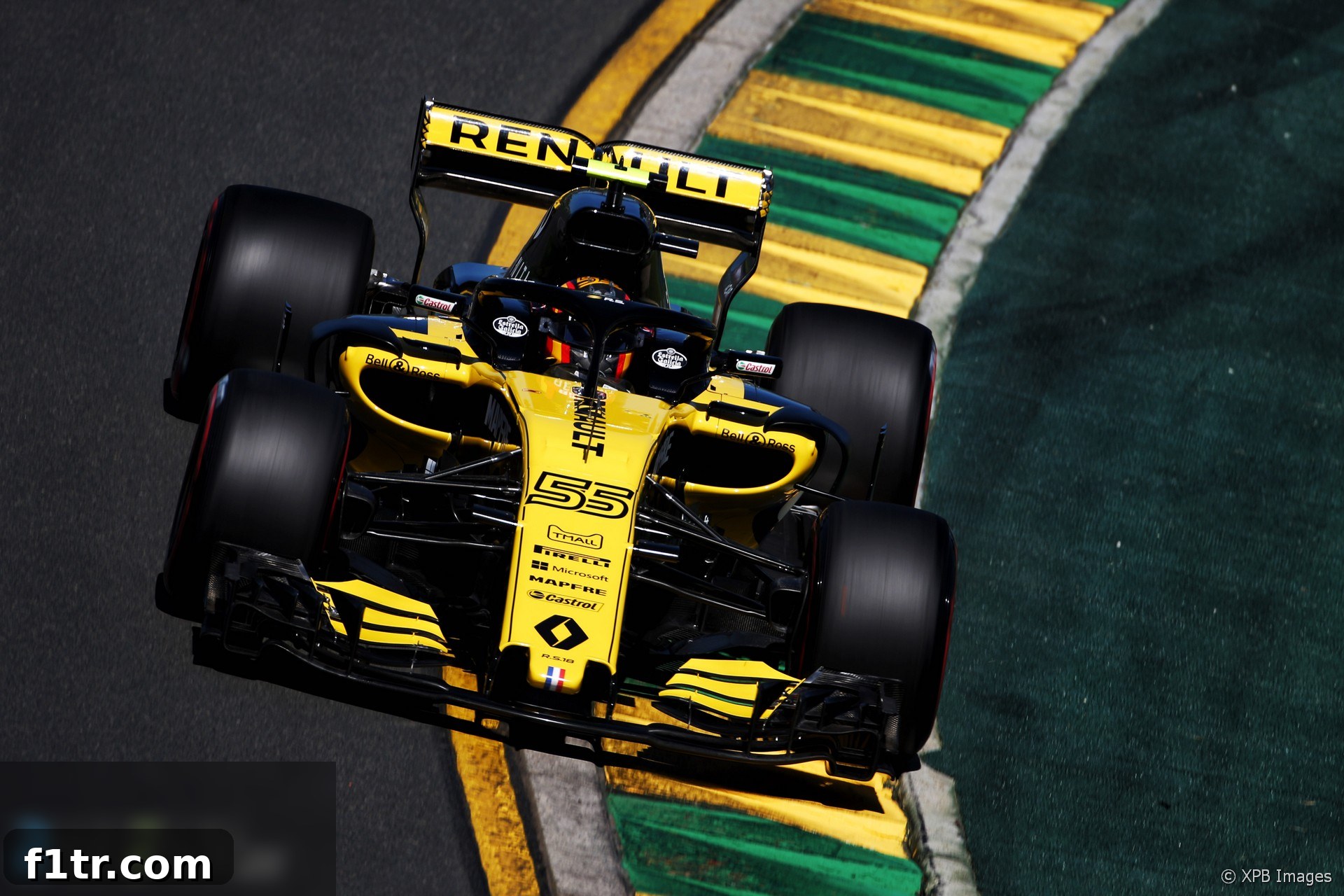
Anticipation for the 2018 Formula 1 season reached a fever pitch as teams unveiled their new machinery and completed crucial pre-season testing. While the spotlight often shines brightest on the sport’s traditional ‘big three’ – Mercedes, Ferrari, and Red Bull Racing – a compelling narrative began to emerge from the midfield. Claire Williams, then Deputy Team Principal of Williams Racing, was among those keenly observing the shifting dynamics, specifically highlighting the significant strides made by rival constructor Renault.
Williams predicted that the French manufacturer’s team would not only close the gap but would actively “snap at the heels” of the sport’s established front-runners, a sentiment that underscored the intensifying competition within Formula 1. This prognostication signaled a potential shake-up in the Constructors’ Championship, a battle that promised to be more thrilling and unpredictable than in recent years.
Renault’s Ascent: A ‘Phenomenal Turnaround’ on the F1 Grid
Renault’s journey back to Formula 1 as a full-fledged factory team had been a meticulous process, marked by substantial investment in personnel, infrastructure, and engine development. Having acquired the Lotus F1 Team at the end of 2015, the Enstone-based outfit embarked on an ambitious multi-year plan to return to championship-contending status. Their initial seasons were dedicated to rebuilding and laying a solid foundation, which now appeared to be bearing fruit as the 2018 season approached.
Claire Williams herself acknowledged the impressive nature of their progress. “Renault have definitely done a pretty impressive job,” she remarked. “They’re probably going to be snapping at the heels of the top three.” This wasn’t merely a casual observation but a well-informed assessment from a direct competitor, recognizing the tangible gains Renault had made over the off-season. Their performance in pre-season testing hinted at a significant leap forward, suggesting they were ready to challenge for more consistent points finishes and even podiums.
“That’s a phenomenal turnaround,” Williams continued, reflecting on Renault’s transformation. “To turn around this team in the sport takes a huge amount of hard work. They seem to have done a really good job.” Her comments underscored the sheer dedication and strategic planning required to elevate a Formula 1 team from the back of the grid to a position where it can realistically eye the established front-runners. The meticulous development of their power unit, combined with a continually improving chassis, positioned Renault as a significant force to be reckoned with in the impending F1 season.
The Intensifying Midfield Battle: A Win for Fans, A Challenge for Teams
The prospect of Renault joining the ranks of competitive teams was not an isolated event but rather indicative of a broader trend: the intensifying battle within Formula 1’s midfield. For several seasons, the ‘big three’ had enjoyed a significant performance advantage, often leading to predictable race outcomes. However, the 2018 season promised a much tighter field, particularly from fourth position downwards, which Claire Williams enthusiastically embraced for the sport as a whole.
“It’s great to have so many teams fighting at the top and in the midfield,” Williams stated. “It’s going to be great for the fans to watch, but it’s going to be challenging for the teams that are behind them.” This tight competition meant that scoring points, let alone securing podium finishes, would become a much harder endeavor for every team outside the absolute top tier. It would demand impeccable strategy, flawless execution, and consistent performance from both drivers and machinery throughout the entire season. The potential for unexpected results, thrilling overtakes, and unpredictable championship narratives significantly amplified the appeal of the 2018 Formula 1 calendar.
Beyond Renault, other teams like McLaren, Force India, Haas, and even Toro Rosso were showing promising signs of progress. This meant that the battle for every single point would be fiercer than ever before. For teams like Williams, who had finished fifth in the Constructors’ Championship the previous year, this increased competition meant that merely maintaining their position would be a significant undertaking, let alone achieving their ambitions of climbing higher up the pecking order. The pressure was on every team to extract maximum performance from their packages and drivers from the very first Grand Prix.
Williams Racing: Aspirations and Obstacles in a Competitive Era
Williams Racing, with its storied history and nine Constructors’ Championships, entered the 2018 season with a clear objective: to improve upon its fifth-place finish from the previous year. However, Claire Williams was acutely aware of the magnitude of the task, particularly given the advancements made by their rivals. The team, known for its independent spirit and engineering prowess, faced the perennial challenge of competing against manufacturer-backed juggernauts with vastly superior resources.
“We finished last year in the championship fifth, which is not where we wanted to be,” Williams candidly admitted. “Really, our target has to be higher than that if we’re going to make progress.” This ambitious goal reflected the team’s relentless pursuit of excellence and their determination to return to the front of the grid. However, the path to improvement was fraught with obstacles, not least of which was the burgeoning strength of their direct competitors. The increased performance from teams like Renault meant that the margins for error would be even thinner, and every development step would need to be impactful and timely.
The inherent challenges for an independent outfit like Williams were magnified in an era of increasing technical complexity and financial investment in Formula 1. Developing a competitive chassis, optimizing engine performance (as a customer team receiving power units from Mercedes), and managing a tight budget while battling well-funded factory teams demanded exceptional efficiency and ingenuity. Claire Williams reiterated the difficult landscape: “The challenge from Renault and other teams will make it harder for Williams to finish higher than it did last year.” The competitive pressure was palpable, and Williams knew her team would need to deliver a flawless campaign to achieve their targets.
Early Practice Insights: A Mixed Bag for Williams
The Australian Grand Prix, the opening round of the 2018 F1 season, offered the first real insights into the pecking order. Practice sessions, while not fully representative, provided crucial data and an early glimpse of team performances. For Williams, the initial sessions brought a mixture of encouraging pace and frustrating reliability concerns, highlighting the fine margins and technical complexities inherent in modern Formula 1.
In terms of outright speed, Williams demonstrated competitive potential, particularly in the second practice session. The team managed to end FP2 within two-tenths of a second of Renault, a positive indicator that their car, the FW41, possessed reasonable pace. This close proximity to a strong midfield rival offered a glimmer of hope that Williams could indeed be in the fight for solid points. However, the sessions were not without their difficulties, underscoring the challenges of a new season and the push for performance limits.
Lance Stroll, who had set Williams’ quickest time during the practice sessions, unfortunately, brought his car to a halt on track at the very end of the second session. Chief Technical Officer Paddy Lowe quickly moved to clarify the situation, stating, “Our car got too close to the power unit limits doing practice starts, so we stopped on track after the chequered flag to preserve the engine.” While the immediate concern was engine preservation rather than a catastrophic failure, any unscheduled stop signals potential issues with managing the complex power unit systems and extracting maximum performance safely. Such incidents, even minor ones, can be costly in terms of track time and data collection.
Meanwhile, Sergey Sirotkin, the team’s other driver, also encountered issues during the morning session, losing valuable track time due to a radio problem. In the highly competitive world of Formula 1, every minute of practice is critical for driver acclimatization, car setup optimization, and data gathering. Lost time due to technical glitches, however minor, can put a team at a significant disadvantage, especially at the start of a new season where every detail matters.
McLaren’s Rebound: A New Chapter with Renault Power
Another prominent team navigating a new chapter in 2018 was McLaren, who had made the strategic decision to switch from Honda to Renault power units. This move was widely seen as a bid to regain their competitive edge after several challenging seasons plagued by reliability and performance issues with their previous engine supplier. Claire Williams also commented on McLaren’s potential, noting their pre-season struggles but acknowledging their underlying strength.
“But Renault have done a great job, McLaren have had some reliability issues in testing but I think they’ve got a pretty sound race car,” Williams observed. This perspective encapsulated the cautious optimism surrounding McLaren. Despite encountering some teething problems with their new Renault engines during testing, the general consensus was that the MCL33 chassis was aerodynamically strong. The hope was that with a more reliable and powerful engine partner, McLaren could finally unleash the full potential of their car and rejoin the battle at the sharp end of the midfield, if not challenge the ‘big three’ themselves. Their presence further intensified the already fierce competition, making the 2018 F1 season one of the most anticipated in recent memory.
In conclusion, Claire Williams’ predictions for the 2018 Formula 1 season painted a picture of exhilarating competition and strategic challenges. Renault’s ‘phenomenal turnaround’ promised to elevate the midfield battle to unprecedented levels, creating a thrilling spectacle for fans and an immense test for every team on the grid. While Williams Racing aimed to climb higher, the increased strength of rivals like Renault and McLaren meant that achieving their objectives would require unwavering effort, precision, and resilience. The season was set to be a captivating display of engineering prowess, driving talent, and fierce competition, promising an unforgettable year in Formula 1 history.
Go ad-free for just £1 per month>> Find out more and sign up
2018 F1 season
- F1 feared “death knell” for Drive to Survive after Ferrari and Mercedes snub
- McLaren staff told us we were “totally crazy” to take Honda engines in 2018 – Tost
- ‘It doesn’t matter if we start last’: How Red Bull’s junior team aided Honda’s leap forward
- Honda’s jet division helped F1 engineers solve power unit problem
- McLaren Racing losses rise after Honda split
Browse all 2018 F1 season articles