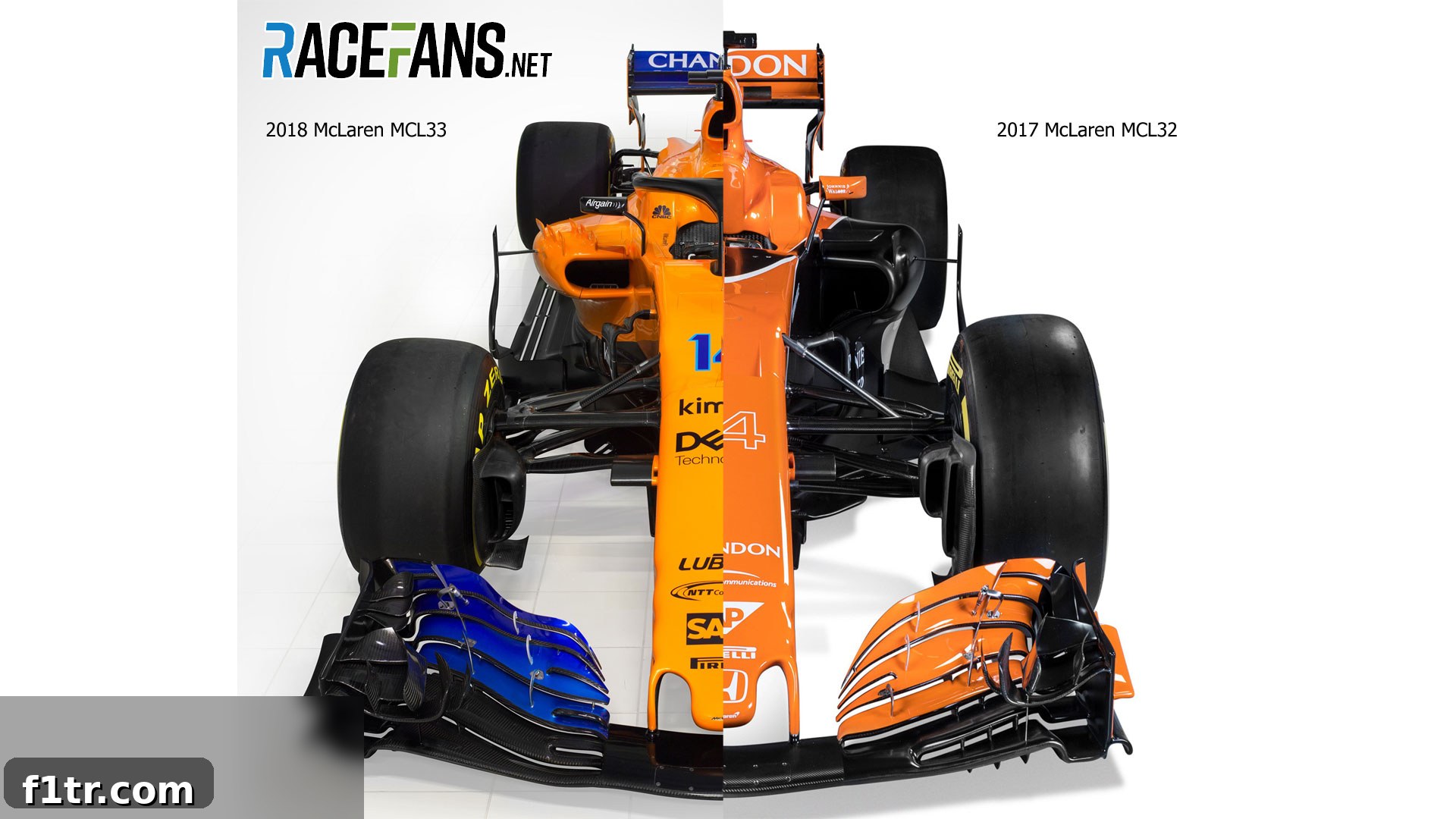
McLaren MCL33: Under the Skin of the Renault-Powered Challenger
The dawn of a new era for McLaren in Formula 1 brought with it one of the most significant changes in recent team history: a seismic switch from Honda to Renault power. This fundamental alteration, decided long after the initial design phases for the 2018 challenger, the MCL33, were underway, immediately ignited a firestorm of debate across the paddock and among fans alike. The central question for the season was whether this pivotal change in power unit suppliers could truly transform McLaren’s fortunes, ending years of unfulfilled potential and reliability woes that plagued their partnership with Honda.
Racing director Eric Boullier had acknowledged that the late decision to transition power units had set the team back by approximately two weeks in their rigorous development schedule. However, despite this considerable challenge, the Woking-based outfit firmly asserted that they had not been forced to compromise on the core design philosophy of their new car. This philosophy, as a detailed technical comparison with its predecessor, the MCL32, clearly illustrates, remained remarkably consistent, suggesting a strong belief in their chassis concept even amidst a major powertrain overhaul. The true test, of course, would be on the track, to see if the highly-rated chassis could finally unlock its full potential with a more competitive and reliable engine behind it.
Visualizing the Evolution: MCL33 vs. MCL32
For an interactive comparison, use the slider below to transition between images of the McLaren MCL33 and last year’s MCL32. Note: some images may have been subtly altered for enhanced comparative clarity and should not be used as a precise reference for exact measurements or scale. These visual aids are designed to highlight key design evolutions and continuities.
McLaren MCL33 and MCL32: Front View Analysis
Despite the debilitating struggles with an underpowered and notoriously unreliable Honda power unit in the preceding seasons, McLaren’s chassis consistently garnered praise as one of the most aerodynamically and mechanically effective on the grid, particularly excelling in high-speed cornering scenarios. This strong foundation provided the team with a ray of hope, suggesting that a more competitive engine could unlock significant performance gains.
From an initial outward inspection, the new MCL33 bore a striking resemblance to the launch specification of its predecessor, the MCL32. This visual continuity was especially pronounced in the crucial aerodynamic treatment surrounding the bargeboard area. These intricate components, located just behind the front wheels, play a vital role in managing the turbulent airflow generated by the front tyres and directing it efficiently towards the sidepods and the rear of the car. The MCL33’s early season design in this area appeared relatively simplistic when compared to the highly complex, multi-element solutions often seen on competitor cars. This observation strongly suggested that McLaren had considerable development planned for this critical zone throughout the 2018 season, intending to refine and optimize its aerodynamic performance as the year progressed.
Furthermore, the front suspension layout remained largely congruent with that of the previous year’s car, despite the off-season introduction of revised regulations governing this specific area of Formula 1 car design. This decision underscored McLaren’s confidence in their existing mechanical platform and perhaps their belief that the regulatory changes did not necessitate a radical overhaul of their tried-and-tested front end geometry. The fine-tuning of suspension dynamics is crucial for ride quality, tyre management, and aerodynamic stability, especially at varying speeds and through different corner types, and McLaren’s consistency here indicated a mature understanding of their chassis’ characteristics.
The front wing and nose cone also showcased a clear evolutionary path rather than a revolutionary redesign. While subtle changes in slot details, endplate geometry, and under-wing profiling are always present in F1 development, the fundamental concepts remained aligned with the MCL32. This approach allowed McLaren to leverage existing knowledge and data, focusing their adaptation efforts on the new power unit integration while incrementally improving established aerodynamic principles. The efficiency of the front aero package is paramount, dictating the initial airflow manipulation that impacts the entire car’s performance, and McLaren’s designers aimed for stability and predictability.
Go ad-free for just £1 per month>> Find out more and sign up
McLaren MCL33 and MCL32: Side Profile Examination
From a side profile perspective, the MCL33 presented a clear and unmistakable continuation of the design philosophy that underpinned its predecessor. A defining characteristic of McLaren’s recent chassis designs, including the MCL33, was its significantly steeply-raked stance. The “rake concept” involves running the car with a higher rear ride height relative to the front, creating a larger volume under the car at the rear diffuser. This design choice aims to enhance aerodynamic performance, specifically by increasing the downforce generated by the floor and diffuser assembly.
A high-rake car manipulates the airflow passing beneath the chassis, effectively sealing the diffuser and creating a powerful low-pressure area that sucks the car towards the track. While offering considerable aerodynamic benefits, particularly in certain cornering phases, this approach also comes with inherent challenges. High-rake designs can be more sensitive to pitch changes, meaning that variations in ride height during braking, acceleration, and cornering can significantly alter the car’s aerodynamic balance. This sensitivity demands exceptional mechanical setup and driver skill to manage, ensuring the aerodynamic platform remains stable and predictable across varying track conditions and speeds. McLaren’s continued commitment to this design concept underscored their belief in its fundamental advantages and their engineering team’s ability to extract performance from it, a philosophy shared by other successful teams like Red Bull Racing, renowned for their high-rake cars.
The sidepods, while visually similar, likely underwent internal revisions to accommodate the new Renault power unit’s cooling requirements and ancillary systems. The sculpted surfaces and aerodynamic furniture atop and around the sidepods are critical for guiding airflow towards the rear wing and diffuser, minimizing drag, and optimizing overall downforce. These intricate details, often difficult to discern from initial launch images, are subject to continuous development throughout the season as teams seek marginal gains.
McLaren MCL33 and MCL32: Top-Down Perspective
The top-down view offers critical insights into the car’s packaging and aerodynamic shaping, especially concerning the engine cover and rear bodywork. When McLaren first unveiled its car featuring the Honda power unit in 2015, the team proudly boasted about their pioneering “size zero” engine philosophy. This ambitious concept aimed to make the rear of the car as incredibly compact as possible, theorizing that an extremely tight engine package would allow for maximum aerodynamic efficiency around the critical rear end, enhancing airflow to the diffuser and rear wing.
However, the reality of the “size zero” concept proved challenging. While theoretically sound, the extreme compactness led to significant cooling issues and reliability problems, as components were pushed to their thermal limits and maintenance access became incredibly difficult. Over time, McLaren gradually departed from this ultra-aggressive approach as the partnership with Honda struggled. Interestingly, a comparison of the 2018 MCL33 with its predecessor revealed remarkably little visible difference in the installation and packaging of the new Renault engine at the rear of the car. This observation was quite telling, suggesting that McLaren either had limited scope for radical redesign given the late engine change, or they deliberately opted for a more conservative and safer approach to engine packaging.
This packaging strategy on the MCL33 did not appear to be as aggressively compact as that seen on the Red Bull RB14, which, coincidentally, utilized the very same Renault power unit. Red Bull, known for its expertise in chassis design and aerodynamic integration, consistently pushes the boundaries of engine packaging, often creating extremely tight and efficient rear bodywork. McLaren’s more conventional approach, therefore, would not have come as a surprise. It was highly plausible that the team had made a conscious decision to launch the MCL33 with a more conservative design, prioritizing crucial factors such as effective cooling and, critically, increasing their chances of achieving reliable pre-season running. The previous years with Honda had been plagued by persistent reliability issues during testing, often limiting crucial track time and data collection. By adopting a less radical packaging solution, McLaren aimed to mitigate these risks, ensuring they could gather sufficient data and fine-tune the car before the competitive season commenced. This strategic choice reflected a pragmatic shift towards foundational reliability and comprehensive preparation, laying a more stable groundwork for performance development.
The 2018 F1 Season: A Pivotal Year for McLaren
The 2018 Formula 1 season was envisioned as a transformative year for McLaren, marking a fresh start with a new power unit supplier and renewed aspirations. The technical choices made in the MCL33, from the continuity of its chassis philosophy to the pragmatic approach to engine packaging, all pointed towards a team determined to establish a stable and reliable platform from which to build. The challenges of integrating a new power unit, optimizing its performance characteristics, and ensuring consistent reliability are immense, especially when undertaken late in the design cycle. However, McLaren’s confidence in their core chassis design, coupled with Renault’s proven track record as an engine manufacturer, fueled optimism.
The season ahead would be a test of McLaren’s engineering prowess, their ability to unlock the potential of the Renault engine, and their capacity for in-season development. The initial conservative design of the MCL33, particularly around the aerodynamic details and engine packaging, hinted at a robust development plan throughout the year. Teams constantly evolve their cars, bringing significant upgrade packages to races, and McLaren was expected to be no exception. Their focus on reliability in pre-season testing was a direct response to past frustrations, indicating a strategic shift towards building a strong, dependable foundation for competitive performance.
Ultimately, the success of the McLaren MCL33 in 2018 hinged not just on raw pace, but on the delicate balance between aggressive innovation and rock-solid consistency – a balance they desperately sought to achieve after years of turbulence. The journey from a renowned chassis to a championship contender required every element of the car to work in harmonious synergy, a goal that the Renault partnership was meant to finally facilitate.
Related Insights from the 2018 F1 Season
Here are additional articles related to the 2018 F1 season and McLaren’s journey:
- F1 feared “death knell” for Drive to Survive after Ferrari and Mercedes snub
- McLaren staff told us we were “totally crazy” to take Honda engines in 2018 – Tost
- ‘It doesn’t matter if we start last’: How Red Bull’s junior team aided Honda’s leap forward
- Honda’s jet division helped F1 engineers solve power unit problem
- McLaren Racing losses rise after Honda split
Browse all 2018 F1 season articles