Formula 1 is a sport defined by relentless competition, not merely on the hallowed asphalt tracks but also in the strategic battles fought behind the scenes. Here, teams constantly strive for the slightest competitive advantage, often through financial maneuvering and technological investment. The latest battleground to capture the sport’s attention revolves around capital expenditure (CapEx) and the intricate question of how much teams can invest in upgrading their facilities to truly compete on an equal footing with their rivals.
A monumental shift occurred in Formula 1 in 2021 with the groundbreaking introduction of its inaugural Financial Regulations. This pioneering move was designed with a singular, ambitious aim: to cultivate a more balanced, sustainable, and intensely competitive championship by leveling the financial playing field. For the first time in the sport’s storied history, all teams were subjected to stringent budget caps, a mechanism meticulously crafted to prevent the wealthiest outfits from simply outspending their way to perpetual success and domination, thereby ensuring that raw financial power no longer guarantees a seat at the top.
Under these transformative regulations, the operational expenses (OpEx) limit for the current season is set at a baseline figure of $135 million (£106.8m), though specific adjustments apply for various factors. This comprehensive cap is designed to cover nearly every facet required to operate, design, develop, build, and race an F1 car. It encompasses a vast array of expenditures, including the salaries of the majority of staff members, the cost of materials and components, extensive research and development initiatives, and all race weekend operations. However, it’s crucial to note that some specific, high-value items, such as the salaries of a handful of top-tier employees – typically the team principal and the two highest-paid drivers – are explicitly excluded from this OpEx limit, recognizing their unique market value.
Beyond the realm of day-to-day operational costs, another critical financial constraint applies directly to capital expenditure (CapEx). This limit currently stands at $45 million (approximately £36 million, according to conversion rates specified within the Financial Regulations) per year. This CapEx category is dedicated to significant, long-term investments that fundamentally enhance a team’s core capabilities for building and developing its car. It includes essential infrastructure upgrades such as state-of-the-art wind tunnels, advanced simulators, the acquisition of cutting-edge manufacturing tools and machinery, the implementation of sophisticated IT systems (like Enterprise Resource Planning, or ERP), and the overall modernization and expansion of factory facilities. In the budget cap era, the quality, efficiency, and modernity of a team’s hardware and infrastructure have become increasingly paramount. The more cost-effectively and innovatively a team can develop and produce components, the faster it can bridge performance gaps and gain crucial ground on its competitors, making CapEx a silent but potent determinant of long-term success.
The Genesis of F1 Financial Regulations: A Quest for Parity and Sustainability
Before the pivotal year of 2021, Formula 1 was characterized by an ever-widening financial chasm that separated the top-spending giants from the smaller, often privately-owned teams. Powerhouses like Mercedes, Ferrari, and Red Bull, backed by immense resources, could pour hundreds of millions – and in some instances, even billions – into their operations, unfettered research and development, and infrastructure. This virtually guaranteed their perennial dominance. This stark disparity led to highly predictable championship outcomes and a stagnant competitive environment where only a select few truly had a realistic chance at victory. The introduction of the budget cap was a direct, decisive response to this profound imbalance, a bold endeavor by the FIA and Formula 1 management to inject renewed excitement, unpredictability, and long-term sustainability into the sport. The core philosophy was fundamentally sound: to rein in the runaway spending of the leading teams, thereby creating an opportunity for others to genuinely compete, if not immediately, then within a few seasons down the line, ultimately fostering a more sustainable, equitable, and thrilling championship battle for fans worldwide.
While the operational expense cap largely received widespread support for effectively limiting the yearly running costs of racing an F1 car, the capital expenditure limit has rapidly emerged as a significant and increasingly contentious point of debate. While undoubtedly intended to prevent unchecked, limitless spending on new facilities and tools, it has inadvertently begun to penalize teams that have either historically suffered from chronic underinvestment or were simply caught at an unfortunate timing juncture relative to the new regulations. At least one team, Williams Racing, a venerable name in Formula 1, has discovered firsthand that catching up with established rivals, given the current stringent CapEx constraints, will be an exceedingly long, arduous, and potentially insurmountable journey.
Williams’ Predicament: Outdated Infrastructure Meets Modern Financial Constraints
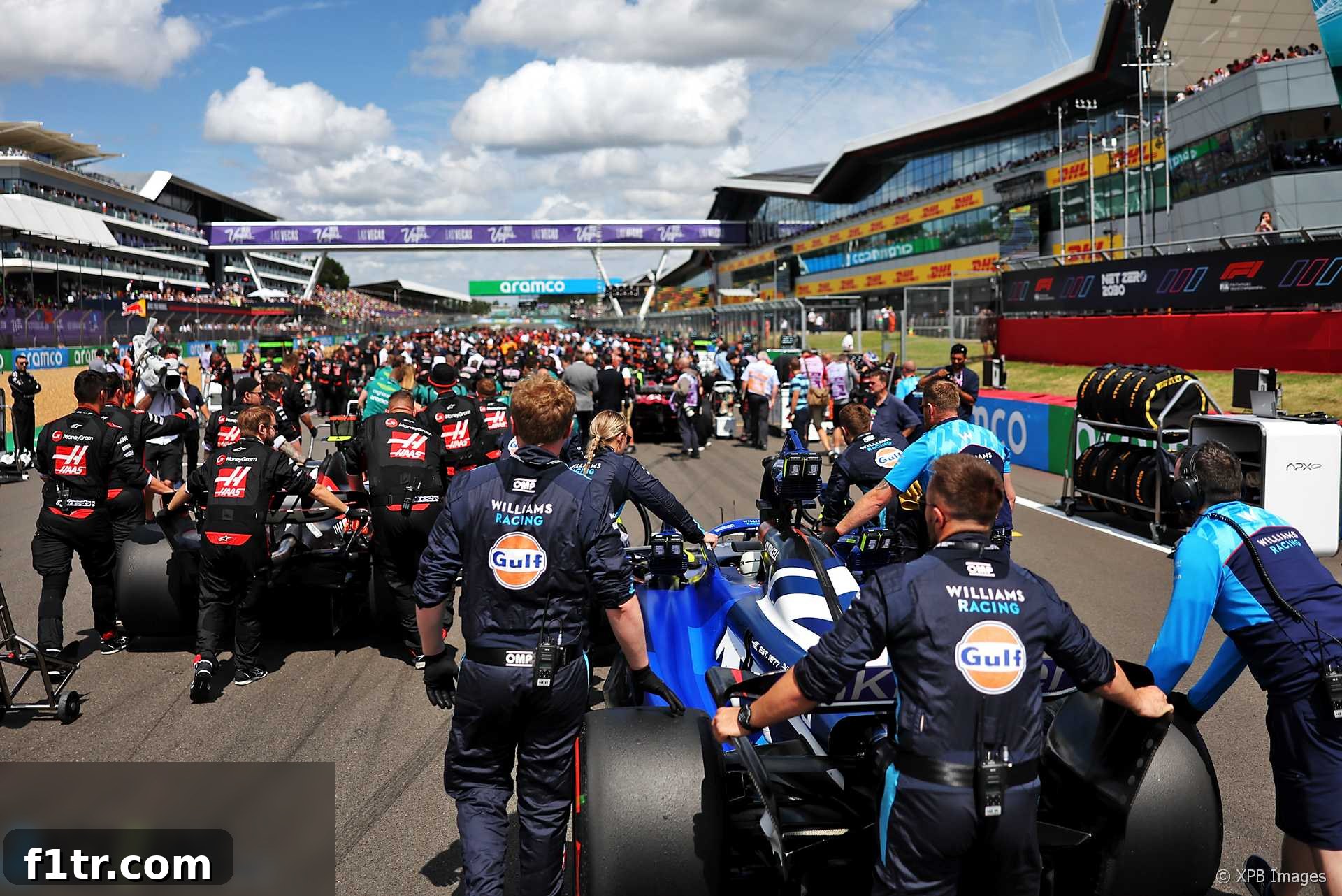
Williams Racing, a team with a glorious F1 heritage but one that has endured a particularly difficult and prolonged period of underperformance, has frequently found itself languishing at the very tail-end of the constructors’ championship for four of the last five seasons. The arrival of James Vowles as Team Principal from Mercedes – a team that had enjoyed an unparalleled and dominant run of eight consecutive constructors’ championships before last year – brought with it a fresh perspective, but also a stark and sobering realization. Vowles, armed with his intimate knowledge of state-of-the-art F1 operations and facilities, was remarkably candid about the monumental challenge confronting Williams. Speaking openly to RaceFans earlier this year, Vowles expressed his genuine disbelief at the expectation that Williams could realistically compete effectively with facilities that are “20 years out of date” when contrasted with the cutting-edge, technologically advanced infrastructure prevalent at top teams like Mercedes.
Vowles painted a vivid and concerning picture of the operational challenges faced daily at Williams’ Grove headquarters: “It’s an organization that is incredible in what it achieved. It has a car here, 17,000 components that it put together without any digitised system at all. I didn’t even believe that was possible in modern-day Formula 1.” This powerful statement underscores a profound and alarming technological gap. In an era where computational fluid dynamics (CFD) is standard, where advanced simulation tools drive design decisions, where digital manufacturing processes streamline production, and where integrated Enterprise Resource Planning (ERP) systems manage every aspect of an operation, Williams was, in many crucial areas, operating with analog methods and antiquated processes. This made efficiency, rapid development, and swift problem-solving extremely difficult. This institutional legacy of chronic underinvestment meant that the team needed far more than just new personnel; it required a significant, wholesale overhaul of its very operational backbone, something the CapEx limit makes incredibly challenging.
Since his arrival, James Vowles has emerged as a vocal and persistent advocate for increasing the CapEx limit, specifically to enable teams like Williams to adequately invest in critically needed modern facilities and essential infrastructure. Williams’ particular situation was exacerbated by the unfortunate timing of investor Dorilton Capital’s takeover at the very end of the 2020 season. This coincided almost perfectly with the immediate implementation of the cost cap from 2021. This meant that while Williams finally had new investment capital, the ability to funnel that much-needed money into significant infrastructure upgrades was immediately and severely constrained by the newly introduced financial regulations.
The Aston Martin Contrast: A Telling Tale of Timing and Investment
The unfortunate timing and its profound consequences for Williams stand in stark and revealing contrast to the situation at Aston Martin. Team owner Lawrence Stroll strategically acquired the team (then known as Racing Point) a crucial two years earlier than Dorilton Capital’s investment in Williams. This earlier takeover provided Stroll with a vital window of opportunity to initiate substantial, large-scale spending on new, modern facilities and cutting-edge equipment *before* the strict CapEx limits officially came into effect. This strategic head start enabled Aston Martin to embark on a massive factory overhaul, culminating in their move into an impressive, state-of-the-art facility just a few weeks ago. Such a significant advantage, born purely from the timing of investment relative to the introduction of the new rule changes, powerfully highlights a potential systemic flaw in the current CapEx structure for teams striving desperately to catch up and achieve competitive parity.
The F1 Commission Debate: Proposals and Their Rejections
To Vowles’ growing and understandable frustration, two distinct proposals, both aimed at providing Williams – and potentially other struggling teams – with the essential means to significantly ramp up their facility investments, were ultimately rejected during a contentious and unproductive F1 Commission meeting. He candidly described the proceedings as teams going “round in circles” without managing to reach any meaningful consensus or resolution.
The first proposal advocated for a universal, across-the-board increase in the CapEx limit. This suggestion garnered notable support from several teams across the grid, but critically, it failed to win over the key decision-makers: the FIA and Formula 1 management. The second proposal, arguably a more targeted and nuanced suggestion, posited that if a team could demonstrably prove a verifiable disadvantage in specific, crucial areas – such as outdated IT systems, archaic manufacturing equipment, or insufficient simulation capabilities – and showed a clear, compelling need for additional funding to rectify these deficiencies, they would receive special, one-off permission to address these specific infrastructure gaps. This more tailored, case-by-case approach, however, found even less favor and encountered stronger resistance among the wider grid, making its passage impossible.
“It’s disappointing because there were a number of votes on increasing just globally the amount of CapEx by 50 or 70 million pounds,” Vowles explained, articulating his disappointment. “The blanket increase was the one that had the most support, as you would imagine, because all teams across the grid benefit from it. It’s not the right solution for the sport, but even as Williams, I would have preferred a blanket increase over nothing, which is where we are today.” The case-by-case proposal, despite its targeted nature, also failed to garner sufficient support from enough of Williams’ rivals, even after Vowles’ repeated, tireless attempts to get it over the line. He humorously, yet tellingly, noted, “My hand was actually aching from the amount of time I held it in the air,” underscoring the futility of his efforts.
The Stance of Stability: Why Rivals Oppose CapEx Loosening
The rival teams who steadfastly oppose any loosening of the current CapEx restrictions articulate their concerns with a clear and unwavering focus on maintaining stability and, crucially, preventing a rapid re-escalation of costs – precisely the outcome the budget cap was meticulously designed to avert. Frederic Vasseur, the influential Ferrari team principal, has been a vocal champion of the budget cap, asserting unequivocally that it has brought much-needed financial stability and fostered a healthier, more competitive environment throughout the sport.
Vasseur emphasized his perspective: “My point of view is that we have a regulation, we changed many times the regulation and for me the good shape of F1 today is due to the stability. If you start to change the regulation each week because someone has an issue or wants to invest somewhere, it’s the end of the stability. And it’s a no-end process because today it’s Williams who wants to have a new ERP [Enterprise Resource Planning] system, tomorrow it will be another one who wants to buy new trucks.” An ERP system, as Vasseur correctly noted, is critical software that helps teams meticulously track and manage all organizational activities, including the precise monitoring of spending on the design and production of new parts. Allowing an exception for such a fundamental system, in Vasseur’s view, would inevitably trigger an endless stream of similar requests for other crucial equipment, effectively unraveling the very fabric of financial control and stability that the budget cap sought to establish.
Mercedes CEO and Team Principal Toto Wolff echoed Vasseur’s sentiments with equal conviction, highlighting the perilous slippery slope such exemptions could create. “Some teams jumped on the bandwagon and said, well, actually we would like to have a little bit more CapEx,” Wolff explained. “That number went up from 50 million to 60 million, 70 million, 90 million, and suddenly it was like free rein. We need the stability of regulations on financial relations. You need to be able to have a business plan that is valid and not free rein that every two years we change the goalposts on CapEx. So that’s why this was the end of the CapEx discussion.” Both Vasseur and Wolff firmly believe that the long-term integrity and efficacy of the budget cap hinge critically on its consistent and unyielding application, arguing that any significant deviation risks fundamentally undermining its foundational principles and potentially returning the sport to a pre-2021 era of unchecked and unsustainable spending.
Seeking a Balanced Solution: A Path Forward for Formula 1’s CapEx Challenge
Despite the strong and unified opposition to blanket CapEx increases or broad, open-ended exemptions, there might still be a glimmer of hope for teams grappling with historical infrastructure disadvantages, particularly for Williams. Toto Wolff, while maintaining a firm stance on the paramount need for regulatory stability, subtly indicated that a highly tailored solution for Williams might still be considered: “Maybe we’ll find a solution for Williams.” This intriguing suggestion implies that a highly specific, perhaps one-off or strictly time-limited, targeted CapEx allowance could potentially be explored. Such an approach would be in stark contrast to a broad loosening of the rules that would indiscriminately affect all teams, potentially reigniting a spending race. Any such solution would require careful and meticulous consideration to ensure it genuinely addresses historical disadvantages without inadvertently opening the door to opportunistic or excessive spending by other outfits.
Williams has, encouragingly, shown tangible signs of recovery and progress this year, managing to haul themselves off the very bottom of the constructors’ pile. They are currently sitting seventh in the championship at the halfway point, a testament to the renewed efforts and strategic direction under Vowles. However, despite this progress, they still have a considerable journey ahead to consistently score points, challenge higher up the grid, and fully regain their competitive footing. Vowles estimates that it took “20 years of underinvestment” for the team to find itself in its current, deeply disadvantageous position. This deep-seated, systemic issue cannot realistically be resolved overnight, even with fresh capital. The fundamental ability to invest in modernizing core infrastructure is not just about building faster cars in the short term, but about creating an efficient, adaptable, and future-proof organization capable of sustained competitiveness.
Ultimately, the challenge of capital expenditure limitations represents a key, significant, and as yet, unresolved problem within Formula 1’s otherwise lauded budget cap framework. If the sport is truly committed to its stated overarching goal of bringing the performance of all teams to a more competitive and equitable level, a pragmatic and balanced solution must be found. This solution needs to delicately balance the undeniable desire for financial stability and predictability with the equally undeniable need for historical underperformers to invest adequately in their long-term future. Without such a carefully crafted mechanism, the budget cap, while commendably successful in curbing excessive operational spending, risks inadvertently entrenching existing disparities in infrastructure. This could, ironically, prevent true competitive convergence, leaving certain teams perpetually playing catch-up and undermining the very spirit of fair competition that F1 is so eager to realize. The integrity, competitive balance, and long-term vision of Formula 1 profoundly depend on finding an equitable and sustainable path forward for CapEx.
News Focus
- No happy ending for Ricciardo’s made-for-Netflix redemption arc
- No ‘two alphas’ for Red Bull as team forms its longest-running driver line-up
- Will Mercedes come to the rescue of Ocon’s career a third time?
- How the midfield’s hottest team mate rivalry boiled over
- Petty officialdom or deserved decisions? Five drivers stripped of wins in 2024
Browse all News Focus articles