Formula 1 & Motorsport Insights: Alonso’s Alpine Setback, Andretti’s IndyCar Reality, and Sprint Race Debates
Welcome to our comprehensive motorsport round-up, bringing you the latest insights and developments from the world of Formula 1 and beyond. Today, we delve into the mechanical woes that plagued Fernando Alonso’s United States Grand Prix, leading to a frustrating retirement. The Alpine driver confirmed that a critical rear wing failure, attributed to fatigue, was the root cause of his early exit from the Austin event. This incident has prompted his team to implement immediate reinforcements, aiming to prevent a recurrence as the season progresses towards its thrilling climax.
Latest Motorsport News and Analysis
Alonso’s US Grand Prix Retirement: Alpine Tackles Rear Wing Fatigue
Advert | Become a Supporter & go ad-free
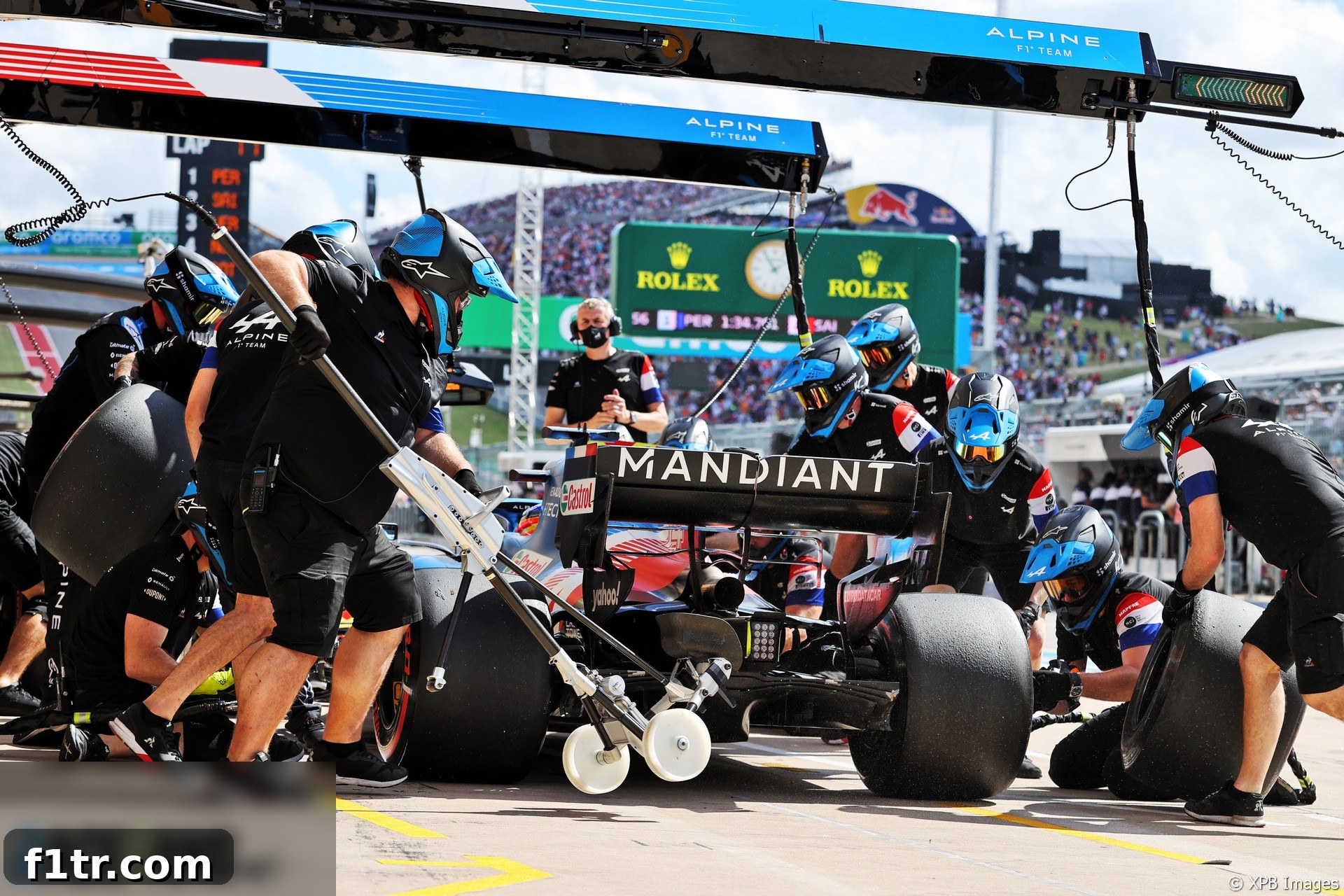
The United States Grand Prix proved to be a challenging weekend for two-time world champion Fernando Alonso. His race came to an abrupt end on lap 49, forcing him to retire from what was shaping up to be a competitive drive. Post-race analysis and subsequent comments from Alonso ahead of the Mexican Grand Prix shed light on the frustrating incident: a critical failure at the rear of his Alpine A521 car, specifically involving the rear wing. Alonso unequivocally stated that the cause was “pure fatigue overload” on the aerodynamic component, highlighting the immense and sustained stresses modern Formula 1 cars endure throughout a race weekend.
The concept of “fatigue overload” refers to the weakening of a material over time due to repeated stress cycles, eventually leading to structural failure. In the demanding environment of Formula 1, where cars experience extreme downforce and vibration, components are engineered to incredibly tight tolerances. However, unforeseen circumstances or specific track characteristics, like those at Circuit of the Americas, can push these limits. For Alpine, this incident served as a crucial lesson. Alonso confirmed that the team has already taken proactive measures, reinforcing the affected part of the rear wing for the remainder of the 2021 season, aiming to prevent any similar issues.
Reflecting on the Austin event, Alonso acknowledged its disappointment. “Austin probably was one of the lows for us,” he remarked, underscoring the team’s struggles during that particular weekend. This setback was especially frustrating for Alpine, who are locked in a tight battle for championship positions in the Constructors’ standings. Reliability issues, particularly those leading to retirements, can significantly impact a team’s points tally and overall morale. However, with the Mexican Grand Prix on the horizon, Alonso expressed optimism for a stronger performance. “Hopefully here we can come back on a strong form,” he added, signaling the team’s determination to rebound and secure valuable points in the upcoming races.
Andretti on IndyCar’s Documentary Potential: A Different Kind of Drama
The phenomenal success of Netflix’s ‘Drive to Survive’ series has not only catapulted Formula 1 into mainstream pop culture but has also sparked conversations across other motorsport disciplines about similar documentary formats. Legendary American racer and team owner Michael Andretti recently weighed in on rumors of a potential IndyCar equivalent, expressing his reservations about whether the same dramatic formula would translate successfully to the North American open-wheel series. While acknowledging the potential benefits of increased exposure, Andretti cautioned against simply replicating F1’s approach.
“I guess it could be good,” Andretti mused, considering the idea. “I just don’t want it to be trying to do the same thing. I don’t know if it’ll have the same effect.” His concerns stem from a fundamental difference in the underlying dynamics and culture of the two championships. ‘Drive to Survive’ thrives on highlighting intense rivalries, team politics, and the high-stakes personal drama that often unfolds behind the scenes in F1. This narrative style has proven immensely popular, drawing in millions of new fans globally.
However, Andretti believes IndyCar operates on a distinct emotional and political landscape. “I think the politics and the things – the stories are a little different in IndyCar,” he elaborated. “I think there’s a little more drama in F1 because there’s a lot more back-stabbing and things like that. I think over here there’s a lot more camaraderie and it’s more about the racing on the racetrack, than the politics off the racetrack.” This perspective suggests that while F1 benefits from its often cutthroat competitive environment, IndyCar fosters a stronger sense of community among its participants.
The emphasis on “camaraderie” in IndyCar, as opposed to the perceived “back-stabbing” in F1, could present a challenge for a documentary aiming for similar dramatic tension. If the core appeal of ‘Drive to Survive’ lies in its portrayal of intense, sometimes fractious relationships and intricate political maneuvering, an IndyCar version might need to find a different angle to capture audience interest. Andretti acknowledged this, stating, “I’m not sure it would have the same interest, but maybe if they can come up with a different angle it would be good.” This highlights the importance of tailoring content to the unique identity of the sport rather than forcing a pre-existing template.
Ultimately, Andretti believes the “ugly drama” that defines much of F1’s appeal in ‘Drive to Survive’ is less prevalent in IndyCar. “I think what makes those stories interesting in F1 is everybody hates each other and everybody has their knives out to stab each other in the back,” he concluded. “You don’t really have that as much in IndyCar, so you don’t have that same type of ugly drama.” While a compelling narrative is essential for any successful documentary, IndyCar’s potential series would likely need to focus on different elements – perhaps the purity of the racing, the challenges of diverse tracks, the unique personalities, or the sheer grit required in American open-wheel racing – to carve out its own niche and resonate with audiences worldwide.
F1 Sprint Races: Balancing Revenue Growth and Team Concerns
The introduction of the sprint qualifying format in Formula 1 has been a topic of intense discussion, generating mixed reactions from various stakeholders within the sport. While Liberty Media, F1’s commercial rights holder, champions the format for its potential to boost revenue and fan engagement, F1 teams and drivers have voiced considerable opposition, primarily citing financial and logistical concerns. Greg Maffei, CEO of Liberty Media, recently articulated this complex dynamic during an investor call, highlighting the core of the debate.
Maffei acknowledged the dichotomy of opinions, stating, “We like it, the fans like it, the teams and the drivers don’t necessarily love it.” He attributed the teams’ reluctance to a combination of factors. Firstly, there’s a natural preference for the established “current system,” which teams and drivers are accustomed to and have optimized their operations around. Secondly, and perhaps more significantly, sprint races introduce “potential incremental expense for them against the cost cap.” The cost cap, designed to level the playing field and promote financial sustainability, makes any additional expenditure a critical point of contention for teams. Extra races mean more wear and tear on components, increased risk of accidents, and additional freight and personnel costs, all of which strain already tight budgets.
Despite these valid concerns from the teams, Maffei was keen to emphasize the substantial “revenue opportunities” that sprint races present for the sport as a whole. These opportunities manifest in several ways: primarily, through potentially “greater attendance at events, including qualifying.” A Saturday sprint race adds a competitive element to what was traditionally a qualifying-only day, making the entire race weekend package more attractive to spectators and thereby increasing ticket sales. Furthermore, Maffei pointed to the potential for “sponsorship of the sprint race and the like,” suggesting new commercial avenues specifically tied to the sprint format, which could generate significant income for F1 and potentially for teams through revised distribution models.
Thus, Maffei concluded, “clearly, there is an economic reason” behind Liberty Media’s push for sprint races. However, he also stressed that F1 is not “dismissive of” the tension created by this economic drive versus the practical realities faced by teams and drivers. He openly acknowledged that the format “puts more stress on the teams and more stress on the drivers.” This increased stress can stem from a more compressed weekend schedule, the pressure of two competitive races, and the heightened risk of incidents that could compromise Sunday’s main Grand Prix. Maffei’s closing remark, “So we’ll see how we can manage through those two counterpoint elements,” indicates that discussions and potential adjustments are ongoing, as F1 seeks to find a sustainable balance that satisfies both its commercial objectives and the operational needs of its participants.
Advert | Become a RaceFans supporter andgo ad-free
Social Media Highlights
Stay connected with the pulse of motorsport through notable posts and discussions across social media platforms. Today, we feature an interesting technical insight from a respected driver:
Circuit design 🧵👇🏻
Considering Continuous Variable Camber in motorsport circuit design.
Abstract: Calculating and simulating different racing lines from A to B to be given the same sector laptime by varying the incline (banking) of a given corner. pic.twitter.com/xTxZXoZR9x
— Lucas Di Grassi (@LucasdiGrassi) November 4, 2021
Former Formula E champion and seasoned endurance racer Lucas Di Grassi offers a fascinating glimpse into advanced circuit design theory. His tweet thread explores the concept of “Continuous Variable Camber,” a highly technical approach to track engineering where the incline (banking) of a corner is dynamically varied to optimize racing lines and potentially allow multiple paths to achieve similar sector times. This innovative idea could lead to more engaging and competitive track layouts in the future, fostering closer racing and strategic variety for drivers.
- For more official F1 accounts and motorsport personalities to follow, explore our comprehensive F1 Twitter Directory.
Recommended Motorsport Links
Explore a curated selection of interesting articles and videos from across the motorsport world, offering deeper dives into racing news, team developments, and driver insights:
Exclusive Autosport to Make Anticipated Expansion into Indy Lights in 2022 (Exclusive Autosport)
This exciting announcement from Exclusive Autosport details their strategic growth within the ‘Road to Indy’ ladder system. As a leading open-wheel racing team in North America, they are set to expand their operations into the premier Indy Lights program in 2022, following a hiatus. This move underscores their commitment to nurturing talent from F1600 racing all the way to the top tiers of American open-wheel motorsport, strengthening the future pipeline for IndyCar.
Sam Bird on Formula E’s Enduring Appeal After Manufacturer Exits (The Sun)
Jaguar Formula E driver Sam Bird shares his candid thoughts on the championship’s continued allure, even as major manufacturers like BMW, Audi, and Mercedes have announced their departures. Bird admits that “it is sad initially when you hear that big teams are leaving,” but frames it as an inherent aspect of top-tier motorsport. His perspective offers an insider’s view on the resilience of Formula E and its ongoing mission to deliver thrilling electric racing despite evolving market dynamics.
Daniel Ricciardo Explains the Rigorous Fitness Regimen for F1 Drivers (Ellen Show)
In a lighthearted yet informative segment on the Ellen Show, McLaren F1 driver Daniel Ricciardo elaborates on the demanding physical fitness required to compete at the pinnacle of motorsport. He provides entertaining insights into the G-forces, endurance, and specific muscle groups F1 drivers must train to withstand the extreme conditions inside a Grand Prix car. This video offers a great glimpse into the often-underestimated athletic prowess of Formula 1 competitors.
We are always looking to provide our readers with diverse and relevant motorsport content. If you have discovered an interesting link related to single-seater motorsport that you believe deserves to be featured in an upcoming RaceFans round-up, please do not hesitate to send it in via our contact form. We always endeavour to credit original sources and appreciate your contributions to our community.
Advert | Become a RaceFans supporter andgo ad-free
Comment of the Day: The Sprint Qualifying Debate
In the ongoing and often passionate debate surrounding Formula 1’s sprint qualifying format, a RaceFans reader, Roger Ayles, offered a compelling critique that resonates with many fans. Their comment questions the fundamental viability of the sprint race concept if it continually requires fervent justification and post-facto adjustments, rather than standing strong on its own merits.
A great idea should sell itself & one that was well thought out shouldn’t need to be constantly ‘fixed’ after the fact.
The fact that Ross, Stefano etc.. are having to constantly sell the sprint as an amazing idea & constantly having to justify it’s existence while coming out with obvious spin like ‘Fans are overwhelmingly positive about it’ when I think even the fans who support the idea would admit that opinion is far more divided suggests that the format is perhaps not a great idea.
And the fact the format is full of holes that need fixing & that some of them are things that they don’t appear to have a good answer to suggests the format wasn’t well thought out to begin with. And that some of the flaws are things that fans (Among others) were pointing out beforehand also shows that those in charge weren’t paying attention because they were too busy putting commercial deals in place ahead of the sport & before the sprint format had even been finalised.
@roger-ayles
Roger Ayles’ comment effectively encapsulates the frustrations of a segment of the fanbase who feel that the sprint format was hastily introduced without sufficient foresight or consultation. The point about F1 leadership, such as Ross Brawn and Stefano Domenicali, needing to perpetually “sell” the idea and present overly positive fan feedback, despite clear divisions, speaks volumes about the perceived instability of the format. Furthermore, the observation that critical flaws, highlighted by fans even before implementation, were seemingly overlooked in favor of commercial agreements, underscores a concern that business interests may sometimes overshadow the sporting integrity and fan experience. This perspective adds valuable depth to the discussion on how F1 balances innovation with its foundational traditions and fan expectations.
Happy Birthday to Our Fellow RaceFans!
We extend our warmest wishes to all members of our vibrant motorsport community celebrating their birthdays today! A special shout-out goes to Adam Dennehey, Amadis, Somersetracefan, Sonia Luff, and Giggsy11. May your day be filled with joy, exciting racing, and all things motorsport!
On This Day in Motorsport History
Taking a moment to look back at significant events in motorsport history, we recall a pivotal announcement from exactly one year ago:
- On this day last year, November 5th, Formula 1 officially announced its expansion into the Middle East with the confirmation that Saudi Arabia would host its inaugural Grand Prix in 2021. This marked a significant step for the championship, bringing new venues and challenges to the calendar.