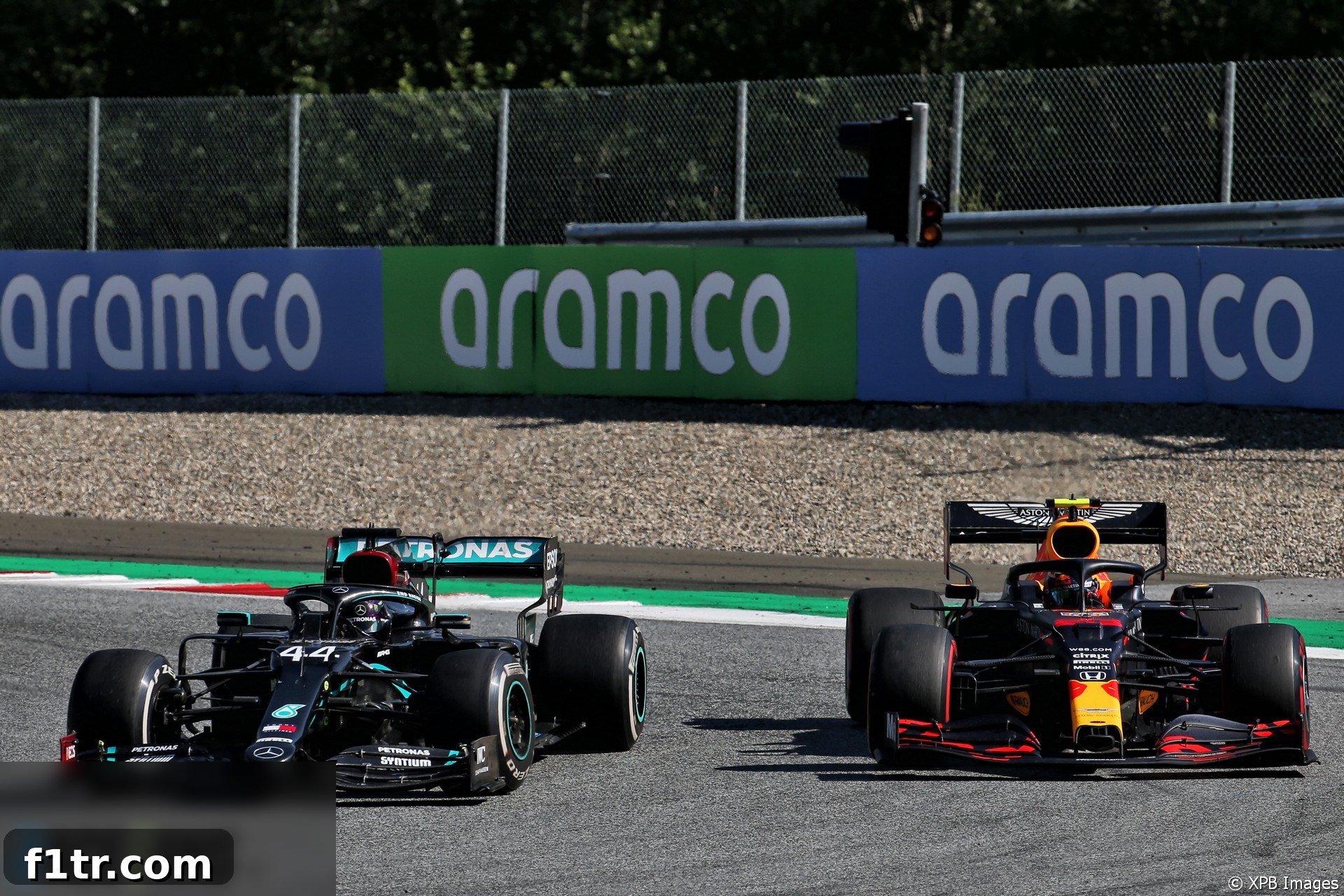
Alexander Albon, the talented Red Bull Racing driver, has firmly stated his unwavering stance regarding the contentious collision with Mercedes’ Lewis Hamilton at the 2020 Austrian Grand Prix. Despite the incident ultimately costing him a strong points finish, Albon maintains he harbors absolutely no regrets about the bold overtaking maneuver he attempted, which culminated in contact between the two fierce competitors.
Alexander Albon Stands Firm: No Regrets on Hamilton Collision at Austrian GP
The opening race of the 2020 Formula 1 season at the Red Bull Ring in Austria was an unforgettable spectacle, marked by high drama, unexpected retirements, and a particularly pivotal moment involving two of the sport’s most dynamic drivers. In the closing stages of the race, with the podium tantalizingly within reach, Alexander Albon, running on significantly fresher and softer tires, launched an audacious move on Lewis Hamilton, who was struggling on older, harder compounds. This strategic advantage presented a golden opportunity for Albon to advance, and he seized it with the characteristic assertiveness of a top-tier racer. However, the attempt to sweep around the outside of Turn 4 led to an unavoidable collision, sending Albon’s Red Bull spinning and effectively ending his chances of a rostrum finish, or even a points haul. Hamilton, despite being deemed at fault by the race stewards and subsequently penalized, managed to continue and salvage a respectable fourth-place finish.
The Unfortunate Contact: A Recurrent Theme in F1
This particular incident was not the first time Albon and Hamilton had come together on track in a crucial racing scenario. Their previous clash at the 2019 Brazilian Grand Prix, where Albon was also spun out by Hamilton while fighting for a potential podium position, naturally drew parallels and raised questions about a recurring pattern. While acknowledging the unfortunate repetition, Albon was quick to dismiss any notion of malicious intent from the reigning world champion. “We didn’t speak afterwards,” Albon revealed during the FIA press conference following the race. “There wasn’t too much for me to say, I think, it is what it is. I’m sure Lewis didn’t intend to make contact. But not too much to say, really, we’re just focused straight away into race two.” This measured response highlights Albon’s pragmatic approach, focusing on moving forward and concentrating on future challenges rather than dwelling on past incidents, even if they have significant personal ramifications for his championship standing.
Albon’s Defensive Explanation: Mastering Turn 4 at the Red Bull Ring
A significant part of Albon’s defense of his aggressive move centered on the unique and often misunderstood characteristics of Turn 4 at the Red Bull Ring. From certain television camera angles, it might have appeared as though Albon had ample space, or that he could have given more room to avoid the collision. However, the Red Bull driver offered a detailed and insightful explanation, shedding light on the immense complexities drivers face when making split-second decisions at incredibly high speeds. “The way the corner is, the exit point of where you take that corner is not where it looks like,” Albon clarified. He elaborated further, stating, “A certain camera angle, where I saw people saying ‘there’s a car length to go still’, you don’t exit at that point, the exit point’s a lot later into the corner just because Turn 4 is quite long. So unless I kind of drove up to the edges of track and then turned again, that’s the only real way to give myself more space.”
This insight is absolutely crucial for understanding the nuanced and often imperceptible decisions made by Formula 1 drivers under extreme pressure. Turn 4, a long, sweeping right-hander at the Austrian circuit, demands a very specific and precise approach. The ideal racing line involves carrying immense speed deep into the corner before gradually unwinding the steering, meaning the car’s trajectory towards the exit often extends much further than an outside observer might initially perceive. Albon’s argument strongly suggests that he was fully committed to a valid and aggressive racing line, and any attempt to deviate significantly to avoid contact would have severely compromised his speed, potentially putting him in an even more precarious or indefensible position. His conviction stems from a deep, intuitive understanding of the circuit dynamics, the physics of high-speed cornering, and the unrelenting demands of competitive racing at the pinnacle of motorsport.
The Unyielding Spirit: “I’d Do The Same Thing Again”
Perhaps the most telling testament to Albon’s inherent racing philosophy and his unwavering belief in the righteousness of his move was his unequivocal declaration: “I’d do the same thing again. It has to be done.” This statement perfectly encapsulates the unyielding mindset required to succeed and excel at the very pinnacle of motorsport. Formula 1 is unequivocally not a sport for the faint-hearted; genuine opportunities to overtake are incredibly scarce, and when they do arise, especially with a critical strategic advantage like fresh tires, they must be seized decisively and without hesitation. Albon emphasized the profound urgency of the situation, noting, “You can’t wait around, especially when they’re at a tyre disadvantage. There’s no waiting to be done, really, because obviously we knew they had a pace advantage and it was just a matter of time until the front tyres warmed up. So there’s no real regret to that.”
This strategic imperative is a fundamental cornerstone of modern F1 racing. Drivers are constantly evaluating a multitude of factors, including tire degradation, fuel load, and the performance characteristics of their competitors’ cars. When a competitor is visibly struggling with degraded tires, it creates a narrow window of opportunity that can close extremely rapidly. Waiting too long risks squandering the advantage, either because the opponent’s tires recover, or because other cars enter the fray, creating a multi-car battle. Albon’s decision was therefore a calculated risk, driven by the acute knowledge that his best chance to make significant progress and potentially secure a podium finish was to act immediately and assertively. This aggressive, yet deeply strategic, approach is often what distinguishes the front-runners from the rest of the pack, and Albon demonstrated in that moment that he possesses that essential killer instinct required to compete at the highest level.
Consequences and the Principle of Consistent Penalties
While Hamilton received a five-second time penalty for causing the collision, which ultimately saw him drop from second to fourth place in the final standings, Albon’s race ended far more prematurely. The contact not only cost him a potential podium finish but also forced him to retire later in the race due to damage, leaving him with zero points from what had been a highly promising outing. This stark contrast in outcomes — Hamilton still scoring significant championship points while Albon walked away empty-handed — naturally led to some understandable frustration for the young Red Bull driver.
“At the very beginning it’s a bit frustrating because you’re the one to lose out in the situation,” Albon candidly admitted. However, he also displayed a remarkably mature understanding of the broader principle underpinning F1 stewarding. “But I think just to make it fair, the way it’s ruled is that they want all the penalties to apply the same way, so no matter what the crash or consequences. I’m kind of happy that that is the situation. Of course it just means that we lost out a bit more than we would have liked.” This perspective eloquently underscores the F1 stewards’ mandate to apply penalties consistently across all incidents, judging the nature of the collision itself rather than its ultimate, often variable, impact on the drivers’ race results. While the outcome was undoubtedly harsh for Albon, his appreciation for the principle of fairness and consistency in the application of rules is a sentiment often echoed throughout the paddock and is crucial for maintaining integrity in the sport.
Team Solidarity: Max Verstappen Supports Albon’s Initiative
In a powerful show of team solidarity, Max Verstappen, Albon’s highly-regarded and exceptionally competitive teammate at Red Bull Racing, also weighed in on the incident, offering his unequivocal support and a remarkably similar interpretation of the events. Verstappen concurred with Albon’s assessment that Hamilton’s actions, while resulting in contact, were not intentional. “It was just that’s unfortunate that happened,” said Verstappen, echoing the sentiment of a genuine racing incident rather than a deliberate foul. Crucially, Verstappen also lauded Albon’s bold attempt, particularly praising the skill and bravery involved in the maneuver itself. “I think it was a great move for Alex, you go around the outside there, I think not many people do that.”
Verstappen’s endorsement adds significant weight and credibility to Albon’s claims. As one of the most aggressive, fearless, and successful overtakers on the current Formula 1 grid, Verstappen’s appreciation for Albon’s move speaks volumes about its legitimacy, daring, and technical difficulty. Overtaking around the outside of a high-speed, challenging corner like Turn 4 is inherently difficult and fraught with risk, requiring immense confidence, pinpoint precision, and exceptional car control. Verstappen’s comments reinforce the idea that Albon was executing a genuinely challenging and potentially rewarding maneuver, rather than merely a reckless or ill-conceived one. This collective perspective from within the Red Bull team highlights their shared philosophy on aggressive, opportunistic racing.
The Broader Picture: Aggression vs. Fair Play in Formula 1
The Albon-Hamilton incident at the 2020 Austrian Grand Prix serves as a perfect microcosm of the ongoing and perennial debate in Formula 1 about aggressive driving, fair play, and the intricate responsibilities of drivers in close-quarters combat. While driver safety is always paramount, the sport unequivocally thrives on daring moves, audacious overtakes, and intense wheel-to-wheel battles that captivate audiences worldwide. Drivers like Albon are constantly faced with split-second decisions that can ultimately define their race, influence their entire season, and even shape the trajectory of their career. The “no regrets” attitude perfectly reflects a true racer’s inherent need to push boundaries, challenge limits, and exploit every possible advantage, however small or fleeting.
For a relatively young driver like Albon, proving his mettle against a multiple world champion and undisputed legend like Hamilton is an absolutely critical part of his ongoing development and evolution as a Formula 1 competitor. These intense on-track encounters, though often ending in frustration or disappointment, are invaluable learning experiences. They serve to hone a driver’s judgment, build their self-confidence, and solidify their reputation within the highly competitive paddock. Albon’s willingness to attempt such a bold move, and his subsequent steadfast refusal to second-guess himself, strongly suggests a remarkable maturity and a fiery competitive spirit that are utterly essential for long-term success in the demanding world of Formula 1. It showcases a driver who profoundly understands the razor-thin margins at the very top level of the sport and is prepared to gamble when the stakes are at their absolute highest.
Ultimately, the 2020 Austrian Grand Prix collision between Alexander Albon and Lewis Hamilton will be remembered not just for the penalty it incurred or the points lost, but for the profound clarity it provided into Albon’s determined and tenacious character. His insistence on having no regrets, backed by detailed technical explanations and robustly supported by his experienced teammate, painted a compelling picture of a driver committed to racing hard, learning from every challenge, and never backing down from a genuine opportunity to advance. As the Formula 1 season progresses and new challenges emerge, such unwavering resolve and competitive fire will undoubtedly serve Alexander Albon exceptionally well in his ongoing quest for success and recognition at the pinnacle of motorsport.
2020 F1 Season Insights and Further Reading
The 2020 Formula 1 season was an extraordinary and unprecedented one, deeply impacted by global circumstances but still delivering thrilling racing moments and unforgettable storylines. The incident between Albon and Hamilton was just one of many dramatic events that defined a championship fought under truly unique conditions. Exploring more about this pivotal season can provide deeper context into the myriad challenges and triumphs faced by all teams and drivers, shaping the sport for years to come.
- Grosjean to make F1 test return tomorrow for first time since Bahrain horror crash
- Pictures: Wrecked chassis from Grosjean’s Bahrain fireball crash to go on display
- Bottas vs Rosberg: Hamilton’s Mercedes team mates compared after 78 races each
- F1 revenues fell by $877 million in Covid-struck 2020 season
- Hamilton and Mercedes finally announce new deal for 2021 season
Browse all 2020 F1 season articles