Williams Challenges Stewards’ Decisions Following Chaotic Azerbaijan Grand Prix
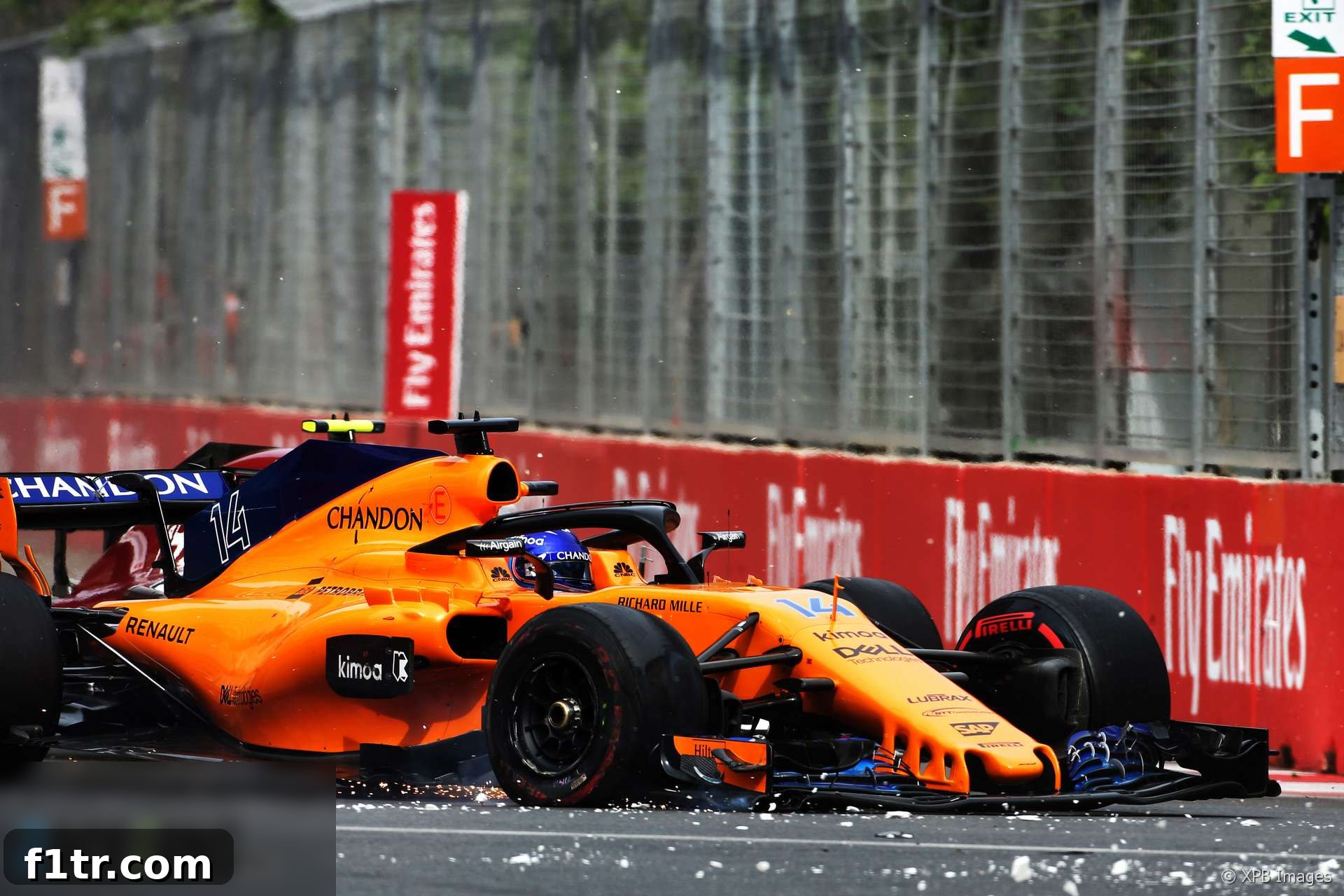
In a significant development following the drama-filled Azerbaijan Grand Prix, Williams Racing has formally lodged a protest with the race stewards. The British team is challenging the conduct of two-time world champion Fernando Alonso regarding his actions while returning to the pits on the opening lap of the race. This protest highlights a broader concern from Williams about the consistency and fairness of stewarding decisions made during the chaotic Baku event, signaling a potential shake-up in the immediate aftermath of one of the season’s most eventful races.
The protest specifically targets the manner in which Alonso, driving for McLaren at the time, navigated his way back to the pit lane after sustaining damage in an early-race incident. The safety of returning vehicles to the pits, especially on a high-speed circuit like Baku, is paramount, and any perceived deviation from safe practice can lead to stern penalties. Williams’ challenge suggests they believe Alonso’s actions warranted further scrutiny or action from the race officials, potentially impacting other drivers and the race outcome.
Demanding a Review: The Lap One Incident Involving Sirotkin, Alonso, and Hulkenberg
Beyond the direct protest against Alonso’s pit-return procedure, Williams has also petitioned the stewards to undertake a comprehensive review of the verdict handed down for a multi-car incident on the opening lap. This specific collision involved their driver Sergey Sirotkin, Fernando Alonso, and Renault’s Nico Hulkenberg. Lap one incidents, particularly in the notoriously tight Turns 2 and 3 of the Baku City Circuit, are often complex and challenging for stewards to untangle, leading to intense scrutiny from affected teams.
Following their initial investigation, the stewards had previously issued a three-place grid penalty to Sergey Sirotkin for the upcoming Spanish Grand Prix, coupled with two penalty points on his racing licence. Such penalties can significantly hinder a driver’s weekend even before practice sessions begin, forcing them to start further down the grid regardless of their qualifying performance. For a team like Williams, which was battling intensely for every position and point during the 2018 season, this penalty was a significant blow, making their call for a review understandable.
The incident itself saw Sirotkin’s Williams make contact with Alonso’s McLaren and Hulkenberg’s Renault, leading to early retirements for Sirotkin and significant damage for Alonso. Alonso, demonstrating his renowned racecraft and determination, remarkably managed to recover from two punctures and significant floor damage to finish the race in an impressive seventh position. This strong points finish placed him one position ahead of Sirotkin’s teammate, Lance Stroll, who also navigated the chaos to secure valuable points for Williams.
The stark contrast in fortunes – Sirotkin penalized and out of the race, while Alonso recovered to a strong points finish – likely fueled Williams’ resolve to seek a re-evaluation of the incident. They may argue that the initial verdict did not fully account for all contributing factors or perhaps placed undue blame on their rookie driver.
Stewards Acknowledge Review Request and Car Number Clarification
In response to Williams’ formal submission, the stewards issued a statement acknowledging the requests. They confirmed receipt of the team’s petition to “review an incident involving cars 17, 27 and 35 in turn two of lap one of the race and the actions of the driver of car 14 in returning to the pits.” The stewards also clarified a potential administrative error in Williams’ initial reference, noting that “the reference to car 17 above is most likely incorrect and it should be car 14, namely Fernando Alonso.” This meticulous approach underscores the formal and precise nature of F1’s judicial process.
A Broader Call for Consistency: Challenging Other Incidents
Williams’ grievances extend beyond their direct involvement in the lap one mêlée. The team has also requested that the stewards reconsider decisions made regarding two other high-profile incidents from the Azerbaijan Grand Prix, suggesting a pattern of inconsistent stewarding that they believe needs addressing. These include the contentious clash between Esteban Ocon’s Force India and Kimi Raikkonen’s Ferrari on the first lap, which ultimately put Ocon out of the race. Both drivers were cleared of blame by the stewards in the immediate aftermath.
Furthermore, Williams wants a re-evaluation of the collision between Haas driver Kevin Magnussen and Toro Rosso’s Pierre Gasly. This incident saw Magnussen aggressively defend a position, resulting in contact that sent Gasly off track at high speed, narrowly avoiding a catastrophic shunt with the wall. Gasly famously branded Magnussen “the most dangerous guy I’ve ever raced with” after the incident, highlighting the severity and frustration felt by drivers. Magnussen was subsequently penalized for causing a collision, but Williams’ request implies they may believe the initial sanctions were insufficient or that the precedents set by these decisions impact the interpretation of other race incidents.
By bringing these additional incidents to the stewards’ attention, Williams is effectively arguing for a more holistic and consistent application of the sporting regulations, particularly in the chaotic and often subjective environment of race stewarding. The team’s stance suggests a belief that if these other incidents were treated differently, or if a different precedent was established, then the verdict on their own drivers’ incidents might also change.
The Judicial Process: Hearing Details and Potential Outcomes
The formal hearing concerning Williams’ protest is scheduled to take place in London at 10 am local time tomorrow. Team representatives have been extended an invitation to attend this crucial proceeding via teleconference, a standard practice allowing key personnel to participate without requiring physical travel, especially for a review that follows a race weekend.
During this initial hearing, any new evidence that Williams can present will be meticulously considered by the stewards. This ‘new evidence’ could encompass a variety of materials not available or not thoroughly reviewed during the initial race weekend investigation, such as previously unseen onboard camera footage, enhanced telemetry data, or additional witness statements from marshals or other drivers. The availability of fresh perspectives or previously overlooked details is critical to the review process.
Should the stewards determine, after reviewing the new evidence and Williams’ arguments, that there are sufficient grounds to reconsider their original verdicts, a full review will then be held. This subsequent review is slated for 11 am, immediately following the initial hearing. The potential outcomes of this protest and review are significant:
- **Protest Upheld:** Fernando Alonso could face a retrospective penalty for his pit-entry procedure, such as a time penalty, grid drop for the next race, or penalty points.
- **Sirotkin’s Penalty Revised:** The stewards could reduce or even overturn Sergey Sirotkin’s three-place grid penalty and penalty points for the Spanish Grand Prix, providing a significant boost for the Williams driver.
- **Re-evaluation of Other Incidents:** While less likely to result in retrospective penalties for the cleared drivers (Ocon/Raikkonen), a review of these incidents could influence future stewarding decisions and set important precedents for what is deemed acceptable conduct.
- **Protest Rejected:** The stewards could find no new evidence or grounds to change their original decisions, upholding the initial verdicts.
The decision holds considerable weight, not only for Williams and the drivers involved but also for the wider perception of F1’s stewarding consistency, which is a frequently debated topic among fans and teams alike.
Context: Williams’ Struggles and Alonso’s Tenacity in 2018
The 2018 Formula 1 season was a particularly challenging one for Williams. The team struggled with the performance of their FW41 car, often finding themselves at the back of the grid. In such circumstances, every single point, every position gained, and indeed every penalty incurred, takes on magnified importance. Their determination to contest these decisions reflects their relentless fight for any advantage they could secure in a difficult year.
Conversely, Fernando Alonso, driving for McLaren, was widely praised for his ability to extract maximum performance from a car that was not a front-runner. His recovery drive in Baku, finishing seventh despite significant damage, was a testament to his skill and tenacity. This protest pits a struggling, proud team against a seasoned champion renowned for his uncompromising racing style, adding another layer of intrigue to an already dramatic season.
Conclusion: High Stakes for the Spanish Grand Prix and F1 Stewarding
The outcome of Williams’ protest and the subsequent review will have immediate implications for the upcoming Spanish Grand Prix and could send ripples through the paddock regarding how race incidents are judged. It underscores the high stakes involved in Formula 1, where every decision, every lap, and every maneuver is scrutinized. As the F1 community awaits the stewards’ final verdict, the controversy surrounding the Azerbaijan Grand Prix continues, adding another fascinating chapter to the 2018 season’s narrative of intense competition and judicial challenges.
Don’t miss anything new from RaceFans
Follow RaceFans on social media to stay updated:
- Join RaceFans on Facebook
- Follow RaceFans on Twitter
- Get daily email updates from RaceFans
2018 F1 Season Insights
Explore more articles related to the exciting 2018 F1 season:
- F1 feared “death knell” for Drive to Survive after Ferrari and Mercedes snub
- McLaren staff told us we were “totally crazy” to take Honda engines in 2018 – Tost
- ‘It doesn’t matter if we start last’: How Red Bull’s junior team aided Honda’s leap forward
- Honda’s jet division helped F1 engineers solve power unit problem
- McLaren Racing losses rise after Honda split
Browse all 2018 F1 season articles