Maintaining Harmony: Lewis Hamilton, Valtteri Bottas, and Mercedes’ Strategic Driver Management in Formula 1
In the fiercely competitive realm of Formula 1, where the pursuit of victory demands absolute precision and unparalleled teamwork, the relationship between a team’s drivers can significantly influence its trajectory. At Mercedes-AMG Petronas F1 Team, the successful partnership between global icon Lewis Hamilton and his teammate Valtteri Bottas has become a testament to effective driver management and mutual respect. Hamilton has publicly articulated his belief that this constructive dynamic will endure, contingent upon both drivers consistently upholding Mercedes’ meticulously defined “rules of engagement.” This strategic approach to fostering team harmony is not merely an aspiration for camaraderie; it is a fundamental pillar of Mercedes’ consistent dominance, a philosophy profoundly shaped by lessons learned from intense past rivalries.
The Hamilton-Bottas Dynamic: A Foundation of Professional Respect
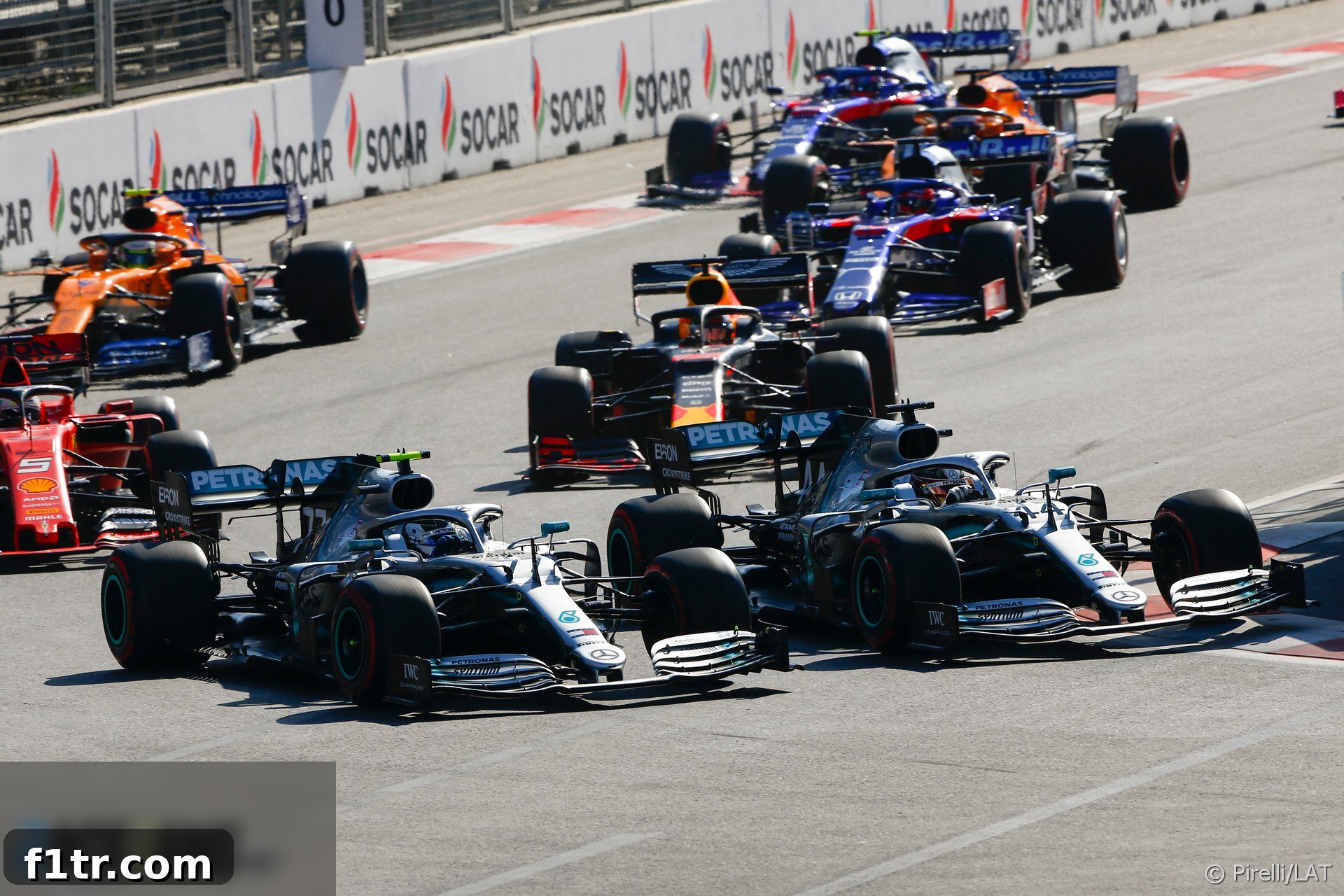
The strength and professionalism inherent in the Hamilton-Bottas pairing were vividly showcased during the exhilarating opening moments of the 2019 Azerbaijan Grand Prix. As the starting lights extinguished, both Mercedes cars surged forward, engaging in a thrilling wheel-to-wheel spectacle through Baku’s challenging street circuit. Ultimately, it was Bottas who skillfully navigated ahead, subsequently driving to a well-deserved victory. However, it was Hamilton’s post-race commentary that truly illuminated the nature of their bond. He candidly admitted that his on-track aggression would have been far more pronounced had he been battling a competitor from another team. This revealing statement underscores the deep-seated trust and understanding that defines their professional relationship – a commitment to race hard and fair, always within the clear boundaries established by the team leadership.
Throughout their seasons together, the Hamilton-Bottas era has been notably free from the political maneuvering and internal strife that frequently destabilizes other top-tier Formula 1 teams. This remarkable stability has allowed Mercedes to dedicate its collective resources and focus entirely on engineering excellence, strategic innovation, and maximizing on-track performance, rather than diverting energy to resolve inter-driver disputes. The absence of destructive ego clashes and public disagreements has cultivated an environment where both drivers can perform at their absolute best, confident that their individual efforts coalesce into a unified team objective. This carefully cultivated harmony is a deliberate outcome of Mercedes’ overarching management philosophy, meticulously designed to ensure that personal ambitions never overshadow the paramount goals of the team.
The Shadow of Past Rivalries: Learning from Hamilton vs. Rosberg
The current serene atmosphere within the Mercedes garage stands in stark contrast to the often-turbulent period when Nico Rosberg was Lewis Hamilton’s teammate. Their tenure together, particularly during the championship-winning seasons of 2014 to 2016, was defined by an electrifying yet frequently fraught rivalry. Numerous incidents served as flashpoints, none perhaps more infamous than their dramatic collision on the opening lap of the 2016 Spanish Grand Prix. This catastrophic event saw both Mercedes cars eliminated from the race, serving as a powerful and costly demonstration of how an unchecked rivalry could severely jeopardize the team’s performance and championship aspirations. The sheer intensity of their battle, while captivating for fans, placed immense strain on the team’s operational and psychological cohesion.
The Hamilton-Rosberg era, despite its undeniable success in securing multiple world championships, undeniably functioned as a critical learning period for Mercedes’ executive leadership. The profound intensity of their personal and professional competition frequently pushed the boundaries of team unity. These formative experiences profoundly influenced the strategic approach adopted by Team Principal Toto Wolff and the entire Mercedes management structure. They acutely recognized that while fierce internal competition could undoubtedly elevate performance, an unmanaged or toxic rivalry could equally devolve into self-destructive behavior, directly threatening constructors’ championship points and eroding overall team morale. The lessons from these intense years have been meticulously integrated into Mercedes’ current framework, designed to pre-empt and mitigate similar scenarios in the future.
Significant Incidents and Their Lingering Impact:
- 2014 Belgian Grand Prix: A controversial collision between Rosberg and Hamilton resulted in Hamilton’s car suffering a puncture and eventual retirement, provoking widespread public scrutiny and criticism from Mercedes management.
- 2016 Spanish Grand Prix: A dramatic first-lap collision that eliminated both leading drivers, unequivocally highlighting the urgent necessity for clearer and more rigorously enforced rules of engagement within the team.
- 2016 Austrian Grand Prix: Another late-race collision, where Rosberg sustained significant damage and Hamilton ultimately secured the victory, further escalating the already strained dynamics of their relationship.
These notable incidents, among several others, served as stark reminders of the extremely delicate balance required to effectively manage two exceptionally competitive individuals, both intensely committed to winning the ultimate prize within the same highly integrated organization. The invaluable insights garnered from this period have become foundational to Mercedes’ present-day driver management strategy, ensuring that potential conflicts are anticipated, addressed proactively, and, ideally, entirely prevented.
Mercedes’ Proactive Driver Management Philosophy: The “Rules of Engagement”
Mercedes Team Principal Toto Wolff has consistently expressed his profound satisfaction with the current driver partnership, openly acknowledging the inherent complexities of maintaining peace and productivity in such a high-pressure, competitive environment. “We are lucky that they have a very good relationship,” Wolff remarked, emphasizing the absence of counterproductive “games in the background.” However, this apparent good fortune is, in fact, the direct result of a deeply embedded, proactive, and uncompromising management philosophy. Mercedes is acutely aware of how quickly relationships can sour in Formula 1, and they have implemented robust protocols to prevent any such deterioration from negatively impacting the team’s overarching objectives.
Wolff’s firm declaration that the team would not hesitate to “issue yellow and red cards” if a driver relationship were to once again threaten team cohesion, mirroring the decisive actions taken during the aftermath of the Hamilton-Rosberg dynamic, is far from an empty threat. It signifies a non-negotiable principle: the collective success and integrity of the team unequivocally take precedence over any individual rivalry or personal ambition. These comprehensive “rules of engagement” likely encompass a wide array of directives, spanning from acceptable on-track conduct during direct competition to guidelines for off-track communication and media interactions. Their primary aim is to cultivate a pervasive culture where mutual respect, unwavering transparency, and an absolute shared commitment to the team’s goals are considered paramount.
The concept of “yellow and red cards” suggests a clearly defined, tiered system of warnings and potential sanctions. A “yellow card” scenario might entail formal discussions, documented reminders of team policies, and clear expectations for behavioral adjustments. Conversely, a “red card” could imply more severe and immediate consequences, potentially including the imposition of strict team orders, a temporary withdrawal of strategic preference, or even significant contractual repercussions. While Mercedes naturally prefers to avoid resorting to such measures, their mere existence unequivocally reinforces the established boundaries and underscores the profound seriousness with which team harmony is regarded. This robust and transparent framework ensures that while drivers are actively encouraged to push each other to extract maximum performance, they must never, under any circumstances, compromise the collective strength, unity, and ultimately, the championship aspirations of the team.
The Strategic Advantage of Team Cohesion in Modern Formula 1
Beyond the fundamental benefit of merely avoiding detrimental internal conflict, a harmonious driver pairing offers profound and multifaceted strategic advantages that directly contribute to on-track success. When drivers operate in a spirit of collaboration rather than perpetual internal contention, they are far more effective in contributing to the iterative process of car development. Their feedback becomes more aligned, constructive, and consistent, thereby significantly accelerating the crucial process of refining the car’s performance characteristics. Similarly, strategic decisions made on race weekends become demonstrably smoother and more efficient; the reduced likelihood of conflicting individual interests derailing critical pit wall calls or meticulously planned race strategies is a clear advantage.
Furthermore, overall team morale flourishes exponentially in an environment free from internal animosity and political maneuvering. Every single team member, from the most experienced engineers to the dedicated garage mechanics, can concentrate entirely on their specialized roles without the added, energy-draining burden of navigating complex driver politics. This unified front not only projects an undeniable image of strength and stability internally, but also externally to crucial stakeholders such as sponsors, the global fanbase, and, critically, their direct competitors. Mercedes’ unparalleled era of success in recent years stands as a powerful testament to this integrated, cohesive approach, unequivocally demonstrating that peak performance in Formula 1 is not solely about raw mechanical speed but is equally, if not more, about intelligent, synchronized, and harmonious teamwork.
A stable and cohesive driver pairing also provides invaluable consistency, which is absolutely critical for meticulous long-term planning and comprehensive data accumulation. With reduced driver turnover and fewer disruptive personality clashes, the team can systematically build a more coherent and extensive knowledge base, continually refining its operational processes year after year. This continuity fosters a dynamic learning environment where incremental improvements are consistently identified and sustained, contributing profoundly to Mercedes’ enduring capacity to mount formidable championship challenges season after season.
Conclusion: Sustaining Success Through Strategic Harmony
As Lewis Hamilton and Valtteri Bottas continue to define their legacy with Mercedes, their meticulously cultivated harmonious relationship remains an indispensable cornerstone of the team’s overarching strategy. While the captivating allure of intense, gladiatorial driver rivalries often garners significant public and media attention, Mercedes has definitively demonstrated that managed cooperation and strict adherence to well-defined “rules of engagement” offer a far more reliable, sustainable, and ultimately successful pathway to prolonged championship dominance. Toto Wolff’s unwavering commitment to proactively preventing internal strife, a commitment deeply informed by the invaluable experience of past challenges, ensures that the silver arrows can maintain their collective focus squarely on outperforming their formidable rivals on the track.
This deliberate and sophisticated cultivation of mutual respect, reinforced by clear boundaries and robust management, allows Mercedes to consistently maximize the formidable potential of both its world-class drivers and its cutting-edge machinery. In doing so, it reinforces its unparalleled position as a truly dominant and enduring force in the highly demanding world of Formula 1. The Hamilton-Bottas era serves as a compelling and definitive case study: in the relentless, uncompromising pursuit of perfection at the pinnacle of motorsport, team harmony is not a mere luxury but an absolute strategic imperative.
Related 2019 F1 Season Articles
- Ocon: Crying in the Melbourne car park at 2019 grand prix was my career low
- McLaren Racing reports reduced £71 million loss in 2019
- Kvyat: Hockenheim podium last year was “my biggest achievement” so far
- FIA’s new encrypted fuel flow meter targets Ferrari’s suspected ‘aliasing’ trick
- “He smashed my office door”: 23 must-see moments from ‘Drive to Survive’ season two
Browse all 2019 F1 season articles