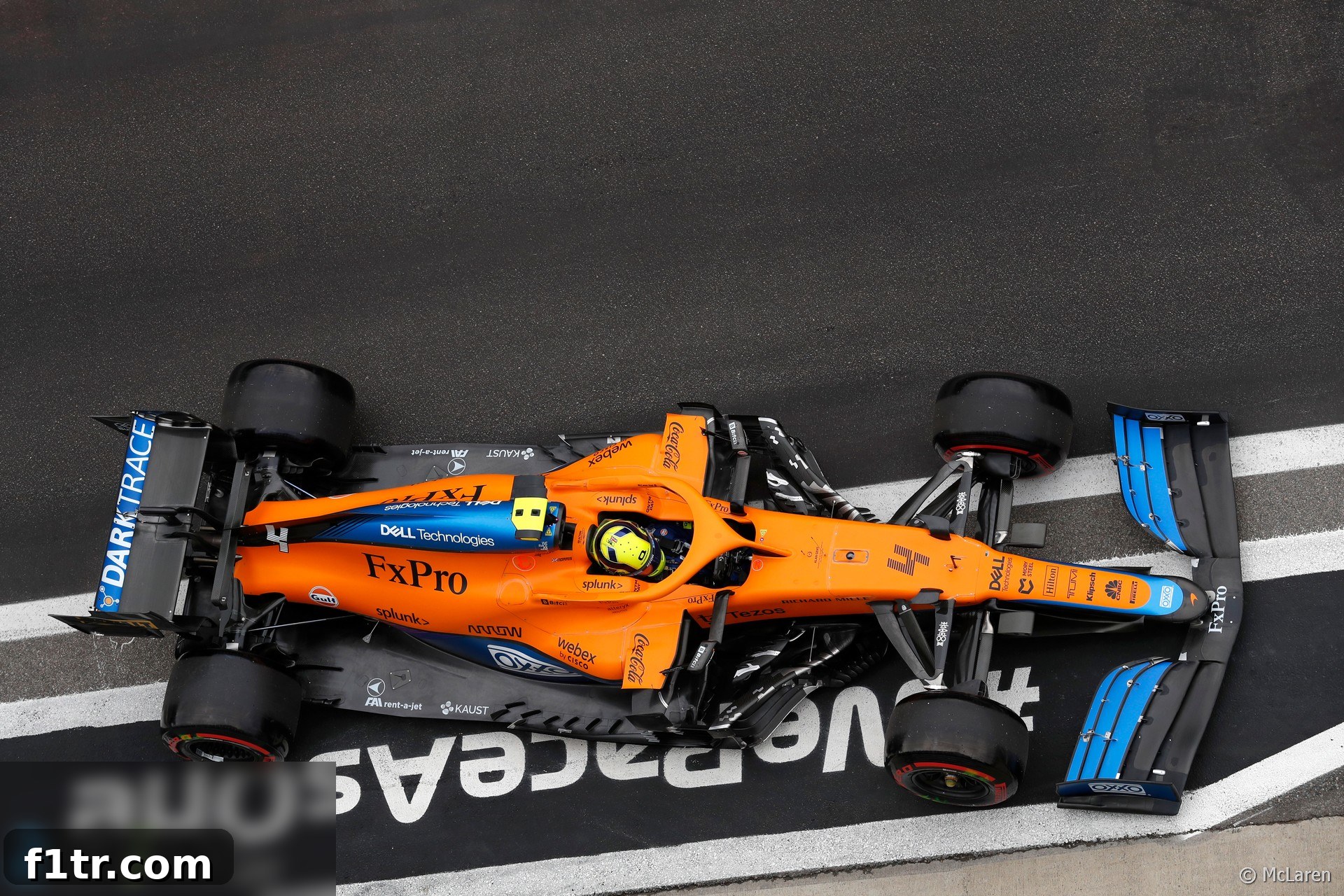
The 2021 Formula 1 Russian Grand Prix presented a tantalizing opportunity for McLaren and their young star driver, Lando Norris. Having brilliantly secured pole position, Norris led much of the race, showcasing a mature and dominant performance that had fans on the edge of their seats. However, as the final laps approached, an unexpected turn of events unfolded: the heavens opened, bringing a sudden downpour that dramatically altered track conditions. In a moment of high-pressure decision-making, McLaren team principal Andreas Seidl admitted the team made a crucial mistake by not ordering Norris to pit for intermediate tyres when the rain intensified, a decision that ultimately cost them a memorable victory.
Norris, demonstrating immense confidence and perhaps a touch of youthful optimism, opted to remain on his slick tyres as the conditions rapidly deteriorated. His determination to hold onto the lead was palpable, but the treacherous, wet surface proved too challenging. The consequence was inevitable: he slid off the track, losing precious positions and seeing a potential maiden Grand Prix win slip through his fingers, eventually finishing a disappointing seventh.
The Fateful Call: A Glimpse into Pit Wall Dynamics
Seidl candidly explained the complexities behind the pit wall’s decision-making process during such volatile conditions. “As always, in these tricky situations, it’s communication between the driver and the pit wall using all the information we have available in terms of weather forecast and what other cars are doing, trying to brief Lando and at the same time get the feedback from Lando how the conditions are,” he elaborated. This intricate dance of information exchange, vital in the high-stakes world of Formula 1, forms the backbone of every strategic call.
The core of the issue, as Seidl revealed, was the team’s deference to Norris’s preference. “Lando, with the information he had from us as well as what he was feeling on track, he felt good staying out there on the slicks. And in the end we didn’t overrule him as a team, so that’s something we need to look into to see what we could have done better.” This statement highlights the delicate balance between trusting a driver’s instinct and the overarching strategic responsibility of the team. In hindsight, the decision not to overrule Norris became McLaren’s biggest regret of the race.
“Because, of course, in hindsight, it was the wrong decision that we made as a team. But we win together, we lose together, the important thing is to analyse it, to learn from it and then move on,” Seidl concluded, embodying the ethos of collective responsibility within a top-tier racing outfit. This philosophy underscores the commitment to growth and continuous improvement, even in the face of painful setbacks. The immediate aftermath of the Russian Grand Prix was undoubtedly filled with disappointment, but it also laid the groundwork for valuable lessons that McLaren vowed to integrate into their future strategies.
Hamilton’s Contrasting Triumph: A Masterclass in Adaptability
The stark contrast to McLaren’s unfolding drama came in the form of Mercedes and Lewis Hamilton. Hamilton, who had been relentlessly pursuing Norris prior to the rain storm, received a direct order from his Mercedes team to pit for intermediates. He complied without hesitation, a decision that propelled him to victory, snatching what had seemed like Norris’s inevitable win. Seidl acknowledged the strategic advantage their rivals possessed, stating, “On Lewis’ side we heard the discussions as well, it was pretty much the same.”
However, Seidl pointed out a crucial difference in their respective positions. “Obviously you get the chance to wait on what we are doing and do the opposite because he was in P2 at this point, we didn’t have this opportunity,” said Seidl. Being in the lead often presents a unique strategic challenge; the leader must react without the benefit of seeing how others perform. Trailing cars, on the other hand, can afford to observe and counter, a luxury Hamilton’s team capitalized on to perfection. “And we wanted to go for the win. That’s why we decided together to stay out, it just didn’t work out,” Seidl reiterated, explaining the aggressive mindset that, on this occasion, backfired.
The Weight of Disappointment and the Path to Resilience
The immediate emotional toll on both Norris and the McLaren team was significant. Seidl conveyed their deep disappointment with the outcome, especially given the magnificent performance leading up to the final laps. However, his praise for Norris’s talent and potential remained unwavering. “I think apart from the last two or three laps what we have seen, again, from the team together with him, from his side yesterday when he pulled off the pole and also today in the race, it’s impressive what he’s pulling off only in his third year in Formula 1.”
Norris’s ability to secure pole position and dominate the race for so long, particularly in only his third season, underscored his burgeoning talent and proved McLaren’s significant progress. This raw potential, the capacity to genuinely challenge for race victories, makes the missed opportunity in Russia all the more poignant, but also crucially important for the team’s development. Seidl emphasized that the potential Norris and McLaren had shown to win a second race that season on merit demonstrated precisely why they must learn comprehensively from their mistake. “That’s always the first thing we do. It doesn’t matter what the outcome of a race, we can do this,” he affirmed, highlighting a culture of continuous improvement ingrained within the team.
Learning from Setbacks: McLaren’s Forward Vision
In the fiercely competitive environment of Formula 1, every race presents a learning opportunity. The Russian Grand Prix was a harsh, yet invaluable, lesson in strategic execution under pressure. While the sting of a lost victory lingered, Seidl was keen to focus on the broader picture and the positives that emerged from the weekend. “But then at the same time, I think it’s also important to see all the positives from this week and also on his side and come back stronger in Turkey.” This forward-looking approach is critical for maintaining morale and momentum within the team.
The incident at Sochi serves as a powerful reminder of the delicate balance between driver intuition and strategic oversight. It underscores the challenges of making split-second decisions in ever-changing conditions, where the line between heroism and misjudgment is often razor-thin. For McLaren, it reinforced the need for robust communication protocols, clearer thresholds for overruling driver decisions, and an even more disciplined approach to race strategy, particularly in unpredictable weather scenarios.
Lando Norris’s performance throughout the Russian Grand Prix was a testament to his growth as a Formula 1 driver. His exceptional qualifying lap, securing his first-ever pole position, and his masterful control of the race car for the majority of the event, demonstrated he possesses all the attributes of a future world champion. The disappointment will undoubtedly fuel his ambition, making him even hungrier for that elusive first victory. For McLaren, the incident is a pivotal moment in their journey back to the top echelon of Formula 1. By thoroughly analyzing their errors, implementing corrective measures, and maintaining their unwavering support for Norris, they aim to emerge stronger and more resilient, transforming a painful lesson into a catalyst for future success on the global stage of motorsport.
The unpredictable nature of Formula 1, where fortunes can swing in a matter of moments, is precisely what captivates millions of fans worldwide. McLaren’s experience in Russia is a vivid illustration of this dynamic. It highlights that even the most meticulous planning can be undone by unforeseen circumstances and the immense pressure placed on both drivers and strategists. The team’s transparency in admitting their error and their proactive approach to learning from it speaks volumes about their professionalism and dedication to reaching their ultimate goals in Formula 1. As they moved towards the Turkish Grand Prix, the focus was firmly on channeling this experience into enhanced performance and strategic acumen, proving that sometimes, the greatest lessons are learned in defeat.
Ultimately, the Russian Grand Prix, despite its bitter end for McLaren, underscored the team’s resurgence and Norris’s incredible talent. It set the stage for a period of introspection and refinement, pushing McLaren to evolve its strategic capabilities. The commitment to “win together, lose together” is not merely a slogan but a foundational principle that guides their continuous quest for excellence. The journey to a Grand Prix victory is often paved with such challenging moments, and how a team responds to them defines its character and potential for future glory.
Related Articles: Insights into the 2021 Russian Grand Prix
- Norris says he missed few chances to win in 110-race wait for first F1 victory
- Sochi disappointment will make Norris and McLaren stronger, says Seidl
- F1 race start times could be brought forward to avoid Spa-style wash-outs
- New technology in Ferrari’s power unit update vital for 2022 – Binotto
- Mercedes have left too many points on the table, admits Wolff
Browse all 2021 Russian Grand Prix articles