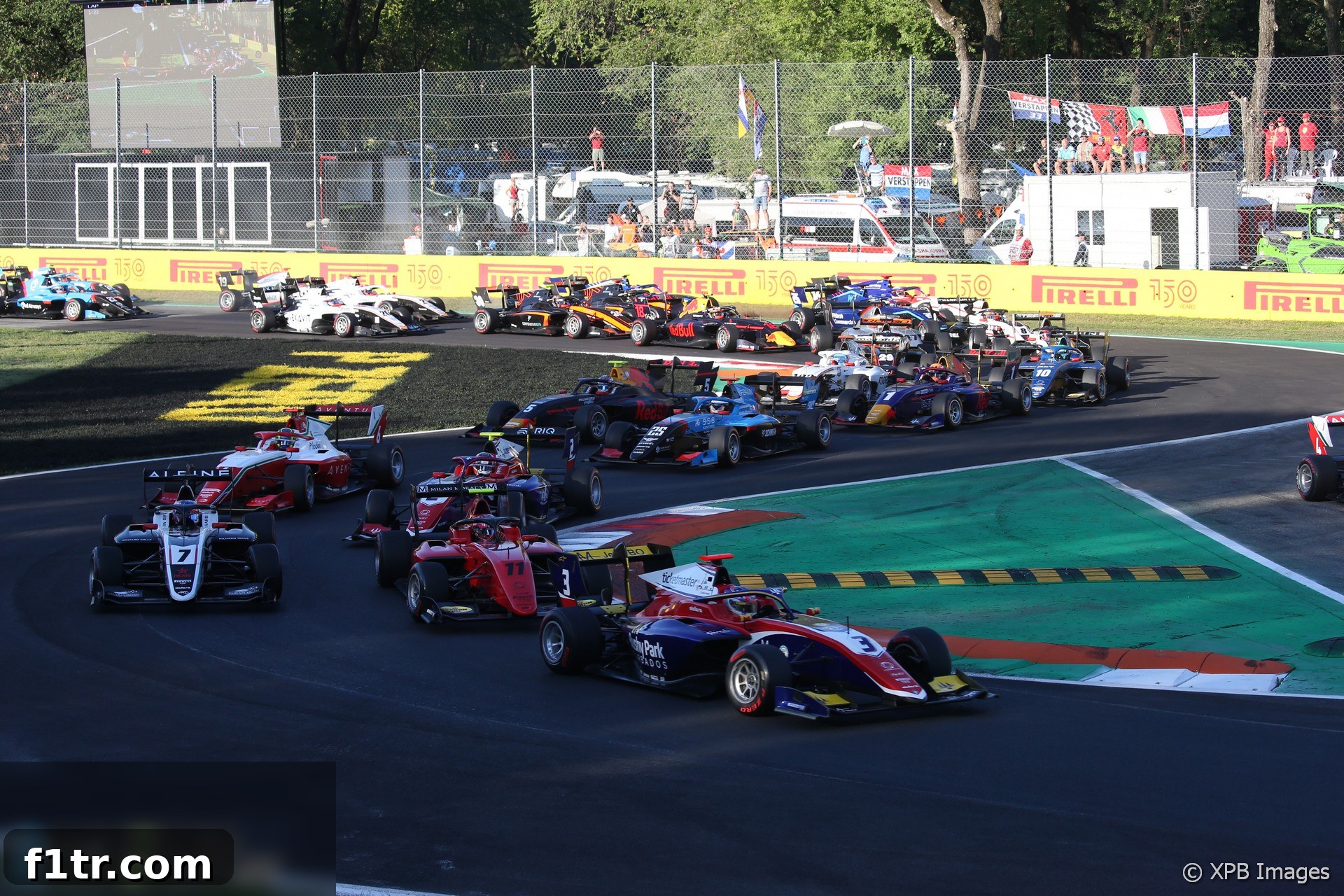
The highly anticipated Formula 3 championship finale at the iconic Autodromo Nazionale Monza culminated in a dramatic and controversial manner, leaving many, including F3 CEO Bruno Michel, expressing profound disappointment. The championship-deciding race, a crucial moment for six aspiring drivers, was prematurely cut short due to a red flag incident, leading to an outcome determined after only 15 laps rather than its scheduled 22.
Advert | Become a Supporter & go ad-free
The Controversial F3 Championship Finale at Monza: A Deep Dive into the Red Flag Decision and Its Aftermath
The 2022 Formula 3 season finale at Monza was poised for an electrifying conclusion, with an unprecedented six drivers still mathematically in contention for the coveted championship title. This high-stakes scenario promised a thrilling spectacle for motorsport enthusiasts, setting the stage for what should have been a memorable decider on the morning of the Italian Grand Prix. However, the excitement was abruptly curtailed when the race was red-flagged and ultimately not restarted, casting a shadow over the championship’s resolution and sparking widespread debate within the paddock.
A Title Decider Derailed: The Monza F3 Race
The morning race at Monza, typically a high-speed and challenging circuit, began with palpable tension. Each of the six title contenders knew that every position and every point would be critical. The race unfolded with intense wheel-to-wheel action, showcasing the immense talent and competitive spirit of these young drivers. Fans were treated to fantastic racing, with the championship protagonists battling fiercely at the front, constantly jockeying for position and exchanging blows in a truly captivating display of junior single-seater racing.
As the laps ticked by, the championship narrative shifted with every overtake and every strategic move. The race was building towards a grandstand finish, embodying the very essence of a title decider. Then, on lap 15, the complexion of the race changed entirely. A significant collision between Kush Maini and Brad Benavides necessitated the deployment of the red flag, bringing the action to an immediate halt. This incident, while requiring intervention for safety, triggered a chain of events that would ultimately lead to a controversial end to the season.
Bruno Michel’s Perspective: A Difficult Decision and Lingering Disappointment
Formula 3 CEO Bruno Michel openly addressed the unfortunate conclusion, acknowledging the immense frustration it caused. Michel stated his full backing for the FIA’s decision to red-flag the race following the Maini-Benavides collision. He emphasized that prioritizing driver safety was paramount, asserting that a full suspension of the race was a more appropriate response than attempting to complete the remaining laps behind a Safety Car, which might not have adequately addressed the track conditions or safety concerns. “It’s never good to end a championship like that,” Michel remarked, reflecting on the situation. “We were really having fantastic racing with all the contenders being at the front of the race. So it was a very interesting moment.”
However, despite his support for the initial red flag, Michel’s disappointment stemmed from the subsequent failure to resume the race. He lamented the lost opportunity to conclude the championship fairly and decisively on track. “Then we had this accident and I was quite happy that the FIA suspended the race because for me that was the best way to finish it properly. And then unfortunately it didn’t come back,” he explained. The inability to restart meant that the championship was decided based on the standings from lap 15, a scenario that left a bitter taste for drivers, teams, and fans who yearned for a natural, on-track resolution to such a closely fought season.
Michel’s frustration underscored the complex balance race officials must strike between safety protocols, competitive integrity, and the practicalities of a tightly packed race weekend. The premature end deprived the series of a fitting conclusion, an outcome no motorsport promoter wishes to see, especially when the stakes are so incredibly high for young talents vying for career progression.
The Unforgiving Schedule: Challenges of an F1 Support Weekend
The primary reason cited for the non-restart of the F3 race was the relentless time pressure imposed by the packed schedule of an F1 Grand Prix weekend. Monza, like many F1 events, features a congested timetable with multiple support categories preceding the main event. The F3 race commenced at 8:35 AM, followed by the Formula 2 race at 10:05 AM, and the Porsche Supercup at 11:50 AM, all leading up to the Italian Grand Prix at 3:00 PM. This tightly choreographed sequence of events left virtually no buffer time for unexpected delays or race stoppages.
Michel revealed that, given the opportunity to influence the schedule, he would have strongly advocated for shortening the F2 race instead. His rationale was clear: the Formula 2 championship had already been mathematically decided the previous day, making its finale less impactful in terms of overall championship outcomes. “What is for sure is that if we had been able to discuss it, for me it was not an issue to shorten the F2 race because we already had a champion from the day before,” he stated. For Michel, ensuring the Formula 3 championship reached its natural conclusion was of paramount importance, given the intense battle for the title among its young contenders.
The inherent challenges of sharing a billing with Formula 1 are not lost on Michel. “You always know that when you are with an F1 weekend, and especially a weekend like Monza where you have a lot of track activities… we always know that’s the risk that we might have,” he conceded. The cumulative effect of a Safety Car period, a race that ran longer than initially anticipated due to incidents, and the subsequent commitments for F2 and other track activities meant that flexibility was severely limited. While starting earlier might seem like a simple solution, Michel pointed out the logistical nightmares involving organization, marshals, and other operational complexities. This highlights the delicate balancing act required to accommodate multiple racing series within a single, high-profile motorsport event, often leaving support categories vulnerable to time constraints.
Advert | Become a RaceFans supporter andgo ad-free
Post-Race Confusion: Penalties and Delayed Confirmation
Adding another layer of complexity and frustration to the Monza F3 finale was the flurry of time penalties issued to several drivers during the race. These penalties, which included sanctions for exceeding track limits or other infringements, meant that the provisional results immediately following the red flag were not the final ones. This bureaucratic process further complicated an already contentious situation, leading to a significant delay between the race stoppage and the official confirmation of the championship winner.
It took a grueling 26 minutes for the stewards’ decisions to be processed and applied, causing an agonizing wait for drivers, teams, and fans alike. This extended period of uncertainty only amplified the sense of anticlimax and confusion. “Unfortunately it was a little bit complicated with the penalties coming in at the last minute and nobody really understanding what it was,” Michel admitted. “So I must say it created some kind of frustration with the teams and with the drivers, which is never good enough.” The lack of immediate clarity on who had ultimately claimed the title undoubtedly tarnished what should have been a moment of pure triumph for the eventual champion.
While acknowledging the difficulties faced by race officials – “Race director is a difficult job as well. And having to make this kind of decision in a very, very short time is never an easy thing” – Michel reaffirmed his desire for a more straightforward and transparent conclusion. The delay in announcing Victor Martins as champion, though ultimately correct, detracted from the celebratory atmosphere and underscored the administrative challenges that can arise in the heat of competition. This confluence of a controversial red flag, tight scheduling, and post-race penalties made the 2022 F3 finale one of the most talked-about and regrettable conclusions in recent memory for the series.
Broader Implications for Feeder Series Motorsport
The Monza incident serves as a stark reminder of the recurring challenges faced by junior single-seater championships like Formula 3 when they operate as support categories to Formula 1. While the association with F1 provides an invaluable platform for young talent, it also comes with inherent compromises, primarily regarding schedule flexibility and decision-making autonomy. The F3 series, designed as a crucial stepping stone to F2 and ultimately F1, relies heavily on showcasing its drivers’ abilities in competitive conditions, especially in championship-deciding moments.
The integrity of a championship is paramount, and ideally, titles should be won or lost under clear and unambiguous circumstances, preferably in live racing conditions. When external factors such as time constraints or administrative delays interfere, it can detract from the sporting spectacle and potentially undermine the perceived fairness of the competition. The Monza scenario highlights the continuous balancing act between ensuring driver safety, maintaining competitive integrity, and adhering to the rigid commercial and logistical demands of an F1 Grand Prix weekend. Future discussions within motorsport governing bodies and series organizers may need to explore potential solutions, such as incorporating greater buffer times into schedules or refining protocols for dealing with red-flagged support races, to prevent similar situations from overshadowing critical championship conclusions.
Conclusion: A Championship Deserving a Clearer End
Ultimately, the 2022 Formula 3 championship finale at Monza will be remembered as a race marked by missed opportunities and lingering questions. Bruno Michel’s sentiments perfectly encapsulate the collective feeling of regret: a championship deserving of a clear, uncompromised end was instead concluded under unfortunate and complex circumstances. While safety must always remain the top priority, the challenges of tightly packed schedules and intricate penalty systems inadvertently conspired to deny the F3 season the definitive, on-track resolution it warranted.
The dramatic conclusion serves as a poignant reminder of the fine margins in motorsport, where split-second decisions and external factors can dramatically alter the course of a championship. Despite the confusion and disappointment, Victor Martins was crowned champion, a testament to his season-long performance. Yet, the desire for a less complicated and more transparent end to such a thrilling title fight will undoubtedly resonate for seasons to come, prompting reflection on how to better manage the delicate balance of an F1 support weekend.
Advert | Become a RaceFans supporter andgo ad-free
Formula 3
- McLaren drop three drivers from junior roster and hire FREC runner-up De Palo
- Lawson: Tsunoda ‘had his time – I beat him in the junior series’
- F3 driver’s penalty cancelled after FIA asks stewards to review decision
- Antonelli and Bearman’s F1 graduations show the limitations of its feeder series
- Win-less Fornaroli clinches F3 title with last-lap pass in epic Monza finale
Browse all Formula 3 articles