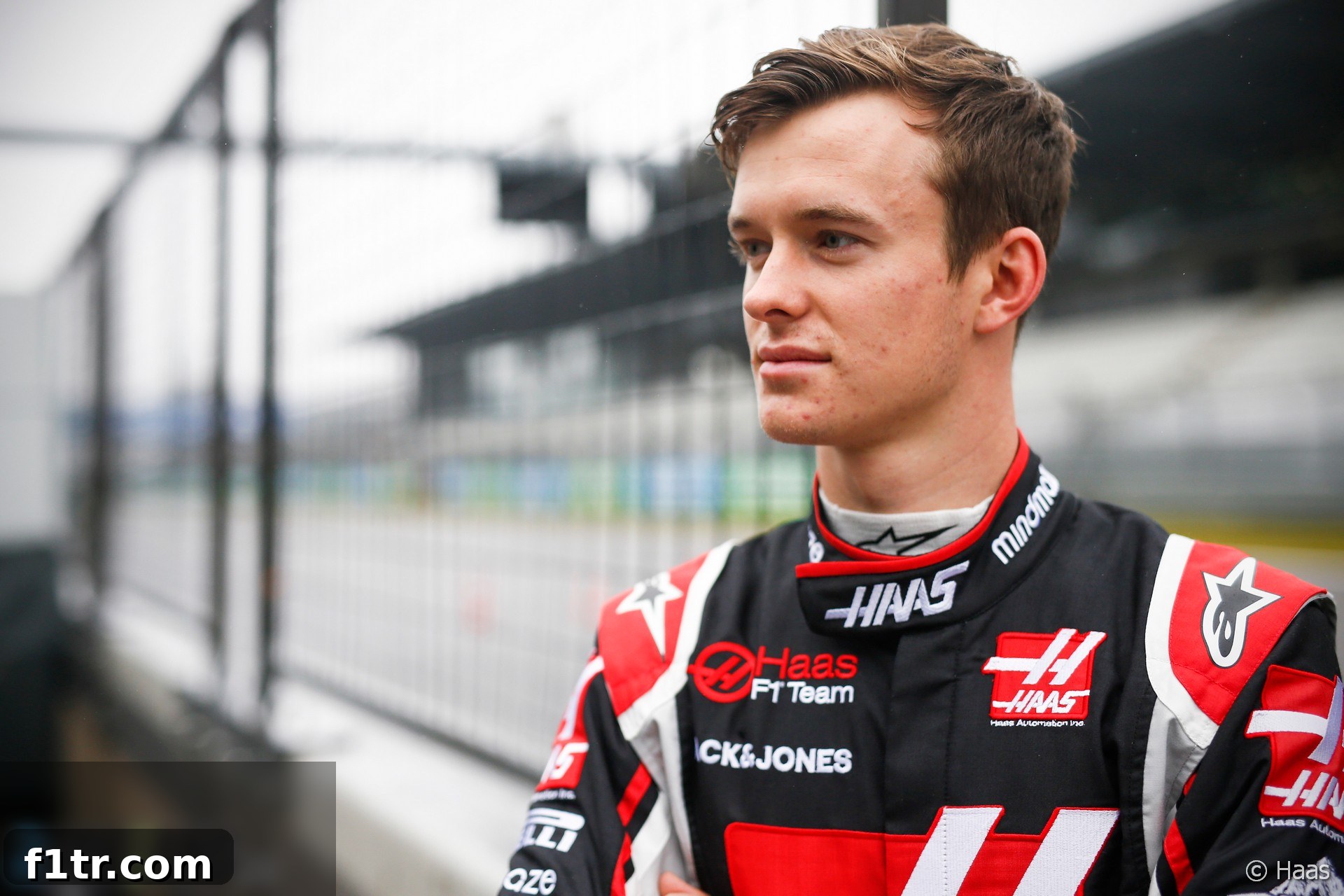
Callum Ilott’s Formula 1 Future: Haas Considers Ferrari Youngster After High-Stakes Practice Debut
The exhilarating world of Formula 1 is a perpetual stage for talent, ambition, and strategic maneuvering. As teams meticulously plan for upcoming seasons, the search for the next generation of driving stars often involves balancing raw potential with proven performance. This intricate dance is currently playing out at Haas F1, a team grappling with its 2021 driver lineup, with the spotlight falling sharply on Ferrari Driver Academy protege, Callum Ilott.
Ilott, a formidable talent currently making waves in the FIA Formula 2 Championship, recently had his first official F1 practice session with Haas, a pivotal moment that could significantly influence his career trajectory. While the 21-year-old Briton stands as one of motorsport’s most promising young talents, his immediate future with Haas remains a complex equation, heavily influenced by his existing ties to Ferrari and the broader dynamics of the driver market.
Callum Ilott: A Rising Star in the Ferrari Driver Academy
Callum Ilott’s journey to the brink of Formula 1 has been marked by dedication and impressive results. As a key member of the prestigious Ferrari Driver Academy (FDA), he represents the Scuderia’s investment in nurturing future champions. The FDA has a rich history of developing top-tier talent, providing young drivers with unparalleled access to resources, engineering expertise, and the highly competitive ladder series leading to F1.
Ilott’s performance in the FIA Formula 2 Championship has been particularly noteworthy, consistently placing him among the front-runners and establishing him as a serious contender for a Formula 1 seat. His consistency, race craft, and ability to extract performance from his machinery have drawn widespread praise, making his debut F1 practice session with Haas a moment of significant anticipation for fans and pundits alike. Being second in the fiercely competitive F2 championship speaks volumes about his skill and determination, underscoring why a team like Haas would take a keen interest in his capabilities.
Guenther Steiner’s Candid Assessment: The Haas F1 Perspective
Haas Team Principal, Guenther Steiner, known for his no-nonsense approach, offered a pragmatic view on Ilott’s candidacy for a 2021 F1 drive. While acknowledging Ilott’s undeniable talent and strong F2 results, Steiner made it clear that the young driver was not “at the moment” on Haas’s definitive shortlist. This initial exclusion, Steiner explained, stems primarily from Ilott’s direct affiliation with the Ferrari Driver Academy.
“He’s not on the list because he’s a Ferrari driver,” Steiner stated, highlighting the strategic complexities involved. “I don’t know what they are doing with him, what they are planning for him and so on. So in the moment therefore he is not on the list.” This sentiment underscores the intricate relationship between customer teams like Haas and power unit suppliers like Ferrari, where driver placements can often be influenced by broader alliance considerations rather than solely by a driver’s individual performance.
Despite this initial caveat, Steiner’s respect for Ilott’s abilities is evident. “But I have a lot of respect for him because he’s second in the F2 championship which means he’s pretty good,” he added. The Haas boss also hinted at the fluid nature of driver selection, suggesting that perceptions could shift rapidly. “Therefore I said, I was very honest, he’s not on the list now, maybe he’s on the list tomorrow.” This statement encapsulates the high-pressure, ever-evolving landscape of Formula 1 team management, where a single impressive outing or a change in Ferrari’s plans could open unexpected doors.
Haas F1 is reportedly considering a pool of nearly ten different drivers for their 2021 lineup, indicating a comprehensive and potentially lengthy evaluation process. This broad search emphasizes the team’s commitment to finding the right fit, whether that be an experienced hand or a promising newcomer, to navigate the challenging financial and competitive environment of modern Formula 1.
The FP1 Imperative: Beyond Pure Lap Times
Crucially, Steiner stressed that Ilott’s performance in his debut Formula 1 practice session would not be judged solely on his raw pace or a spectacular qualifying-style lap time. For Haas, the FP1 session served a more strategic purpose: an opportunity to assess Ilott’s professionalism, his interaction with the team, and his ability to provide coherent feedback, all under immense pressure.
“It will not be depending on the first practice result,” Steiner confirmed. “For sure if he does one thing which he shouldn’t be doing, then he’s not on the list, for sure, any more, like if he crashes the car.” This serves as a stark warning about the unforgiving nature of F1 debuts; a single, costly error can quickly derail a promising opportunity. The primary goal for a young driver in an FP1 session is not necessarily to set the fastest time, but to demonstrate maturity, precision, and an understanding of the team’s objectives.
“I don’t think tomorrow is about him getting in there,” Steiner elaborated on his expectations for Ilott’s practice run. “Tomorrow for us is actually trying to get something out of him to see how he works.” The team was focused on understanding Ilott’s methodology, his communication style with race engineers, and his ability to adapt to the F1 car’s complex dynamics. A crucial part of this assessment involves the feedback loop between driver and engineer, which is vital for car development and setup adjustments over a Grand Prix weekend.
Steiner particularly cautioned against the rookie mistake of attempting to overly impress the team with a heroic, but potentially risky, performance. “What I want to avoid is that he tries to impress us,” said Steiner. “That is one of the tasks because when they try to impress you they normally disappoint you because they do something which is not good.” This philosophy highlights a deep understanding of human psychology under pressure; a driver pushing beyond their current limits in an unfamiliar car, particularly during a test session, is more prone to errors than one who focuses on a methodical, consistent approach.
The team’s briefing with Ilott before the session emphasized this point. “So what we are going to speak with him this afternoon, with the race engineers, is what we want out of his test is consistent feedback of what he feels what we are doing and not a fast time. Because it’s always difficult, it’s a lot of pressure, one-and-a-half hours.” While Ilott has had prior experience in an F1 car, that experience was “quite a while ago,” adding another layer of challenge to his return to a Formula 1 cockpit. Ultimately, for a young driver in such a crucial session, Steiner’s advice was clear and concise: “The most impressive thing he can do is not to do anything stupid.”
Navigating the Ferrari-Haas Partnership: Beyond Practice Laps
The relationship between Ferrari and Haas is a significant factor in any discussion surrounding driver placements. As Ferrari’s closest technical partner and customer team, Haas often serves as a potential proving ground for FDA talents. However, this relationship also implies a degree of influence from Ferrari over their junior drivers’ futures. Steiner confirmed that while discussions for Ilott’s FP1 participation took place, conversations regarding a potential 2021 race seat with Ferrari had not advanced further.
“We discussed to get him into FP1 but we didn’t discuss anything further than that,” Steiner clarified. This distinction is crucial, suggesting that Ilott’s path to an F1 seat, even within the Ferrari-Haas ecosystem, is not a direct or guaranteed one. Ferrari’s own plans for its young drivers, including potential reserve roles or placements in other series, could supersede or at least heavily influence Haas’s independent decisions. For Ilott, this means his future is not entirely in his own hands or even solely in Haas’s, but also depends on Ferrari’s broader strategic vision for its academy graduates.
The dynamics of such partnerships can be complex. While Haas benefits from a close technical alliance with Ferrari, including power unit supply and shared components, this can also mean a more limited scope for completely independent driver choices. The balance between fulfilling the strategic aims of a major partner and making decisions that are purely in the best interest of the customer team’s performance and financial stability is a delicate one. For Ilott, an exceptional performance in F2 and a mature showing in FP1 with Haas can only strengthen his overall case, regardless of the team he eventually targets for a full-time F1 drive.
Callum Ilott’s F1 Aspirations: What the Future Holds
The practice session with Haas, while not a definitive audition for a 2021 seat, undoubtedly represents a critical step in Callum Ilott’s Formula 1 aspirations. For a young driver, every minute spent in an F1 car, especially during an official Grand Prix weekend, is invaluable experience. It familiarizes them with the raw power, intricate controls, and intense pressures of top-tier motorsport, moving them closer to their ultimate goal.
Regardless of whether Haas ultimately offers him a seat, a strong and sensible performance will enhance Ilott’s reputation within the paddock. It showcases his capability to other teams and validates the investment Ferrari has made in him. Potential pathways for Ilott could include a full-time reserve driver role for Ferrari, which often entails simulator work and being on standby for Grand Prix weekends, or seeking opportunities with other F1 teams if suitable seats become available. The Formula 1 driver market is notoriously competitive, with very few seats available and a long line of talented individuals vying for them.
Ilott’s journey is a testament to the talent within the Ferrari Driver Academy and the aspirations of many young racers dreaming of F1. His F2 results and recent FP1 outing put him firmly in the conversation, but the ultimate decision rests on a myriad of factors, including team strategy, financial considerations, and the intricate chess game played out between major manufacturers and their customer teams. His ability to consistently deliver, adapt, and demonstrate composure will be key to unlocking his Formula 1 future.
Haas F1’s Strategic Choices for 2021: Balancing Experience and New Talent
For Haas F1, the 2021 season represents a crucial juncture. The team has faced various challenges, and strategic driver choices are paramount for its competitive future. The decision to potentially onboard a Ferrari Driver Academy member like Ilott would align with a model of fostering young talent, potentially at a reduced cost or with additional technical benefits through the Ferrari partnership. However, the team also needs drivers who can provide immediate performance, consistent feedback, and help develop the car, particularly under new regulations that may come into play in future seasons.
The extensive list of candidates Haas is evaluating suggests a thorough review of available talent, balancing the allure of fresh, quick drivers like Ilott with the proven experience of veterans. The financial implications of driver contracts, sponsorship opportunities, and the team’s long-term vision for stability and growth will all weigh heavily on Guenther Steiner and team owner Gene Haas as they finalize their lineup. Ultimately, the selection of drivers for 2021 will be a defining moment for Haas F1, indicating their strategic direction for the years to come in the pinnacle of motorsport.
Related Motorsport News
- Grosjean to make F1 test return tomorrow for first time since Bahrain horror crash
- Pictures: Wrecked chassis from Grosjean’s Bahrain fireball crash to go on display
- Bottas vs Rosberg: Hamilton’s Mercedes team mates compared after 78 races each
- F1 revenues fell by $877 million in Covid-struck 2020 season
- Hamilton and Mercedes finally announce new deal for 2021 season
Browse all 2020 F1 season articles