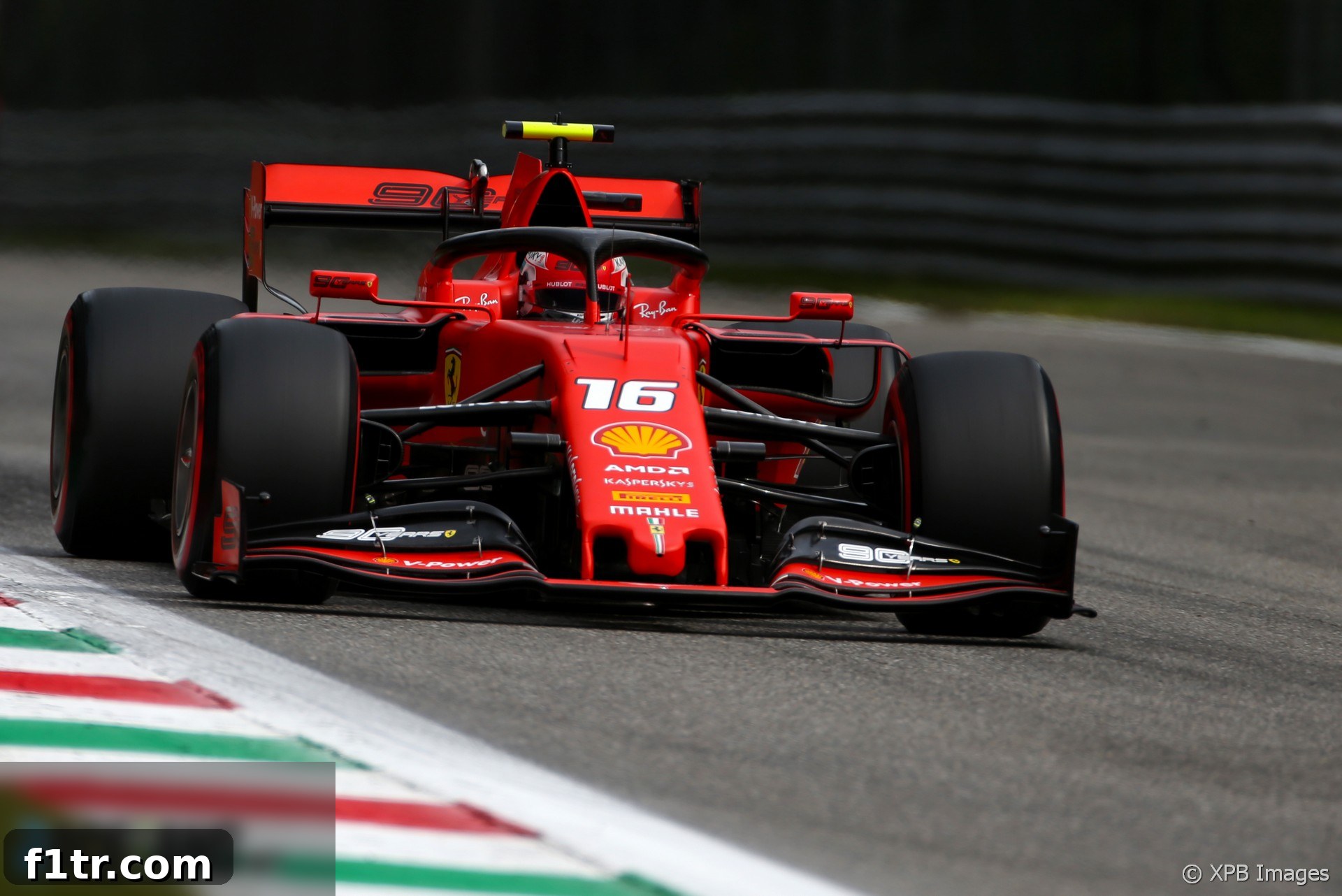
Leclerc Claims Chaotic Monza Pole in Farce-Filled Italian Grand Prix Qualifying
The 2019 Italian Grand Prix qualifying session at the iconic Monza Circuit culminated in an unprecedented and farcical finish, leaving fans and drivers alike bewildered. Charles Leclerc, driving for Ferrari at their home race, ultimately secured pole position, but the final moments of Q3 saw almost all competitors fail to start their crucial last laps in time. This bizarre conclusion was the direct result of an extreme battle for slipstream advantage, a tactic particularly potent on Monza’s high-speed straights.
The dramatic session saw Lewis Hamilton of Mercedes claim a hard-fought second place, narrowly ahead of his teammate Valtteri Bottas, who rounded out the top three. Ferrari’s second driver, Sebastian Vettel, secured fourth on the grid, setting the stage for an electrifying race.
Monza, known as the “Temple of Speed,” always presents unique qualifying challenges, where gaining a tow from another car can shave crucial tenths off a lap time. However, this session took the pursuit of slipstream to an extreme, leading to a spectacle that will be remembered for years to come.
Q1: Ferrari’s Calculated Risk and Early Drama
The first qualifying segment, Q1, began with an interesting strategic gamble from Ferrari. They were the sole team to initially send their drivers out on the harder medium compound tyres, aiming to save the softer, faster rubber for later sessions. Charles Leclerc showcased the Scuderia’s pace, quickly setting the fastest time on his mediums, displacing Renault’s Nico Hulkenberg, who had initially impressed with a strong start to the session.
Even the formidable Mercedes pair found themselves struggling to match Hulkenberg’s early pace despite running on the soft tyres. Valtteri Bottas came agonizingly close, missing the top spot by a mere thousandth of a second after momentarily running wide at the challenging Variante della Roggia chicane. Meanwhile, Sebastian Vettel, also on medium tyres, could only manage the sixth fastest time. The team pondered whether he could progress on the harder compound, but after a brief discussion, he was ultimately sent back out for his final run on a set of softs, a sensible precaution to ensure safe passage into Q2.
As it transpired, Vettel didn’t need to improve his time significantly, as a dramatic turn of events curtailed further improvements for many. Sergio Perez’s Racing Point ground to a halt in the Curva Grande, triggering a red flag with just four minutes remaining on the clock. This compressed the final runs into a frantic dash for a handful of drivers.
In the ensuing chaos, Pierre Gasly and Lance Stroll skillfully utilized opportune slipstreams to post impressive sector times, successfully snatching a spot in Q2. However, Romain Grosjean found himself on the wrong side of the cut-off, finishing 16th and exiting the session. He was joined by the unfortunate Perez, whose car failure ended his qualifying prematurely. Adding to the drama, Max Verstappen, already facing a grid penalty, reported a loss of power from his Honda engine at the exit of the Rettifilio chicane during his single Q1 run, consigning him to a back-of-the-grid start. Predictably, the struggling Williams duo of George Russell and Robert Kubica also failed to progress.
Drivers eliminated in Q1
| 16 | Romain Grosjean | Haas-Ferrari | 1’20.784 |
| 17 | Sergio Perez | Racing Point-Mercedes | 1’21.291 |
| 18 | George Russell | Williams-Mercedes | 1’21.800 |
| 19 | Robert Kubica | Williams-Mercedes | 1’22.356 |
| 20 | Max Verstappen | Red Bull-Honda |
Q2: Intensifying Slipstream Battles and Strategic Teamwork
The second qualifying segment, Q2, saw a universal shift to soft tyres as drivers pushed for a spot in the top ten shootout. Charles Leclerc once again set the pace, leading the initial charge. His teammate Sebastian Vettel was close behind, but it was Lewis Hamilton who split the two Ferraris, demonstrating Mercedes’ formidable single-lap potential. As the session progressed, Hamilton found even more pace, ultimately topping the timing sheets with his final effort, albeit by less than a tenth of a second, highlighting the incredible competitiveness at the sharp end of the grid.
As the clock wound down, the entire field converged onto the track for their final runs, creating a spectacular train of cars all vying for a crucial slipstream. Alexander Albon spearheaded this queue, successfully cementing his place in the final top ten. The Renault pair of Daniel Ricciardo and Nico Hulkenberg also put in strong performances, with Ricciardo particularly impressing by securing fourth position, a testament to the progress of the French team.
Daniil Kvyat, who was P10 before the final runs, urgently radioed his team requesting a tow to ensure his progression. Unfortunately, the strategy didn’t materialize, and the Russian driver was eliminated in 13th, expressing his frustration afterwards with a terse, “What a mess.”
In contrast, McLaren brilliantly executed their slipstream strategy. Lando Norris, already facing a grid penalty, selflessly provided a crucial tow to his teammate Carlos Sainz Jnr down to the Rettifilio straight. This invaluable assist helped Sainz propel himself into Q3, securing seventh place. Lance Stroll also celebrated a significant achievement, grabbing his first Q3 appearance of the year. Kimi Raikkonen, a veteran of Monza, also squeezed through, albeit at the expense of his Alfa Romeo teammate Antonio Giovinazzi, by an incredibly slim margin of just two-thousandths of a second, demonstrating the fine margins in Formula 1 qualifying.
Drivers eliminated in Q2
| 11 | Antonio Giovinazzi | Alfa Romeo-Ferrari | 1’20.517 |
| 12 | Kevin Magnussen | Haas-Ferrari | 1’20.615 |
| 13 | Daniil Kvyat | Toro Rosso-Honda | 1’20.630 |
| 14 | Lando Norris | McLaren-Renault | 1’21.068 |
| 15 | Pierre Gasly | Toro Rosso-Honda | 1’21.125 |
Q3: The Unprecedented Farcical Finale
The highly anticipated Q3 session was prefaced by a crucial advisory from the race stewards. Drivers had been explicitly warned that their out-laps would be closely monitored, with the minimum Safety Car time serving as a reference point to prevent dangerously slow driving – a tactic often employed to create a larger gap for a slipstream. Little did anyone know, this warning would precede one of the most chaotic and unusual qualifying conclusions in recent memory.
As Q3 commenced, these warnings seemed to be ignored or misinterpreted, leading to a series of bizarre maneuvers. Sebastian Vettel initially led the field out of the pits but immediately ran straight on at the first chicane, rejoining the track still ahead. Behind him, Alexander Albon voiced concerns, alerting his team that some drivers were deliberately using the chicane escape route to fall further back into the queuing pack, hoping to secure a tow.
Vettel’s first timed lap also saw him run wide at the final corner, but his time stood. However, it was quickly beaten. Charles Leclerc, fueled by the home crowd’s support, extracted an extra tenth of a second from his Ferrari in the first sector, seizing the provisional pole. The Mercedes drivers, though, were hot on his heels.
Lewis Hamilton incredibly got within 39 thousandths of a second of Leclerc, despite Kimi Raikkonen spinning off directly in front of him in the middle of the challenging Parabolica corner. This incident momentarily raised concerns and brought out yellow flags. Valtteri Bottas, running just behind them, crossed the line but initially didn’t register a time, causing confusion. His time was subsequently reinstated, placing him third on the grid.
Raikkonen, thankfully unhurt after what was his second crash at Parabolica that weekend, saw his car cleared quickly, and the session resumed. However, the crowds would witness little more competitive action.
For the final runs, the remaining nine cars joined the track together, immediately beginning to swap positions in a slow, weaving procession. The intent was clear: to create the perfect slipstream chain. But as the seconds ticked away, the teams and drivers seemed to collectively realize the perilously small window they had to cross the start/finish line in time to begin their last flying laps. The urgency suddenly increased, and drivers pressed on, pushing their cars harder to make it.
Yet, as they reached the start/finish area, the devastating reality became clear: most of them wouldn’t make it. Only Carlos Sainz Jnr managed to cross the line in time, closely followed by Charles Leclerc. However, even the Ferrari hero abandoned his effort early into the lap, recognizing the futility of it all. None of the remaining drivers behind them made it across the line before the chequered flag fell, effectively ending the session prematurely for nearly the entire Q3 field. This astonishing conclusion cemented Charles Leclerc’s pole position, earned from his earlier impressive lap, in what was undoubtedly one of the most bizarre qualifying sessions in Formula 1 history.
Top ten in Q3
| 1 | Charles Leclerc | Ferrari | 1’19.307 |
| 2 | Lewis Hamilton | Mercedes | 1’19.346 |
| 3 | Valtteri Bottas | Mercedes | 1’19.354 |
| 4 | Sebastian Vettel | Ferrari | 1’19.457 |
| 5 | Daniel Ricciardo | Renault | 1’19.839 |
| 6 | Nico Hulkenberg | Renault | 1’20.049 |
| 7 | Carlos Sainz Jnr | McLaren-Renault | 1’20.455 |
| 8 | Alexander Albon | Red Bull-Honda | |
| 9 | Lance Stroll | Red Bull-Honda | |
| 10 | Kimi Raikkonen | Alfa Romeo |
Anticipation Builds for the Italian Grand Prix
The chaotic qualifying session at Monza created an incredibly intriguing grid for the Italian Grand Prix. Charles Leclerc’s pole position at Ferrari’s spiritual home sets him up perfectly to delight the Tifosi. However, with the relentless pace of Lewis Hamilton and Valtteri Bottas breathing down his neck, and Sebastian Vettel eager to make amends from fourth, the race promises to be an intense strategic battle. The unusual grid, coupled with Monza’s reputation for thrilling races, ensures that the 2019 Italian Grand Prix will be a spectacle not to be missed, with the drama of qualifying only heightening the anticipation for Sunday’s main event.