Understanding Formula 1 Penalties and Stewarding: A Deep Dive into the 2019 Season
In the high-octane world of Formula 1, where milliseconds define victory and defeat, teams and drivers perpetually push the boundaries of technical and sporting regulations. This relentless pursuit of advantage often brings them perilously close to, and sometimes across, the line. Consequently, just like in any elite sport, controversies frequently erupt when an athlete or team is judged to have contravened the rules. The intricate dance between aggressive competition and strict adherence to regulations forms a core tension that defines much of the sport’s drama and debate.
The Heart of the Controversy: Stewarding Decisions and the “Let Them Race” Debate
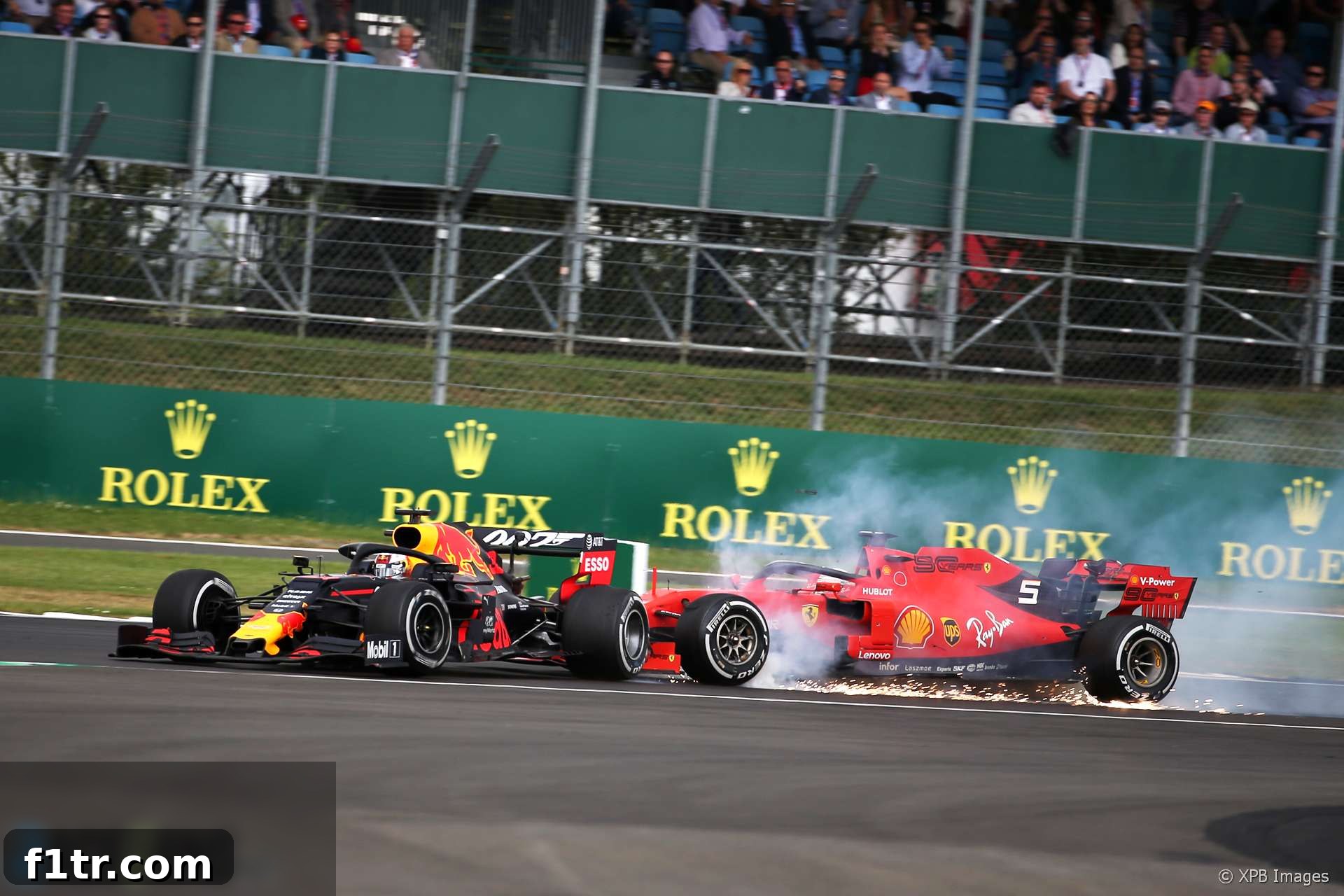
Few incidents encapsulate this tension better than the controversial five-second time penalty issued to Sebastian Vettel at the 2019 Canadian Grand Prix. The Ferrari driver, leading the race, ran wide and rejoined the track in what stewards deemed an unsafe manner, impeding Lewis Hamilton. This decision ultimately denied Ferrari their anticipated first win of the year, handing victory instead to Hamilton. The fallout was immediate and intense, reigniting the perennial debate over whether stewards should adopt a more lenient approach, allowing drivers to “let them race,” or strictly enforce the rulebook at every single round. This discussion wasn’t just a fleeting moment but rumbled on, influencing narratives and opinions throughout the entire season and beyond.
The incident highlighted the subjective nature inherent in judging racing incidents. What one fan sees as a racing incident requiring no penalty, another might view as a clear breach of sporting conduct. The ‘let them race’ philosophy advocates for minimal intervention, believing that drivers should largely resolve on-track skirmishes themselves. Conversely, the ‘rigid application’ argument emphasizes fairness and safety, asserting that clear rules must be consistently applied to maintain the integrity of the sport and prevent dangerous driving. Finding the right balance remains one of the most challenging aspects of F1 stewarding, as officials strive to preserve both the thrill of competition and the integrity of the rules.
The Guardians of the Rulebook: Race Director and Stewards
The 2019 season also witnessed a profound, largely unforeseen, change within the FIA’s regulatory framework. The sudden and tragic passing of long-serving Race Director Charlie Whiting, just as he arrived in Melbourne for the season’s opening weekend, necessitated a swift succession. The FIA promoted Michael Masi to fill this crucial void, a role that, much like Whiting’s before him, is frequently misunderstood by the wider F1 audience and even some within the paddock.
It’s vital to clarify the distinct responsibilities. While the Race Director, exemplified by Michael Masi, plays a pivotal role in managing the race weekend, overseeing track operations, and has the authority to refer incidents to the stewards, the ultimate power to impose penalties rests solely with the stewards. The stewards, typically a panel of three individuals including a former F1 driver, are the final arbiters of justice on race day. They meticulously review evidence, hear from drivers and teams, and then collectively decide whether an infraction has occurred and what, if any, penalty should be applied. Masi, or any Race Director, does not personally decide what warrants a penalty; his role is more about facilitating the process and ensuring the smooth running of events, while the stewards act as the independent judiciary.
Many of the stewards who officiated in 2019 had been part of the system for several years. That season marked the tenth year since the FIA began incorporating experienced ex-drivers into the stewarding panels, specifically to offer expert advice and perspective on racing maneuvers. This long-standing tenure and the inclusion of former racers are designed to foster continuity and consistency in decision-making, aiming to create a predictable and fair environment for all competitors, despite changes at the very top of the race management structure. The hope is that this blend of legal expertise and practical racing experience leads to more informed and acceptable rulings.
Understanding the Data: A Deeper Look at Incident Investigations
A superficial glance at the raw data might suggest a significant surge in regulatory interventions. Indeed, the statistics reveal that considerably more incidents were investigated in 2019 compared to previous years, leading directly to an increased number of penalties issued to Formula 1 drivers. This initial observation could lead one to conclude that stewards adopted a dramatically tougher stance on driving standards throughout the season, signaling a new era of strict enforcement.
However, a closer examination reveals a more nuanced picture, demonstrating that statistics alone do not always reflect the underlying reality. The bulk of this apparent increase in investigations and penalties can be attributed to a specific change in how track limits were monitored and enforced at two particular Grand Prix events: Germany and the United States.
The “Track Limits” Factor: An Explainer
At the German and United States Grands Prix, the FIA implemented electronic loops embedded in the track to automatically detect instances where a driver had exceeded track limits. If a driver ran wide and triggered these sensors, their corresponding lap time was automatically deleted. This automated system, designed for precision and objectivity, was a major departure from traditional manual observation and policing, where human spotters would report infractions.
This technological shift alone accounted for a staggering 46 additional investigations and subsequent penalties. These were not subjective judgments but rather objective consequences of crossing a defined boundary. When these 46 incidents are excluded from the total, the perceived dramatic rise in investigations and penalties becomes a much more modest increase. This adjustment highlights that while there was indeed a slight uptick in other types of infractions, the overwhelming majority of the statistical surge was due to a very specific, automated method of enforcing track limits at select events, rather than a blanket change in stewarding philosophy or a sudden deterioration in driver conduct.
The introduction of electronic monitoring for track limits sparked debate itself. While it offered undeniable objectivity and eliminated the potential for human error or bias in detection, some argued that it removed an element of ‘racing’ by punishing minor excursions that might not have offered a significant advantage. The constant tension between technological precision and the fluid nature of racing remains a key point of discussion in F1, as officials seek the most equitable and effective way to police track boundaries without overly penalizing drivers for pushing the limits.
Beyond Track Limits: Driver-Caused vs. Team-Caused Penalties
Upon initial review, the data differentiating between penalties attributed to drivers (e.g., for collisions, track limits, unsafe driving) and those attributable to teams (e.g., for engine component changes, gearbox issues, parc fermé infringements) again appears to show a clear trend: a substantial increase in driver-related penalties. This might suggest a decline in driver discipline or an increase in aggressive on-track conduct during the 2019 season.
However, once more, this apparent trend requires critical context. We must recall that the 46 routine lap time deletions, triggered by the electronic track limits monitoring at just two races, fall squarely into the category of “driver penalties.” These automated sanctions account for more than half of all driver-related penalties issued throughout the entire 2019 season. This single factor dramatically skews the overall picture, making it seem like drivers were committing far more infractions than they actually were outside of these specific circumstances.
When these specific, automated track limits penalties are factored out, the number of penalties given for genuine driving infringements per race drops significantly from an average of 4.1 to a mere 2.0. This adjusted figure provides a much more accurate representation of driver conduct and stewarding intervention for typical racing incidents. For comparison, the average number of driver-related penalties per race in 2018 stood at 2.3, a season where lap time deletion penalties were far less prevalent, as the subsequent comparative data illustrates.
This detailed analysis underscores the importance of dissecting raw statistics. Without understanding the nuances and specific operational changes, one could easily draw misleading conclusions about driver behavior or the severity of stewarding in Formula 1. It highlights that the 2019 season, despite the headline numbers, maintained a fairly consistent level of penalties for traditional racing infringements.
Evolution of Penalties: 2019 vs. 2018 Trends
Beyond the impact of lap time deletion penalties, a comprehensive comparison between the 2018 and 2019 seasons reveals that there was remarkably little fundamental change in the overall volume or nature of penalties handed down for most types of infringements. This suggests a commendable level of consistency in the stewards’ application of the rules, despite the leadership change within the Race Director role, reinforcing the idea of a stable regulatory environment.
One notable shift, however, was an increase in instances where drivers were mandated to start from the back of the grid or directly from the pit lane. This particular trend was not indicative of harsher stewarding, but rather a direct consequence of evolutions in the sporting regulations concerning power unit component allocation. Under revised rules, drivers who exceeded their prescribed limit for certain power unit components by a significant margin were now subject to starting from the pit lane, instead of incurring grid penalties of 20 places or more, which often amounted to a back-of-grid start anyway but could be complicated by other grid movements. This change aimed to simplify the penalty system for severe component breaches and ensure a clear, consistent punishment that also freed up grid positions for others.
The regulation of power unit components is a critical area, balancing performance, reliability, and cost control for teams. Penalties for exceeding component allocations are designed to deter teams from gaining an unfair advantage through excessive use of fresh parts. The shift to pit lane starts for major breaches reflected an ongoing effort by the FIA to refine the penalty system for maximum clarity and impact, ensuring that penalties are not only fair but also easy for fans to understand.
The Penalty Points System: Deterrence and Driver Conduct
Use control to show/hide drivers
Introduced to deter dangerous driving and promote safer on-track conduct, the FIA’s penalty points system assigns points to drivers for various infractions. Accumulating 12 penalty points within a 12-month period results in an automatic one-race ban. This system provides an overarching framework for assessing a driver’s consistent adherence to safety and sporting rules, acting as a cumulative deterrent rather than a one-off punishment.
In the 2019 season, while Romain Grosjean famously edged close to a ban in 2018 by accumulating 10 penalty points, no Formula 1 driver reached the critical threshold of 12 points. Sebastian Vettel, however, found himself at the peak of the season’s tally with nine points after the Italian Grand Prix. This unfortunate accumulation also distinguished him as the driver with the most penalty points since the system’s inception five years prior, reaching a cumulative total of 24 points over that period. It’s crucial to remember that points expire after 12 months, preventing an indefinite build-up and offering drivers a chance to reset their tally over time.
To put Vettel’s F1 tally into perspective, the remarkable case of Formula 2 driver Mahaveer Raghunathan garnered widespread attention. In a single F2 season, Raghunathan incredibly amassed 24 penalty points, earning himself a one-event ban. He narrowly avoided a second ban only due to a technicality in how the rules applied to accumulating points across different race weekends, demonstrating the dramatic and immediate impact of the system in junior categories. This highlighted the necessity of consistent and clear application across all levels of FIA-sanctioned motorsport.
Heading into the 2020 F1 season, Sebastian Vettel and Daniel Ricciardo were identified as the drivers carrying the highest number of active penalty points, both with seven. This placed them closer to the one-race ban threshold than any other competitor, adding another layer of scrutiny to their on-track conduct and reminding them of the need for disciplined racing.
The Quest for Consistency: Challenges and Future Outlook
The world of Formula 1 stewarding is a complex one, continually navigating the fine line between allowing thrilling, wheel-to-wheel racing and upholding strict safety and sporting regulations. The 2019 season offered a compelling microcosm of these challenges, highlighting how changes in enforcement methodology, like automated track limits, can dramatically alter statistical perceptions of driver behavior and official intervention without necessarily reflecting a fundamental shift in racing standards.
The FIA’s ongoing efforts to maintain consistency, through the appointment of experienced stewards and the integration of former drivers, are commendable. Yet, the subjective nature of many racing incidents ensures that debates, like the “let them race” philosophy, will always remain part of Formula 1’s fabric. Transparency in decision-making, clear communication of rule interpretations, and a consistent application across all circuits are paramount for building trust among teams, drivers, and fans, and for reinforcing the credibility of the sport’s officiating body.
As Formula 1 continues to evolve, so too will its regulatory landscape. The goal remains a balanced approach: one that champions exhilarating competition while rigorously enforcing the rules that define the sport’s integrity and safety. Understanding the nuances behind the numbers, as explored in the 2019 season, is key to appreciating the formidable task faced by those who officiate at the pinnacle of motorsport and the continuous effort required to refine the delicate art of stewarding.
Notes on the Data
The figures and analyses presented above specifically exclude minor infractions that typically result in fines, such as speeding in the pit lane during practice sessions. These are generally considered administrative penalties rather than racing incidents. Furthermore, all penalties incurred due to component changes (e.g., engine, gearbox) have been consistently attributed to the responsibility of the respective teams, rather than individual drivers, reflecting the operational control teams have over such elements and ensuring a clear distinction between driver and team accountability.
2019 F1 Season Related Articles
- “Crying in the Melbourne car park at 2019 grand prix was my career low” – Ocon
- McLaren Racing reports reduced £71 million loss in 2019
- Kvyat: Hockenheim podium last year was “my biggest achievement” so far
- How the FIA’s new encrypted fuel flow meter targets Ferrari’s suspected ‘aliasing’ trick
- “He smashed my office door”: 23 must-see moments from ‘Drive to Survive’ season two
Browse all 2019 F1 season articles