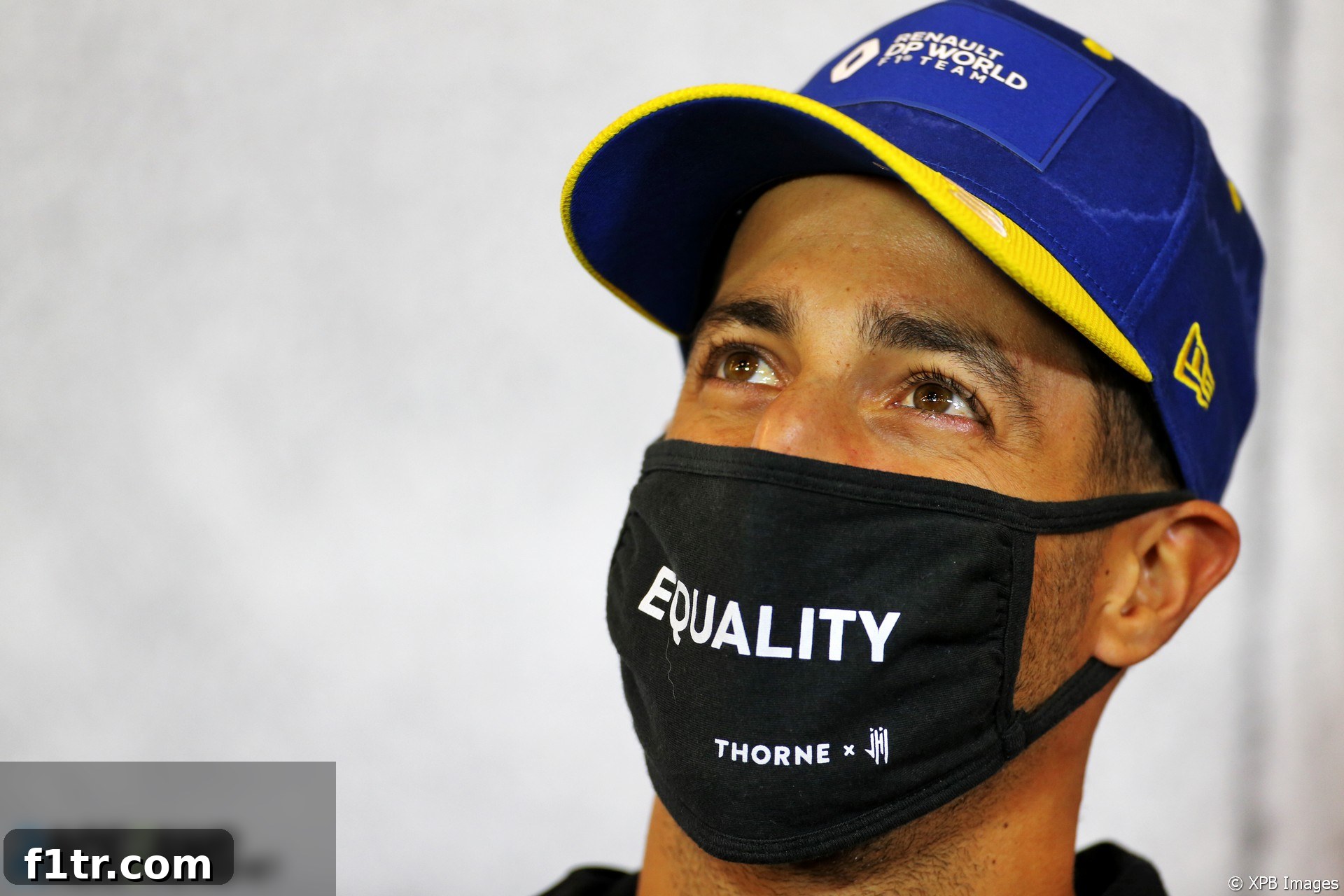
Daniel Ricciardo Sees No Obstacles to Red Bull and Renault Reunion
Following the significant announcement of Honda’s withdrawal from Formula 1 at the end of the 2021 season, the future engine supply for Red Bull Racing and its sister team AlphaTauri has become a focal point of discussion within the paddock. Among those weighing in on the unfolding situation is Daniel Ricciardo, the charismatic Australian driver who has a unique perspective, having driven for Red Bull with Renault power units for five years. Ricciardo suggests that despite a historically strained relationship between the two entities, a reunion in the wake of Honda’s departure is far from impossible and that both parties would likely adopt a pragmatic approach to “get on with it” if forced together by the sport’s regulations.
Formula 1’s sporting regulations include a critical provision designed to prevent any team from being left without an engine supplier. Should Red Bull fail to secure an alternative power unit partner, Renault, as one of the existing engine manufacturers on the grid, could be contractually obligated to supply them. This scenario, while rooted in the rules, sets the stage for a fascinating potential reconciliation between two titans of the sport who once achieved immense success together before their partnership soured in the hybrid era.
A Look Back: The Glory Days and the Strain
The history between Red Bull Racing and Renault is a storied one, marked by incredible highs and frustrating lows. From 2010 to 2013, this formidable pairing dominated Formula 1, securing four consecutive Constructors’ and Drivers’ championships with Sebastian Vettel behind the wheel. During this golden period, the synergy between Adrian Newey’s aerodynamically brilliant chassis designs and Renault’s V8 engines made them virtually unbeatable. Daniel Ricciardo himself joined Red Bull in 2014, just as the sport transitioned into the V6 hybrid turbo era, a period that would unfortunately coincide with the severe deterioration of the Red Bull-Renault relationship.
The new hybrid regulations proved to be a significant hurdle for Renault, whose power units consistently lagged behind those of Mercedes, and later Ferrari, in terms of both performance and reliability. This performance deficit led to escalating public criticism from Red Bull team principal Christian Horner and motorsport advisor Helmut Marko. At one particularly low point in 2014, Horner famously described Renault’s power units as “unacceptable,” reflecting the growing frustration within the Milton Keynes-based squad. These public pronouncements, coupled with frequent on-track engine failures and a perceived lack of progress, created a deeply acrimonious atmosphere, ultimately leading Red Bull to seek alternative suppliers and eventually partner with Honda.
Ricciardo’s Pragmatic View: “Time Heals a Lot of Things”
When questioned during a recent FIA press conference about the feasibility of Red Bull and Renault working together again, Ricciardo offered a thoughtful and pragmatic assessment. “I think they could,” he stated, adding, “Obviously, it’s not really up to me to decide how that goes. But I do think they could.” His reasoning highlighted the distinct separation between personal feelings and professional necessity. “I think there’s… call it emotions, and then there’s business and there’s time. And I think, obviously, time heals a lot of things.”
Ricciardo’s perspective is particularly insightful given his direct experience with both the successful and turbulent phases of the Red Bull-Renault alliance. He clarified that, from his vantage point as a driver, he “never experienced anything that was irreparable” in the relationship. This suggests that while public rhetoric may have been heated, the underlying operational and technical bonds might not have been irrevocably broken. For Ricciardo, the core of the issue was a performance gap and frustration, not necessarily an irreparable breakdown in professional conduct. His calmness regarding a potential reunion underscores his belief that if a partnership were to be rekindled, both professional organizations would simply “get on with it” and focus on the shared goal of competitive performance.
The Business of Formula 1: Beyond Personalities
Formula 1 is, at its heart, an intensely competitive business where results dictate relationships more than past grievances. The prospect of a Red Bull-Renault reunion, even a forced one, would undoubtedly be approached with a clear focus on commercial and sporting objectives. Any new agreement would likely be structured with rigorous terms to ensure clear communication, performance targets, and accountability, aiming to avoid the public spats that characterized their previous struggles.
Both Red Bull and Renault, as established entities in Formula 1, understand the high stakes involved. For Red Bull, securing a competitive power unit is paramount to maintaining their status as a front-running team. For Renault, an opportunity to supply a top-tier customer team like Red Bull could provide valuable data, potentially accelerate engine development, and strengthen their presence in the sport, even if it comes with the added challenge of powering a direct competitor. The evolution of their respective teams and personnel since 2018 also means that a fresh start, driven by mutual self-interest, is a distinct possibility. The ultimate goal for both would be to maximize performance and achieve success on track, overriding any lingering ’emotions’ from previous disagreements.
Honda’s Exit and Ricciardo’s Career Trajectory
Honda’s decision to leave Formula 1, citing commitments to carbon neutrality and future automotive technologies, reverberated throughout the sport. This announcement inevitably drew parallels to Ricciardo’s own career choices. When he made the surprising move from Red Bull to Renault at the end of 2018, one of his cited reasons was the uncertainty surrounding Red Bull’s long-term engine strategy, particularly their shift to Honda power. However, Ricciardo vehemently denies any sense of personal vindication following Honda’s departure.
“I honestly don’t feel anything personal towards it,” he affirmed. “I’m not jumping around saying, oh, you look, you know, I was right. It’s nothing like that.” This sentiment reflects a maturity and understanding of the ever-evolving landscape of Formula 1, where decisions are made based on various complex factors that can change rapidly. For Ricciardo, his journey has moved him into a new chapter. Next year, he will embark on a new challenge, joining McLaren, which will be powered by Mercedes engines. This move marks a significant milestone in his V6 hybrid turbo era career, as it will be the first time he uses a power unit other than Renault’s, underscoring the dynamic nature of F1 and the constant pursuit of competitive advantage.
Red Bull’s Future: The Road Ahead
The sudden vacuum created by Honda’s departure places Red Bull Racing in a precarious position, necessitating a swift and strategic decision regarding their engine supply for 2022 and beyond. Beyond a potential reunion with Renault, Red Bull’s options appear limited. Developing their own Formula 1 engine program from scratch is an incredibly costly and time-consuming endeavor, unlikely to be viable within the short timeframe available before the 2022 season. Mercedes, being a direct and fierce competitor, would likely be reluctant to supply Red Bull, though F1 rules might still mandate it as a last resort. Ferrari also presents a similar competitive dynamic.
This situation underscores the critical importance of reliable and competitive engine partners in modern Formula 1. The performance of the power unit is arguably the single most influential factor in a team’s success, making Red Bull’s upcoming decision one of the most significant in their recent history. Not only must they secure a supply, but it must also be a competitive one that allows them to continue fighting at the sharp end of the grid. The outcome of these negotiations will undoubtedly shape the competitive landscape of Formula 1 for years to come, impacting not just Red Bull and Renault, but potentially the entire grid.
Conclusion: A Pragmatic Future for F1 Engines
Daniel Ricciardo’s measured assessment provides a valuable perspective on a situation that could easily be viewed through a lens of past animosity. His focus on “business and time” rather than “emotions” offers a realistic outlook on how a potential Red Bull-Renault reunion might unfold. While the past was turbulent, the imperatives of Formula 1 — the need for competitive engines and the obligation to supply them — could very well pave the way for a new, perhaps more pragmatic, partnership. The coming months will be crucial as Red Bull navigates its engine future, a decision that will undoubtedly shape its destiny in the sport and potentially redefine its relationship with a former partner.
Further Reading
- Renault “not scared of anywhere” in remaining races
- Bottas “needs a miracle” to overturn Hamilton’s 69-point lead
- 2020 Eifel Grand Prix Star Performers
- Leclerc sees ‘quite a few positives’ in Ferrari’s Nurburgring weekend
- Mercedes relied on DAS “more than ever” at cold Nurburgring
Browse all Formula 1 articles