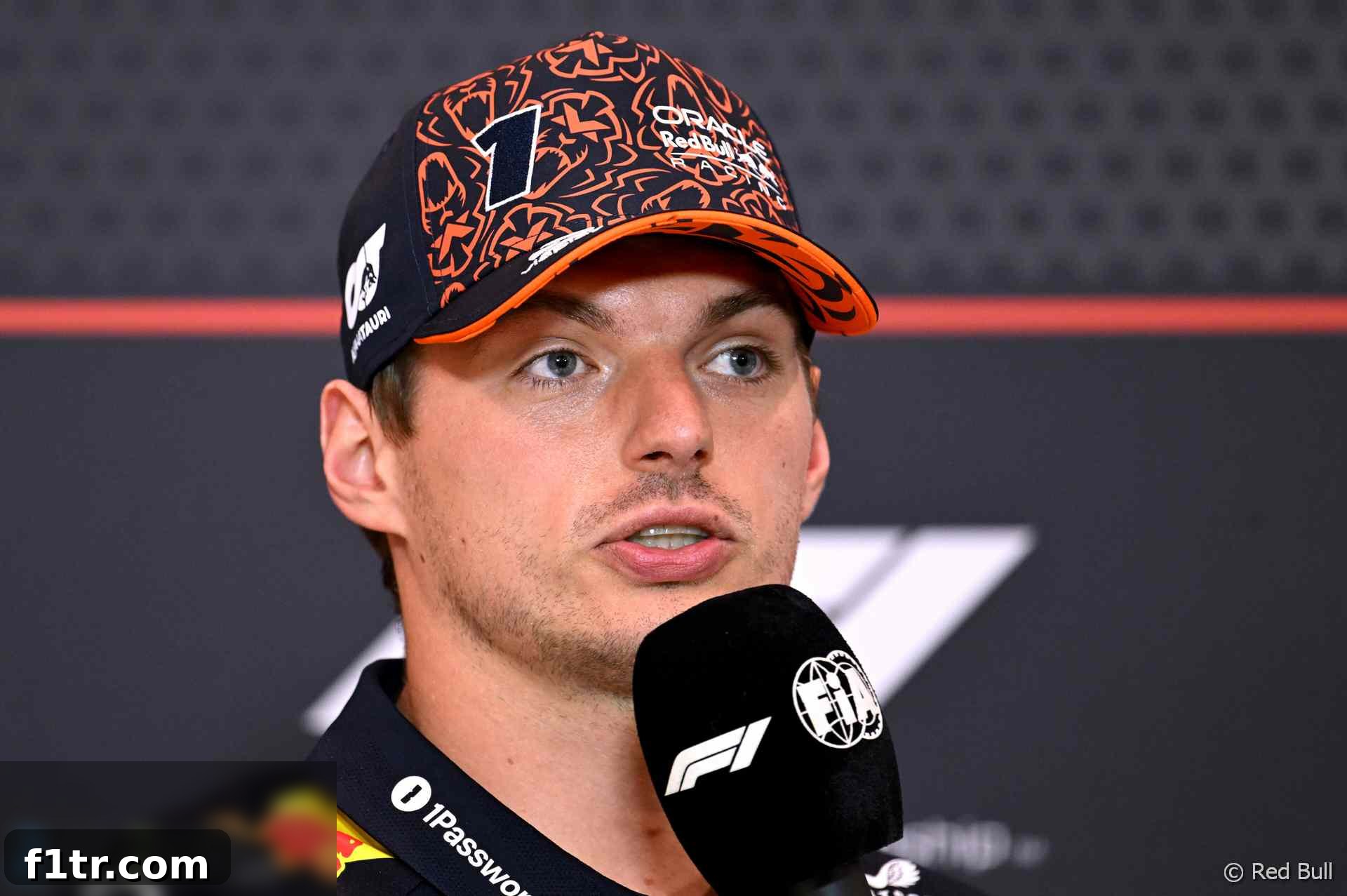
Max Verstappen found himself at the center of a fresh controversy following the dramatic Canadian Grand Prix, choosing to remain silent regarding Red Bull’s formal protests against Mercedes driver George Russell. The contentious post-race events have reignited debates about sporting conduct, team rivalries, and the stringent regulations governing Formula 1, capturing significant attention across the F1 community.
The protests, which followed a thrilling race in Montreal where Russell clinched victory ahead of Verstappen, drew sharp criticism from Mercedes team principal Toto Wolff. Wolff did not mince words, labeling his rivals’ efforts to strip Russell of his hard-earned win as “petty,” “ridiculous,” and “embarrassing.” Furthermore, he publicly speculated that Verstappen, who finished a close second to Russell, might not have even supported his own team’s actions, adding a layer of intrigue to the unfolding drama.
Advert | Become a Supporter & go ad-free
When pressed by journalists ahead of the upcoming race weekend to confirm or deny Wolff’s assertion about his support for the protests, Verstappen offered a curt non-answer. “I think everything has been said about Montreal,” he stated, maintaining a composed demeanor. “At least, I have nothing to add from that race.” This evasive response has only fueled speculation, leaving observers to ponder the true dynamics within the Red Bull camp and Verstappen’s personal stance on the matter, especially given the high stakes involved in championship racing.
The Controversial Protests: Unpacking Red Bull’s Challenge Against Russell
Red Bull’s decision to lodge two separate protests against George Russell stemmed from alleged breaches of Safety Car regulations during the critical final stages of the Canadian Grand Prix. The primary focus of these complaints was Article 55.10 of the FIA Sporting Regulations. This crucial rule mandates that “no driver may drive unnecessarily slowly, erratically or in a manner which is potentially dangerous to other drivers or any other person at any time whilst the Safety Car is on the track.” Crucially, it specifically states that drivers must not fall more than 10 car lengths behind the Safety Car, except under tightly defined circumstances such as entering the pits. This regulation is designed to ensure safety and prevent drivers from gaining an unfair advantage by strategically manipulating the gap.
Initially, Red Bull submitted two distinct complaints concerning Russell’s conduct. One protest, relating to a claim that Russell repeatedly fell more than 10 car lengths behind the Safety Car, was ultimately withdrawn by the team. This withdrawal suggests that after further review or deliberation, the evidence for this specific infraction might not have been deemed strong enough to pursue a successful challenge. However, Red Bull persisted with a second protest, which centered on Russell’s broader driving conduct directly behind the Safety Car. This second challenge, despite Red Bull’s insistence and detailed arguments, was ultimately rejected by the stewards, who concluded there was insufficient evidence to penalize the Mercedes driver for any rule infringement.
This incident in Canada was not an isolated event for Red Bull and Russell this season. The team had previously lodged a similar complaint against the British driver at the Miami Grand Prix, also without success. This emerging pattern of protests against Russell by Red Bull raises significant questions about the team’s strategy, the increasing intensity of their rivalry, and a perceived willingness to meticulously scrutinize every move of their direct competitors. Such actions highlight the high-pressure environment of Formula 1, where every on-track maneuver is dissected and challenged off-track, especially as the battle for constructor and driver supremacy continues to heat up.
Toto Wolff’s Scathing Assessment and the Enduring F1 Rivalry
Toto Wolff’s exceptionally strong condemnation of Red Bull’s actions – describing them as “petty,” “ridiculous,” and “embarrassing” – underscores the deep-seated, often acrimonious rivalry that continues to persist between Mercedes and Red Bull. This intense competition thrives even in seasons where their respective on-track performance might appear divergent, proving that the psychological battle is just as fierce. Wolff’s comments were not merely a defense of his driver, George Russell; they were a direct and pointed attack on Red Bull’s sporting integrity, judgment, and perceived tactical desperation.
His public questioning of Max Verstappen’s personal support for his own team’s protests adds another fascinating layer to this narrative. Wolff’s insinuation could be interpreted as a strategic move to create internal friction within the rival Red Bull team, aiming to sow discord or suggest a lack of unified purpose within their camp. It also served to portray Red Bull’s actions as out of step with the general sporting ethos, potentially influencing public opinion and the broader narrative surrounding the incident. The historical context between these two powerhouse teams, marked by a recent era of intense championship battles and frequently controversial incidents, further amplifies the significance of this current dispute. Every strategic decision, every on-track maneuver, and every off-track comment is meticulously scrutinized and magnified within the Formula 1 ecosystem, reflecting the extraordinarily high stakes involved in global motorsport. Wolff’s outspoken nature in this scenario powerfully highlights the cut-throat environment of the sport, where psychological warfare and narrative control can be as crucial as technical superiority or driving skill.
Verstappen’s Precarious Position: A Looming Race Ban Threat
Adding to the palpable tension surrounding Max Verstappen’s silence on the Red Bull protests is his current standing on the FIA’s stringent penalty points system. The reigning world champion heads into this weekend’s race in an extraordinarily precarious position, still at significant risk of triggering an automatic race ban if he accumulates just one more penalty point on his Super Licence. Under the current FIA regulations, a driver who accrues 12 penalty points within a rolling 12-month period is subject to a mandatory one-race suspension. This consequence could be catastrophic for a championship contender, potentially derailing an entire season’s efforts and significantly altering the dynamics of the title fight.
When directly asked by journalists whether he felt Formula 1 has become excessively regulated—a sentiment often echoed by various drivers and fans alike—Verstappen offered yet another carefully worded refusal to comment. “I’m not going comment on that. I cannot risk a penalty point,” he stated, clearly demonstrating his acute awareness of the extremely fine line he is currently treading. This response vividly indicates that F1 drivers are not only constrained by the rules governing their on-track performance but also by the potential for penalties arising from their public statements, especially if those statements are perceived as overly critical of the sport’s governance or integrity. While the FIA’s penalty points guidelines do not explicitly list penalty points for general “breaches related to drivers’ comments,” expressing strong opinions on sensitive or controversial topics could indeed lead to other forms of sanctions or reprimands, which drivers, particularly one already close to a race ban, are understandably keen to avoid at all costs.
He delivered a similar, highly cautious response when questioned on whether penalty points should exclusively be issued for incidents deemed genuinely potentially dangerous, rather than for more minor infringements. This ongoing debate within the F1 paddock questions the efficacy and inherent fairness of awarding points for minor procedural errors that might not pose a direct safety threat, compared to serious on-track collisions or reckless driving. Verstappen’s inability to openly share his personal views on these critical matters powerfully underscores the intense pressure and relentless scrutiny drivers face, where every single word, even off-track, can potentially have significant and career-altering repercussions.
Advert | Become a RaceFans supporter andgo ad-free
Verstappen’s Race Radio Comments Prompting Red Bull’s Protests
The formal protests subsequently lodged by Red Bull were far from arbitrary; they were directly influenced by Max Verstappen’s real-time observations and emphatic complaints transmitted over his team radio during the tense final laps of the Canadian Grand Prix. These revealing radio exchanges provide a fascinating, unvarnished glimpse into the heat of the moment and the drivers’ immediate perspectives under challenging Safety Car conditions, laying the groundwork for the post-race controversy.
| Lap: 68/70 VER: 2’05.276 | |||||||||||||||||||||||||||||||||||||||||||||||||||
| Verstappen | After turn 10 The Safety Car is driving really slow, what is he doing? |
||||||||||||||||||||||||||||||||||||||||||||||||||
| Verstappen | Russell slows and Verstappen briefly passes him before dropping behind again George suddenly just aggressively braked. |
||||||||||||||||||||||||||||||||||||||||||||||||||
| Lambiase | Understood, thank you. We will check for any erratic driving. | ||||||||||||||||||||||||||||||||||||||||||||||||||
| Lap: 69/70 VER: 2’03.745 | |||||||||||||||||||||||||||||||||||||||||||||||||||
| Lambiase | We can see that on our data stream as well, Max. Thank you for the info. | ||||||||||||||||||||||||||||||||||||||||||||||||||
| Verstappen | Russell drops back from the Safety Car, then accelerates That’s more than 10 car lengths also, there. |
||||||||||||||||||||||||||||||||||||||||||||||||||
| Lambiase | Okay, we will check that as well, thank you. | ||||||||||||||||||||||||||||||||||||||||||||||||||
| Lambiase | Yeah, that incident with Russell now being shown on the feeds Max. So, pretty blatant. Just don’t fall for the gamesmanship, okay? Thank you. | ||||||||||||||||||||||||||||||||||||||||||||||||||
| Lambiase | Safety Car through the pit lane, Max. | ||||||||||||||||||||||||||||||||||||||||||||||||||
| Lap: 70/70 VER: 2’06.683 | |||||||||||||||||||||||||||||||||||||||||||||||||||
| Verstappen | Russell drops back from the Safety Car, then accelerates Again, more than 10 car lengths, what is he doing? |
||||||||||||||||||||||||||||||||||||||||||||||||||
| Lambiase | Thank you. | ||||||||||||||||||||||||||||||||||||||||||||||||||
| Verstappen | Way more than 10, look at this! | ||||||||||||||||||||||||||||||||||||||||||||||||||
| Lambiase | Yes, thank you Max. We’ll have a look. Cheers mate. | ||||||||||||||||||||||||||||||||||||||||||||||||||
These real-time communications powerfully highlight Verstappen’s growing frustration and his firm belief that George Russell was actively not adhering to the Safety Car regulations, particularly concerning the mandated 10-car length gap. His race engineer, Gianpiero Lambiase, promptly acknowledged these observations, indicating that the Red Bull pit wall was also closely monitoring the situation and eventually confirmed seeing what they considered a “blatant” incident on their data feeds and broadcast coverage. This immediate feedback loop from driver to pit wall, and the subsequent agreement on perceived infringements, served as the direct impetus and foundation for Red Bull’s formal protests. Verstappen’s repeated exclamations about Russell’s braking actions and his tendency to drop back suggest a perception of aggressive or gamesmanship-like driving, potentially designed to manage tire temperatures or to create a strategic advantage before the crucial restart.
Max Verstappen’s Penalty Points: A Detailed Look at His Recent Record
Max Verstappen’s current precarious predicament with accumulated penalty points is not an isolated incident but rather a culmination of several infringements over the preceding twelve months. The FIA’s penalty points system is meticulously designed to penalize drivers for a wide range of infractions, spanning from overtly dangerous driving to less severe procedural breaches, all with a cumulative effect that can ultimately lead to a mandatory race ban. Verstappen’s recent history, as detailed in the table below, serves as a stark illustration of the broad spectrum of actions that can result in points being added to a driver’s Super Licence, putting his participation at risk.
| Date | Event | Session | Infringement | Points |
|---|---|---|---|---|
| 30/6/2024 | Austrian Grand Prix | Grand prix | ‘Collision between Car 1 and Car 4 in turn 3.’ | 2 |
| 27/10/2024 | Mexican Grand Prix | Grand prix | ‘Forcing another driver off the track.’ | 2 |
| 2/11/2024 | Brazilian Grand Prix | Sprint race | ‘The driver was above the minimum time at VSC End.’ | 1 |
| 1/12/2024 | Qatar Grand Prix | Qualifying | ‘Car 1 drove unnecessarily slowly on a cool down lap.’ | 1 |
| 8/12/2024 | Abu Dhabi Grand Prix | Grand prix | ‘Car 1 caused a collision with Car 81 in turn 1.’ | 2 |
| 1/6/2025 | Spanish Grand Prix | Grand prix | ‘Car 1 collided with Car 63 at turn 5.’ | 3 |
As the comprehensive table vividly illustrates, Verstappen has accumulated penalty points for a diverse array of offenses across different sessions. The two points received from the Austrian Grand Prix for a collision, swiftly followed by another two in Mexico for forcing a driver off track, clearly indicate a pattern of aggressive on-track behaviors that occasionally cross the line. A single point from the Brazilian Grand Prix for a Virtual Safety Car (VSC) rule breach highlights that even seemingly minor procedural errors can significantly add to a driver’s overall tally. The point incurred from the Qatar Grand Prix for driving unnecessarily slowly on a cool-down lap during qualifying further underscores the extremely strict nature of qualifying procedures and the unforgiving regulatory environment. Another two points collected in the Abu Dhabi Grand Prix for causing a collision with Car 81 further cement the pattern of competitive incidents. Most recently, the substantial three points received at the Spanish Grand Prix for colliding with Car 63, notably George Russell, brought him to an alarmingly critical position, just shy of the 12-point threshold for a ban.
With his current cumulative total, Max Verstappen is critically positioned just one penalty point shy of an automatic race ban. This ever-present and looming threat undoubtedly influences his every decision and move, both consciously and subconsciously, both on and off the track. His meticulously cautious and evasive responses to media questions about F1 regulations are a direct and transparent reflection of this incredibly precarious situation. It clearly demonstrates a calculated and deliberate effort to avoid any further disciplinary action, however minor, that could potentially jeopardize his championship aspirations or, even worse, lead to a forced and detrimental absence from a crucial race weekend. The cumulative and unforgiving nature of these penalty points means that even a minor infraction in any upcoming race could have severe and far-reaching consequences for the sport’s most dominant and high-profile driver, impacting not just his season but potentially the entire championship narrative.
Advert | Become a RaceFans supporter andgo ad-free
Miss nothing from RaceFans
Get a daily email with all our latest stories – and nothing else. No marketing, no ads. Sign up here:
2025 Canadian Grand Prix: Related Content and Further Reading
Stay comprehensively updated on all the latest developments, in-depth analyses, and ongoing discussions surrounding the 2025 Canadian Grand Prix and its significant aftermath with these highly relevant and insightful related articles from our archives:
- Canada was my most obvious missed opportunity to score more points – Norris
- Norris names China and Canada as biggest missed opportunities this year
- Don’t boo Piastri, Norris tells British Grand Prix fans
- Fine teams for “long shot” protests like Red Bull’s in Canada, says Wolff
- Verstappen refuses to say whether he supported Red Bull’s latest Russell protests
Browse all 2025 Canadian Grand Prix articles