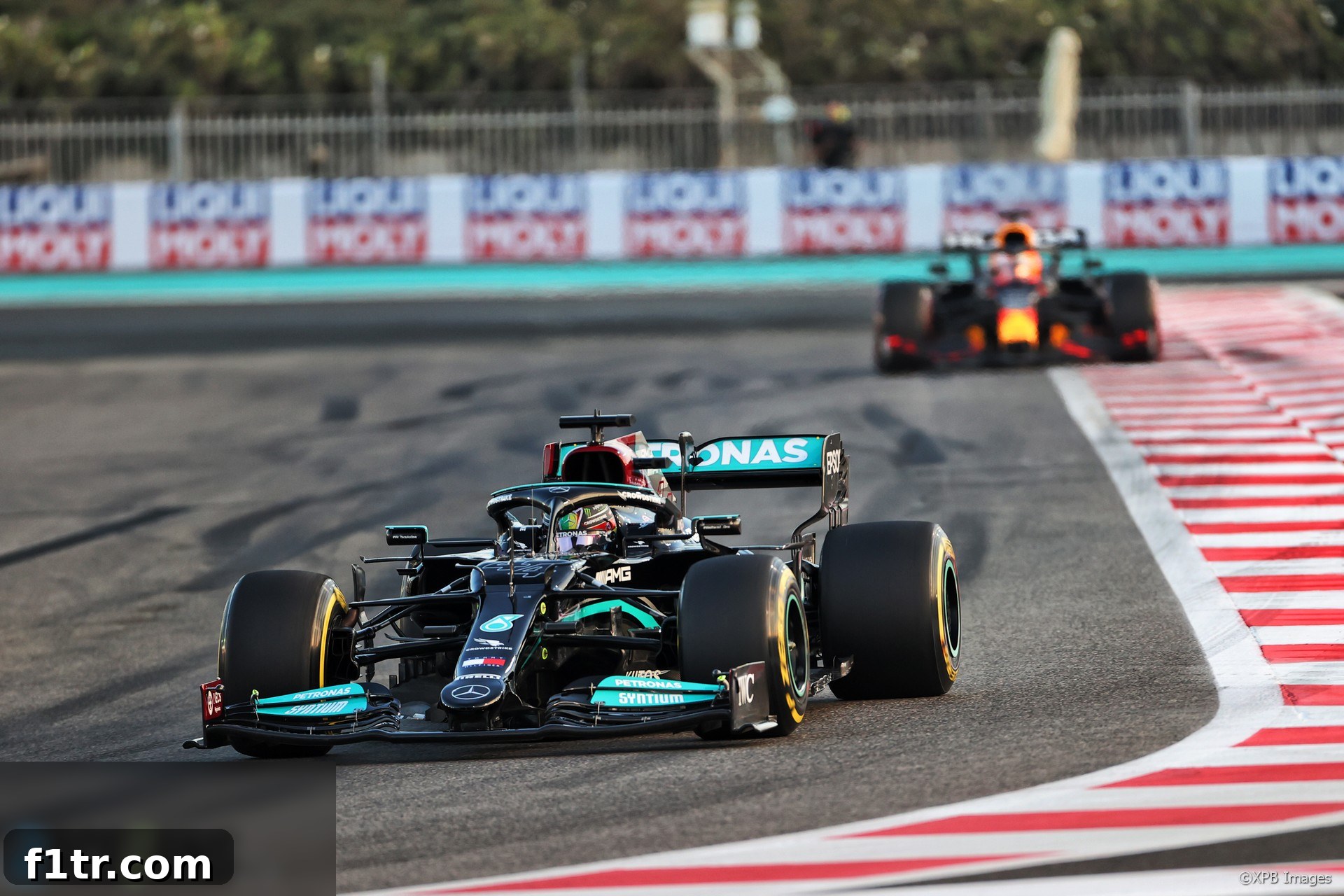
The echoes of the 2021 Formula 1 season finale continue to reverberate, casting a long shadow over what should have been a triumphant end to a historic championship battle. The Abu Dhabi Grand Prix, intended to crown either Lewis Hamilton or Max Verstappen, instead concluded amidst a storm of controversy that saw Mercedes-AMG Petronas F1 Team challenging the very integrity of the sport’s regulations. Following a contentious race restart and the subsequent rejection of their initial protests by the stewards, Mercedes found itself at a pivotal juncture: pursue an appeal, or let the most disputed title decider in recent memory stand. According to a leading expert in sports law, the German powerhouse possesses a compelling case should they choose to take their fight to the International Court of Appeal.
The controversy stems from the dramatic closing laps of the Abu Dhabi Grand Prix on Sunday. A late safety car deployment, triggered by a crash involving Nicholas Latifi, set the stage for a grandstand finish. However, the subsequent handling of the race restart by Race Director Michael Masi ignited an immediate and fierce debate. Mercedes contended that the sport’s precise regulations regarding safety car procedures were not followed correctly, specifically citing the decision to allow only a partial number of lapped cars to un-lap themselves before resuming racing. This contentious call directly paved the way for Max Verstappen, on fresh tyres, to overtake Lewis Hamilton, who was on significantly older rubber, on the very last lap and snatch the world championship title.
Advert | Become a Supporter & go ad-free
The aftermath of the race plunged the outcome of the 2021 championship into uncertainty for nearly two days, sparking global outrage and intense scrutiny from fans, pundits, and legal experts alike. Under the strict rules of the FIA (Fédération Internationale de l’Automobile), Mercedes was granted a 96-hour window to formally commit to an appeal following the stewards’ decision, a significant portion of which had already elapsed. The high stakes of the 2021 season meant Mercedes had arrived in Abu Dhabi fully prepared for potential legal skirmishes, having retained the services of Paul Harris QC, a formidable name in sports law. Harris’s impressive track record includes successfully representing Mercedes in 2013 during an FIA tribunal over a Pirelli tyre test, and more recently, Manchester City in 2020 at the Court of Arbitration for Sport, where he overturned a ban imposed by UEFA for alleged breaches of financial fair play regulations. This strategic legal counsel underscores Mercedes’ unwavering commitment to challenging decisions they deem unjust.
Legal Grounds for Appeal: Inconsistency and Sporting Fairness
Nicholas Bamber, an esteemed associate specializing in regulatory and commercial dispute resolution at Penningtons Manches Cooper LLP, believes Mercedes has robust grounds to challenge the stewards’ decision to reject their initial protest. Bamber highlights the widespread skepticism surrounding the interpretation of the FIA’s 2021 Sporting Regulations by both Race Director Michael Masi and the race stewards. “Race director Michael Masi and the stewards’ interpretation of the FIA’s 2021 Sporting Regulations has been called into question by racing drivers, pundits and legal commentators alike,” Bamber stated, emphasizing the broad consensus on the contentious nature of the decision.
The core of the legal argument revolves around the interplay between two specific articles within the FIA’s regulations: Article 15.3 and Article 48.12. In their response to Mercedes’ protest, the stewards concluded that Article 15.3, which grants the race director broad authority to control the use of the safety car, effectively provides “carte blanche” and overrides the explicit procedural steps outlined in Article 48.12. Article 48.12 dictates the precise protocol for safety car periods, including the crucial directive that “any cars that have been lapped by the leader will be required to pass the cars on the lead lap and the safety car.” Critically, this article specifies that the race should only restart “once the last lapped car has passed the leader.”
Bamber argues that the stewards’ interpretation appears inconsistent with a plain language reading of the regulations. Legal interpretation often prioritizes the literal meaning of statutory text, and in this case, the language of Article 48.12 seems unambiguous about *all* lapped cars needing to un-lap themselves. Furthermore, this interpretation directly contradicts Michael Masi’s own approach in remarkably similar circumstances during the 2020 Eifel Grand Prix. At that event, Masi explicitly stated, “There is a requirement in the sporting regulations to wave all the lapped cars past before the safety car returns to the pit lane and the race recommences.” He acknowledged that this requirement prolonged the safety car period, demonstrating that the race director previously recognized the imperative to fully apply Article 48.12, even if it impacted race timing. This glaring inconsistency in the application of the rules presents a significant legal vulnerability for the FIA.
Advert | Become a RaceFans supporter andgo ad-free
Such an apparent breach of consistent rule application could be considered a violation of the International Sporting Code. Bamber points out that Article 1.1.1 of the 2021 FIA International Sporting Code unequivocally states that regulations must be enforced “based on the fundamental principles of safety and sporting fairness.” Consistency in the application of rules is a cornerstone of sporting fairness. If the rules are applied differently in comparable situations, it undermines the principle of fairness and raises serious questions about the integrity of the competition. Given the precedent set by Masi himself and the clear wording of the regulations, Mercedes appears to have a strong legal foundation upon which to base its appeal.
The “Field of Play” Doctrine and its Limitations
Should the matter escalate to an International Court of Appeal hearing, Bamber anticipates that the FIA would likely defend its position by reiterating the reasoning presented in the stewards’ initial decision. Furthermore, the FIA would probably argue for resolving any ambiguities in the regulations in favor of Masi’s real-time decision-making, made under immense pressure to ensure the race was completed safely and competitively. This defense would lean on the established sports law doctrine of “field of play” decisions, which generally grants considerable deference to officials’ judgments made in the heat of the moment during a competition.
However, Bamber believes this argument would be unconvincing in this specific instance, precisely due to the aforementioned inconsistency. “Again, given the inconsistency in the application of the decision-making during the race itself, and against the same circumstances in prior races, this seems an unconvincing argument,” he asserted. The “field of play” doctrine, while important for allowing sports to proceed without constant retrospective interference, is not absolute. Its applicability diminishes significantly when there’s demonstrable evidence of rule misinterpretation or, more damagingly, inconsistent application by the very same official in comparable scenarios. The perceived selective application of Article 48.12, favoring a spectacular finish over strict adherence to established protocols, undermines the impartiality and fairness that the “field of play” doctrine is designed to protect.
Unusual Communications: A Question of Influence
As the field circulated behind the safety car during those tense final moments of the Abu Dhabi Grand Prix, Michael Masi found himself operating within an increasingly narrow window of opportunity to organize a race restart. Compounding the pressure, he was also receiving direct communications from both championship-contending teams, Mercedes and Red Bull Racing. The Red Bull team principal, Christian Horner, notably urged Masi to resume the race, explicitly stating the desire for a single racing lap to give Max Verstappen a chance against Lewis Hamilton. These unprecedented radio communications between teams and the Race Director, while popular with the F1 audience from an entertainment perspective, have, according to Bamber, “highlighted the volume and questionable nature of communications sent mid-race by the teams.”
Bamber stresses that this level of direct communication between team representatives and officials during the actual course of a sporting contest is “extremely unusual, if not unique, in a sporting context.” In virtually every other major professional sport, clear boundaries are maintained to prevent undue influence on officiating decisions. The impartiality of officials is paramount to the integrity of any sport, and direct lobbying from competing teams during critical moments raises serious questions about the fairness of decisions and the potential for perceived or actual bias. This incident has sparked calls for a re-evaluation of the regulations governing such communications moving forward, perhaps limiting them to specific channels or designated team liaisons, away from the immediate decision-making process.
Bamber draws a parallel to the world of rugby, where South Africa’s director of rugby faced a lengthy ban for “egregious” offenses during the British and Irish Lions’ tour of South Africa. His actions included releasing a video criticizing match officials’ performance, which World Rugby’s independent committee found to have had a “corrosive effect on the game more widely, as well as the viewing public and press.” While the F1 incident differs in nature, the underlying principle remains the same: any action or communication that could compromise the perception of officials’ impartiality has damaging implications for the sport’s credibility and public trust.
The Road Ahead for Formula 1
The Mercedes appeal, if pursued, transcends the immediate outcome of the 2021 championship. It represents a crucial moment for Formula 1’s governance, its commitment to sporting fairness, and the clarity of its regulations. The controversy has undeniably damaged the sport’s reputation in the eyes of many, leaving a significant portion of its global fanbase questioning the integrity of its officiating. A successful appeal by Mercedes could force the FIA to revisit and clarify ambiguous rules, particularly concerning safety car procedures and the extent of the Race Director’s discretionary powers. It might also lead to a more stringent framework for communications between teams and officials, safeguarding the impartiality that is fundamental to fair competition.
Conversely, a failed appeal, or even the decision by Mercedes not to appeal, would leave a bitter taste and a lasting legacy of doubt over the legitimacy of the 2021 title. Whatever the ultimate resolution, the events of the Abu Dhabi Grand Prix have irrevocably altered the discourse around Formula 1 officiating and the precise application of its sporting code. The world of motorsport, and the FIA, face an urgent need to restore trust, ensure consistency, and uphold the principles of sporting fairness that are essential for the long-term health and credibility of Grand Prix racing.