In a strategic move signaling a fresh direction for the iconic Williams Racing team, new CEO Jost Capito has announced the appointment of Francois-Xavier Demaison as its technical director. This pivotal decision sees Capito reaching beyond the traditional confines of Formula 1, bringing in a highly respected engineer he knows intimately and values tremendously from their shared tenure at Volkswagen Motorsport.
Known affectionately as ‘FX’ among Capito and his colleagues, Demaison’s arrival from outside the fiercely insular F1 paddock might seem unconventional to some. However, Williams’ recent, unfortunate experience with his predecessor, Paddy Lowe, serves as a stark reminder that a deep-seated familiarity with Formula 1, while often lauded, is by no means a guaranteed panacea for competitive success.
Paddy Lowe embarked on a distinguished F1 career that began at Williams, later contributing to championship-winning eras at McLaren and Mercedes. Yet, his highly anticipated return to Williams as chief technical officer in 2017 culminated in disaster. The team’s 2019 challenger, the FW42, was not only significantly delayed for pre-season testing but also proved woefully off the pace once it finally hit the track. This period marked a severe competitive nadir for the Grove-based outfit, leading to Lowe’s eventual departure from the team shortly thereafter.
This challenging chapter was followed by a transformative period for Williams. Last year, the founding Williams family divested ownership, selling the team to new investors, Dorilton Capital. This change heralded a new era, with Jost Capito swiftly brought in from Volkswagen to lead the team as CEO. Less than two months into his new role, Capito has made one of his most significant appointments, bringing in a key figure from his hugely successful previous leadership.
Francois-Xavier Demaison: A Proven Track Record Beyond F1
Demaison’s name is synonymous with the Volkswagen Polo R WRC, a rallying machine that under Capito’s leadership, achieved unprecedented dominance in the World Rally Championship. Such was its overwhelming success that even FIA president Jean Todt expressed concerns, reportedly complaining that Volkswagen was “winning too much.” While his success in rallying is undeniable, describing Demaison merely as a “rally engineer” would be a disservice to his exceptional breadth of talent, as Capito emphatically states.
“He’s a brilliant motorsport and racing engineer,” Capito affirmed. “He puts high pressure on himself. He is a workaholic.” This praise highlights Demaison’s dedication and intrinsic drive for excellence, qualities essential for navigating the cutthroat environment of Formula 1.
Upon assuming his role at Williams, Capito embarked on an extensive review, meeting with the heads of every department within the team. His assessment led him to a crucial conclusion: Williams already possesses a wealth of engineering expertise. The challenge, he determined, was not a lack of talent, but rather the imperative to effectively marshal this talent in the correct, cohesive direction.
“When I see what we have at Williams, we have a lot of engineering talent and we have a way how we do things – they might not be seen in the results right now – but we have brilliant people,” Capito explained. This nuanced understanding formed the bedrock of his recruitment strategy for the technical director role.
Capito’s Strategic Vision: Evolution, Not Revolution
Capito’s philosophy for the technical director role diverged significantly from the traditional expectation of an outsider coming in to completely overhaul existing processes. “I don’t think we need a technical director who changes the direction and tells them to do things different,” he elaborated. “I thought we need somebody who comes in, is a brilliant engineer, has different experiences, learns, works with the people we have and further develop the direction we have – because I think we are on the right track – and not disturbing the whole engineering process and team.”
This statement reveals Capito’s belief in the foundational strength within Williams’ engineering department. Demaison’s role, therefore, is not to dismantle and rebuild, but to provide fresh perspective, innovative ideas, and astute leadership to an already talented group, guiding them towards optimized performance within their established framework.
The ID.R Project: A Blueprint for F1’s 2022 Regulations
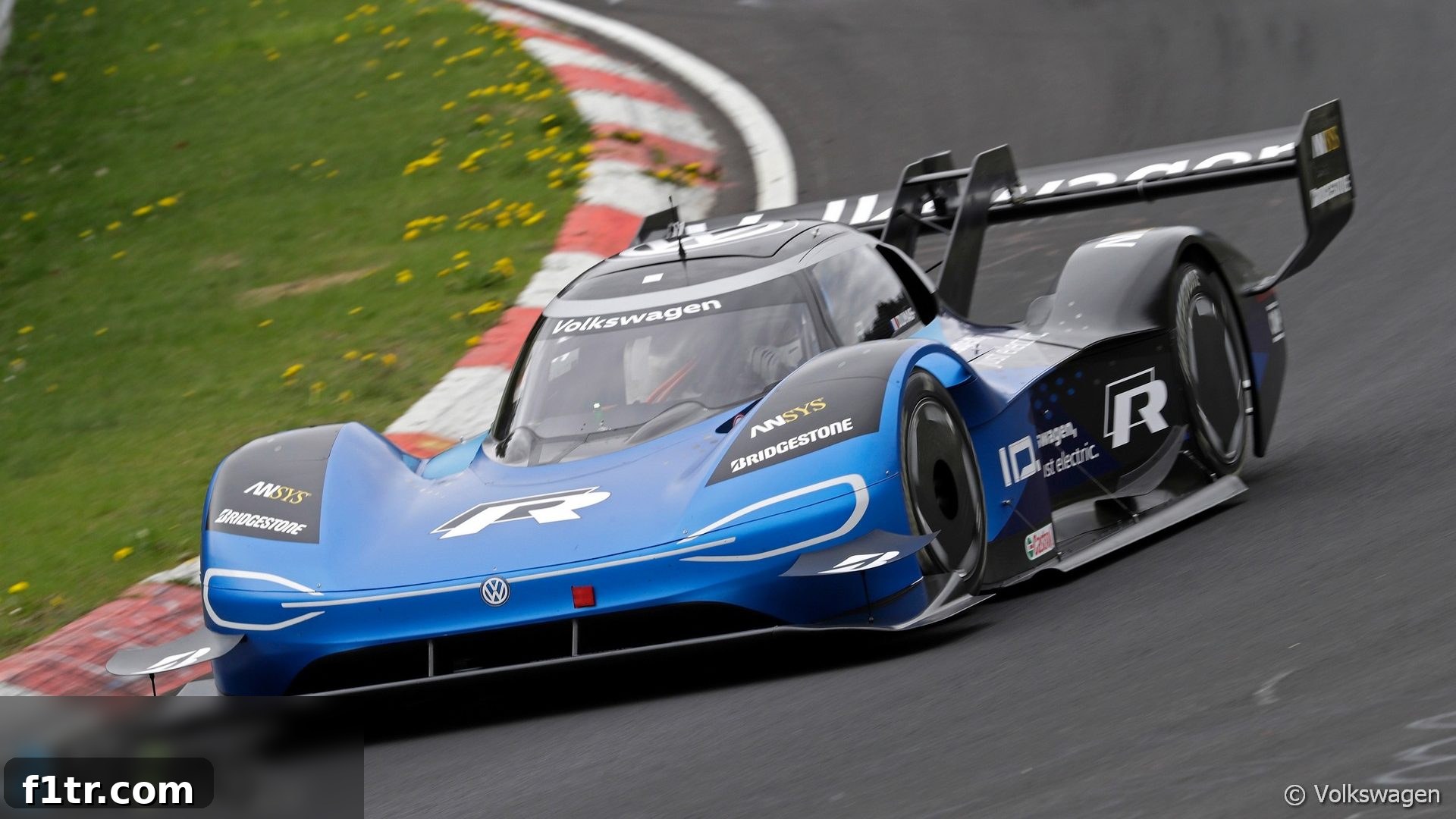
Perhaps one of the most compelling aspects of Demaison’s resume, offering invaluable lessons for Formula 1’s drastically revised technical regulations for 2022, is his work on another extraordinary vehicle: Volkswagen’s ID.R. This project was a groundbreaking endeavor to construct an ultra-high-performance electric car, conceived almost entirely unconstrained by conventional motorsport regulations.
The ID.R project was characterized by an astonishingly short lead time from concept to completion – precisely the kind of intense pressure and rapid development cycle F1 engineers are accustomed to. Wielded by the formidable Romain Dumas, the ID.R shattered electric car lap records at legendary venues such as the Nürburgring Nordschleife, the Pikes Peak International Hill Climb, and several other iconic circuits. This demonstrated not only its raw performance but also the agility and efficiency of its development process.
“With FX, especially when you look at the experience they have done with the ID.R at Volkswagen, they had six months from the project start to Pikes Peak,” Capito highlighted. “So the car had to be fully simulated before they even started building it. They had to create that capability and they had to learn how to do that.” This emphasis on simulation-driven design, rapid prototyping, and efficient project management aligns perfectly with the demands of modern F1, especially under new regulations that necessitate innovative thinking and streamlined development.
The ID.R also pioneered and extensively exploited aerodynamic techniques that will be critical for F1 designers in the upcoming 2022 season. The new technical regulations for Formula 1 drastically curtail the use of intricate upper-surface bodywork for generating downforce. Instead, teams are granted significantly greater latitude to harness the aerodynamic power of their cars’ floors, marking a substantial shift towards ground effect aerodynamics.
The prominent downforce-generating tunnels seen on F1’s 2022 concept car (a design originally slated for 2021 but postponed by a year due to the pandemic) bear a striking resemblance to the underbody design of the ID.R. Capito is confident that Demaison’s deep understanding and practical experience with this aspect of Volkswagen’s record-breaking electric racer will be an invaluable asset for Williams as they navigate the complexities of the new regulations.
“The [ID.R] is a ground effect car because you had no technical limitations,” Capito explained, underscoring the freedom Demaison had to explore optimal aerodynamic solutions. “So the car is a ground effect [car] and this technology comes back into Formula 1. That’s having somebody who adds something to the team that is not there yet because it was not needed for the last decades already.” This insight highlights a crucial gap in current F1 expertise that Demaison can uniquely fill, bringing cutting-edge knowledge in an area that has been largely dormant in F1 for many years.
Integration and Immediate Focus: The 2022 Car
Demaison’s integration into the Williams team is now contingent on practicalities, primarily his relocation to Britain, which has been complicated by the bureaucratic processes following Brexit. “It just depends on the bureaucracy because you need now a work visa,” Capito noted, outlining the administrative hurdles. “He can start 1st of April, but the papers have to be ready. So it might be sixth of April, it might be the week after it depends when we get that, he gets the papers back for a visa from the government.”
Once settled, Demaison will report directly to Capito, forming a critical part of the team’s senior leadership alongside Team Principal Simon Roberts and Chief Operations Officer James Colgate. Capito, himself an engineer, has a clear vision for Demaison’s responsibilities: “Me being an engineer, I prefer for the time being to have somebody in charge 100% of the track, 100% on developing the car and 100% on delivering the car in parts,” he explained. This clear delineation of duties underscores a focused approach to car performance and delivery.
Formula 1 teams were permitted to recommence development work on their 2022 designs as soon as the new year began. While Williams’ current engineering team remains dedicated to optimizing this year’s championship contender, the FW43B, Demaison’s immediate and primary task will be “majority focussing on next year,” according to Capito.
“That is with the track engineering [team] to make this year’s car work and if there are obvious opportunities we have, of course we will do them. But his task is really focussed on the ’22 car.” This strategic emphasis on the 2022 regulations highlights Williams’ long-term ambition and their commitment to leveraging Demaison’s unique skill set for a strong showing in the new era of Formula 1.
The performance of the Williams team in 2022 will serve as the crucial first indicator of whether this new organizational structure and Demaison’s innovative approach have begun to successfully reverse the fortunes of a once-great but long-dormant Formula 1 powerhouse. The motorsport world eagerly anticipates whether this bold, outside-the-box appointment can truly ignite a revival for Williams Racing.