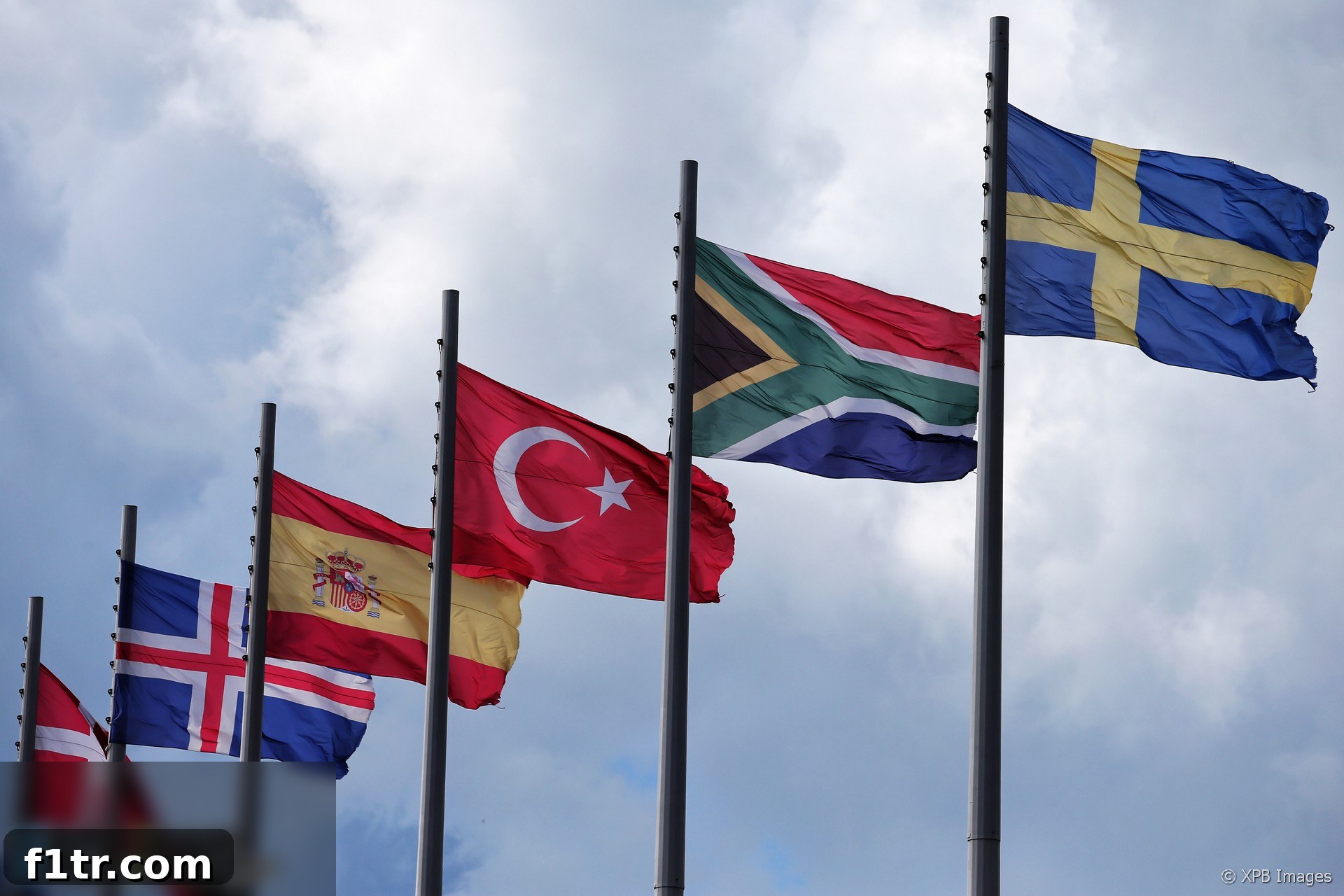
In a significant move toward fostering a more inclusive and representative environment, Formula 1 unveiled its ambitious ‘#WeRaceAsOne’ campaign. This initiative, launched on a Monday, was strategically built upon two pressing global concerns: the ongoing challenges presented by Covid-19 and the deeply rooted issue of inequality prevalent across societies worldwide. The campaign was not merely a fleeting gesture but a declaration of intent, signaling a foundational shift in Formula 1’s strategic outlook. It was explicitly stated that this theme would not be a transient focus, disappearing as headlines fade, but rather a permanent pillar underpinning the sport’s long-term commitment to making a tangible, positive difference both within motorsport and the broader societal landscape it inhabits.
Advert | Become a Supporter & go ad-free
Further solidifying this commitment, F1 CEO and chairman Chase Carey personally contributed a substantial $1 million to kick-start the sport’s dedicated diversity fund. This act carries immense significance for multiple reasons. Firstly, it unmistakably underscores his profound personal dedication to championing diversity within Formula 1. Beyond that, it represents his second million-dollar personal contribution this year, a remarkable gesture. Reliable sources indicate that Carey had previously waived his salary and bonuses for the year, acknowledging the severe economic impact of the Covid-19 pandemic on Formula 1’s operations and financial health. Such leadership, demonstrating both financial commitment and a willingness to share in the sport’s economic burdens, sets a powerful precedent for corporate responsibility and genuine engagement with social issues.
Recalling the era when CVC Capital was F1’s previous rights holder, one might remember them extracting approximately $5 billion from the sport over a decade. It is difficult to imagine any individual from that regime making a personal contribution of a million dollars for the sport’s benefit, especially given how thoroughly they capitalized on it. This stark contrast highlights that Formula 1 is, unequivocally, in far more conscientious and dedicated hands than it was a decade ago. The current leadership appears to be driven by a vision that extends beyond mere profit margins, embracing a responsibility to the sport’s future and its role in global society.
These two pivotal announcements from Formula 1 seamlessly followed the FIA e-Conference held the preceding week. During this crucial digital gathering, sustainability and diversity emerged as two of the most dominant and earnestly discussed topics. This alignment clearly signals that Formula 1, in conjunction with the wider motorsport community, is increasingly dedicated to addressing and rectifying the historical and persistent social imbalances that have long existed within its ranks. While these initiatives are undeniably long overdue, the timeless adage, ‘Better late than never,’ certainly resonates with the current efforts to usher in a new era of inclusivity and conscious social responsibility within motor racing.
These initial steps are commendable and represent a positive direction. However, the crucial question remains: Is motorsport genuinely doing enough to correct past imbalances, or are these merely instances of lip service? A deeper examination of global racing calendars reveals a concerning disparity that warrants further scrutiny. The commitment to diversity and global representation, while articulated in campaigns, often seems to fall short when it comes to the practicalities of venue selection and the geographic spread of prestigious events.
Last week, the FIA World Motorsport Council confirmed Formula E’s 2021 calendar, marking a significant milestone as the electric racing series’ first season as a world championship. Out of the 14 rounds listed, a disproportionate six are scheduled to be hosted by European venues, including a double-header event in England. Saudi Arabia will also host a double-header, while the Americas are allocated three races. The remaining confirmed rounds are set for China and South Korea, with one ‘TBC’ slot slated for June. This distribution immediately raises questions about the “world” scope of the championship, particularly when considering vast, populous continents that remain unrepresented.
Let’s be absolutely unequivocal: not a single round of this supposed ‘world championship’ will be contested on the entire continent of Africa, nor—despite the significant presence of Mahindra on the grid—on the Indian sub-continent. These two regions combined account for an astonishing 2.5 billion people, representing one-third of the world’s total population of 7.5 billion. Yet, Formula E, a series that prides itself on innovation and forward-thinking, does not see fit to host even a single race in either of these immensely populated and economically significant territories, let alone both. This glaring absence undermines the very notion of a truly global championship and highlights a disconnect between stated diversity goals and operational reality.
Advert | Become a RaceFans supporter andgo ad-free
The ‘TBC’ round, while offering a glimmer of hope, is highly unlikely to be awarded to a location like Cape Town. Despite the city’s application and potential, its wintry weather in June—often characterized by snow amidst gale-force winds, as observed last week—makes it an impractical choice for a summer racing series. Similarly, India’s monsoon season typically commences in late May and extends through September, presenting insurmountable logistical challenges for outdoor events. Morocco could potentially fill the ‘Africa’ slot, but the country has a historically intermittent relationship with top-tier motorsport, meaning any return would require substantial investment and commitment, leaving fans with little reason to “hold their breath” for a guaranteed event.
It would be unfair, however, to single out only the FIA for the persistent lack of diversity in its championship calendars. The commercial rights holders of its various championships are primarily responsible for negotiating and contracting venues. Moreover, current FIA president Jean Todt has demonstrably championed equality across the organization’s full membership, pushing for broader representation. Nor should Formula E bear the sole burden of criticism, as other FIA-sanctioned series have demonstrated an equally pronounced reluctance to integrate Africa or India into their global schedules. This suggests a systemic issue deeply embedded within the commercial models and traditional priorities of international motorsport.
Historically, Formula 1 grands prix were hosted in Africa only during South Africa’s apartheid era, a period that offers little in terms of a positive legacy for global inclusivity. India briefly hosted F1 rounds between 2011 and 2013 before financial and bureaucratic challenges ultimately led to the plug being pulled. While the Buddh Circuit outside Delhi was repurposed as a Covid-19 quarantine station for migrant workers in April, it remains structurally usable, highlighting that the infrastructure isn’t the sole barrier. Africa’s only FIA world champion remains Jody Scheckter, who raced under an apartheid-era flag, further underscoring the continent’s limited and complex history with top-tier motorsport representation. The absence of sustained presence not only starves these regions of the spectacle of racing but also inhibits the development of local talent and economic opportunities.
There were indeed plans to host an F1 fan fest in South Africa in March of this year, intended as a precursor to a potential return to the legendary Kyalami circuit. However, these plans, like many others, were regrettably canceled due to the pervasive impact of the Covid-19 pandemic. Despite this setback, the fundamental truth remains that Liberty Media’s current priorities for Formula 1’s expansion clearly lie elsewhere. Their strategic focus includes securing a race in Miami, which would establish two events in the USA and four across North America. Additionally, a second event in China and a new race in Saudi Arabia are high on the agenda, with the latter adding to the Middle East’s growing roster of three grands prix. Africa appears further down the list of priorities, while India, despite its vast population and emerging market status, does not seem to be a target for an immediate return. This approach, driven by commercial viability and established market appeal, inadvertently perpetuates the geographic imbalance and overlooks the immense potential in underserved regions.
Advert | Become a RaceFans supporter andgo ad-free
Expanding this analysis beyond Formula 1, a comprehensive perusal of every single karting world championship venue since 1964 reveals a strikingly similar pattern. Rounds across all classes and categories have been contested on every continent globally, with the stark exception of Africa. The single known exception was a round of the 1984 250cc class, which ironically was contested in Pretoria at the very height of apartheid. Karting events are widely regarded as the sport’s fundamental nursery slopes, where future champions hone their skills. The near-total absence of top-tier karting events in Africa means that the foundational infrastructure and talent development pathways simply do not exist at an international level, effectively stifling potential grassroots growth and representation from the continent.
Rallying enthusiasts might point out that the World Rally Championship has confirmed a 2021 round in Africa, an event that unfortunately fell prey to the pandemic in its 2020 iteration. However, this particular event last featured as a full world championship round back in 2002 before its subsequent removal from the calendar. The alleged reason for its cancellation? A rather remarkable logistical hiccup: the roll-on/roll-off vessel used to transport WRC hardware was reportedly unable to off-load in Mombasa due to docking problems, leading to the entire event being scrapped. Even the iconic Dakar Rally, an event famously named after the capital of Senegal and deeply associated with the African continent, has now relocated its operations to Saudi Arabia. These instances illustrate that even when attempts are made to bring global motorsport to Africa, they often encounter unique and sometimes bizarre challenges, or are simply superseded by more commercially attractive alternatives.
Ultimately, a quantitative review of the past two decades paints a clear and concerning picture. The total number of FIA world championship events hosted by Africa and India across all major series—including Formula 1, WEC (World Endurance Championship), WRC (World Rally Championship), Formula E, WRX (World Rallycross Championship), and WTCC (World Touring Car Championship)—can barely be counted on the digits of both hands. In stark contrast, Europe stages more championship rounds annually than both these vast regions combined have hosted since the turn of this century. Furthermore, the Middle East alone has managed to host more Formula 1 grands prix since 2004 than Africa and India combined have in the entire 70-year history of the sport. This data unequivocally demonstrates a severe imbalance in global motorsport distribution.
The underlying reasons for this profound disparity will likely come as no surprise to seasoned observers: profit often takes precedence over principles, and immediate financial gain overshadows the long-term benefits of true diversity. Until motorsport series implement more equitable calendars that genuinely embrace and feature venues from all corners of the globe, the continued use of the term ‘world championship’ is, arguably, a significant misnomer. For motorsport to truly live up to its global aspirations and the spirit of initiatives like #WeRaceAsOne, it must critically re-evaluate its commercial strategies and commit to fostering a truly inclusive and geographically balanced future for the sport.
Comment
- The shadow of motorsport’s worst tragedy hangs over F1’s latest safety debate
- F1 got lucky three ways. But now it has a difficult and urgent problem to solve
- Verstappen’s overreaction shows he knows he cost himself the 2025 title
- F1’s sticking-plaster fix for Qatar tyre failures is an embarrassment
- The FIA’s stewards grabbed the chance to correct their mistake – unlike last time
Browse all comment articles