In the vibrant world of electric motorsport, intrigue often extends beyond the track. As @DieterRencken embarked on his second day in the captivating city of Marrakesh, he uncovered some truly surprising details, including the curious tale of a Formula E driver who reportedly shaved his initials onto a horse. Join us as we delve into a weekend filled with high-octane racing, paddock insights, and memorable anecdotes from the heart of the ABB FIA Formula E Championship.
8am, Saturday 12 January: Marrakesh Awakening for the E-Prix
The Moroccan sun was already painting the sky as I prepared to head to the Circuit International Automobile Moulay El Hassan. Nestled in Agdal, on the bustling outskirts of Marrakesh, the track was buzzing with anticipation for the day’s first practice session. Unlike the serene quiet of yesterday morning, when the circuit allowed for an easy stroll, today presented a different challenge. The track was alive, meaning my direct path was blocked, necessitating a detour around the perimeter and across a pedestrian bridge to reach the paddock.
This unexpected繞道, however, proved to be a fortunate one. It offered a unique opportunity to truly appreciate the impressive scale and ingenious design of the 2.99-kilometre circuit. A remarkable blend of purpose-built track and public roads, constructed from a planned housing estate, the layout is roughly a 60/40 split. This distinctive characteristic not only provides a challenging course for the drivers but also integrates the race seamlessly into the urban fabric of Marrakesh, a hallmark of Formula E events. What struck me most, even at this early hour, was the sheer number of ticket holders already present. Families, groups of friends, and enthusiastic individuals filled the public areas. Now in its third year, the Marrakesh E-Prix has clearly cemented its place on the calendar, gaining significant traction with local and international fans alike. The palpable excitement was a testament to the championship’s growing appeal and its success in captivating new audiences.
A key factor in Formula E’s expanding popularity is its deliberate strategy of making motorsport accessible. Ticket prices are thoughtfully structured with families in mind, often costing as little as ten pounds at most venues, with an additional fiver for entry to the immersive E-Village. Even coveted grandstand seats, including those at prestigious locations like Monaco, typically hover around the twenty-pound mark. This affordability stands in stark contrast to the often exorbitant prices of other top-tier motorsports, allowing an entire family to enjoy a full day of thrilling electric racing action for less than the cost of a single general admission ticket to a Formula 1 event. This commitment to accessibility ensures that the excitement of motorsport is not confined to an elite few but is open to everyone.
The affordability extends beyond gate admission. Within the interactive E-Village, team and series branded caps and T-shirts are priced attractively at under £15, while branded sweatshirts and hoodies come in at double that. Again, this pricing strategy underscores Formula E’s dedication to providing a premium fan experience without the prohibitive cost often associated with major sporting events. It’s a championship that truly values its supporters and strives to create an inclusive atmosphere.
10am: Paddock Perambulations and Professional Pathways
My morning stroll through the vibrant paddock offered a fascinating glimpse into the melting pot of talent that defines Formula E. It was genuinely astonishing to encounter so many familiar faces – former Formula 1 personnel from every conceivable job description, now contributing their expertise to the electric revolution. This observation underscored a profound point: for dedicated individuals whose lives revolve around motorsport, series like Formula E are an absolute godsend. Should Formula 1 ever implement the stringent budget caps it frequently discusses, the opportunity to remain within the professional racing ecosystem, even if not at its absolute pinnacle, becomes invaluable. Formula E provides a vital career pathway, ensuring that a wealth of experience and passion isn’t lost to the sport.
It’s crucial to understand, however, that this isn’t to suggest Formula E is in any way inferior to Formula 1. On the contrary, it’s simply different – as distinct from F1 as tennis is from squash, despite both being racquet and ball sports. While both occupy the pinnacle of motorsport in their respective domains, they operate on fundamentally different philosophies. Formula E champions sustainable, urban racing with electric powertrains and a focus on fan interaction, bringing the race to the people in city centres. Formula 1, meanwhile, represents the apex of conventional internal combustion engine technology, pushing boundaries in aerodynamics and raw speed on purpose-built circuits. Grasping this distinction is key to truly appreciating Formula E for what it is: a visionary, technologically advanced, and incredibly competitive motorsport series forging its own path.
1pm: Qualifying Thrills and Technical Triumphs
Lunch arrived – a refreshing fresh salad accompanied by a satisfying chicken baguette – a welcome interlude after the morning’s intense qualifying session. The session had been nothing short of scintillating, with Sam Bird claiming a magnificent pole position. The incredibly tight gaps between the top contenders hinted at a fiercely contested race to come, particularly significant as Marrakesh was the first familiar circuit for the new generation (Gen2) cars. These advanced machines, with their enhanced performance and striking aesthetics, demonstrated their prowess by delivering lap times approximately two seconds quicker than their predecessors. This tangible leap in speed is a clear indicator of the rapid technological progress within the series. More importantly, Formula E has, with considerable pride and relief, dispensed with the rather “naff” mid-race car swap. This clunky procedure, necessitated by limited battery range in the Gen1 era, was a point of contention for many. Its elimination, thanks to the vast improvements in battery technology and overall efficiency over the past four years, marks a monumental step forward for the championship, enhancing its sporting credibility and streamlining the race spectacle. With such impressive strides already made, one can only look ahead with excitement to the next five years of innovation and evolution.
1:45pm: Paddock Personalities and a Hairy Tale
Following the qualifying excitement, I had the privilege of interviewing Audi’s esteemed motorsport director, Dieter Gass. A pivotal figure, Gass spearheaded the ‘Four Rings’ entry into Formula E after their successful tenure in the World Endurance Championship. The astute German provided fascinating perspectives on Formula E’s unique challenges and opportunities, insights which promised to make for compelling reading on Wednesday. His strategic vision for electric racing was clear, reflecting Audi’s commitment to sustainable mobility and innovation.
Later, as I continued my wander through the bustling paddock, the sheer density of motorsport luminaries was striking. My gaze fell upon familiar F1 faces: Fred Vasseur, then of Sauber; Toto Wolff, here lending support to both HWA/Mercedes and his wife Susie, who brilliantly leads the Venturi team; Cyril Abiteboul from Renault; and Eric Boullier, whom I had already encountered on Friday. In the distance, I even caught a glimpse of Max Verstappen, engrossed in a phone conversation, a reminder of the interconnectedness of top-tier motorsport. Then, another familiar figure caught my eye, yet something about him seemed strangely different. The penny soon dropped: it was the reigning champion, Jean-Eric Vergne, a driver always happy to engage in conversation. The striking difference? Vergne, typically sporting a luxuriant mane of hair that could put an alpha lion to shame, was now bald-shaven. Naturally, my curiosity was piqued, and I enquired about this dramatic transformation. With a massive grin breaking across his face, he explained, “My sister cut a chunk out while I was sleeping.” He then added with mischievous delight, “I repaid her by shaving my initials ‘JEV’ onto her horse…” It was a truly classic paddock anecdote, showcasing the lighter, more human side of these intensely competitive athletes.
3:30pm: Grid Walk Intensity and Tyre Tech Talk
As race time approached, I made my way to the grid, eager to soak in the unique build-up of a Formula E race. The area was packed, a vibrant mosaic of fans, media, and team personnel. Amidst the organised chaos, I once again bumped into many familiar faces, including Pascal Couasnon, the distinguished boss of Michelin Motorsport. His presence and his unwavering support for Formula E’s tyre regulations provided valuable insight into a crucial aspect of the championship. Couasnon is a staunch advocate for the cost-effective, road-relevant nature of Formula E’s low-profile, single-compound treaded tyres. He emphasized how these tyres are designed to perform in all conditions, reducing costs by eliminating the need for multiple compounds and showcasing technology directly applicable to consumer electric vehicles. This strategic choice aligns perfectly with Formula E’s mission to drive innovation in sustainable mobility.
I genuinely adore grid walks, not solely for their ‘charged-up’ atmosphere – a pun I simply can’t resist – but primarily for the unparalleled opportunity they offer. It’s a rare chance to observe the demeanour of drivers and team principals at close quarters, to witness their pre-race focus and composure. More profoundly, it’s a privilege to see true professionalism in action. Engineers and technicians, with meticulous precision, run through their crucial pre-race tasks, each aware that a single slip, a momentary lapse, could spell the difference between victory and a lost race, or even far worse. Whether it’s in Formula 1, Formula E, at Le Mans, or any other racing series, in any order, this intimate glimpse into the dedication and high-stakes precision of motorsport is always a true privilege.
During my return to the media centre after the race build-up, I engaged in a fascinating conversation with Vitantonio Liuzzi, a former F1 and Formula E driver who was serving as a driver steward for this Marrakesh event. Liuzzi was the man charged with orienting Max Verstappen during his much-publicised “public service” following an incident at the 2018 Brazilian Grand Prix. He shared that Max had settled in remarkably easily, displaying a keen eagerness to observe the ropes and offering thoughtful input into various discussions. Crucially, some of his contributions were even taken on board by the stewards, demonstrating his engaged approach.
An FIA source confirmed to me that the governing body was keen to resolve Max’s public service issue before the commencement of the 2019 F1 season. Formula E, with its Marrakesh E-Prix, was strategically chosen as the only FIA series hosting a race in close proximity to Europe before March, making it a logistically convenient option. However, the perception that observing a Formula E race is widely viewed as a punishment rather than a genuine service continued to linger. This sentiment was famously articulated by Sam Bird, who candidly shared his views with me after the race – comments that were subsequently widely picked up and reported by numerous other motorsport outlets, sparking considerable debate within the racing community. It highlighted the ongoing discussion about how Formula E is perceived within the broader motorsport landscape.
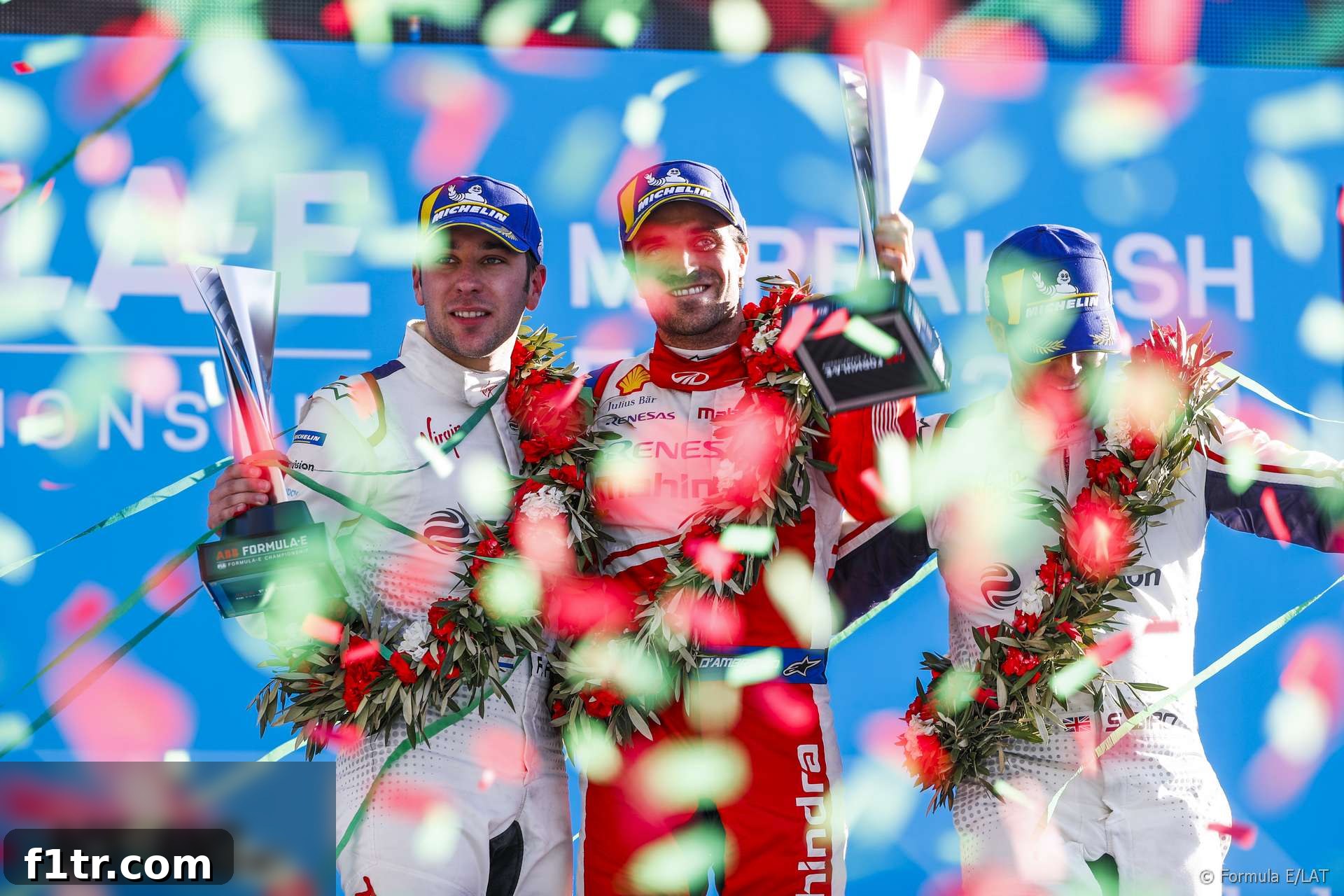
The race itself proved to be absolutely chaotic and utterly thrilling, a testament to the unpredictable nature of street circuit racing. BMW, looking set for a dominant one-two finish, suffered a heartbreaking turn of events when their two drivers tangled, snatching victory from their grasp. It was in this dramatic scenario that my compatriot, Jerome D’Ambrosio, whom I first met when he was a Renault F1 development driver in the noughties, fought valiantly through the melee. His resilient performance ultimately delivered a popular and well-deserved victory, showcasing his skill and composure amidst the high-pressure environment.
6pm: A Moroccan Farewell and Future Horizons
As the day’s racing concluded and all planned interactions were wrapped up, I packed my gear and headed back to the hotel. Dinner in the restaurant offered a delightful typical Berber buffet, a perfect culinary reflection of the rich Moroccan culture. Unexpectedly, I found myself invited to join the Jaguar team’s table, where Mabel Dautzenberg, their race operations manager and another familiar ex-F1 staff member, was celebrating her birthday. It was a lovely, relaxed end to an intense day, with good cheer and laughter enjoyed by all, highlighting the camaraderie that often transcends team rivalries within the motorsport community.
With Saturday’s events behind me, it was time to prepare for checking out on Sunday morning, though my journey wasn’t quite over. Another visit to the circuit awaited, this time for the highly anticipated rookie test. This session promised to be particularly interesting, given that some of the listed drivers, while new to Formula E, are far from being true “rookies” in the purest sense, bringing a wealth of prior motorsport experience. The test would offer a crucial opportunity for these talents to get to grips with the unique demands of electric racing and the Gen2 cars, potentially unearthing future stars for the championship.
After the conclusion of the rookie test, it would be off to the airport for my flight back to Brussels, marking the end of a truly memorable working weekend. My sincere thanks go out to all the wonderful folk at Formula E for their incredible hospitality and for facilitating such a productive and enjoyable visit. Marrakesh, with its vibrant culture, warm hospitality, and stunning backdrop, has been simply wonderful. I wholeheartedly recommend it for any motorsport fan seeking a fantastic and accessible event experience.
Ciao until the F1 testing begins in mid-February, where another chapter of motorsport excitement will unfold.
Formula E kindly hosted Dieter for his visit to this weekend’s race.
Paddock Diary
- Paddock Diary: 2023 Abu Dhabi Grand Prix
- 2023 Las Vegas Grand Prix Paddock Diary part two
- 2023 Las Vegas Grand Prix Paddock Diary part one
- Paddock Diary: 2023 United States Grand Prix
- Paddock Diary: 2023 Qatar Grand Prix
Browse all Paddock Diary articles