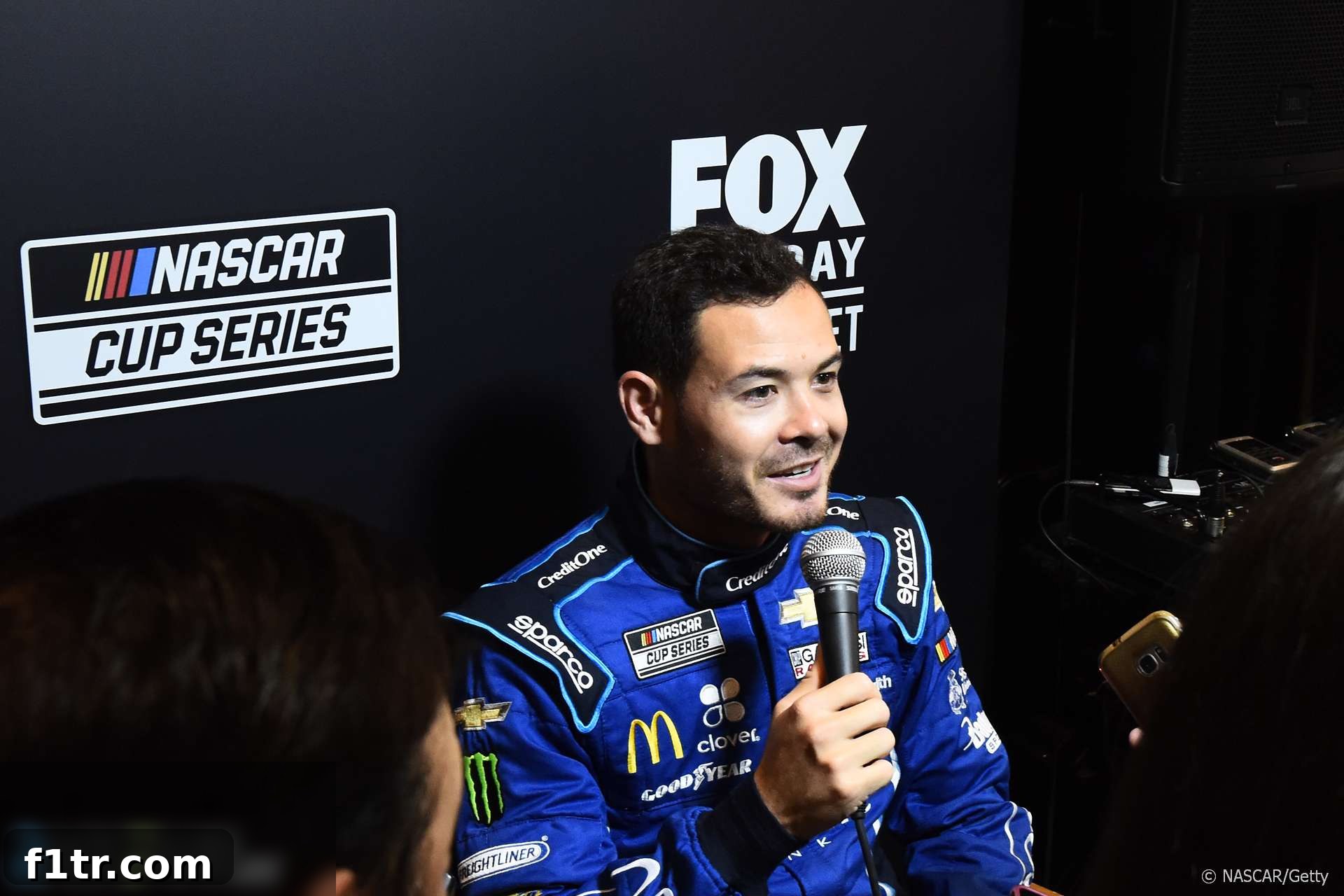
Kyle Larson Faces Severe Scrutiny After Racial Slur Incident in eNASCAR Sim Race
The world of motorsports is once again grappling with a significant controversy as prominent NASCAR driver Kyle Larson has come under intense fire for using a racial slur during an official eNASCAR sim race. The incident, which was broadcast live, has triggered a swift investigation by NASCAR and raised serious questions about driver conduct, professionalism, and the repercussions for athletes in the digital age. This event not only puts Larson’s career in jeopardy but also highlights the increasing scrutiny on public figures in all competitive fields, regardless of the platform.
Advert | Become a Supporter & go ad-free
Larson, a key figure for Chip Ganassi Racing, was participating in Sunday’s “Monza Madness” event, a high-profile virtual competition organized and promoted by NASCAR itself. The race was widely broadcast on eNASCAR’s official online racing platform and streamed live on Twitch, reaching a considerable audience. During a moment within the live chat feed, which was openly accessible to viewers and heard by other competitors among the 62-driver field, Larson uttered the offensive term. The immediate reactions from other participants, captured on the broadcast, indicated the gravity of his words and the shock it caused. This incident quickly spiraled into a major talking point across social media, drawing widespread condemnation from fans, media, and fellow competitors, igniting a crucial discussion about accountability in the virtual racing sphere.
NASCAR Launches Immediate and Comprehensive Investigation
Responding to the outcry and the undeniable evidence of the incident, NASCAR swiftly confirmed that it is actively investigating the matter with the utmost seriousness. A spokesperson for the championship issued a concise yet firm statement to RaceFans, articulating the series’ position: “NASCAR is aware of insensitive language used by a driver during an iRacing event on Sunday, and is currently gathering more information.” This official statement underscores the severity with which NASCAR views such transgressions, especially given the widespread condemnation the incident has received across social media and various media outlets. The phrase “gathering more information” suggests a thorough review process that will likely examine the full context of the incident, the nature of the broadcast, and, critically, the impact of Larson’s words on the racing community, its diverse fanbase, and the broader public perception of the sport.
The implications of such an investigation are profound and far-reaching. NASCAR has a clear, stringent code of conduct designed to uphold the integrity and public image of the sport, ensuring it remains an inclusive and respectful environment. Any actions that bring the championship into disrepute, particularly those involving discriminatory language, are typically met with significant penalties. The series has a long-standing commitment to promoting inclusivity and respect, and incidents involving racial slurs directly contradict these core values, threatening to alienate fans and tarnish NASCAR’s brand. The outcome of this investigation will not only determine Larson’s immediate future in the sport but also send a crucial, unambiguous message about NASCAR’s stance on offensive language in any context associated with its brand, whether on a physical track or in a virtual arena. The eyes of the motorsport world are now firmly fixed on NASCAR’s impending decision.
Setting a Precedent: Jeremy Clements’ Suspension in 2013
This isn’t the first time NASCAR has faced the difficult challenge of enforcing its code of conduct regarding racially insensitive language. A notable and highly relevant precedent was set in 2013 when Jeremy Clements, a competitor in one of NASCAR’s feeder series, faced severe consequences for using the same derogatory term as Larson during a post-race interview. Clements was swiftly suspended under the series’ strict code of conduct, serving a two-race ban before being permitted to return to competition. This past incident serves as a critical benchmark for how NASCAR might handle Larson’s current situation, indicating a historical willingness to act decisively.
The Clements case highlights NASCAR’s historical readiness to impose significant sanctions, even on drivers in less prominent roles, for actions that damage the sport’s reputation. While the context differs – Clements’ remarks were made in a real-world, highly public post-race interview, whereas Larson’s occurred during a virtual race’s live chat – the underlying offense and its potential to harm the sport’s image remain strikingly similar. Both incidents involved the use of a deeply offensive term, widely broadcast and quickly disseminated, amplifying their negative impact. For Kyle Larson, a Cup Series star at the pinnacle of stock car racing, the stakes are arguably much higher. His prominent position in the sport and the increased media attention surrounding his actions mean that any disciplinary action will carry a greater weight and set a more visible example for the entire racing community, reinforcing the idea that such language has no place in motorsport.
The Broader Impact: Consequences for Top Drivers and Sponsors in the Digital Age
Kyle Larson was part of an elite field of NASCAR and IndyCar drivers who participated in the “Monza Madness” race. This illustrious group included racing luminaries such as Josef Newgarden, Tony Kanaan, Patricio O’Ward, Oliver Askew, and James Hinchcliffe. The presence of such high-profile names underscored the significance and visibility of the virtual event, making Larson’s comments even more profoundly visible and impactful. The incident quickly overshadowed the competitive aspects of the race itself, turning the spotlight onto a deeply uncomfortable ethical issue that questions the very fabric of professionalism in sports.
One of the drivers heard reacting to Larson’s remark on the live feed was Conor Daly, whose own career has been tragically marked by the long shadow of similar remarks. Two years ago, Daly lost the crucial backing of sponsor Lilly Diabetes during a real-world NASCAR Xfinity Series race at Road America. This devastating loss of sponsorship came after it resurfaced that his father, former F1 racer Derek Daly, had used the same racial slur in a radio interview back in the early eighties. Derek Daly later expressed deep regret for his remarks and issued a profound public apology, acknowledging the harm caused. Conor Daly’s experience serves as a stark and painful reminder of how deeply and widely offensive language can reverberate, impacting not only the individual responsible but also their loved ones and professional prospects, even decades later. This historical parallel makes the potential ramifications for Kyle Larson all the more apparent, severe, and possibly long-lasting, extending beyond any immediate suspension.
The Rising Stakes of Sim Racing: Sponsorship and Professional Conduct
The line between real-world racing and sim racing has become increasingly blurred, particularly during periods when traditional racing is paused or restricted, as seen during global health crises. This evolution has led to virtual competitions carrying real-world consequences for drivers, sponsors, and teams, proving that actions in the digital realm can have tangible, significant impacts. The incident involving Bubba Wallace just last week stands as another powerful testament to this evolving landscape, highlighting the heightened scrutiny athletes face across all platforms.
Blue Emu, a prominent muscle and joint cream brand, abruptly pulled its sponsorship of Bubba Wallace after he intentionally retired from an eNASCAR iRacing Pro Invitational event following a crash. The sponsor’s public statement, shared via its social media account, was unequivocal and widely reported: “We’re interested in drivers, not quitters.” This decisive action demonstrates unequivocally that sponsors are now closely monitoring drivers’ conduct and performance in the virtual realm with the same rigorous scrutiny they apply to real-world races. For sponsors, their association with an athlete extends to all public-facing activities, and any behavior deemed unprofessional or contrary to their brand values can lead to immediate and costly repercussions. Brands are increasingly protective of their public image and are quick to distance themselves from controversies.
The Wallace incident, though different in nature, establishes a clear and forceful precedent: actions in sim races have tangible, financial consequences that can significantly impact a driver’s career. This raises the stakes exponentially for Kyle Larson, whose incident involves a far more serious ethical breach than quitting a race. Sponsors associated with Larson, as well as Chip Ganassi Racing, will undoubtedly be evaluating their positions very carefully, considering the potential damage to their own brand reputations and the backlash from consumers who expect a higher standard of conduct from public figures. The ongoing shift towards virtual sports as a legitimate competitive platform means that the professional obligations of athletes now extend into these digital spaces more than ever before.
Kyle Larson’s On-Track Performance Overshadowed by Off-Track Actions
During Sunday’s “Monza Madness” race, before the controversy erupted and overshadowed everything else, Kyle Larson experienced a challenging virtual outing on the historic Italian banking. He started the event with promising pace, running in a respectable 12th position early on. However, his fortunes quickly turned, and he ultimately fell significantly through the fiercely competitive field, finishing in 60th place out of the 62 competitors who were navigating the fast and demanding Monza track. The race was eventually won by Justin Botelho, whose impressive victory was unfortunately overshadowed by the rapidly developing news surrounding Larson’s highly regrettable remarks. While a driver’s performance in a virtual race typically garners attention for its competitive outcome, Larson’s poor finish is now merely a footnote to the far more serious ethical issue at hand, starkly highlighting how quickly an athlete’s actions outside of pure competition can redefine their public narrative and overshadow any on-track endeavors, virtual or real.
The Broader Message: Professionalism in the Digital Age and NASCAR’s Stance
The Kyle Larson incident is far more than just an isolated event; it’s a stark reminder of the evolving landscape of sports professionalism in the digital age. Athletes, regardless of their sport, are constantly under public scrutiny, and the distinction between “on-track” and “off-track” behavior has virtually disappeared. Social media, live streaming platforms, and online gaming environments provide unprecedented avenues for engagement and fan interaction but also introduce new arenas for potential missteps and ethical breaches that can have devastating consequences.
For NASCAR, this incident presents a critical and highly visible test of its commitment to diversity, inclusion, and the values it seeks to project to a global audience. The series has made significant efforts in recent years to expand its appeal, attract a broader and more diverse audience, and cultivate an inclusive environment for all participants and fans. Any perceived tolerance of racial insensitivity could severely undermine these vital initiatives and damage the sport’s reputation. The decision made regarding Kyle Larson will, therefore, set a powerful precedent for all drivers under the NASCAR banner, emphatically emphasizing that professional conduct is expected at all times, across all platforms, and that there will be severe and unequivocal penalties for language that propagates hate, discrimination, or racism.
This situation serves as a vital lesson for all professional athletes across every sport: every public interaction, whether in a physical arena or a virtual one, carries immense weight and reflects not only on their personal brand but also on their team, their sponsors, and the sport they represent. The swift and decisive action taken by sponsors like Blue Emu, combined with NASCAR’s serious and ongoing investigation, underscores an industry-wide commitment to accountability and ethical conduct. The future of Kyle Larson’s career now hinges on NASCAR’s findings and the severity of the sanctions ultimately imposed, but the broader message about professionalism, respect, and responsibility in motorsports has been irrevocably amplified, reminding everyone involved that integrity is paramount in the modern sporting world.
This article has been updated following a response from NASCAR. Further developments regarding Kyle Larson’s situation and NASCAR’s investigation will be reported as they emerge.
Advert | Become a RaceFans supporter andgo ad-free
Other Motorsport News and Features
- Formula 2 to debut in Miami and Montreal after Iran war cancellations
- IndyCar driver McLaughlin cleared of injury after crashing through barrier at Barber
- Verstappen to tackle Nurburgring 24 Hours in a Mercedes-AMG GT3
- Ex-McLaren junior Dunne’s move to Alpine finally confirmed
- WEC cancels its Qatar season-opener due to US-Iran war
Browse all other motorsport articles