F1 2022: Unpacking the Challenges of Montreal and Beyond
As the Formula 1 circus gears up for the exhilarating Canadian Grand Prix at Circuit Gilles Villeneuve, drivers and teams are meticulously preparing for a unique set of challenges presented by the 2022 regulations and the iconic Montreal track. From navigating aggressive kerbs with stiffer cars to optimizing tyre performance and evaluating critical car upgrades, the upcoming race promises a captivating blend of strategy and raw pace. This comprehensive report brings you the latest insights from key figures, shedding light on the intricate dynamics shaping the F1 landscape.
Drivers Brace for New Approach at Circuit Gilles Villeneuve
Pierre Gasly on the Stiffer 2022 Cars and Montreal’s Kerbs
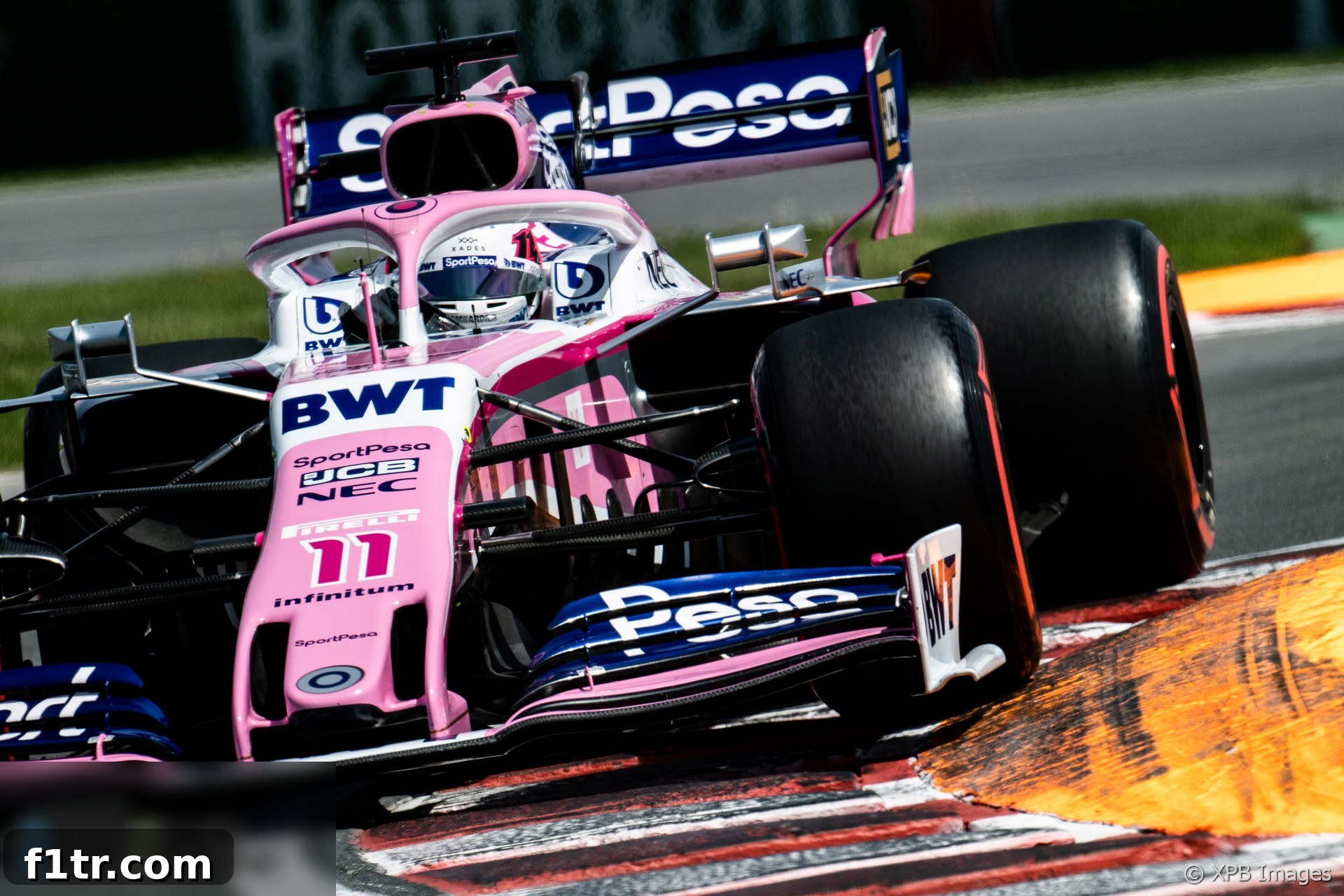
AlphaTauri driver Pierre Gasly has issued a clear warning to his competitors: the traditional approach to the Circuit Gilles Villeneuve will need a significant overhaul this year. The advent of the significantly stiffer 2022-specification cars, designed under new aerodynamic regulations focusing on ground effect, means that drivers can no longer rely on aggressive kerb-riding tactics that were once crucial for a quick lap time in Montreal.
“This year, the Montreal circuit will be genuinely challenging, especially with these new cars that are inherently very stiff, a stark contrast to their predecessors,” Gasly explained. The Frenchman highlighted the circuit’s defining characteristics: “The substantial kerbs and the high speeds will present a rigorous test, as will the notorious final corner leading into the famous Wall of Champions.” He emphasized the tactical shift: “We will be forced to avoid the kerbs far more than in previous seasons, whereas historically, you almost needed to ride over them to extract maximum performance from the car.”
This change stems from the fundamental design philosophy of the 2022 cars. Their ground-effect aerodynamics rely heavily on a stable ride height to generate consistent downforce. Hitting kerbs aggressively can disrupt this stability, causing the car to “porpoise” or lose aerodynamic grip, potentially leading to costly mistakes or even damage. Drivers will need to find a delicate balance between cornering speed and car preservation, navigating the chicanes with a newfound precision that respects the car’s structural limitations.
Looking ahead to his team’s prospects, Gasly expressed caution. “While Montreal is another street circuit, much like the preceding races in Monaco and Baku, its layout is considerably faster with a greater number of quicker corners,” he observed. This characteristic, according to Gasly, makes it “on paper” a more formidable challenge for AlphaTauri, suggesting the team might struggle to replicate the competitive showings seen at slower, more technical venues.
Lando Norris Hopes McLaren’s Progress Isn’t Just Track-Specific
Lando Norris, McLaren’s promising young star, is optimistic that his team’s recent in-season improvements represent a genuine overall gain in performance rather than merely being optimized for specific track characteristics. The continuous development cycle in Formula 1 is a relentless pursuit of performance, and understanding whether gains are universally applicable or narrowly tailored is critical for long-term success.
“I want to genuinely believe, and I think I possess a degree of confidence in asserting, that we have successfully improved the car across a majority of its operational areas,” Norris stated. He further clarified McLaren’s developmental objective: “What we now require, in general, is a comprehensive upgrade package that enhances the car’s performance across the board.”
Norris noted that the car’s handling is currently “reasonably well.” However, he also acknowledged personal preferences and areas for further refinement. “There are undeniably certain characteristics that I, as a driver, still desire more from the car, and it’s proving challenging to push the development in that specific direction at present.” This often relates to a driver’s unique driving style and how they prefer the car to react at the limit.
Despite the positive trajectory, Norris maintained a cautious outlook, emphasizing that the full diversity of the F1 calendar’s circuits has yet to be encountered. “I believe there are still a few slightly tougher areas or tracks for us,” he conceded. “I want to hold the conviction that, on average, we have broadly improved the car across all types of tracks.”
He specifically referenced venues that have historically posed difficulties for McLaren. “There remain a handful of circuits we have yet to visit this season where we experienced considerable struggles last season. I think these tracks present somewhat different characteristics compared to the ones we’ve already encountered, places such as Zandvoort and similar layouts. Therefore, we still need to fully explore the entire range of corner types and track demands that the calendar offers.” This suggests McLaren is keen to validate its development on high-downforce, low-speed, and unique flow circuits to prove its versatility.
Advertisement
Team Strategies & Technical Focus
Alfa Romeo Confident in Solving Soft Tyre Warm-Up Issues for Canada
Alfa Romeo’s head of trackside engineering, Xevi Pujolar, exudes confidence that the team will successfully overcome its soft tyre warm-up difficulties in time for the Canadian Grand Prix. This follows struggles to bring the C5 soft compound tyres into their optimal operating window during qualifying sessions in Baku and Monaco, which significantly hampered their Saturday performance.
Valtteri Bottas and Zhou Guanyu were both unfortunately eliminated in Q2 at Baku, primarily because both drivers consistently required a second push-lap to generate sufficient heat and bring Pirelli’s ultra-soft C5 compound tyres up to temperature. This pattern was a direct continuation of similar challenges faced by the team with the C5 tyres during the Monaco Grand Prix qualifying, a circuit also demanding immediate tyre performance.
Pirelli’s tyre selection for Montreal once again features the three softest compounds in its range – the C3 (hard), C4 (medium), and C5 (soft). Given the crucial role of qualifying position at the Circuit Gilles Villeneuve, Pujolar’s confidence in quickly solving the warm-up issue is vital. A tyre that isn’t up to temperature on the first flying lap can cost tenths, which is often the difference between making it to Q3 or being eliminated early.
Pujolar clarified the distinctions between their recent struggles: “In Monaco, we certainly encountered some difficulties, but that scenario presented different underlying factors.” He assured that the team has been proactive since then: “We have been diligently working since Monaco, and as a result, we implemented changes to the car’s configuration.”
He pointed to Zhou’s performance as evidence of progress: “If you analyze the level of performance we achieved with Zhou – because Valtteri’s situation was slightly different due to other factors – then we can confidently state that the problems from Monaco have been resolved.” However, new issues emerged in Baku: “Now, in Baku, some of our competitors demonstrated an ability to extract more performance from their very first timed lap. For us, on that crucial first timed lap, we were struggling more; we only managed to gain significant performance on our second push lap. This is precisely what we are now focusing our efforts on.”
Achieving optimal tyre performance on the first push-lap is paramount, especially in the tight margins of Formula 1 qualifying where track evolution is rapid. “I believe we are making headway towards resolving this for Q2, but then we seem unable to make further progress into Q3. However, looking ahead to Montreal, we see no discernible reason why we shouldn’t be fully on top of this challenge. The specific problems that plagued us in Monaco are definitely behind us now,” Pujolar concluded, offering an optimistic outlook for the upcoming weekend.
Advertisement
Young Talent Takes the Wheel: Caldwell’s F1 Test Debut
Olli Caldwell Calls Debut F1 Test an “Unbelievable” Experience
Formula 2 driver and Alpine Academy member Olli Caldwell recently had his inaugural Formula 1 test at the iconic Silverstone circuit, describing the experience as nothing short of “unbelievable.” Caldwell piloted a 2021-specification Alpine A521 at the home of the British Grand Prix, marking a significant milestone in his burgeoning motorsport career.
“I’m genuinely quite speechless, to be honest,” Caldwell confessed, still reeling from the sheer intensity of the experience. “There is absolutely nothing I could even begin to compare it to; it was everything I anticipated and so much more. There’s truly nothing you can do to adequately prepare yourself for the raw sensation of driving an F1 car.”
The step up from Formula 2, despite being just one category higher, proved to be monumental. “It’s incomparable to F2, even though it’s technically just one category above,” he explained. “Simply put, everything is amplified – the immense speed, the phenomenal downforce, the ferocious braking capabilities, absolutely everything.” Beyond the physical demands, the technological complexity also stood out: “The sheer number of buttons on the steering wheel – there are probably 50 more buttons than I’m accustomed to, which is a lot to process in real-time. It’s all just so much better. I am eagerly anticipating the step up to F1, should that opportunity ever materialize.”
The experience is expected to provide tangible benefits for Caldwell’s F2 campaign, especially as Formula 2 is scheduled to race at Silverstone in just two weeks’ time. Caldwell believes the F1 test will provide him with invaluable insights and a heightened sense of pace and precision.
“Simply because everything in an F1 car is quicker, it demands that you work harder and faster to extract the absolute maximum from the vehicle,” he reasoned. “Consequently, when I return to F2, where the car is comparatively slower, it should afford me more time to analyze and think during crucial moments. I’m very much looking forward to returning here to race and to ascertain how the track now feels in the F2 car compared to the F1 machine.” This cross-category experience often helps young drivers refine their skills and gain a deeper understanding of track dynamics, benefiting their current championship aspirations.
Advertisement
F1 & Motorsport News Around the Web
A curated selection of interesting motor racing links from across the internet:
- Racing across the eras: Alfa Romeo F1 Team ORLEN takes on the 1000 Miglia (Alfa Romeo)
Alfa Romeo F1 Team ORLEN Managing Director, Alessandro Alunni Bravi, will be competing alongside Italian race driver and TV Host, Vicky Piria, in a classic Alfa Romeo 1900 Sport Spider (number 342) that participated in the original event. Alfa Romeo will also field a 1928 6C 1500 Super Sport (number 41) and a 1900 C Super Sprint Touring (number 399), bridging the gap between historical motorsport and modern F1.
- Does FIA have to act on bouncing? Haug sees the duty lying with teams (Sky Sports F1 (German))
Former Mercedes motorsport boss Norbert Haug offers his perspective on the ongoing “porpoising” issue affecting many F1 teams, particularly Mercedes. He suggests that while other teams have optimized their engine performance, Mercedes has ventured into a “revolutionary aerodynamic concept” that has consequently led to them being “shaken the most,” implying that the solution primarily rests with the teams themselves rather than requiring FIA intervention.
- In the case of Rosberg: there are rules (Sport1 – German)
This article discusses a situation involving former F1 World Champion Nico Rosberg, stating that “he has to stay at home, that’s the way it is.” It highlights that “when you jet around the world, there are rules that you have to follow,” and this “also applies to Nico,” underscoring the importance of adherence to regulations for all individuals involved in the sport, regardless of their status.
- Azerbaijan holding talks to extend F1 Azerbaijan Grand Prix (Exclusive) (Trend)
Negotiations are reportedly underway for the extension of the Formula 1 Azerbaijan Grand Prix. A representative stated, “We have started negotiations with F1, yet it is too early to talk about the outcome.” However, an optimistic outlook was shared: “I can say that both sides are interested, and if we find the common ground, the contract will likely be extended,” indicating a strong mutual desire to keep F1 racing in Baku.
- Can Sebastian Vettel Really Make Formula 1 a Welcoming Place for Queer Drivers? (Into)
This thought-provoking piece explores whether four-time world champion Sebastian Vettel’s recent advocacy can genuinely transform Formula 1 into a more inclusive environment for queer drivers. The article posits, “Marginalised folk are often told that now that one of them is here, the work of undoing generations of hurt will magically begin. It’s not that simple; there need to be systems in place to facilitate real change,” suggesting that individual efforts, while commendable, must be backed by structural support to achieve true progress.
- Elgato and Lando Norris Usher in New Generation of Content Creators with ‘Create Greatness’ Campaign (Little Black Book)
Elgato, a prominent creator economy brand, has partnered with F1 star Lando Norris for a new campaign titled ‘Create Greatness.’ Developed by Atomic London and directed by Josh Cohen with Sticker Studios, the campaign celebrates individuality and personal storytelling. It features global content creators including Norris, his gaming and lifestyle brand Quadrant, make-up artist Djarii, musician Mr Gregles, and podcasters The Nerd Council, aiming to inspire a new generation of digital creators.
We always endeavor to credit original sources. If you have a tip for a link relating to single-seater motorsport to feature in the next RaceFans round-up, please send it in via the contact form.
Advertisement
Social Media Highlights
Notable posts from Twitter, Instagram, and more, offering a glimpse into the motorsport world online:
pic.twitter.com/owthHlXClz
— Naomi Schiff Racing (@NaomiSchiff) June 14, 2022
Today we celebrate the roll out of our Gen3 test car – the NIO 333 ER9 – with @OliverTurvey
📸 at Silverstone HQ#NIO333FE #FormulaE #BlueSkyComing pic.twitter.com/OmPqDjWFfs
— ERT Formula E Team (@ERTFormulaETeam) June 15, 2022
The GRAN TURISMO movie is coming out August 11, 2023, directed by Neill Blomkamp.
In the film, a teenage “Gran Turismo” player on PlayStation becomes an actual professional race car driver. pic.twitter.com/O8RVO8nsz9
— The Game Awards (@thegameawards) June 14, 2022
- Find more official F1 accounts to follow in the F1 Twitter Directory
Advertisement
Comment of the Day: The Ever-Present Qualifying Conundrum
As Formula 1 drivers and officials continue to grapple with the perennial issue of qualifying sessions being interrupted by red or yellow flags, and the subsequent debate on how blame should be apportioned, a thought-provoking comment from @Stefmeister highlights the recurring nature of traffic problems:
It always surprises me that we have all these complaints about drivers going slowly and impeding etc… now when we didn’t in the past at times when there were many more cars, much larger performance deficits between the cars (and drivers) with far less data available, spottier team radio reception and much smaller mirrors (and of course if you go back a bit further they didn’t have any data or radio).
Was it less of an issue in the past because everyone just accepted things as been part of the sport and so didn’t complain about it as much? Were drivers more aware of cars coming up behind them and more willing to get out of the way? Or maybe they were just better at making there way through any traffic they encountered (Also considering how blue flags worked as only a warning rather than a call to jump out of the way)?
And on yellow/red flags. It’s no doubt frustrating if your lap gets hindered by them but I don’t like the ‘IndyCar rule’ of losing lap times and so don’t want to see it adopted by F1. If a driver is suspected of doing something intentionally then investigate it and penalise him if he has. But a genuine mistake shouldn’t suffer further penalties.
@Stefmeister
Stefmeister’s comment raises valid questions about the evolution of qualifying ethics and the impact of technological advancements. In past eras of Formula 1, despite larger grids and significant performance disparities, the outcry over impeding and slow driving in qualifying seemed less prevalent. This could be attributed to a different cultural understanding within the sport, where drivers might have been more instinctively aware of surrounding traffic, or perhaps the consequences of impeding were less severe given the different qualifying formats and car performance windows.
The “IndyCar rule,” which often sees drivers losing their lap times if they cause or are caught out by yellow or red flags, is a contentious point. While it aims to deter intentional disruptions, applying it strictly in F1 could penalize genuine mistakes or unavoidable incidents, adding another layer of frustration for drivers and fans alike. The debate highlights the continuous search for a fair and effective balance between sporting integrity and mitigating the natural chaos of high-speed competition.
Happy Birthday!
A special shout-out and happy birthday wishes go out to our dedicated readers, Plushpile and Jennikate Wallace!
On This Day in Motorsport History
- 20 years ago today: A future seven-time Formula 1 World Champion, Lewis Hamilton, secured his very first victory in a racing car. This momentous occasion took place in the Formula Renault 2.0 UK series at the challenging Thruxton circuit. Hamilton led home a talented field, with Jamie Green and Danny Watts finishing behind him. Notably, Susie Wolff, then Susie Stoddart and now the wife of Mercedes team principal Toto Wolff, also competed in the race, finishing in 16th position. This victory marked the nascent stages of what would become one of the most illustrious careers in motorsport history, showcasing Hamilton’s undeniable talent from an early age in a competitive junior category that has launched many F1 stars.