Audi’s ambitious journey into Formula 1 in 2026 has officially begun its driver recruitment phase, marking a significant milestone in the German automotive giant’s motorsport future. The renowned manufacturer, poised to enter the pinnacle of global motorsport, has announced its inaugural driver signing for the groundbreaking project.
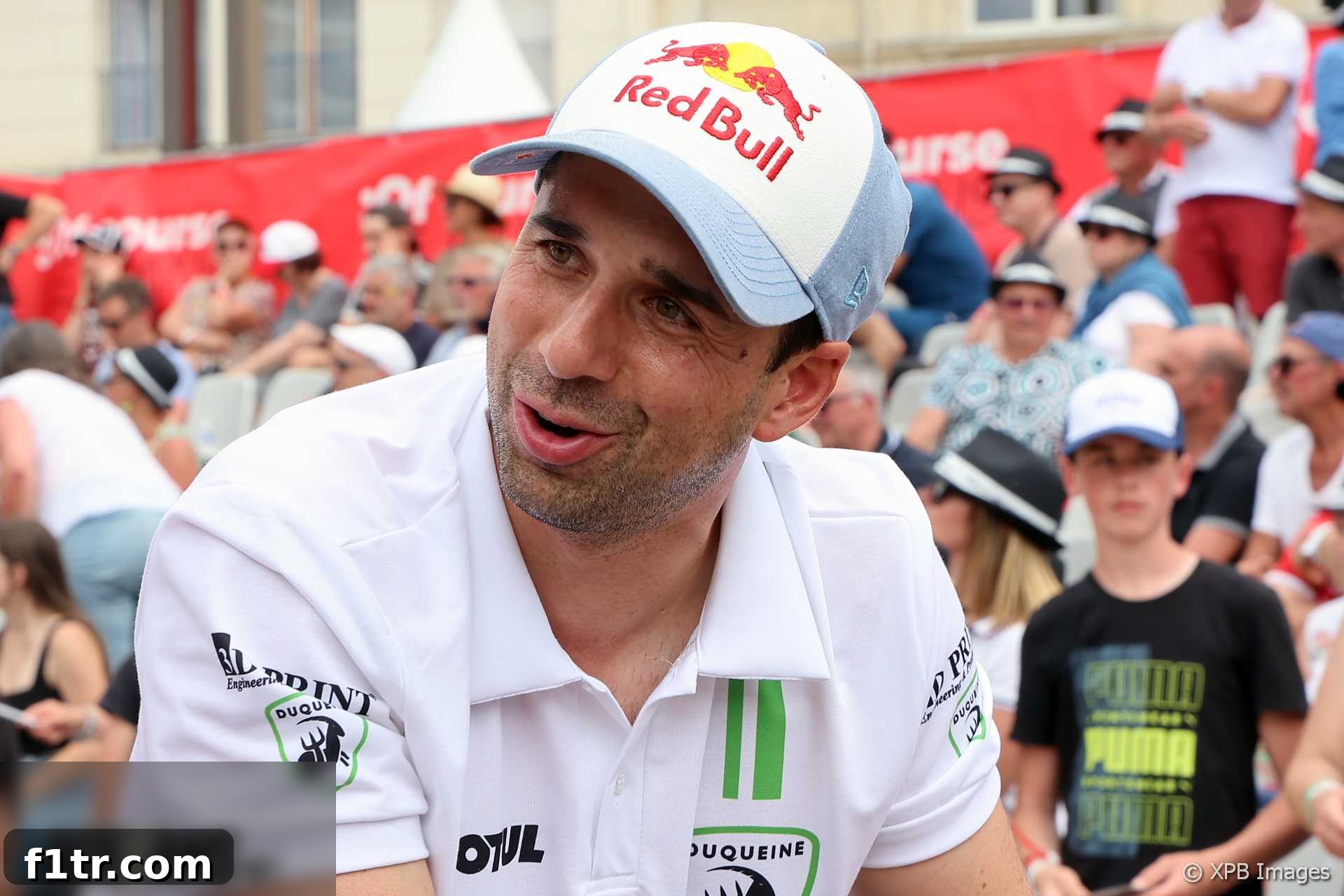
Confirming an instrumental role in the development of their cutting-edge 2026 power unit, Audi has appointed Neel Jani, a celebrated Le Mans 24 Hour winner and World Endurance Champion, as their dedicated simulator driver. This strategic hiring underscores the critical importance of virtual testing and development in modern Formula 1, particularly for a brand-new engine manufacturer. Jani’s vast experience is expected to provide invaluable feedback, bridging the gap between theoretical engineering and on-track performance.
The year 2026 heralds a new era for Formula 1, with revised power unit regulations designed to promote sustainability, innovation, and closer competition. It is precisely this landscape that has attracted Audi to the sport for the very first time. Their entry will see them partner with Sauber, currently operating under the Alfa Romeo moniker, transforming the Swiss outfit into a full-fledged Audi factory team within the elite world championship. This collaboration promises a formidable challenge, bringing together Audi’s engineering prowess with Sauber’s long-standing F1 experience and operational infrastructure.
This announcement is far more than a simple driver hiring; it represents a tangible leap forward in Audi’s comprehensive design and development program for their formidable 1.6-litre V6 turbo hybrid power unit. Substantial work has already commenced at their state-of-the-art facility in Neuburg, dedicated entirely to the conception and production of this sophisticated engine. The integration of a top-tier simulator driver like Jani at such an early stage signals Audi’s meticulous approach to every facet of their F1 debut, emphasizing a data-driven development strategy from the outset.
Neel Jani’s pedigree in top-tier motorsport makes him an exceptional choice for this pivotal role. His remarkable career highlights include securing the World Endurance Championship (WEC) in the fiercely competitive LMP1 category with Porsche in 2016. That same year, Jani, alongside his co-drivers Romain Dumas and Marc Lieb, famously clinched victory at the iconic Le Mans 24 Hours. This triumph came in dramatic fashion, capturing the win on the final lap after the leading Toyota suffered a critical failure on track, an event that remains etched in motorsport history. Such high-pressure, strategic racing experience, particularly concerning energy management and hybrid system optimization in endurance races, is directly transferable and invaluable to the nuanced demands of Formula 1’s complex hybrid power units.
Beyond his endurance racing accolades, Audi’s new recruit brings extensive prior Formula 1 experience to the table. Jani has previously served as a reserve driver for the formidable Red Bull Racing team, gaining invaluable insight into the operational demands and technical intricacies of an F1 outfit. Furthermore, his participation in every practice session for Scuderia Toro Rosso (now Visa Cash App RB) throughout the 2006 season provided him with crucial track time and a deep understanding of F1 car dynamics and engineering feedback loops. This blend of real-world F1 exposure and championship-winning endurance expertise positions Jani uniquely to contribute to Audi’s ambitious project, offering a comprehensive understanding of both driver needs and technical requirements.
The Critical Role of Simulation in F1 Power Unit Development
Oliver Hoffmann, Audi’s esteemed member of the board of management for technical development, has emphatically stated that simulator work will be absolutely critical to the successful development of their groundbreaking, first-ever Formula 1 powertrain. His comments underscore the paradigm shift in motorsport engineering, where virtual testing environments have become indispensable tools for innovation and performance optimization, especially when building an engine from a clean sheet.
“Just like in production development, simulation plays a major role in our Formula 1 project,” Hoffman remarked. This highlights Audi’s commitment to leveraging its expertise from road car development into the hyper-competitive world of F1, where precision and efficiency are paramount. “Our simulator is an important tool for the power unit development. It requires a development driver who in addition to a grasp of technology brings versatile experience to the project, especially in terms of energy management in racing conditions.”
Hoffmann’s emphasis on “versatile experience” and “energy management” directly points to Jani’s strengths. Modern F1 power units are complex hybrid systems, combining a turbocharged internal combustion engine with powerful electric motors (MGU-K and MGU-H) and a sophisticated energy recovery system. Efficiently managing the deployment and regeneration of electrical energy throughout a race lap is paramount for maximizing lap time performance, enhancing strategic flexibility, and ensuring overall reliability. A driver who can accurately evaluate and provide granular feedback on these intricate energy flows within a simulated racing scenario is an invaluable asset, allowing engineers to refine software and hardware without the cost and time constraints of physical testing.
Neel Jani on His Monumental Role
Expressing his enthusiasm and acknowledging the profound responsibility entrusted to him, Neel Jani shared his perspective on joining this monumental project. “It is both an honour and a great responsibility to be involved in a project of this magnitude at an early stage,” Jani stated, reflecting the gravity and excitement surrounding Audi’s F1 entry and his integral position within it.
He further elaborated on how his diverse career background would serve the team: “I am sure that with my experience from Formula 1 and LMP projects I can forge good links between theory and practice.” This ability to bridge the gap between abstract engineering data and tangible on-track performance is the hallmark of an elite development driver. Jani’s prior experience in both the high-downforce, high-speed environment of Formula 1 and the demanding, energy-management-focused world of LMP1 prototypes provides him with a unique perspective. He understands intimately how theoretical engine maps and software algorithms translate into real-world drivability, throttle response, optimal energy deployment strategies, and ultimately, a competitive lap time. His insights will be crucial for fine-tuning the power unit’s characteristics to suit the demanding F1 environment and maximizing its potential.
Audi’s Vision for the Future of Formula 1
Audi’s commitment to Formula 1 in 2026 is a testament to the sport’s growing global appeal and its relevance as a platform for technological advancement, particularly in sustainable mobility. The upcoming regulations, with their increased focus on electric power and the mandated use of 100% sustainable fuels, align perfectly with Audi’s corporate strategy and their drive towards electrification and environmental responsibility. This convergence of motorsport ambition and corporate values positions Audi as a forward-thinking entrant, eager to contribute to F1’s greener future.
The decision to partner with Sauber is equally strategic. Sauber Motorsport boasts a rich history in Formula 1, having been a consistent presence on the grid for decades, bringing invaluable operational experience, a dedicated factory, and established infrastructure. The transition to a full Audi factory team means a complete integration of resources, engineering talent, and a shared vision, laying the groundwork for a competitive future. This partnership aims not just to participate, but to contend for victories and championships in the long run, leveraging the combined strengths of both organizations.
The road to 2026 will be challenging, demanding immense dedication and innovative solutions. Developing a brand-new Formula 1 power unit from scratch, especially under new regulations, is one of the most complex engineering feats in motorsport. However, with the strategic early hiring of a highly experienced simulator driver like Neel Jani, and the unwavering commitment from its technical development board, Audi is clearly signaling its intent to leave no stone unturned in its quest for Formula 1 success. Fans around the globe eagerly await the sight and sound of the Audi power unit making its competitive debut, confident that the foundations for its performance are being meticulously laid years in advance in the virtual world of simulation and expert driver feedback.
2023 F1 Season Related Content
- FIA president cleared of alleged interference in two 2023 races
- First week viewing figures for new Drive to Survive season fall again
- Max who? Drive to Survive season six prefers its favourite faces
- RaceFans’ complete 2023 season review
- The F1 drivers who pulled off the 10 biggest charges through the field in 2023
Browse all 2023 F1 season articles