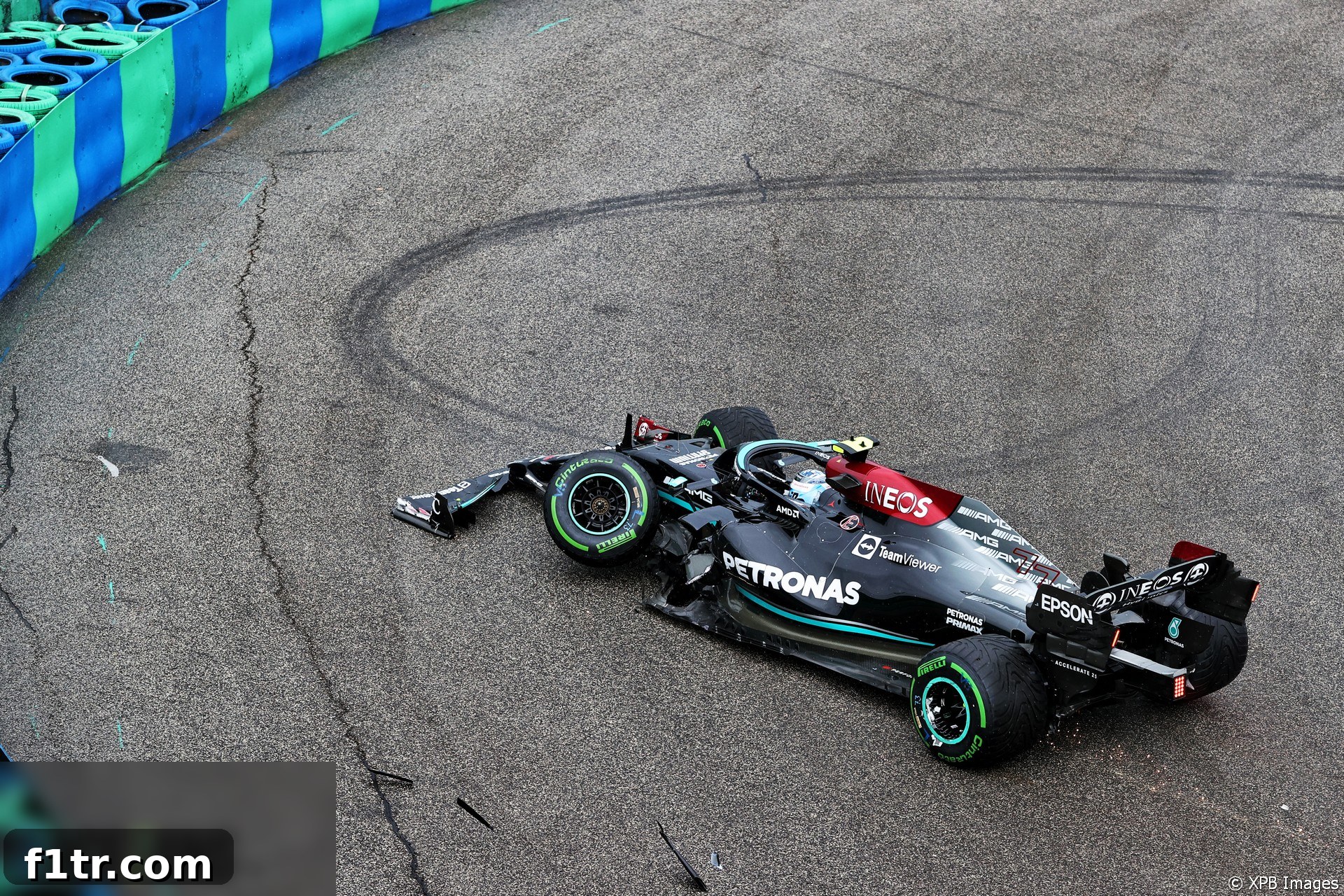
Chaos at Hungaroring: Bottas and Stroll Slapped with Grid Penalties After Hungarian GP Pile-Up
The opening lap of the 2021 Hungarian Grand Prix descended into immediate chaos, leading to significant repercussions for two prominent drivers. Valtteri Bottas and Lance Stroll have each been handed a five-place grid penalty for the subsequent race, the Belgian Grand Prix at Spa-Francorchamps, following their involvement in separate but equally destructive collisions at the very start of the race. These penalties, coupled with additional penalty points on their licences, underscore the high stakes and challenging conditions that defined the dramatic moments at the Hungaroring.
The Hungarian Grand Prix began under treacherous wet conditions, a factor that profoundly contributed to the early incidents. As the lights went out and the grid surged towards the tight Turn 1, visibility was poor and grip levels unpredictable, creating a recipe for disaster. The race had barely begun when two major incidents unfolded almost simultaneously, effectively reshaping the complexion of the race and impacting several championship contenders.
Valtteri Bottas’ Costly Misjudgment at Turn 1
Valtteri Bottas, starting from a competitive position, found himself at the heart of the first major pile-up. As the pack braked for Turn 1, Bottas misjudged his braking point on the slippery surface. His Mercedes W12, struggling for traction, locked its front wheels and careened into the back of Lando Norris’ McLaren. The impact was severe, sending Norris’ car veering uncontrollably into the side of Sergio Perez’s Red Bull. All three drivers sustained irreparable damage, forcing Bottas, Norris, and Perez into immediate retirement from the race.
The ripple effect of Bottas’ collision didn’t stop there. Norris’ out-of-control McLaren also made contact with championship leader Max Verstappen’s Red Bull, inflicting significant damage to the sidepod and floor of Verstappen’s car. While Verstappen managed to continue, the aerodynamic losses severely compromised his pace for the remainder of the race, effectively thwarting his chances of a strong points finish in a crucial phase of the championship battle. This incident alone had massive implications for both the drivers’ championship and the constructors’ title, highlighting the butterfly effect of a single mistake in Formula 1.
Stewards’ Verdict on Bottas’ Incident
Following a thorough investigation after the race, the FIA stewards deliberated on Bottas’ actions. They acknowledged the challenging “track conditions” but ultimately ruled that “the driver of car 77 [Bottas] was fully to blame for the collision.” This clear determination led to the imposition of a five-place grid penalty for the subsequent race. In addition, Bottas was assessed two penalty points on his Super Licence, bringing his cumulative total to four. This penalty would significantly hamper his starting position at the upcoming Belgian Grand Prix at the iconic Spa-Francorchamps circuit, a track known for its challenging high-speed corners and demanding nature.
Lance Stroll’s Parallel Predicament
Mere moments after Bottas’ incident unfolded, an eerily similar collision transpired further back in the pack involving Lance Stroll. Like Bottas, Stroll misjudged the braking zone for Turn 1 on the wet track, losing control of his Aston Martin. His car then ploughed into the rear of Charles Leclerc’s Ferrari. The force of the impact was substantial, immediately ending the races for both Stroll and Leclerc.
The chain reaction from Stroll’s error also affected another competitor. The collision sent Daniel Ricciardo’s McLaren into a spin, although the Australian driver was fortunate enough to recover and continue the race, albeit losing valuable positions and track time. While Ricciardo’s car sustained some damage, he was able to battle through the adversity, showcasing remarkable resilience in a race that saw many retirements and strategy shifts.
Stewards’ Decision on Stroll’s Action
The FIA stewards applied a similar strict interpretation to Stroll’s incident as they did for Bottas’. They deemed Stroll to be primarily responsible for the collision, concluding that his misjudgment under the difficult conditions warranted disciplinary action. Consequently, Lance Stroll received the same five-place grid penalty to be served at the Belgian Grand Prix. Furthermore, he was issued two penalty points, increasing his total on his Super Licence to six. These penalties highlighted the FIA’s consistent approach to drivers causing avoidable collisions, especially in the opening stages of a race where the stakes and potential for multi-car incidents are highest.
Impact and Implications for the Championship
The twin incidents at the start of the Hungarian Grand Prix had profound implications for the drivers and their respective teams. For Mercedes, Bottas’ crash not only eliminated him from a points-scoring opportunity but also contributed to significant damage for a key championship rival, Max Verstappen. This directly influenced the fierce Constructors’ Championship battle between Mercedes and Red Bull, adding another layer of tension to an already dramatic season.
For Aston Martin, Stroll’s early exit meant a missed opportunity to score crucial points in their pursuit of rivals in the midfield standings. The penalties for both drivers also serve as a stark reminder of the financial cost of such incidents, with significant repair work required for multiple damaged vehicles. More broadly, the chaotic start underscored the inherent risks and challenges of racing in wet conditions, particularly at circuits like the Hungaroring where Turn 1 offers limited run-off and tight racing lines.
These grid penalties are not merely symbolic; they have tangible effects on race outcomes. Starting five places lower at Spa-Francorchamps, one of the longest and most demanding circuits on the calendar, will be a significant handicap for both Bottas and Stroll. Overtaking opportunities are present at Spa, but a compromised grid position requires a faultless drive and potentially aggressive strategy to recover, adding pressure to both drivers to perform under scrutiny.
Looking Ahead to Spa-Francorchamps
As the Formula 1 circus moves to the legendary Spa-Francorchamps circuit for the Belgian Grand Prix, all eyes will be on how Valtteri Bottas and Lance Stroll manage their penalties. The picturesque yet challenging track, famous for its iconic Eau Rouge-Raidillon complex and long straights, provides a unique test for both drivers and machinery. The five-place grid penalties will necessitate strong performances in qualifying simply to mitigate the impact of their starting positions. Their ability to navigate the first lap cleanly and advance through the field will be crucial for their respective teams’ championship aspirations.
The 2021 Hungarian Grand Prix will be remembered as a race of unexpected outcomes and dramatic turns, largely shaped by the initial chaos. The penalties meted out to Bottas and Stroll are a clear message from the stewards regarding driver responsibility, even under the most challenging circumstances. As the season progresses, every point and every grid position becomes increasingly vital, making these early race incidents and their subsequent penalties pivotal moments in the unfolding championship narrative.
For detailed analysis and updates on the ongoing F1 season, including the aftermath of the Hungarian Grand Prix and previews of upcoming races, please explore our extensive coverage.
Related 2021 Formula 1 Grand Prix Articles
- Detailed Race Strategy Analysis: How the Hungarian GP Unfolded
- Driver Ratings: Assessing Performance in the Hungarian Grand Prix
- FIA Stewards’ Decisions Explained: Key Incidents from Hungary
- The Impact of Wet Weather on Modern F1 Racing: A 2021 Perspective
- Updated Championship Standings After a Turbulent Hungarian GP
Browse all 2021 Formula 1 Season articles