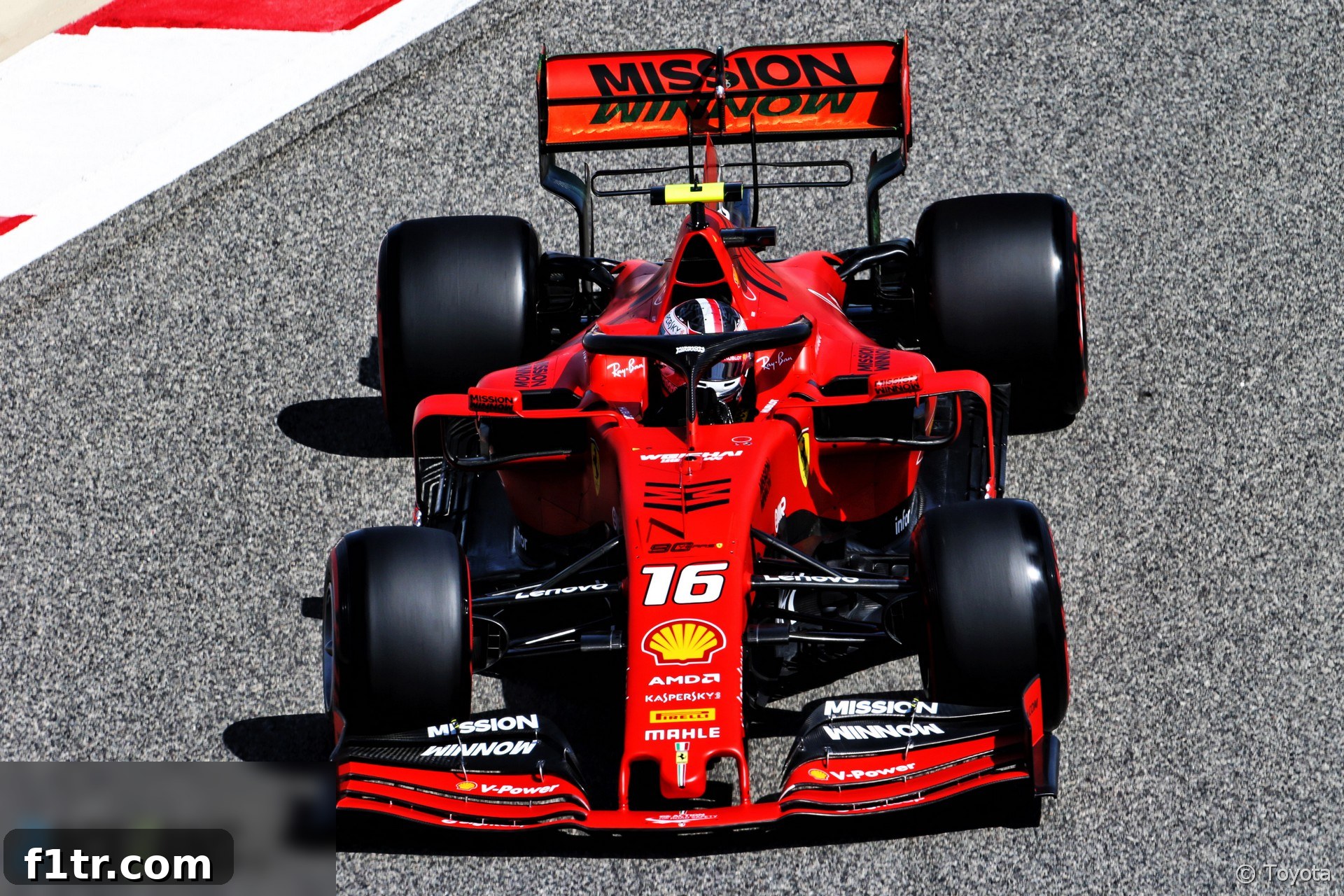
Leclerc Dominates Opening Practice for the Bahrain Grand Prix as Ferrari Shows Early Strength
Ferrari’s young prodigy, Charles Leclerc, delivered a statement of intent by setting the fastest time in the highly anticipated first practice session for the 2019 Bahrain Grand Prix. The Monegasque driver confidently steered his Ferrari SF90 almost a full second ahead of the closest Mercedes, signaling a strong start for the Scuderia at the Sakhir International Circuit. This emphatic performance immediately set the tone for what promises to be an exhilarating weekend of Formula 1 racing, following a season-opener in Australia that saw Mercedes take a surprising one-two finish.
Challenging Track Conditions and Tyre Strategy
The initial 90-minute practice session unfolded under the scorching Bahraini sun, with track temperatures soaring to an intense 45 degrees Celsius. These conditions are notably more extreme than those typically experienced during the cooler evening qualifying and race sessions, presenting a unique challenge for teams and drivers to manage tire degradation and car balance. Ferrari, Mercedes, and Red Bull, the usual front-runners, all opted to utilize the soft C3 compound tyre to log their quickest laps. This choice was crucial for understanding the performance envelope of the softest available compound in high temperatures, even if the data gathered might not directly translate to the cooler, more representative conditions of Saturday and Sunday.
The high temperatures meant that drivers had to be particularly mindful of their tires, as overheating and rapid degradation can severely impact lap times and long-run pace. Despite the heat, Leclerc and Vettel showcased Ferrari’s strong potential, suggesting the SF90 is well-suited to the circuit’s characteristics, especially in terms of traction and outright speed. The relative performance advantage seen in FP1 often indicates a team’s fundamental strength, although fuel loads and engine modes remain unknown variables that can significantly skew the results of early practice sessions.
Ferrari’s Early Dominance: A Red Flag for Rivals?
In the blistering heat, Ferrari’s duo of Sebastian Vettel and Charles Leclerc took turns at the top of the time sheets, illustrating the team’s robust pace right from the outset. Vettel initially posted a highly competitive lap, placing his SF90 a significant seven-tenths clear of early pace-setter Valtteri Bottas. However, Leclerc, eager to make his mark in only his second Grand Prix with the Italian squad, soon followed up with an even quicker time, further extending Ferrari’s lead and leaving no doubt about their immediate superiority in this session. His final fastest lap was an impressive 1’30.354, demonstrating both raw speed and confidence.
This early show of strength by Ferrari is a strong indicator that the issues potentially faced in Australia, which saw Mercedes dominate, might have been circuit-specific or simply a blip. The Sakhir circuit, with its long straights and fast corners, appears to play to the strengths of the SF90, particularly its power unit and aerodynamic efficiency. Leclerc’s substantial margin over the rest of the field, especially Mercedes, will undoubtedly be a cause for concern for their rivals, who will be working overtime to analyze the data and close the gap before qualifying.
Mercedes and Red Bull Play Catch-Up
The Mercedes pair found themselves having to settle for third and fourth positions, with Lewis Hamilton trailing his championship-leading teammate, Valtteri Bottas, by two-tenths of a second. Bottas’s best lap was 1’31.328, nearly a second adrift of Leclerc. While FP1 times are notoriously unrepresentative due to varying engine modes, fuel loads, and testing programs, such a significant gap will still prompt some introspection within the Mercedes camp. It suggests they might be exploring different setups or struggling more with the challenging track conditions than Ferrari.
Hot on the heels of the Silver Arrows were the Red Bull drivers. Max Verstappen, in his Honda-powered challenger, managed to lap within a tenth of a second of Hamilton, showcasing Red Bull’s consistent top-tier performance. His teammate, Pierre Gasly, was close behind, ensuring both Red Bulls maintained their positions within the top six. Red Bull’s performance, while not challenging Ferrari at the very top, indicates a solid baseline and potential to mix it with Mercedes once the various parameters normalize over the weekend. The battle for the podium positions, therefore, looks set to be a fierce three-way contest between Ferrari, Mercedes, and Red Bull.
Midfield Mayhem: Intrigue and Incidents
Beyond the established top three teams, the midfield battle proved as intense and unpredictable as ever. Carlos Sainz Jnr put in an excellent performance for McLaren, securing seventh place. This was a crucial session for Sainz, as his car featured a new power unit following the MGU-K failure that prematurely halted his race in Australia. His rapid pace, just one-tenth of a second off Pierre Gasly, offered a strong sign of McLaren’s recovery and the reliability of their updated components. Closely following Sainz was fellow Renault power unit user, Nico Hulkenberg, who demonstrated the potential of the factory Renault team.
The top 10 was rounded out by Daniil Kvyat for Toro Rosso and Kimi Raikkonen in his Alfa Romeo. Raikkonen, the veteran Finn, faced considerable challenges with traffic during the session, being variously held up by Sainz and Kvyat’s teammate, Alexander Albon. These incidents highlight the tight confines of the Sakhir track and the perpetual struggle for clear air in practice sessions, which can significantly impact a driver’s ability to extract maximum performance.
The session wasn’t without its dramatic moments. Nico Hulkenberg experienced an even closer encounter with Raikkonen’s Alfa Romeo teammate, Antonio Giovinazzi, in the dying minutes. Giovinazzi collided with the Renault at Turn 7, sending his Alfa Romeo briefly flying into the air in a heart-stopping moment. While both drivers managed to recover without significant damage that would halt their participation, it underscored the fine margins and high stakes even in a practice session.
Further down the order, Daniel Ricciardo narrowly missed out on a place in the top 10, highlighting the competitive nature of the midfield. The quickest Haas was only 12th, courtesy of Kevin Magnussen, after Romain Grosjean damaged his front wing, disrupting his session. Sergio Perez led the Racing Points in 14th, while his teammate Lance Stroll lost a significant chunk of the session after spinning and grazing a barrier early on, underscoring the unforgiving nature of the Sakhir circuit for any lapse in concentration. These incidents not only cost track time but also valuable data collection opportunities for the teams.
Williams’ Persistent Struggles
The Williams pair, George Russell and Robert Kubica, once again occupied their familiar positions at the bottom of the timesheets. Despite their consistent presence at the tail end, there was a glimmer of improvement compared to their significant deficit in Australia, with the gap to the midfield appearing slightly smaller. George Russell, the highly-rated rookie, experienced a quick spin towards the end of the session but skillfully avoided making contact with the barriers, minimizing any potential damage or further loss of track time. Their struggles underscore the continued development challenges faced by the historic British team, as they work tirelessly to claw their way back towards the competitive midfield.
Advert | Become a RaceFans supporter andgo ad-free
Implications for the Weekend Ahead
While practice sessions often conceal more than they reveal, Ferrari’s emphatic performance in FP1 suggests they have found a strong baseline setup for Bahrain. Charles Leclerc’s pace, in particular, will inject significant confidence into the Maranello camp and serve as a powerful psychological boost after the somewhat disappointing season opener. Mercedes, meanwhile, will be poring over their data, understanding whether their current setup is optimized for the cooler evening conditions or if they truly have a performance deficit to overcome.
The midfield fight promises to be as thrilling as ever, with McLaren, Renault, Toro Rosso, and Alfa Romeo all showing flashes of speed. The minor incidents during FP1, such as Giovinazzi’s collision and Stroll’s spin, serve as a reminder of the circuit’s demands and the high-pressure environment. As the track evolves and temperatures drop for FP2, which is more representative of qualifying and race conditions, the true pecking order will begin to emerge. All eyes will be on Ferrari to see if they can maintain their blistering pace, and on Mercedes to see how they respond to this early challenge.
First Practice Session: Full Results
| Pos. | No. | Driver | Car | Best lap | Gap | Laps |
|---|---|---|---|---|---|---|
| 1 | 16 | Charles Leclerc | Ferrari | 1’30.354 | 20 | |
| 2 | 5 | Sebastian Vettel | Ferrari | 1’30.617 | 0.263 | 21 |
| 3 | 77 | Valtteri Bottas | Mercedes | 1’31.328 | 0.974 | 26 |
| 4 | 44 | Lewis Hamilton | Mercedes | 1’31.601 | 1.247 | 23 |
| 5 | 33 | Max Verstappen | Red Bull-Honda | 1’31.673 | 1.319 | 21 |
| 6 | 10 | Pierre Gasly | Red Bull-Honda | 1’31.815 | 1.461 | 17 |
| 7 | 55 | Carlos Sainz Jnr | McLaren-Renault | 1’31.952 | 1.598 | 28 |
| 8 | 27 | Nico Hulkenberg | Renault | 1’32.040 | 1.686 | 17 |
| 9 | 26 | Daniil Kvyat | Toro Rosso-Honda | 1’32.339 | 1.985 | 24 |
| 10 | 7 | Kimi Raikkonen | Alfa Romeo-Ferrari | 1’32.385 | 2.031 | 23 |
| 11 | 3 | Daniel Ricciardo | Renault | 1’32.401 | 2.047 | 19 |
| 12 | 20 | Kevin Magnussen | Haas-Ferrari | 1’32.602 | 2.248 | 21 |
| 13 | 23 | Alexander Albon | Toro Rosso-Honda | 1’32.874 | 2.520 | 24 |
| 14 | 11 | Sergio Perez | Racing Point-Mercedes | 1’32.885 | 2.531 | 20 |
| 15 | 4 | Lando Norris | McLaren-Renault | 1’32.945 | 2.591 | 29 |
| 16 | 99 | Antonio Giovinazzi | Alfa Romeo-Ferrari | 1’32.949 | 2.595 | 22 |
| 17 | 8 | Romain Grosjean | Haas-Ferrari | 1’32.994 | 2.640 | 22 |
| 18 | 18 | Lance Stroll | Racing Point-Mercedes | 1’33.518 | 3.164 | 16 |
| 19 | 63 | George Russell | Williams-Mercedes | 1’34.188 | 3.834 | 26 |
| 20 | 88 | Robert Kubica | Williams-Mercedes | 1’34.253 | 3.899 | 27 |
First practice visual gaps
Charles Leclerc – 1’30.354
+0.263 Sebastian Vettel – 1’30.617
+0.974 Valtteri Bottas – 1’31.328
+1.247 Lewis Hamilton – 1’31.601
+1.319 Max Verstappen – 1’31.673
+1.461 Pierre Gasly – 1’31.815
+1.598 Carlos Sainz Jnr – 1’31.952
+1.686 Nico Hulkenberg – 1’32.040
+1.985 Daniil Kvyat – 1’32.339
+2.031 Kimi Raikkonen – 1’32.385
+2.047 Daniel Ricciardo – 1’32.401
+2.248 Kevin Magnussen – 1’32.602
+2.520 Alexander Albon – 1’32.874
+2.531 Sergio Perez – 1’32.885
+2.591 Lando Norris – 1’32.945
+2.595 Antonio Giovinazzi – 1’32.949
+2.640 Romain Grosjean – 1’32.994
+3.164 Lance Stroll – 1’33.518
+3.834 George Russell – 1’34.188
+3.899 Robert Kubica – 1’34.253
Drivers more than ten seconds off the pace omitted from this visualization.
Advert | Become a RaceFans supporter andgo ad-free
More on the 2019 Bahrain Grand Prix
- Top ten pictures from the 2019 Bahrain Grand Prix
- 2019 Bahrain Grand Prix Star Performers
- Hamilton hails luckless Leclerc after thrilling Bahrain GP
- Mercedes start season with back-to-back one-twos for the first time
- Paddock Diary: Bahrain Grand Prix day four
Browse all 2019 Bahrain Grand Prix articles