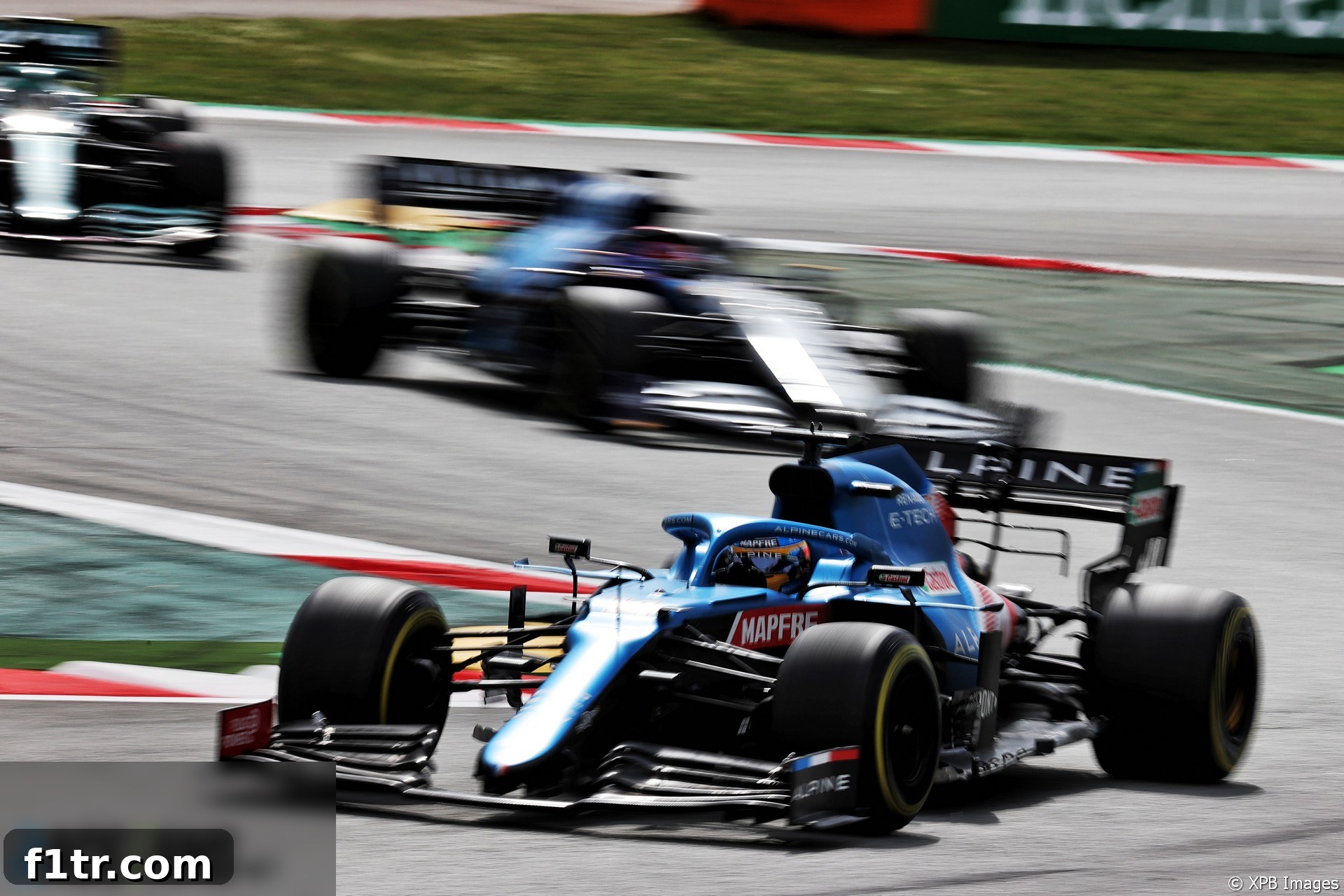
Formula 1 racing at the iconic Circuit de Catalunya could see a significant return to its roots if discussions about reverting to the original final corner layout come to fruition. This potential change aims to inject more excitement and improve racing dynamics at a track often criticized for its challenging overtaking opportunities.
The circuit, nestled near Barcelona, has been a staple on the Formula 1 calendar, known for its diverse range of corners and demanding nature that thoroughly tests a car’s aerodynamic and mechanical balance. However, its reputation as a difficult venue for wheel-to-wheel action has prompted ongoing discussions among drivers, teams, and the sport’s governing body, the FIA.
One of the most debated elements of the current layout is the slow chicane at turns 14 and 15, positioned just before the pit straight. This chicane was introduced in 2007 at the FIA’s behest, primarily to slow the cars as they exited the final sector and entered the main straight, a measure initially implemented for safety reasons in an era of ever-increasing cornering speeds.
Leading the charge for change is British Mercedes driver George Russell, who recently voiced his conviction that bypassing this slow chicane would dramatically enhance the racing spectacle at the Spanish Grand Prix. Russell’s perspective, shared with RaceFans last month, highlights a common sentiment among drivers who often advocate for track layouts that promote more fluid, high-speed racing and easier overtaking. His argument is that the original, faster configuration of the final two corners would allow drivers to carry more speed onto the main straight, potentially creating better slipstream opportunities and more thrilling starts to overtaking maneuvers.
Responding to these calls, FIA Formula 1 Race Director Michael Masi confirmed that the prospect of reverting to the original final corner configuration is indeed under active consideration. “It’s something that we’ve been looking at for a little while,” Masi stated in an interview with RaceFans, acknowledging the complexity of such a modification. He emphasized that any track change of this magnitude is “obviously not an overnight change that can be done” and requires meticulous planning and evaluation.
Masi further elaborated on the FIA’s diligent process, explaining that they are “having a look at all of the implications and unintended consequences that may come about” from restoring the faster layout. The decision-making process involves a delicate balancing act between safety imperatives and the desire to enhance the racing product. Any alteration to a track’s layout, particularly a high-speed section, must first and foremost ensure the utmost safety for drivers and marshals.
The FIA’s approach is highly collaborative, involving all key stakeholders in Formula 1. “Like all of our circuits and different corners and everything, we work together with the teams, the drivers and F1 in ensuring we’ve got the safest venue, but also something that promotes good racing,” Masi explained. This collaborative ethos ensures that any proposed changes are thoroughly vetted from various perspectives, considering everything from car performance and tire degradation to driver feedback and spectator experience.
The debate surrounding the final chicane is not the only recent discussion about optimizing the Circuit de Catalunya’s layout. For this year’s Spanish Grand Prix, changes were successfully implemented at Turn 10. This particular bend, which had been tightened in 2004, was eased and brought closer to its original, more flowing layout. This modification aimed to improve the flow of the circuit and potentially offer a slightly different dynamic for racing without compromising safety.
Spanish F1 veteran Fernando Alonso offered his approval of the Turn 10 modification, though he tempered expectations regarding its impact on overtaking. “I confirmed the feelings that I had about the turn 10, which is it changed not much the overtaking possibilities,” Alonso remarked. He noted that the revised corner felt “very similar” to the old Turn 10 in terms of its effect on passing maneuvers. However, Alonso highlighted a significant positive: “It’s more fun to drive because it’s faster and you can carry more speed into the corner. So that was a positive thing. But in terms of overtaking, it was not a game-changer.” This sentiment underscores a crucial aspect of track design: changes can improve driver enjoyment and lap flow even if they don’t radically alter overtaking dynamics.
Despite these minor adjustments, Alonso remains pragmatic about the inherent difficulties of overtaking at the Circuit de Catalunya. He sees limited scope for making passing significantly easier without more substantial overhauls to the track’s fundamental design. The circuit’s long, high-speed corners, coupled with its demanding aerodynamic characteristics, mean that cars often struggle to follow closely enough to launch an attack without being severely penalized by turbulent air, often referred to as ‘dirty air’.
Alonso pondered potential solutions, suggesting, “Maybe a little bit extra DRS to right after the last chicane, maybe being able to open the DRS is a possibility for the future. I don’t know. Barcelona is going to be always tough for overtaking.” The Drag Reduction System (DRS) has been a key tool in Formula 1 to facilitate overtaking, and extending its zones or adding new ones is a common approach to enhance racing on circuits where passing is notoriously difficult. However, even with DRS, Barcelona’s layout presents unique challenges that are hard to overcome with simple additions.
The Circuit de Catalunya has a rich history with Formula 1, having hosted every Spanish Grand Prix since its inaugural race three decades ago. Its enduring presence on the calendar has made it a familiar and often pivotal stop in the championship. However, its future on the F1 schedule is not entirely guaranteed, highlighting the competitive nature of securing a spot in the sport’s global lineup. The promoters of the Spanish Grand Prix are yet to finalize a deal to host a round of the 2021 F1 season, a situation that underscores the constant negotiations and financial pressures circuits face to retain their place.
In a rapidly evolving Formula 1 landscape, where new venues and city circuits are increasingly vying for attention, traditional tracks like Barcelona must continually adapt to remain relevant and exciting. The consideration of reverting to the original final corners is a testament to this ongoing effort. It reflects a commitment to enhancing the racing spectacle while balancing the critical aspects of driver safety and historical integrity. Whether this change materializes, and whether the Circuit de Catalunya secures its future on the F1 calendar, remains to be seen. However, the discussions themselves indicate a positive step towards ensuring that one of F1’s most challenging circuits can also become one of its most thrilling.