Welcome to the final installment of our Silverstone Paddock Diary, reflecting on a thrilling British Grand Prix weekend. From Sebastian Vettel’s double dose of misfortune to significant changes within the BRDC leadership and whispers of a potential new team on the Formula 1 grid, the paddock was buzzing with activity. Join us as we delve into the key moments and insights from the track.
7am: A Race Day Morning at Silverstone
The gentle hum of anticipation filled the air as I began my final packing ritual after a hearty full English breakfast. Check-out was imminent, but first, a crucial meeting awaited: coffee with colleagues at the esteemed BRDC Clubhouse at 9am. To ensure a timely arrival, allowing for the unpredictable British Grand Prix traffic, I aimed to depart within the hour. Unexpectedly, the journey was remarkably smooth; traffic flowed effortlessly, and I found myself pulling into the paddock ahead of schedule, having barely paused at the main gate. The crisp morning air, infused with the scent of racing fuel and damp grass, always serves as a potent reminder that it’s race day at one of motorsport’s most iconic venues. The atmosphere, even at this early hour, was electric, a palpable excitement building for the spectacle ahead.
10am: Secret Dinners and New Team Whispers
As the paddock slowly came to life, a fascinating tidbit emerged from the previous evening: Toto Wolff, head of Mercedes-AMG F1, had hosted a dinner for his F1 counterparts at his nearby residence. Approaching several team principals about the gathering, their responses were notably guarded. They coyly indicated it was a purely social affair, attended by around 18 guests, suggesting some teams had more than one representative present. When I gently pressed, suggesting that F1 business – given the current climate of regulatory discussions, budget caps, and the future Concorde Agreement – must have been on the agenda, they clammed up completely, refusing any further comment. This collective secrecy, if the event was indeed “purely social,” only served to fuel speculation about what critical issues might have been discussed behind closed doors, away from the prying eyes and ears of the media. The dynamics of Formula 1’s power brokers gathering in such a manner are always intriguing, especially as the sport navigates a pivotal period of change and negotiation.
Further to this, another significant rumor began circulating. A former, highly respected team boss is reportedly considering launching a new Formula 1 team, potentially targeting an entry in the 2021 or 2022 season. Sources indicated that this individual was present at Silverstone over the weekend, meticulously “investigating the lay of the land.” While it’s premature to confirm the viability of such an ambitious project, and thus unfair to reveal any names, the intensity of the questions being posed suggested a serious intent. Formula 1 has long benefited from having a diverse grid, and the potential addition of at least one more competitive team would undoubtedly inject fresh excitement, create more opportunities for drivers and personnel, and ultimately benefit the sport’s global appeal. The financial and logistical challenges of entering F1 are immense, making any serious exploration a testament to the sport’s enduring allure.
Noon: Silverstone’s Record Crowds and F1’s Metrics
Lunchtime arrived, offering a brief respite from the burgeoning activity. Brisket tacos and a baked potato in the bustling media canteen provided a moment to share notes and observations with colleagues. The day’s crowd numbers were a hot topic, with whispers confirming that race day attendance was expected to set a new record at a staggering 141,000 spectators. While Saturday’s audience was slightly down compared to previous years, the overall sentiment was that Silverstone continues to do something remarkably right, drawing immense crowds year after year. To put this into perspective, Silverstone’s race day crowd represents approximately 0.23 percent of the UK’s population – a substantial figure for any sporting event.
However, this led to a broader discussion about how Formula 1 measures success, particularly concerning attendance figures. For instance, Bahrain’s 35,000-strong audience, when viewed on the same percentage basis relative to its country’s population, is ten times larger than Silverstone’s. Yet, the crowd sizes at desert circuits often face ridicule or criticism. This disparity highlights a crucial point: headline attendance numbers, while impressive, don’t always tell the full story. Market share, audience engagement, and the local impact are arguably just as, if not more, significant than raw figures. This is food for thought for Liberty Media, F1’s commercial rights holder, as they frequently trot out attendance statistics. A more nuanced understanding of fan engagement across diverse markets could provide a richer, more accurate picture of the sport’s health and reach.
1pm: BRDC Leadership and Media Frustrations
With lunch concluded, it was time for a final sweep of the paddock before making my way to the grid, roughly twenty minutes before the race start. Amidst the pre-race fervor, a quiet whisper reached me from a British Racing Drivers’ Club (BRDC) insider: David Coulthard, the esteemed former Formula 1 driver and popular television pundit, would soon be announced as the new president of the BRDC. The formal announcement was expected as early as Monday. It appears to be a two-year tenure, succeeding the respected Paddy Hopkirk, whose term concludes in September. Congratulations are undoubtedly in order for DC, and a fond farewell to Paddy, whose contributions to British motorsport have been invaluable. Coulthard’s appointment is a fitting choice, bringing a blend of modern F1 experience and a deep understanding of the sport’s heritage to the prestigious club.
The British Grand Prix, unlike its Austrian counterpart, featured an earlier race start time, and it felt like a much better fit for all involved. There was minimal wasted time after lunch, and crucially, an additional hour was available after the checkered flag to conduct interviews with drivers and team personnel. This extra time proved invaluable for independent journalists seeking in-depth insights. Yet, Liberty Media, despite having ready access to comprehensive F1 figures and vast data, often persists with a timetable that suits very few – certainly none of my acquaintance in the media. I frequently ponder what research, if any, they use to justify these later timings, and more importantly, whom exactly they consult. There’s a growing belief among many in the independent media that these scheduling decisions are part of a larger strategy to gradually stifle access, making it increasingly difficult for us to gather original content and forcing fans to rely more heavily on PR-style ‘news’ disseminated directly by the teams or the sport’s official channels. This trend raises concerns about the future of diverse and critical reporting within Formula 1.
4pm: A Race for the Ages and Vettel’s Misfortune
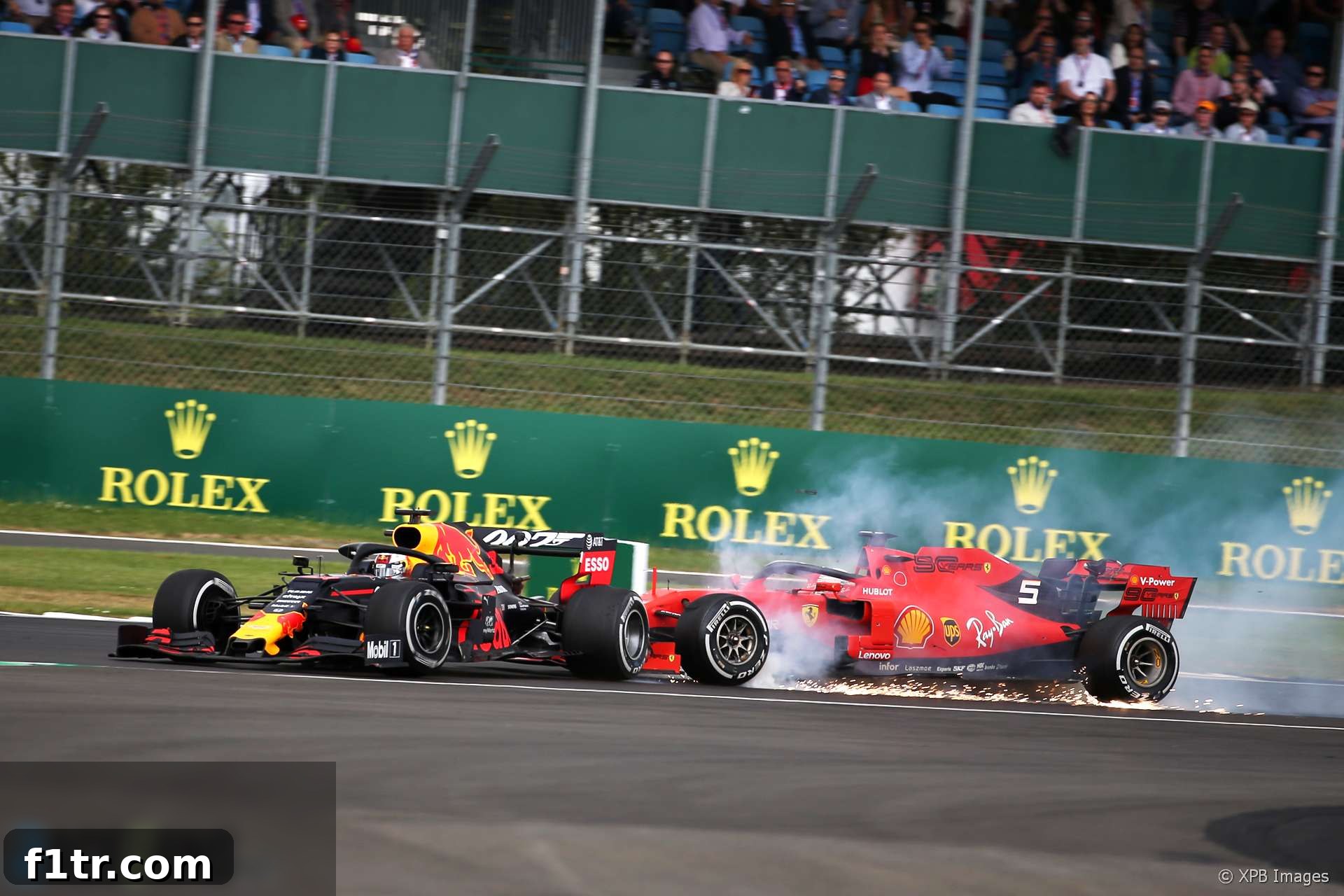
If the Austrian Grand Prix was a cracker, Silverstone potentially outstripped it, delivering a truly spectacular display of wheel-to-wheel racing from the very beginning among the front runners. Valtteri Bottas and Lewis Hamilton engaged in a thrilling, high-stakes duel for the lead, pushing each other to the absolute limits. However, the most talked-about incident unfolded when Sebastian Vettel, in an unfathomable moment of misjudgment, bundled Max Verstappen into the gravel trap at Vale. The collision was a stark reminder of the fine margins in Formula 1 and the immense pressure drivers operate under, especially when battling rivals of Verstappen’s caliber. It marked a significant setback for Vettel, adding to a challenging period in his career.
Unfortunately, an Antonio Giovinazzi-triggered Safety Car period momentarily deprived us of what promised to be a second helping of intense action between the two Mercedes drivers. Later, Race Director Michael Masi clarified the decision, explaining that race control had no alternative course of action. Deploying a Virtual Safety Car (VSC) was simply not an option, given the precarious location of the stranded Alfa Romeo near the pit lane entrance, necessitating a full Safety Car deployment for the safety of marshals and competitors. Such decisions, while sometimes frustrating for viewers, are paramount for safety.
Following the race, I navigated the bustling ‘mixed zone,’ where I managed to speak to eight drivers – roughly double my usual quota, perhaps a benefit of that extra post-race hour. My next stop was the McLaren hospitality area for Andreas Seidl’s media debrief. The German, with refreshing candor, made it unequivocally clear that regardless of the specific reasons behind Lando Norris’s strategy error during the race, the ultimate responsibility rested squarely on his shoulders at the pit wall. This public acceptance of accountability provided refreshing proof that McLaren’s much-discussed “matrix structure,” which Zak Brown had previously championed as a new approach, was truly dead. Seidl’s leadership style, prioritizing clear lines of responsibility and open communication, signals a significant and positive cultural shift for the Woking-based outfit, aiming to restore its former glory.
5:30pm: Masi’s Confirmation and Stability in Race Direction
The post-race debrief with Michael Masi confirmed the information I had previously gathered: he has been officially confirmed as Formula 1 Race Director for the balance of the season, moving beyond the race-by-race basis he had operated on previously. This is a significant development for the sport. Michael, who stepped into the immensely large shoes of the late Charlie Whiting at extremely short notice and under incredibly trying circumstances earlier in the season, has demonstrably proven his mettle over the past ten races. His calm demeanor, consistent decision-making, and ability to manage the complexities of a Grand Prix weekend have earned him the respect of the paddock. My heartfelt congratulations go out to him; stability in such a critical role is vital for the integrity and smooth operation of Formula 1, and Masi has more than earned this extended tenure.
6:30pm: A Double Crash for Vettel and the Journey Home
With the debriefs concluded and the media center slowly emptying, it was time to pack up my gear and depart Silverstone. My next destination: England’s south-west coast and the Channel Islands for a brief, well-earned break before the German Grand Prix. As I approached the main exit, a loud, jarring crunch echoed through the air. Ahead, a beige Maserati Levante had collided with a double-decker bus, resulting in rather expensive front-end damage to the luxury car. From the passenger seat emerged a rather annoyed-looking Sebastian Vettel, who must have been wondering if his chauffeur had perhaps mistaken the distinctive red bus for Max Verstappen’s Red Bull, adding insult to injury after his earlier on-track incident. One could only surmise that the chauffeur was likely facing something far more serious than a mere 10-second time penalty after this second, highly public collision involving the German driver. It was a bizarre, almost comical end to what had been a challenging day for Vettel, providing a memorable anecdote to cap off the Silverstone weekend.
The 2019 British Grand Prix, with its dramatic on-track battles, behind-the-scenes intrigue, and unforgettable moments, truly delivered on all fronts. Silverstone once again showcased why it remains a jewel in the Formula 1 crown, leaving fans and journalists alike eagerly anticipating the next chapter in this thrilling season.