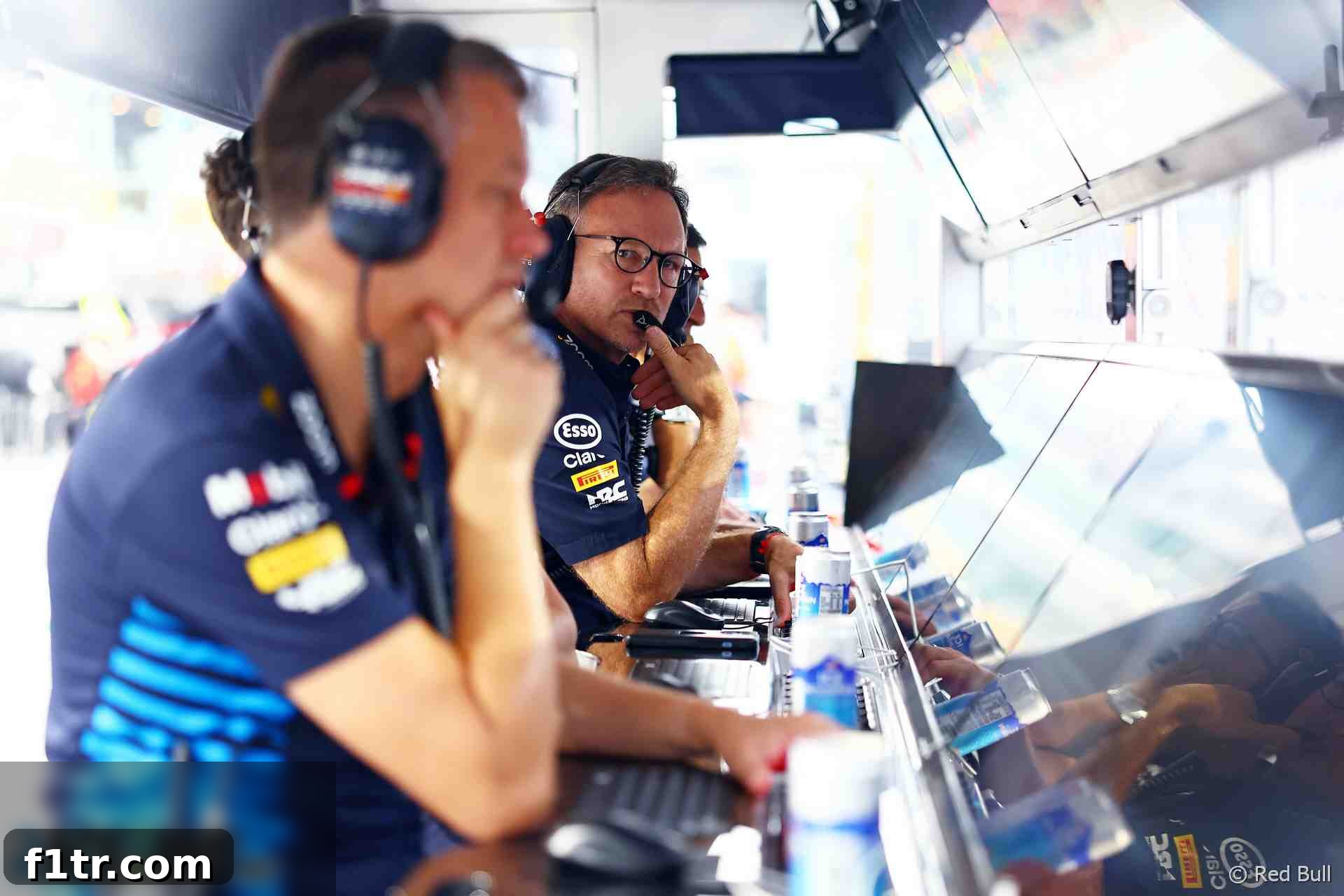
The exhilarating world of Formula 1, renowned for its relentless pursuit of speed and technological supremacy, stands on the cusp of another monumental transformation. Red Bull Racing team principal Christian Horner has voiced his profound conviction regarding the immense potential of artificial intelligence (AI) to revolutionize every facet of their racing operations. This foresight highlights a strategic pivot within elite motorsport, signaling a future where data-driven insights and predictive analytics will become as crucial as horsepower and aerodynamic efficiency in securing championship glory.
Motorsport Insights & Innovations: Redefining the Race for Excellence
The Transformative Power of AI in Formula 1: A Vision from Red Bull
Christian Horner’s perspective on artificial intelligence and machine learning (ML) underscores a pivotal shift in how Formula 1 teams approach car design, race preparation, and strategic execution. Far from being a futuristic concept, AI is already an integral part of the cutting-edge technology defining F1 today. Horner elaborated on its current applications, stating, “We’re using AI in our simulations, how we prepare for a grand prix. It’s a fascinating technology that we’re only scratching the surface of.” This statement reveals a strategic investment in cognitive technologies that are set to redefine competitive advantage.
The application of AI extends beyond mere data processing; it delves into complex pattern recognition and predictive modeling. Teams leverage AI in intricate simulations to optimize car setups, predict tire degradation, and model various race scenarios with unprecedented accuracy. This allows engineers and strategists to make more informed decisions rapidly, a critical advantage in a sport where milliseconds can dictate outcomes. AI algorithms analyze vast datasets encompassing historical race data, real-time sensor information from the car, weather forecasts, and competitor performance to generate actionable insights.
Furthermore, the introduction of the budget cap and stringent restrictions on development work in Formula 1 has amplified the importance of precision and efficiency. In an environment where every resource must be optimized, AI provides an invaluable tool for maximizing the return on investment. By focusing development efforts on the most impactful areas identified through AI-powered analytics, teams can circumvent traditional trial-and-error methods, leading to more efficient R&D cycles and superior car performance. Horner emphasized this point, noting, “The data just enables us to make better-informed decisions.” This strategic adoption of AI is not merely about gaining an edge, but about navigating the increasingly complex regulatory and financial landscape of modern Formula 1, ensuring sustained competitiveness and innovation within tightly constrained parameters.
IndyCar’s Strategic Leap: Introducing the Charter System for Enhanced Stability
In a significant move to bolster team stability and long-term investment, IndyCar has rolled out a comprehensive charter system, effectively securing 25 entries across 10 of its prominent teams through the 2031 season. This landmark initiative is designed to provide participating teams with guaranteed entry into every race, a share of the prize money, and a more predictable financial future, mirroring similar models found in other major sports leagues and even hinting at Formula 1’s own franchise system. The charter system aims to foster a more robust and attractive environment for team owners, sponsors, and drivers alike, encouraging greater investment and commitment to the series.
Under this new framework, several established powerhouses have committed to multi-car operations. Five teams – Penske, Ganassi, Andretti, McLaren, and Rahal Letterman Lanigan – have each secured three charters, demonstrating their deep commitment to the series and their intention to maintain a significant presence. These teams represent some of the most successful and well-funded operations in IndyCar history, and their continued stability is vital for the series’ health. Another five teams – Foyt, Coyne, Carpenter, Juncos Hollinger, and Meyer Shank – have each been allocated two charters, ensuring their participation and providing a foundation for growth and development within their organizations.
The introduction of charters marks a strategic turning point for IndyCar, offering a clear path for sustainable growth and a more enticing proposition for both existing and potential team owners. It addresses concerns about financial stability and ensures that key stakeholders have a vested interest in the long-term prosperity of the sport. Notably, incoming team Prema does not currently hold a charter. This highlights the value of securing a charter and provides a clear incentive for new entrants to demonstrate their commitment and performance over time, eventually earning a coveted spot within the charter system. This structured approach promises to elevate the overall quality and competitiveness of the IndyCar series for years to come.
Deagen Fairclough Crowned British F4 Champion with Dominant Performance
The British Formula 4 season witnessed a spectacular display of talent and determination, culminating in Deagen Fairclough clinching the championship title at Silverstone. Fairclough’s remarkable consistency and pace throughout the season were undeniable, underscored by his impressive 11th and 12th victories during the Silverstone weekend. This double triumph was enough to secure the coveted title even before the final triple-header at Brands Hatch, a testament to his commanding performance.
The weekend at Silverstone wasn’t without its challenges, however. The cancellation of the second race due to adverse weather conditions, particularly heavy rain, presented a minor hurdle. This cancellation unfortunately deprived Thomas Bearman, younger brother of F1 hopeful Oliver Bearman, of a reverse-grid pole position start, showcasing the unpredictable nature of junior single-seater racing. Despite this, Fairclough maintained his focus and delivered when it mattered most, solidifying his position as the class of the field.
For Fairclough, this championship victory is more than just a trophy; it’s the culmination of years of hard work, sacrifice, and unwavering family support. Reflecting on his journey, an emotional Fairclough shared, “This means so much to my family. I’ve been racing since I was five years old, just me, my mum and my dad. We’ve been scraping every penny together to go and have some fun and pursue my career. We’ve come a long way as a family, with a lot of difficulties.” This heartfelt sentiment resonates deeply within the motorsport community, highlighting the immense personal and financial dedication required to ascend the junior ranks. Fairclough’s triumph serves as an inspiring example of perseverance and the profound impact of family commitment in the pursuit of a racing dream, marking him as a promising talent to watch in future categories.
Advert | Become a RaceFans supporter andgo ad-free
Around the Motorsport World: Key Stories & Developments
Logan Sargeant’s Potential IndyCar Future: A New Chapter?
The motorsport world is abuzz with news of Logan Sargeant, following his departure from Formula 1, reportedly securing an IndyCar test with Meyer Shank Racing (MSR). This development, highlighted by Racer, signals a potential career pivot for the American driver and offers a glimpse into the fluid nature of top-tier motorsport talent. While MSR and Ganassi, two prominent IndyCar teams, currently have no vacancies across their combined five entries for the upcoming 2025 season, the test provides Sargeant with a crucial opportunity to showcase his capabilities in an IndyCar machine. This platform is invaluable for any driver looking to transition to a new series, allowing them to demonstrate adaptability and speed to other teams actively seeking talent. For Sargeant, it’s a chance to re-establish his credentials and prove he has the mettle to compete at the highest levels of open-wheel racing, potentially opening doors with other teams who might be impressed by his performance during the evaluation.
Martin Brundle’s Incisive Singapore GP Analysis and Verstappen’s FIA Saga
Veteran Formula 1 commentator and former driver Martin Brundle offered his expert insights on the Singapore Grand Prix for Sky Sports, providing a candid analysis of the race’s key moments and underlying narratives. His commentary delved into Lando Norris’s dominant victory, dissecting the McLaren driver’s stellar performance and the team’s strategic masterclass that led to their triumph. Beyond the immediate race action, Brundle also addressed the ongoing saga involving Max Verstappen and his escalating verbal sparring with the FIA. Brundle expressed concern over Verstappen’s conduct, stating, “I’m not sure why Max is allowing himself to get distracted and dragged into the swearing battle with the FIA. It’s wasted energy and serves no good purpose for him.” This observation highlights the potential for such public disagreements to detract from a driver’s focus and reputation, emphasizing the importance of maintaining professional composure, even amidst intense competitive pressure and regulatory scrutiny. Brundle’s perspective offers a valuable viewpoint on the mental game in F1 and the delicate balance between passion and professionalism.
Alex Dunne’s Formula 2 Ambitions: Navigating the Ladder to F1
Emerging talent Alex Dunne has voiced his aspirations for a move to Formula 2, a critical stepping stone on the path to Formula 1. Speaking to the BBC, Dunne reflected on his recent experiences, acknowledging the challenges faced in his current season. “Coming off the back of two-and-a-half years of being fairly successful in cars and fighting for poles, wins and titles in whatever series I was racing in, to come into this year and have things go wrong more consistently than I would have liked, that can be quite difficult,” he admitted. This candid admission sheds light on the often-turbulent journey through junior motorsport, where momentum can be difficult to maintain and setbacks are an inherent part of the learning curve.
Despite the difficulties, Dunne’s ambition remains undimmed, with a potential step up to Formula 2 described as “really nice.” Such a move would pit him against some of the most promising young drivers globally, providing an invaluable test of his skills, adaptability, and resilience. Success in F2 is often seen as the ultimate proving ground before an F1 debut, requiring consistent performance, strong racecraft, and the ability to manage complex race weekends. Dunne’s journey is a vivid illustration of the highs and lows faced by aspiring F1 drivers, emphasizing that a career in motorsport is as much about mental fortitude and persistence as it is about raw talent and speed.
We always endeavour to credit original sources. Got a tip for a link relating to single-seater motorsport? Please send it to us via the contact form.
Advert | Become a RaceFans supporter andgo ad-free
Social Media Pulse: Voices from the Paddock and Beyond
In the dynamic world of motorsport, social media platforms like X (formerly Twitter) serve as immediate conduits for insights, reactions, and personal updates directly from key figures within the sport. These notable posts offer a unique, unfiltered glimpse into the lives and thoughts of team principals, drivers, and other personalities, bridging the gap between the racing world and its ardent fanbase.
Peace in F1 has been restored on flight home (where’s Netflix when you need them!) – but the battle will continue on track. What an awesome sport! pic.twitter.com/LBnr3jtkee
— Zak Brown (@ZBrownCEO) September 23, 2024
McLaren CEO Zak Brown’s tweet, jovially noting that “Peace in F1 has been restored on flight home (where’s Netflix when you need them!) – but the battle will continue on track. What an awesome sport!”, captures the intense rivalries and inherent drama that define Formula 1. His lighthearted call-out to Netflix, referencing the popular ‘Drive to Survive’ series, cleverly plays into the sport’s growing entertainment appeal, while simultaneously reaffirming that despite any off-track camaraderie, the real fight always resumes on the circuit. It highlights the unique blend of competition and collegiality that often exists within the F1 paddock.
Now that my contract with ECR has come to an end, I am excited about the future and know that I have my best racing years ahead of me.
Rinus
(3/3)
— Rinus VeeKay (@rinusveekay) September 23, 2024
Meanwhile, IndyCar driver Rinus VeeKay’s series of tweets, concluding with “Now that my contract with ECR has come to an end, I am excited about the future and know that I have my best racing years ahead of me,” provides a personal update on his career trajectory. Such announcements, made directly by the athletes, offer fans immediate insight into driver movements and future prospects. VeeKay’s optimistic outlook, even as he concludes a significant chapter with Ed Carpenter Racing, speaks to the resilience and ambition prevalent among professional racers. It signals a new phase in his career, prompting speculation and excitement about where his talents will take him next in the competitive IndyCar series.
Advert | Become a RaceFans supporter andgo ad-free
- Find more official F1 accounts to follow in the F1 Twitter Directory
The Fan’s Perspective: Reflecting on Daniel Ricciardo’s F1 Journey
The highly competitive landscape of Formula 1 often sparks passionate debate among fans, especially concerning driver careers and potential futures. The recent developments surrounding Daniel Ricciardo’s apparent departure from RB and potentially from Formula 1 altogether have ignited considerable discussion. Many within the fanbase are left pondering whether the popular Australian driver could have extended his illustrious career with a different team, outside the demanding Red Bull system.
There have been many drivers who have been less than spectacular compared to Ricciardo and had longer careers in F1. In fact, I think many people are sad that he is leaving perhaps because there are worse drivers on the grid today who don’t deserve to be on the grid as much as Ricciardo.
The problem is he cornered himself into being the oldest driver in a team where they expect a lot from far younger drivers. Red Bull’s second team has always been the toughest seat to retain and killed many decent drivers’ careers. Therefore I am afraid it is time for him to retire. Had he stayed out of Red Bull and found his latest form, mediocre as it was I think he could have stuck around maybe another year or more.
Alberto
Alberto’s “Comment of the Day” eloquently encapsulates a sentiment shared by many, highlighting the perceived unfairness of Ricciardo’s situation. The commenter points out that several drivers with demonstrably less talent have enjoyed longer careers in F1, suggesting that Ricciardo’s exit is not solely due to a lack of ability. This perspective underscores the brutal reality of Formula 1, where factors beyond raw speed – such as team politics, timing, and junior driver pathways – often play a decisive role in a driver’s longevity.
The core of Alberto’s argument focuses on Ricciardo’s entanglement within the Red Bull driver program. By returning to Red Bull’s ‘B’ team, now RB, Ricciardo found himself in a high-pressure environment known for its ruthless development of young talent. The commenter articulates that this particular seat has historically proven to be a career graveyard for many promising drivers, irrespective of their skill. The expectation for older drivers within such a system, constantly compared to much younger, emerging talents, is incredibly high and often unsustainable. Alberto speculates that if Ricciardo had managed to secure a seat outside the Red Bull family, perhaps even with his recent “mediocre” form, he might have found a lifeline for another season or two. This poignant reflection highlights the strategic choices drivers make and the unique challenges presented by the Red Bull driver pipeline, ultimately leaving fans to ponder what might have been for the charismatic Australian.
Celebrating Motorsport Figures: Happy Birthday!
A round of happy birthday wishes goes out to Christian Mateus, Selidor, and Michael. May their day be filled with joy and celebration, perhaps even with a nod to their connection to the thrilling world of motorsport.
Motorsport History: Moments Etched in Time
- 35 years ago today, September 23rd, 1989, etched itself into Formula 1 history with a controversial Portuguese Grand Prix, where Gerhard Berger claimed victory. The race is most remembered for a dramatic incident involving Berger’s McLaren teammate, Nigel Mansell, and championship rival Ayrton Senna. Mansell, having received a black flag for reversing in the pit lane, defiantly rejoined the race. This act of defiance led to a catastrophic collision with Senna, effectively ending both their races and adding another chapter to one of F1’s most intense rivalries.
The 1989 Portuguese Grand Prix was a race fraught with tension and controversy, a true spectacle of the era’s raw and often unforgiving motorsport. Nigel Mansell, driving for Ferrari, was shown a black flag for an unsafe maneuver in the pit lane. In a moment of high drama and clear disregard for race control, Mansell continued on track, eventually colliding with Ayrton Senna’s McLaren. This incident not only had significant implications for the championship battle between Senna and Alain Prost but also highlighted the fierce competitive spirit and occasional disregard for authority that characterized some drivers of that generation. Berger’s victory, while significant for his career, was almost overshadowed by the dramatic clash that unfolded between two of the sport’s greatest titans.