Spanish Grand Prix: Verstappen’s Unyielding Dominance and the Grueling Battle for the Podium
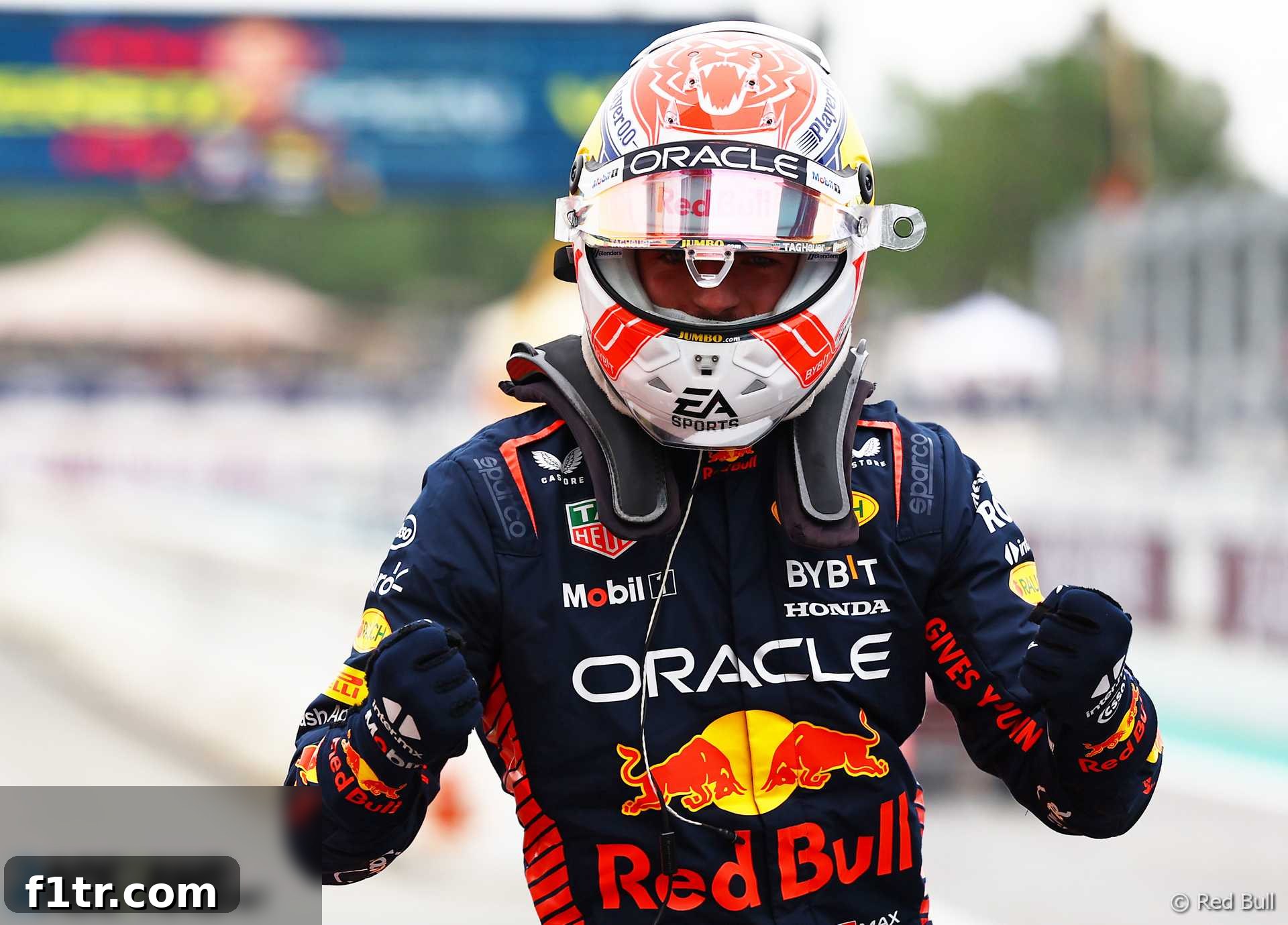
After countless thousands of working hours invested by Red Bull’s rivals into developing their intricate upgrade packages, all in a desperate bid to close the gap to the formidable RB19, Max Verstappen extinguished their hopes in little more than 72 breathtaking seconds. His untouchable pole lap in Barcelona was not just a statement; it was a clear declaration of superiority, arguably the most dominant of Red Bull’s six poles in the 2023 Formula 1 season thus far.
Advert | Become a Supporter & go ad-free
The Dutchman’s commanding four-tenths of a second advantage was particularly ominous, given that the RB19’s true strength is widely believed to lie in its unparalleled race pace rather than outright single-lap performance. The true margin of his dominance could have been even greater, as Verstappen was instructed to abandon his final flying lap to conserve tires, suggesting he had even more pace in hand – a chilling prospect for the rest of the grid. As the Spanish Grand Prix race day approaches, Verstappen once again finds himself in a familiar position, knowing that the only car capable of genuinely challenging him starts significantly further down the grid, minimizing any immediate threat.
The contrast to the preceding Monaco Grand Prix could not be starker. Around the unforgiving, narrow streets of Monte Carlo, there was a compelling argument for Verstappen to face genuine competition for the win. However, at the traditional Circuit de Catalunya, the Red Bull remains in a league of its own, and Verstappen is driving with an imperious confidence. The likelihood of him being beaten on pure race pace over 66 demanding laps, without a major mishap or stroke of misfortune, seems as remote as it has been since the season opener in Bahrain.
Reflecting on his qualifying performance and securing his fourth pole of the season, Verstappen shared his satisfaction: “Overall, the whole weekend, it has been really enjoyable to drive the car. It was really hooked up.” This sentiment only further solidifies the formidable synergy between driver and machine, making them a seemingly insurmountable force.
The Unassailable Leader: Max Verstappen’s Spanish Supremacy
The Spanish Grand Prix marks the first race at a permanent circuit since the season-opening Bahrain Grand Prix. In Bahrain, Verstappen secured pole position, maintained his lead into Turn 1, and subsequently dominated the entire race, comfortably controlling his pace and staying well within his limits until the chequered flag. Assuming he successfully navigates the notoriously long run to Turn 1 at Circuit de Catalunya on Sunday, which is one of the longest on the calendar, the reigning world champion could once again be set for a relatively straightforward afternoon, extending his commanding lead in the drivers’ championship.
However, while Verstappen’s victory appears almost inevitable, the battle raging behind him for the remaining podium places promises to deliver fierce excitement for Formula 1 fans. This segment of the grid is where the true drama and unpredictable elements of the Spanish Grand Prix are expected to unfold.
A Kaleidoscope of Contenders: The Intense Podium Battle
Remarkably, the top seven positions on the grid are occupied by drivers from seven different teams, a testament to the incredibly tight competition and the varying fortunes across the field. Less than half a second separated Carlos Sainz Jnr, starting an impressive second, from Nico Hulkenberg, who will line up seventh following Pierre Gasly’s double penalty which promoted six drivers up the grid. All six drivers directly behind Verstappen have legitimate reasons to target solid points as a minimum, with a podium finish being the ultimate aspiration. Sainz, starting from the front row at his home race, fully expects the competition among this group to be nothing short of ferocious.
Advert | Become a RaceFans supporter andgo ad-free
Sainz elaborated on the evolving competitive landscape, noting: “Now it looks like the midfield is really starting to close up with us. You have the likes of the Alpines, even the Haas, Lando [Norris] with the McLarens are appearing and joining us in that fight for second or third best. Obviously Red Bull are in a league of their own but then everyone else – it looks like it’s really, really tight out there.” This observation underscores the fluid nature of the grid dynamics, where a slight performance gain or misstep can dramatically alter a team’s standing.
Norris’s Surprise P3 and Strategic Outlook
Lando Norris has consistently expressed a fairly pessimistic outlook regarding his McLaren’s performance for much of the early 2023 season. Even securing a remarkable third place in qualifying at Barcelona couldn’t fully ignite a spark of optimism in him. When questioned about his confidence heading into the race, his blunt reply was, “not very.”
Despite his cautious demeanor, Norris acknowledged the unpredictability of motorsport: “You never know, the pace could be mega and I could catch Max and overtake him,” he quipped. “We’ll do our best for tomorrow but the aim is just to get some good points for both myself and for Oscar [Piastri].” This pragmatic approach highlights McLaren’s focus on maximizing their opportunities and securing valuable championship points.
The Revised Final Sector and Overtaking Dynamics
With the field so incredibly close in performance, the prospect of a DRS train forming becomes a significant concern. This scenario makes the revised final sector of the Circuit de Catalunya all the more critical, as cars now approach the pit straight and its extended DRS zone at significantly higher speeds than before. Esteban Ocon, starting from sixth place, believes that the increased speed through the final corner should not overly hamper overtaking opportunities.
“I don’t think it’s as bad as we thought,” Ocon stated confidently. He even provided a personal anecdote: “I overtook Sergio [Perez] in FP2 in turn one – he’s usually very quick on the straights, so we will see.” This suggests that while challenging, overtaking might still be feasible. However, Lance Stroll, who will start directly ahead of Ocon, holds a more cautious view than his Alpine counterpart. He feels that following another car through the high-speed final sector could prove more difficult, potentially hindering overtakes onto the main straight.
Advert | Become a RaceFans supporter andgo ad-free
“I think a little bit,” Stroll commented on the difficulty. “Naturally it’s more difficult to follow a car at high-speed corners. I think it’s going to be tricky to overtake, but I think tyre deg and strategy is going to be very important.” Stroll’s emphasis on tire degradation and strategy points towards a race where clever management and optimal pit stops could be the deciding factors, rather than sheer on-track duels.
Major Players Facing Uphill Battles: Perez, Leclerc, and Alonso
The intense closeness of the cars within the top 10 was undoubtedly influenced by several major contenders failing to reach the positions they would typically expect. Ferrari’s Charles Leclerc suffered the most striking setback, eliminated in a shocking 19th place due to an apparent anomaly on his SF-23. Compounding the surprises, Sergio Perez and George Russell also failed to make it into the top ten, leaving them with significant recovery drives ahead.
Even Fernando Alonso, who managed to qualify for Q3, will start only from eighth place. His qualifying session was severely compromised by what team principal Mike Krack described as “significant floor damage” sustained from an early trip across the gravel during Q1. Under these challenging circumstances, Alonso experienced a “big loss of downforce,” making his advancement to Q3 “a remarkable achievement” in Krack’s estimation. Despite his heroic efforts, starting eighth on his home turf will be a tough ask for the veteran.
Sergio Perez, starting from 11th, urgently needs to make significant progress through the field to limit the potential damage Verstappen could inflict on his championship ambitions. With the sheer pace of the Red Bull, even rivals like Sainz and Norris fully expect Perez to effortlessly catch and likely pass them before the chequered flag. “I think it will be still tough to get [a podium], especially Checo coming from P11 with a Red Bull,” Sainz predicted in the post-qualifying press conference. “As soon as I get back to the engineers, I think they will tell me that the simulation suggests that the Red Bull should still finish ahead of us and then it will be a fight with Lando and Mercedes, the Astons.” This illustrates the widespread recognition of Red Bull’s raw speed and Perez’s inherent advantage, despite his compromised grid position.
While Perez faces a considerable task from 11th, Charles Leclerc’s challenge is far greater. Qualifying from the back row in 19th position, it is almost certain that he will start the race from the pit lane once Ferrari identifies and rectifies whatever mysterious issue caused his SF-23 to become “incompatible with left-handers” during qualifying, as he starkly put it. This unexpected turn of events puts Leclerc in an incredibly difficult situation, demanding a flawless and aggressive recovery drive.
Advert | Become a RaceFans supporter andgo ad-free
As Lewis Hamilton famously demonstrated last season, it is indeed possible to fight through the field at Barcelona if a driver possesses superior race pace. However, Leclerc acknowledges the monumental grind ahead of him. “It’s going to be an uphill weekend, to be honest,” Leclerc mused. “But on the other hand, it’s a track where I think we will see quite a few stops. Degradation is going to be a big thing tomorrow, so if we do a good job on that, we’ve got our chances.” His words highlight the strategic importance of tire management and the potential for multiple pit stops to create opportunities for advancement.
The Critical Role of Tire Strategy and Degradation
Leclerc is not alone in predicting that tire management will play a pivotal role in determining the outcome of the Spanish Grand Prix. Despite Pirelli bringing their second-hardest combination of tires (C1, C2, and C3 compounds) to Spain for this weekend, the Italian tire manufacturer fully expects teams to opt for at least two pit stops over the course of the race. This anticipation stems from the notoriously high tire wear and degradation characteristic of the Circuit de Catalunya, a factor that is expected to be even more pronounced than in recent races.
Pirelli’s chief engineer elaborated on the likely strategy: “I think the strategy will be towards the two stops, on the paper it’s the fastest one. Probably using the C3 at the start because it gives you an important extra grip. You’ve seen today quite a big gap, big delta with the C2, we are around one, 1.2 seconds per lap, and turn one is quite far from the start finish line so you can gain some position with extra grip. Then probably they will manage the first stint and they will try to do two stints with the hard compounds.” This insight provides a clear roadmap for teams, emphasizing the initial advantage of the softest compound for the race start before transitioning to the more durable hard compounds for longer stints.
The Unpredictable Element: The Threat of Rain
For the second consecutive race weekend, however, even the most meticulously planned tire strategy could become entirely moot if rain decides to make an appearance. Once again, teams and fans alike will be keeping a watchful eye on the clouds forming on the horizon as the Formula 1 circus returns to the Circuit de Catalunya on Sunday. Current forecasts indicate a significant 60% chance of stormy weather hitting the circuit in the lead-up to the race lights going out, with the risk of precipitation only subsiding as the race nears its scheduled end. That said, as seen with the rapidly changing forecasts for qualifying on Saturday, predictions can be notoriously fickle.
Should it indeed rain, it would mark the first wet Spanish Grand Prix at Barcelona since the famed and utterly chaotic 1996 event, which saw Michael Schumacher clinch his maiden Ferrari victory in torrential conditions. With the grid so tightly packed at the front, many big names fighting their way up the order, and teams further down eager to seize any opportunity to score precious points, a little water could be the perfect ingredient to transform this into a particularly spicy and unpredictable Sunday afternoon in Spain. Such conditions would undoubtedly amplify the strategic challenges and potentially throw up some unexpected heroes, creating a spectacle beyond the anticipated Red Bull dominance.
Advert | Become a RaceFans supporter andgo ad-free
2023 Spanish Grand Prix Qualifying Results
Below are the detailed qualifying times for the 2023 Spanish Grand Prix, highlighting the immense talent and close competition across the grid.
Qualifying Times in Full
| Position | Number | Driver | Team | Q1 time | Q2 time (vs Q1) | Q3 time (vs Q2) |
|---|---|---|---|---|---|---|
| 1 | 1 | Max Verstappen | Red Bull-Honda RBPT | 1’13.615 | 1’12.760 (-0.855s) | 1’12.272 (-0.488s) |
| 2 | 55 | Carlos Sainz Jnr | Ferrari | 1’13.411 | 1’12.790 (-0.621s) | 1’12.734 (-0.056s) |
| 3 | 4 | Lando Norris | McLaren-Mercedes | 1’13.295 | 1’12.776 (-0.519s) | 1’12.792 (+0.016s) |
| 4 | 10 | Pierre Gasly | Alpine-Renault | 1’13.471 | 1’13.186 (-0.285s) | 1’12.816 (-0.370s) |
| 5 | 44 | Lewis Hamilton | Mercedes | 1’12.937 | 1’12.999 (+0.062s) | 1’12.818 (-0.181s) |
| 6 | 18 | Lance Stroll | Aston Martin-Mercedes | 1’13.766 | 1’13.082 (-0.684s) | 1’12.994 (-0.088s) |
| 7 | 31 | Esteban Ocon | Alpine-Renault | 1’13.433 | 1’13.001 (-0.432s) | 1’13.083 (+0.082s) |
| 8 | 27 | Nico Hulkenberg | Haas-Ferrari | 1’13.420 | 1’13.283 (-0.137s) | 1’13.229 (-0.054s) |
| 9 | 14 | Fernando Alonso | Aston Martin-Mercedes | 1’13.747 | 1’13.098 (-0.649s) | 1’13.507 (+0.409s) |
| 10 | 81 | Oscar Piastri | McLaren-Mercedes | 1’13.691 | 1’13.059 (-0.632s) | 1’13.682 (+0.623s) |
| 11 | 11 | Sergio Perez | Red Bull-Honda RBPT | 1’13.874 | 1’13.334 (-0.540s) | Missed by 0.051s |
| 12 | 63 | George Russell | Mercedes | 1’13.326 | 1’13.447 (+0.121s) | Missed by 0.164s |
| 13 | 24 | Zhou Guanyu | Alfa Romeo-Ferrari | 1’13.677 | 1’13.521 (-0.156s) | Missed by 0.238s |
| 14 | 21 | Nyck de Vries | AlphaTauri-Honda RBPT | 1’13.581 | 1’14.083 (+0.502s) | Missed by 0.800s |
| 15 | 22 | Yuki Tsunoda | AlphaTauri-Honda RBPT | 1’13.862 | 1’14.477 (+0.615s) | Missed by 1.194s |
| 16 | 77 | Valtteri Bottas | Alfa Romeo-Ferrari | 1’13.977 | Missed by 0.103s | |
| 17 | 20 | Kevin Magnussen | Haas-Ferrari | 1’14.042 | Missed by 0.168s | |
| 18 | 23 | Alexander Albon | Williams-Mercedes | 1’14.063 | Missed by 0.189s | |
| 19 | 16 | Charles Leclerc | Ferrari | 1’14.079 | Missed by 0.205s | |
| 20 | 2 | Logan Sargeant”>Logan Sargeant | Williams-Mercedes | 1’14.699 | Missed by 0.825s |
Sector Times Analysis
A breakdown of the fastest sector times reveals where drivers gained or lost crucial tenths, offering further insight into their qualifying performance and car strengths.
| Position | Number | Driver | Sector one | Sector two | Sector three | Ultimate lap | Deficit to ultimate lap |
|---|---|---|---|---|---|---|---|
| 1 | 1 | Max Verstappen | 21.536 (1) | 28.903 (1) | 21.672 (2) | 1’12.111 | 0.161 |
| 2 | 44 | Lewis Hamilton | 21.694 (3) | 29.154 (2) | 21.728 (4) | 1’12.576 | 0.242 |
| 3 | 4 | Lando Norris | 21.72 (5) | 29.253 (5) | 21.644 (1) | 1’12.617 | 0.159 |
| 4 | 55 | Carlos Sainz Jnr | 21.696 (4) | 29.257 (6) | 21.73 (5) | 1’12.683 | 0.051 |
| 5 | 10 | Pierre Gasly | 21.748 (7) | 29.211 (3) | 21.857 (8) | 1’12.816 | – |
| 6 | 81 | Oscar Piastri | 21.754 (8) | 29.269 (8) | 21.804 (6) | 1’12.827 | 0.232 |
| 7 | 14 | Fernando Alonso | 21.889 (14) | 29.244 (4) | 21.695 (3) | 1’12.828 | 0.270 |
| 8 | 31 | Esteban Ocon | 21.737 (6) | 29.285 (9) | 21.909 (12) | 1’12.931 | 0.070 |
| 9 | 18 | Lance Stroll | 21.806 (11) | 29.262 (7) | 21.887 (10) | 1’12.955 | 0.039 |
| 10 | 63 | George Russell | 21.647 (2) | 29.574 (13) | 21.876 (9) | 1’13.097 | 0.229 |
| 11 | 27 | Nico Hulkenberg | 21.79 (10) | 29.484 (10) | 21.895 (11) | 1’13.169 | 0.060 |
| 12 | 11 | Sergio Perez | 21.788 (9) | 29.578 (14) | 21.919 (13) | 1’13.285 | 0.049 |
| 13 | 22 | Yuki Tsunoda | 21.83 (12) | 29.486 (11) | 22 (14) | 1’13.316 | 0.546 |
| 14 | 24 | Zhou Guanyu | 21.945 (15) | 29.643 (15) | 21.84 (7) | 1’13.428 | 0.093 |
| 15 | 21 | Nyck de Vries | 21.886 (13) | 29.501 (12) | 22.103 (15) | 1’13.490 | 0.091 |
| 16 | 77 | Valtteri Bottas | 22.06 (19) | 29.679 (16) | 22.238 (17) | 1’13.977 | – |
| 17 | 20 | Kevin Magnussen | 21.968 (17) | 29.732 (17) | 22.342 (19) | 1’14.042 | – |
| 18 | 23 | Alexander Albon | 22.045 (18) | 29.815 (19) | 22.201 (16) | 1’14.061 | 0.002 |
| 19 | 16 | Charles Leclerc | 21.962 (16) | 29.746 (18) | 22.371 (20) | 1’14.079 | – |
| 20 | 2 | Logan Sargeant | 22.193 (20) | 30.209 (20) | 22.297 (18) | 1’14.699 | – |
Speed Trap Data
The speed trap figures provide an indication of top-end speed, crucial for understanding potential overtaking prowess on the main straight, especially with the extended DRS zone.
| Position | Number | Driver | Car | Engine | Model | Max kph (mph) |
|---|---|---|---|---|---|---|
| 1 | 27 | Nico Hulkenberg | Haas | Ferrari | VF-23 | 333.7 (207.4) |
| 2 | 1 | Max Verstappen | Red Bull | Honda RBPT | RB19 | 333.1 (207.0) |
| 3 | 55 | Carlos Sainz Jnr | Ferrari | Ferrari | SF-23 | 332.3 (206.5) |
| 4 | 63 | George Russell | Mercedes | Mercedes | W14 | 332.0 (206.3) |
| 5 | 16 | Charles Leclerc | Ferrari | Ferrari | SF-23 | 331.8 (206.2) |
| 6 | 20 | Kevin Magnussen | Haas | Ferrari | VF-23 | 331.5 (206.0) |
| 7 | 23 | Alexander Albon | Williams | Mercedes | FW45 | 331.2 (205.8) |
| 8 | 10 | Pierre Gasly | Alpine | Renault | A523 | 331.2 (205.8) |
| 9 | 11 | Sergio Perez | Red Bull | Honda RBPT | RB19 | 330.4 (205.3) |
| 10 | 44 | Lewis Hamilton | Mercedes | Mercedes | W14 | 328.3 (204.0) |
| 11 | 31 | Esteban Ocon | Alpine | Renault | A523 | 328.2 (203.9) |
| 12 | 24 | Zhou Guanyu | Alfa Romeo | Ferrari | C43 | 327.6 (203.6) |
| 13 | 77 | Valtteri Bottas | Alfa Romeo | Ferrari | C43 | 327.0 (203.2) |
| 14 | 4 | Lando Norris | McLaren | Mercedes | MCL60 | 326.9 (203.1) |
| 15 | 22 | Yuki Tsunoda | AlphaTauri | Honda RBPT | AT04 | 326.3 (202.8) |
| 16 | 2 | Logan Sargeant | Williams | Mercedes | FW45 | 326.0 (202.6) |
| 17 | 81 | Oscar Piastri | McLaren | Mercedes | MCL60 | 325.8 (202.4) |
| 18 | 18 | Lance Stroll | Aston Martin | Mercedes | AMR23 | 324.9 (201.9) |
| 19 | 21 | Nyck de Vries | AlphaTauri | Honda RBPT | AT04 | 324.1 (201.4) |
| 20 | 14 | Fernando Alonso | Aston Martin | Mercedes | AMR23 | 324.0 (201.3) |
Become a RaceFans Supporter
RaceFans is run thanks in part to the generous support of its readers. By contributing £1 per month or £12 per year (or the same in whichever currency you use) you can help cover the costs of creating, hosting and developing RaceFans today and in the future.
Become a RaceFans Supporter today and browse the site ad-free. Sign up or find out more via the links below:
- Become a RaceFans Supporter
- RaceFans Supporter FAQ
Further Reading: 2023 Spanish Grand Prix
- Ben Sulayem raises safety concerns over “too many people on the grid” at races
- Why Ferrari say their change in design is the result of “discipline”, not “copying”
- Hamilton and Russell were seeking tow from Sainz when they collided – Mercedes
- Red Bull’s Spanish GP diffuser update was ‘inspired by rivals’ including Williams
- Why McLaren always doubted second-row start in Spain would lead to points finish
Browse all 2023 Spanish Grand Prix articles