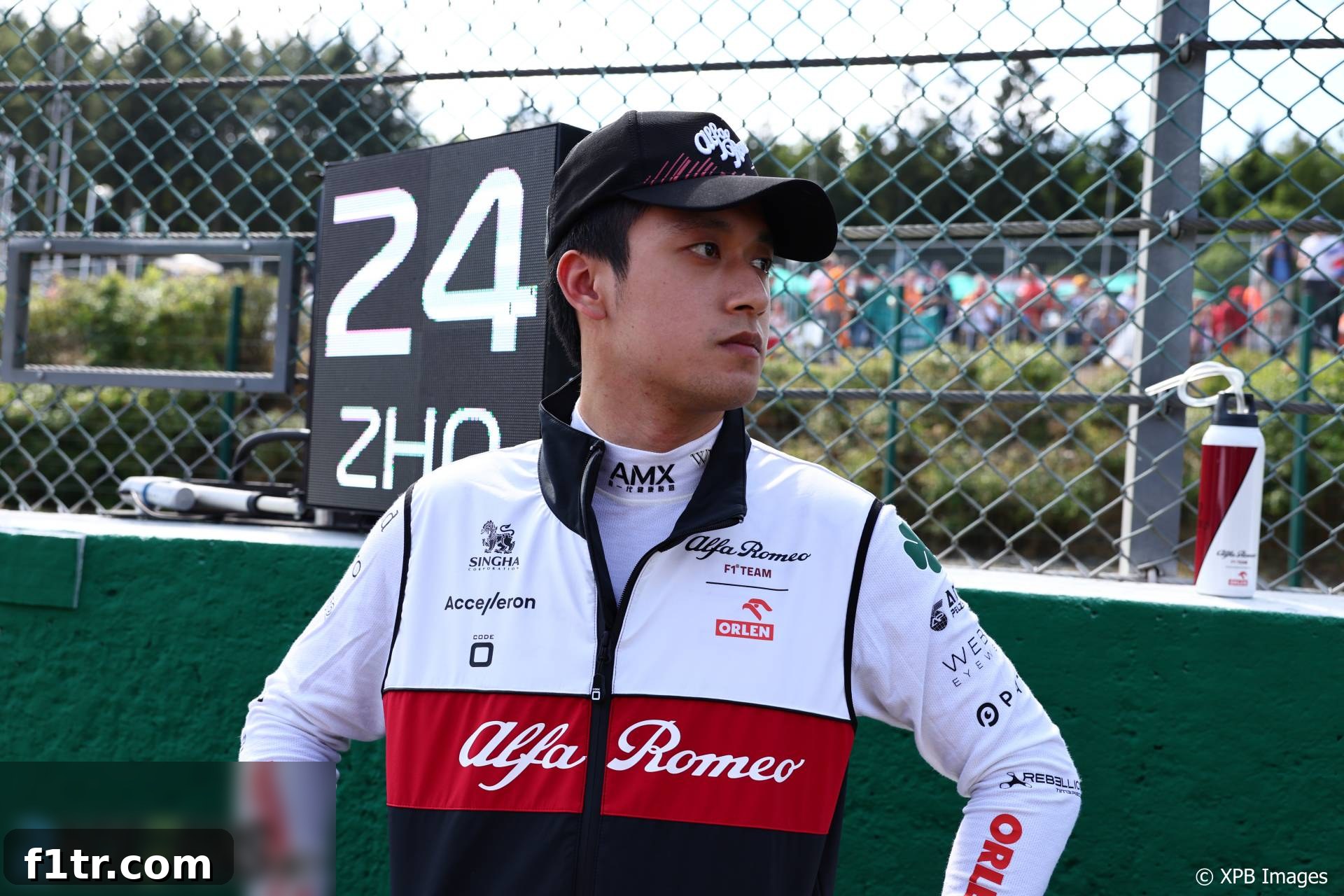
Zhou Guanyu: Navigating His F1 Future and the Return of the Chinese Grand Prix
Zhou Guanyu, China’s trailblazing Formula 1 driver, remains steadfast in his belief that he will retain his coveted spot on the F1 grid for the upcoming 2023 season. Beyond his personal aspirations, Zhou also holds a strong conviction that the sport’s global calendar will see the triumphant return of his home grand prix, an event of immense significance for both his career and the broader expansion of Formula 1 into the lucrative Asian market. His journey through a challenging yet promising rookie year has been a testament to his resilience, a narrative interwoven with both on-track performance and the intricate dynamics of team politics and global events.
As the first driver from China to ever compete in the prestigious world championship, Zhou Guanyu carries the hopes of an entire nation on his shoulders. His debut season with Alfa Romeo has been a steep learning curve, marked by moments of brilliance alongside frustrating technical setbacks and a harrowing crash at the British Grand Prix. Despite these challenges, Zhou has managed to score points in two races, demonstrating flashes of his potential and adaptability to the pinnacle of motorsport. Currently positioned 17th in the drivers’ standings, his statistics only tell part of the story, as underlying reliability issues have often masked his true pace and ability to consistently challenge for higher positions.
Zhou’s confidence stems from a positive rapport with his team principal, Frederic Vasseur, who he believes is satisfied with his overall progress and commitment. “Nothing confirmed yet, but we will wait for the confirmation,” Zhou stated regarding his F1 future during the Belgian Grand Prix weekend. He elaborated, “We obviously started talking about it, my side and also from the team side. They are very happy with the job I was doing so far, especially after a tough Silverstone weekend, to come back and continue to be in form from, let’s say, Budapest was a switch-around point to here.” This suggests a mid-season surge in form and consistency, particularly after recovering from the psychological and physical impact of his dramatic crash at Silverstone. His ability to bounce back and maintain competitive performance speaks volumes about his mental fortitude, a crucial attribute for any aspiring Formula 1 driver.
The synergy within the Alfa Romeo garage also plays a pivotal role in Zhou’s outlook. His collaboration with experienced teammate Valtteri Bottas appears to be a harmonious one, fostering an environment conducive to learning and growth. “So I’m happy with all the group, all the crew, and going along well with Fred, with Valtteri. So it should be no big issue for next year, as long as we concentrate for this year,” Zhou affirmed. Bottas, a multiple Grand Prix winner, provides an invaluable benchmark and source of mentorship for the young Chinese driver, aiding his rapid acclimatization to the demands of Formula 1 racing. This stable internal dynamic further strengthens Zhou’s position within the team as contract negotiations progress.
However, the Formula 1 landscape is rarely straightforward. Alfa Romeo’s partnership with Sauber is slated to conclude after the 2023 season, hinting at a significant restructuring within the team, fueled by persistent rumors of an impending Audi acquisition. This transitional period adds another layer of complexity to driver decisions. Furthermore, Sauber has its own highly-rated junior driver, Theo Pourchaire, currently competing in Formula 2 and a strong contender for an F1 seat. Pourchaire’s impressive performances in the feeder series naturally position him as a potential rival for Zhou’s spot, creating a classic F1 dilemma for team management: promote internal talent or retain a commercially valuable driver?
In this competitive environment, Zhou Guanyu’s commercial appeal becomes a crucial differentiator. His status as China’s first and only Formula 1 driver makes him an incredibly valuable asset, opening doors to a massive market that F1 is keen to penetrate further. The strategic importance of having a Chinese driver is amplified tenfold if the Chinese Grand Prix, last held in 2019 before the global pandemic, makes its highly anticipated return to the 2023 F1 calendar. Zhou himself is notably confident that the race in his home city of Shanghai will indeed run next season, a sentiment that aligns with Formula 1’s stated ambitions for global expansion.
The Highly Anticipated Return of the Chinese Grand Prix
“[The] Chinese Grand Prix will be likely, it should be here next year,” Zhou asserted, underscoring his optimism. “I feel like it will be. It’s not been confirmed but still I know they are pushing for it, and everything looks quite good in restrictions Covid-wise, so I think it’s a big opportunity.” The return of the Chinese Grand Prix is more than just another race on the calendar; it represents a significant strategic move for Formula 1. For Zhou, it would be a dream come true to compete on home soil, offering him an unprecedented opportunity to engage with his local fanbase and further elevate the profile of motorsport in China. From F1’s perspective, re-establishing a presence in one of the world’s largest economies is critical for its long-term commercial growth and global reach.
However, the path to the Chinese Grand Prix’s return is paved with complex geopolitical and public health considerations. F1 CEO Stefano Domenicali was recently pressed on the series’ potential return to China, particularly in light of ongoing concerns regarding human rights violations within the country and its stance on international conflicts, such as the refusal to condemn Russia’s invasion of Ukraine – an event that directly led to the cancellation of the Russian Grand Prix. Domenicali’s responses highlighted the delicate balancing act Formula 1 must perform between its commercial imperatives and its declared commitment to “positive values.”
Domenicali articulated the sport’s nuanced position, stating, “As we always said, the political line of the sport is always very thin. We need to be always prudent. But for us, we always said that we want to bring the spotlight on other positive values. And this is what is happening. We are going to be in all the countries that are highlighting what we believe is the right thing to highlight.” This statement implies that F1 aims to operate in countries that, by their inclusion on the calendar, can be seen as upholding or moving towards certain positive global standards. Yet, the question of how “positive values” are defined and applied remains a subject of intense debate, particularly when juxtaposed against the commercial allure of major markets.
The F1 chief executive further acknowledged the inherent complexities, adding, “[If] it is not happening, of course, we will take the right decision to move out. In this moment, I think that the situation in China has to be followed for many reasons. We have the Covid-19 situation, that is unclear, and I really believe that all the major sports leagues are waiting to understand what’s going on.” This clarifies that while F1 seeks to promote positive values, it is also prepared to withdraw if conditions fundamentally conflict with its principles. Crucially, the immediate and most tangible barrier to the Chinese Grand Prix’s return remains the country’s stringent “zero-COVID” policy. The uncertainties surrounding travel restrictions, quarantine requirements, and mass gathering protocols present immense logistical challenges that major sports organizations, including Formula 1, are closely monitoring.
Domenicali anticipates that greater clarity on China’s future trajectory, particularly concerning its COVID-19 policies and broader political direction, will emerge after the ruling Chinese Communist Party’s National People’s Congress. This quinquennial event, typically held in October, is expected to provide key insights into the country’s mid-to-long-term strategies. “We believe that we are going to have a clear guidance on what is the scenario for China in the future within the end of this year,” said Domenicali. “From the political perspective, there is a big event there at the end of October.” The outcomes of this Congress will undoubtedly shape not only China’s domestic policies but also its international engagement, directly impacting the feasibility of hosting global sporting spectacles like Formula 1.
Beyond the political landscape, the practicalities of public health regulations are paramount. “Then, of course, on our side, the first point will be to understand what will be the Covid regulations that has to be applied in that country. Then we will see how the situation will evolve. I don’t want to take any kind of conclusion. We are monitoring, as always, the situation in these countries and I think that our course has always been approved by facts, so far,” Domenicali concluded. This reinforces the idea that the final decision will hinge significantly on China’s willingness and ability to provide a secure and viable environment for an international event of F1’s scale, one that accommodates thousands of personnel, sensitive equipment, and potentially a large number of spectators, all while adhering to global health standards. The logistical undertaking of transporting the entire F1 circus – cars, parts, tools, and hundreds of team members – across borders requires meticulous planning and predictable regulations, which China’s current dynamic zero-COVID policy makes incredibly challenging.
The Intersecting Futures of Zhou Guanyu and Alfa Romeo
Zhou Guanyu’s potential continuation with Alfa Romeo for 2023 is intrinsically linked to these broader discussions. His value to the team extends beyond his driving performance; he is a bridge to a colossal market. Should the Chinese Grand Prix successfully return, Zhou’s commercial value, and by extension his leverage in contract negotiations, would undeniably surge. For Alfa Romeo, or rather Sauber under its new potential guise, securing a driver who can attract significant Chinese sponsorship and attention would be a shrewd business move, especially as they prepare for a major shift post-2023. The decision to retain Zhou would represent a strategic investment in the future, aligning with Formula 1’s overarching goal to expand its global footprint, particularly in Asia.
The 2023 season marks a pivotal year for the Sauber-run team, as it will be their last operating under the Alfa Romeo branding. This impending separation, amidst persistent whispers of Audi’s deeper involvement, means the team’s long-term identity and strategy are in flux. Driver choices made for 2023 will likely set the stage for the team’s future direction, balancing immediate performance needs with strategic foresight. Zhou’s blend of raw talent, commercial appeal, and improving consistency makes him a compelling candidate to retain, especially given the positive sentiment from the team principal and his constructive working relationship with Bottas.
Ultimately, Zhou Guanyu’s optimism regarding both his F1 future and the return of the Chinese Grand Prix reflects a dynamic period in Formula 1. It’s a period where sporting merit, commercial strategy, and geopolitical realities frequently intertwine. As the season progresses and the deadlines for driver contracts and calendar confirmations loom, all eyes will be on how these complex factors resolve, potentially paving the way for a bright future for China’s pioneer in Formula 1 and a landmark return for a highly anticipated race.
2023 F1 Season Related Articles
- FIA president cleared of alleged interference in two 2023 races
- First week viewing figures for new Drive to Survive season fall again
- Max who? Drive to Survive season six prefers its favourite faces
- RaceFans’ complete 2023 season review
- The F1 drivers who pulled off the 10 biggest charges through the field in 2023
Browse all 2023 F1 season articles