Alexander Albon’s Red Bull Challenge: Echoes of Gasly and the Pursuit of Confidence
In the relentlessly competitive realm of Formula 1, every millisecond and every nuance of car handling can determine a driver’s fate. At the forefront of recent discussions within the Red Bull Racing camp, a familiar technical hurdle has emerged, one that team principal Christian Horner readily identifies as a shared experience between current driver Alexander Albon and his predecessor, Pierre Gasly. This revelation points to a deep-seated characteristic of the Red Bull chassis – specifically, its sensitive rear under braking – posing a consistent challenge to drivers striving to unleash its full potential, particularly in the shadow of the formidable Max Verstappen.
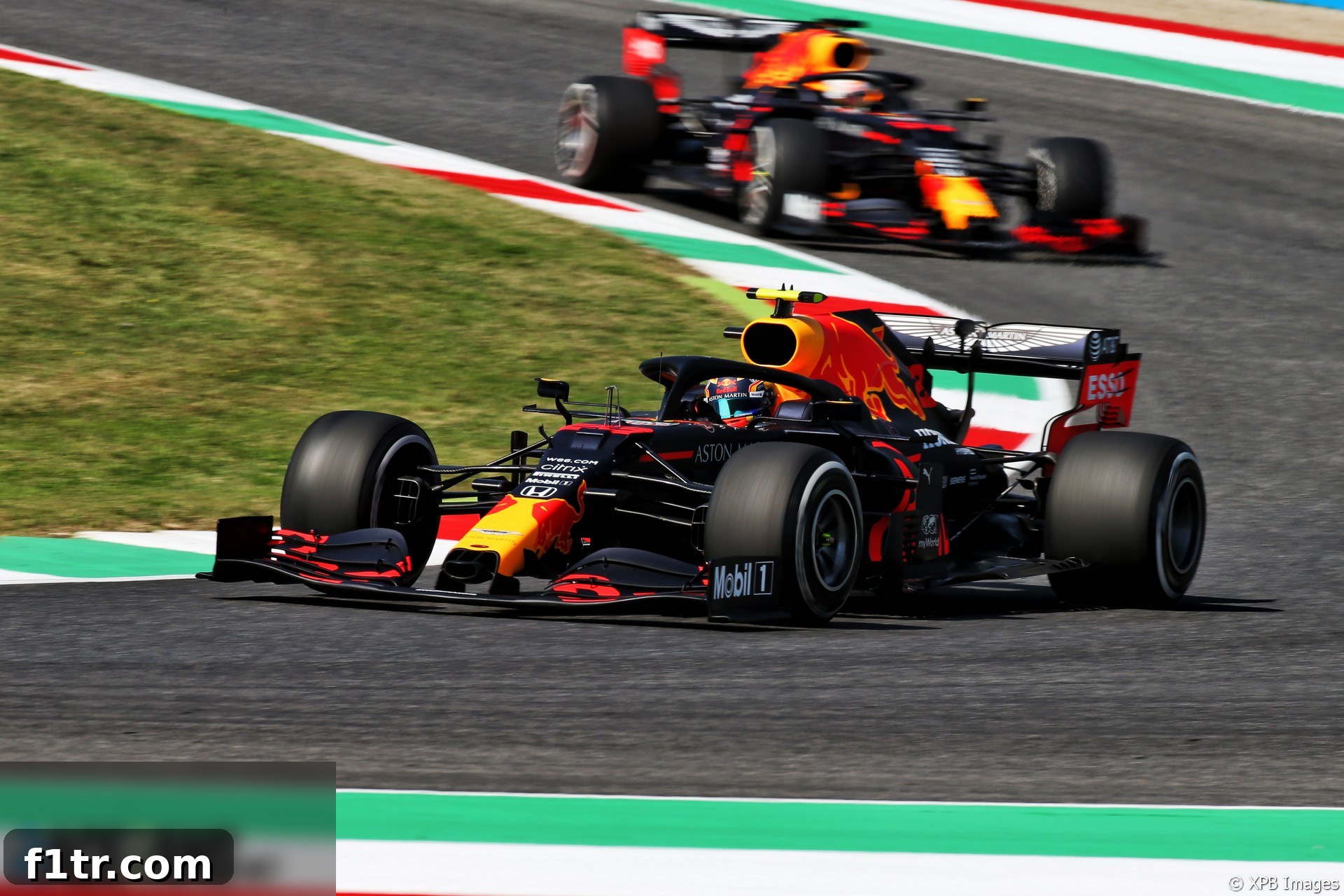
Albon, who stepped into the demanding Red Bull cockpit 12 races into the 2019 season following Gasly’s demotion, has now spent over a year honing his skills and adapting to the team’s machinery. While his tenure has been marked by periods of intense scrutiny and a persistent struggle to consistently match Verstappen’s pace, recent improvements offer a beacon of hope. His impressive fourth-place qualifying finish at Mugello, equalling his best grid position of the season, signals a crucial shift in his comfort and confidence with the RB16, suggesting that a significant breakthrough might be on the horizon.
The Enduring Red Bull Handling Trait: A Recurring Saga
Christian Horner’s insights into the car’s behaviour are critical for understanding the complexities faced by Red Bull drivers. “The car can be a little bit sensitive at the rear, under braking,” Horner explained, articulating the core of the issue. “And I think that can make life difficult for Alex as it did Pierre last year. So that’s something that we’ve been very focused on trying to address.” This specific characteristic – a propensity for the car’s rear to become unstable or ‘loose’ during the crucial braking phase before corner entry – demands an exceptionally nuanced driving style and profound trust from the driver. It forces a delicate balance, as drivers must meticulously manage the brake pedal and steering input to prevent the rear tyres from losing traction or over-rotating the car, which inevitably leads to slower cornering speeds and reduced confidence.
The Red Bull design philosophy, often credited to the genius of Adrian Newey, frequently prioritises aggressive front-end bite and high aerodynamic rake, which can sometimes come at the cost of rear stability, especially in transitional phases like braking. While this setup allows for incredible turn-in capabilities and agility through corners, it requires a driver to be extraordinarily precise and adaptable. Engineers continuously work to mitigate these inherent traits, attempting to find a sweet spot that maximises downforce without making the car overly nervous. However, achieving this perfect harmony for every driver remains one of Formula 1’s most intricate engineering puzzles.
The Echoes of Pierre Gasly’s Struggles
The direct comparison drawn by Horner to Pierre Gasly’s experience in 2019 is particularly telling. Gasly’s promotion from Toro Rosso was initially met with high hopes, but his brief stint at Red Bull was largely defined by his inability to come to grips with the RB15. He struggled profoundly with the car’s rear stability, frequently reporting a lack of confidence in its behaviour under braking and through fast corners. This discomfort translated into a significant performance gap to Max Verstappen, often leaving him multiple tenths, or even over a second, adrift in both qualifying and race conditions. The pressure mounted, and despite the team’s efforts, Gasly could not unlock the car’s potential, leading to his mid-season demotion. Horner’s recent comments confirm that the fundamental handling trait that contributed to Gasly’s difficulties persists, reinforcing the notion that adapting to a Red Bull car is a unique and formidable challenge, requiring a specific driving style and exceptional sensitivity.
Alexander Albon’s Journey of Adaptation and Emerging Progress
Since his unexpected promotion, Alexander Albon has embarked on a steep learning curve, navigating the intense scrutiny and pressure of a top-tier F1 team. A recurring theme throughout his time at Red Bull has been a disparity between his qualifying and race performances. While he has often found himself struggling to get within half a second of Max Verstappen in qualifying, his race pace has frequently been more competitive. This pattern suggests that with higher fuel loads and perhaps a more measured approach over a race distance, Albon can find a more comfortable rhythm and better manage the car’s quirks.
However, recent events signal a tangible shift. His qualifying session at Mugello, where he secured fourth place just 0.445 seconds behind Verstappen, was particularly noteworthy. Christian Horner praised this as “his best quali of the season so far in terms of delta to his team mate.” This narrowing of the performance gap, following encouraging signs at Spa and Monza, indicates a positive trajectory. “At Spa and Monza he was also been getting close. So he’s starting to make real progress. I think as we’re starting to improve the car, that’s certainly starting to help as well,” Horner elaborated, attributing the improvement to a combination of Albon’s personal development and the team’s ongoing car enhancements.
The Indispensable Role of Driver Confidence
Albon himself highlights the critical importance of confidence in unlocking a car’s speed. “Each car has its quirks and it’s just being confident, really,” he explained. “Once the confidence is there the pace improves. It’s pretty simple like that.” This philosophy becomes even more pertinent on high-speed circuits like Mugello, characterized by its flowing, high-commitment corners. Here, a driver’s ability to “throw the car in and know it’s going to stick” is paramount. Any hesitation or uncertainty due to a sensitive rear can drastically impact corner entry speed and, consequently, overall lap time.
His experience in qualifying at Mugello, where he felt, “Okay, this is this feeling good,” underscores the direct correlation between mental state and performance. For Albon, building a robust connection with the car involves intensive collaboration with his engineering team to fine-tune its setup, addressing its specific sensitivities. This iterative process of feedback, adjustment, and renewed trust is essential for any driver, but especially for one grappling with a car’s inherent challenges. “So it’s working with the team and getting comfortable with the car,” he affirmed, encapsulating the essence of his current development.
Max Verstappen: The Unyielding Benchmark of Adaptability
Alexander Albon’s performance is inevitably measured against that of Max Verstappen, a driver widely acclaimed for his exceptional raw talent and unparalleled adaptability. Verstappen possesses a rare ability to extract the absolute maximum from any car, often by driving around its imperfections. Albon candidly acknowledges this, stating, “Of course, at points, you just have to kind of get on with it and drive it. And that’s where obviously Max is very quick. He can drive a very loose car, he can drive very understeery car.”
Verstappen’s aggressive yet controlled driving style allows him to actively influence the car’s balance mid-corner, often using a ‘loose’ rear end to rotate the car more quickly and carry immense speed through apexes – a technique many drivers find destabilizing. Furthermore, his extensive experience plays a crucial role. “He’s experienced as well, of course. He’s in his fifth or sixth year now with the team and I’m still getting there,” Albon observed. This long tenure provides Verstappen with an invaluable understanding of the car’s evolution, a deep rapport with his engineers, and the confidence to push the limits, even when the car’s balance isn’t perfect. This institutional knowledge and established working relationship empower him to guide development more effectively and consistently deliver top-tier results.
Red Bull’s Ongoing Quest for Balance and Consistency
For Red Bull Racing, resolving these handling intricacies for Alexander Albon is not merely about individual driver performance; it’s fundamental to their aspirations in the Constructors’ Championship. A consistent second driver who can regularly score strong points is vital for challenging Mercedes and accumulating the necessary tally to compete for the title. The engineering team is undoubtedly working tirelessly, exploring every avenue from subtle suspension geometry changes to aerodynamic refinements, all aimed at mitigating the RB16’s rear-end sensitivity without sacrificing its inherent speed and aggressive turn-in characteristics.
Albon’s recent statements about feeling a “step forward understanding what I need personally to go faster” at Spa and Monza, culminating in his improved Mugello performance, are highly encouraging for the team. “It’s kind of getting that consistently each week. Something to build on and have the consistency. I think the last two weekends have consistently been a step forward and that’s positive, rather than a little bit of up and down throughout the weekend or through race to race,” he elaborated. This newfound consistency is precisely what Red Bull requires from its second driver to maximise strategic options, put pressure on rivals, and reinforce their position as a top-tier contender.
Conclusion: A Promising Path Forward for Albon and Red Bull
Alexander Albon’s journey at Red Bull Racing encapsulates the intricate dance between raw talent, engineering prowess, and psychological resilience inherent in Formula 1. The persistent challenge of the Red Bull car’s rear-end sensitivity, echoing the difficulties faced by Pierre Gasly, underscores the unique demands of this particular machinery. However, Christian Horner’s acknowledgment of Albon’s progress, combined with the driver’s own growing confidence, paints an increasingly optimistic picture for his future.
While the formidable benchmark set by Max Verstappen will continue to be a measure of his development, Albon’s consistent improvements over recent race weekends – particularly his ability to narrow the qualifying delta and demonstrate stronger race pace – suggest he is steadily taming the Red Bull beast. For both Albon and the Red Bull team, maintaining and building upon this newfound consistency and confidence will be paramount for the remainder of the season and beyond, solidifying his role and contributing significantly to the team’s championship ambitions.
For more detailed coverage and analysis of the 2020 F1 season, including driver performances and team strategies, explore our comprehensive articles on the 2020 Tuscan Grand Prix and other key events.