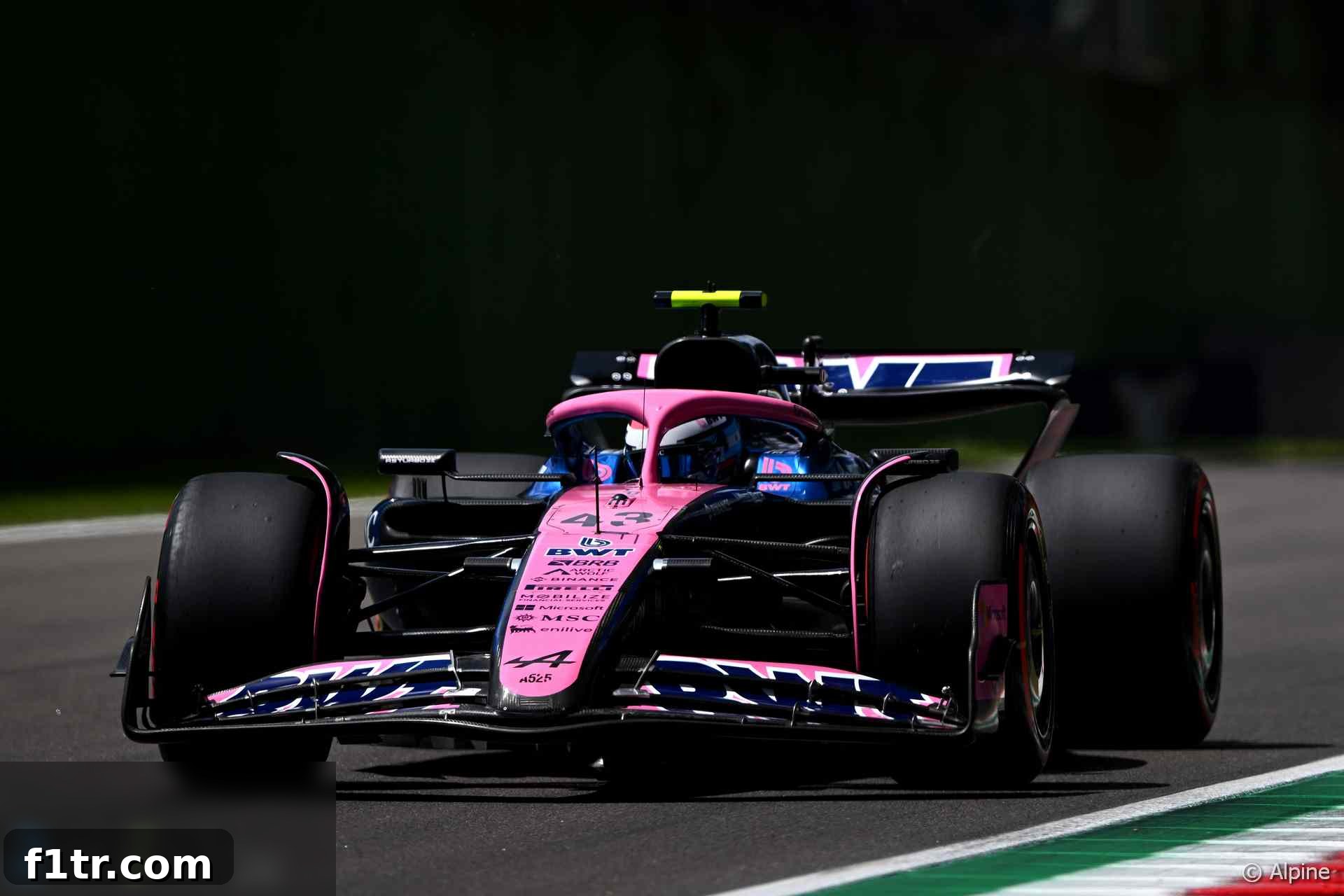
The high-octane world of Formula 1 is a relentless arena where performance dictates fate, and recent developments at the Alpine F1 team vividly underscore this reality. Flavio Briatore, a seasoned and often outspoken consultant for the French outfit, has recently provided candid insights into a series of significant shifts within the team, most notably the decision to replace promising young driver Jack Doohan just six rounds into what was anticipated to be his breakthrough season. This move, coupled with a leadership change at the top, paints a clear picture of Alpine’s determined, if sometimes brutal, quest for competitiveness amidst a challenging period in their F1 journey.
Alpine’s Driver Dilemma: The Sudden Exit of Jack Doohan
The departure of Jack Doohan from his reserve driver role, which saw him participating in select Grand Prix weekends, has sent ripples through the F1 paddock. Doohan, a highly regarded talent and son of motorcycling legend Mick Doohan, had been meticulously groomed through the junior categories, including a strong showing in Formula 2, where he demonstrated undeniable speed and potential. His promotion to an F1 role with Alpine was seen as a natural progression, a testament to the team’s investment in cultivating future stars. However, the unforgiving nature of top-tier motorsport means that potential must quickly translate into tangible results, especially when opportunities are scarce and competition is fierce.
Briatore’s explanation for Doohan’s ousting, which followed the Miami Grand Prix where Doohan crashed out on the first lap – mirroring an incident in the season-opener in Australia – suggests a confluence of factors. “I believe at one point with Jack it was very difficult and it was difficult for Jack as well,” Briatore stated, hinting at the immense pressure and perhaps a struggle for Doohan to fully adapt to the demands of F1 in high-stakes environments. His subsequent remark, “I believe at one point Jack needed a break,” offers a glimpse into the psychological toll that early F1 setbacks can inflict on a young driver. This is not merely about physical skill but also about mental fortitude, consistency, and the ability to perform flawlessly under intense scrutiny.
The decision to halt Doohan’s immediate progression reflects Alpine’s urgent need for stability and immediate impact. In a sport where every tenth of a second and every point matters, any perceived dip in performance or a string of incidents can trigger swift and decisive action from team management. Briatore, known for his no-nonsense approach and singular focus on winning, is unlikely to tolerate anything less than maximum dedication and error-free execution from his drivers, regardless of their developmental stage. The high financial costs associated with crash damage further amplify the pressure on drivers to avoid mistakes, making the learning curve in F1 incredibly steep and unforgiving.
A New Chapter: Franco Colapinto Steps In
Doohan’s unexpected exit paved the way for the swift arrival of Franco Colapinto, who was quickly signed as Alpine’s new reserve driver. The announcement of Colapinto’s appointment was preceded by an accidental reveal from one of his sponsors, indicating that he would be in the car sooner rather than later. This premature disclosure, prior to the official Miami Grand Prix announcement, highlighted the intricate web of commercial partnerships and the delicate balance teams must maintain with their financial backers.
Colapinto, an Argentine talent with a burgeoning career in the junior categories, brings his own set of credentials and, crucially, a suite of new sponsorship deals that Alpine evidently found attractive. The modern Formula 1 landscape is increasingly influenced by commercial viability, and a driver who brings not only talent but also significant financial backing can be a highly strategic asset for a team. Briatore articulated the rationale behind the swap, explaining, “We had the possibility to have Franco Colapinto in the team and we try to swap, to see if it’s better for the team, if it is better from Franco on one side as well.” This suggests a multifaceted evaluation, weighing not just raw driving talent but also the broader strategic fit, including commercial benefits and the potential for a fresh dynamic within the team.
The consultant was quick to emphasize that the move was not a personal slight against either driver. “It’s nothing against one [driver] or the other one. The team needs to find the best way possible to be competitive.” This statement encapsulates the ruthless pragmatism that often defines decisions in Formula 1. Teams are not merely nurturing individual careers; they are businesses operating in an intensely competitive environment, where every personnel decision must ultimately serve the overarching goal of improving performance and securing results. Colapinto’s immediate task will be to integrate seamlessly, provide valuable feedback, and be ready to step into a race seat if required, all while demonstrating the consistency and maturity that Alpine clearly seeks.
The Relentless Pursuit of Performance: Alpine’s Future Driver Strategy
The focus on immediate performance is a recurring theme within Alpine’s recent rhetoric. The team announced that it would re-evaluate its driver line-up within five rounds, signaling a period of intense scrutiny for Colapinto and indeed for the existing drivers. Briatore was unequivocal in stating that “only the performance” would influence the team’s ultimate decision about its future driver line-up. This declaration serves as a stark reminder to all involved that results are paramount and that loyalty, while valued, takes a back seat to the imperative of competitiveness.
The short evaluation window places immense pressure on Colapinto. In a sport where adaptability and instant impact are highly prized, he will need to demonstrate his capabilities quickly and consistently. Briatore’s comments on Colapinto’s potential tenure – “Franco is in the car, the team [will] decide if it’s three races, five races, or the whole season. We’ll see the performance” – highlight the fluid nature of these decisions. This probationary period reflects Alpine’s desire to leave no stone unturned in their pursuit of an optimal driver pairing, one that can consistently extract maximum performance from their machinery and contribute significantly to the constructors’ championship.
The need for “two cars” to be performing at their peak is critical in modern Formula 1. With the midfield being exceptionally tight, every point scored by both drivers can make a substantial difference in the constructors’ standings, impacting crucial prize money and team prestige. A team cannot afford to have one driver consistently underperforming or frequently involved in incidents that compromise race strategies or result in costly repairs. Alpine’s strategic decisions regarding its driver roster are therefore not just about individual talent but about building a cohesive and effective unit capable of battling fierce rivals and pushing the team up the grid. The pressure is on for Colapinto to prove that he is not just a temporary fix but a long-term solution for Alpine’s ambitious goals.
Leadership Transition: Oliver Oakes’ Departure from Alpine
Adding to the dynamic shifts within Alpine, the team also saw the departure of its previous team principal, Oliver Oakes, since the Miami Grand Prix. His resignation, announced due to personal reasons the day before Briatore’s interview, marked another significant leadership change within a team that has experienced considerable flux in its upper echelons over recent seasons. The role of a Team Principal in Formula 1 is multifaceted and demanding, encompassing technical oversight, strategic planning, team management, and external relations, all while operating under immense public and internal pressure.
Briatore expressed regret over Oakes’ departure, stating, “I feel sorry about what happened with him.” He clarified that “it’s something that’s nothing to do with the team. It’s a personal decision, him resigning [as] team principal.” This reassurance aims to quell speculation about internal discord, emphasizing that Oakes’ decision was driven by personal circumstances rather than professional disagreements or team performance issues. Briatore extended his best wishes, saying, “I wish him to have a fantastic career [and he] clears up everything with whatever it is.” Such sentiments, while professional, also underscore the demanding nature of the F1 environment, where the personal lives of even the most senior figures can be impacted by the relentless demands of the sport.
The departure of a team principal, regardless of the reasons, inevitably creates a period of adjustment. Leadership stability is crucial for long-term planning and consistent execution of strategies within an F1 team. Alpine has faced several high-profile management changes in recent years, leading to questions about the team’s overall direction and coherence. While Briatore’s role as a consultant provides experienced guidance, the search for a new permanent team principal who can provide consistent leadership and steer the team through its technical and sporting challenges will be paramount. The successful integration of new leadership is as vital as securing competitive drivers, as both are foundational to a team’s success in Formula 1.
Navigating Turbulence: Alpine’s Path Forward in Formula 1
The recent events at Alpine F1 illustrate a team in a pivotal phase, grappling with the complexities of performance, personnel, and commercial realities in Formula 1. Flavio Briatore’s re-engagement, even in a consultant capacity, signals a return to a results-driven philosophy, where difficult decisions are made with the singular aim of elevating the team’s competitiveness. Alpine’s struggles to consistently challenge at the sharp end of the grid have been well-documented, making these changes an urgent attempt to recalibrate their trajectory.
The future of Alpine hinges on successfully navigating these internal shifts while simultaneously pushing technical boundaries and extracting consistent performance from their racing package. The pressure on Franco Colapinto to deliver quickly and on the existing leadership to stabilize the team’s direction is immense. In a sport where fortunes can turn rapidly, Alpine’s proactive (and at times, ruthless) approach to personnel management is a clear indication of their unwavering ambition to return to championship-contending form. The coming rounds will undoubtedly be crucial in shaping the immediate and long-term future of the Alpine F1 team, as they strive to turn potential into podiums in the cutthroat world of Formula 1.