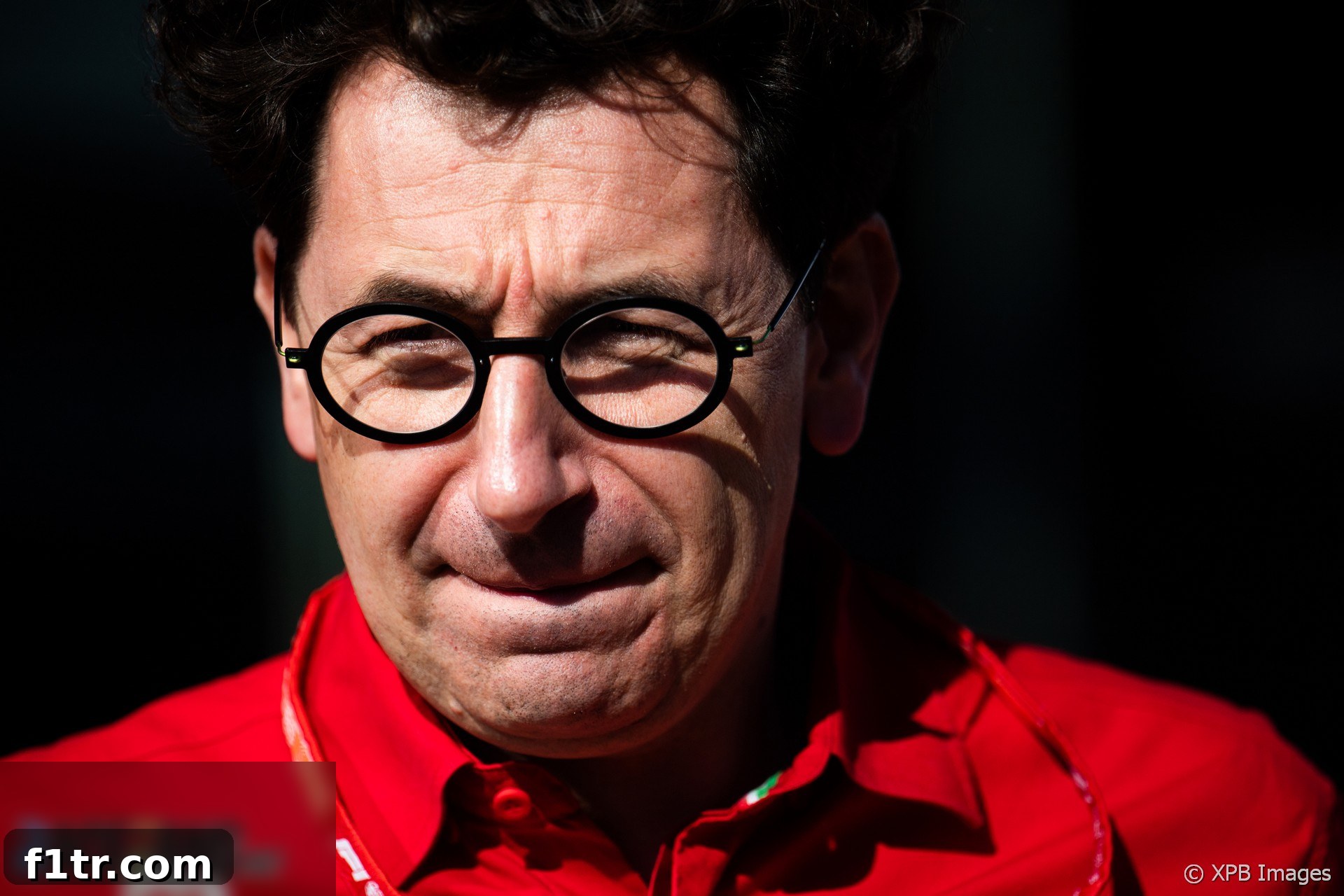
The 2019 Formula 1 season presented a formidable challenge for Scuderia Ferrari, a team accustomed to vying for championship glory. Despite flashes of brilliance, particularly their formidable engine power on straights, the SF90 chassis frequently struggled to match the all-around performance of its primary rivals. In a candid assessment, Team Principal Mattia Binotto acknowledged that Ferrari would be unable to fully overcome the fundamental competitive deficit of their SF90 car before the conclusion of the season. This admission highlighted a crucial aerodynamic shortcoming that underscored the team’s inconsistent form throughout the campaign and set the stage for strategic decisions impacting their future.
Ferrari’s core issue stemmed from an inability to generate sufficient downforce compared to Mercedes and Red Bull. This fundamental aerodynamic disadvantage became glaringly obvious on specific circuit layouts, particularly those demanding maximum grip and high levels of downforce through numerous corners. While the Scuderia managed to secure a memorable victory at the high-speed Spa-Francorchamps circuit, a track where their engine power could be fully leveraged, the preceding Hungarian Grand Prix painted a starkly different picture. At the twisty Hungaroring, Ferrari finished a staggering minute behind the race leaders, a humbling demonstration of their car’s deficiency in grip-limited conditions. This performance disparity underscored a critical area of weakness that needed urgent attention, not just for the remainder of 2019 but with an eye firmly on the subsequent seasons.
Advert | Become a Supporter & go ad-free
Speaking at an FIA press conference, Binotto delved deeper into the “quite different characteristics” of the SF90 compared to the dominant W10 of Mercedes and the agile RB15 of Red Bull. He openly conceded, “We are certainly lacking in grip-limited areas and this is where we need to improve.” This statement pinpointed the critical challenge facing the Maranello-based squad: their car’s inability to extract maximum performance when cornering grip dictated lap times. Circuits featuring a multitude of slow to medium-speed corners, where aerodynamic downforce is paramount for stability and speed, consistently exposed Ferrari’s significant weakness. The struggle wasn’t merely about raw engine power; it was about the delicate balance between drag and downforce, and the SF90 appeared to be compromising the latter, making it less versatile across the diverse F1 calendar.
The implications of this performance gap extended beyond individual race results. A car that struggles for downforce often experiences instability, leading to increased tyre wear and making it difficult for drivers to extract consistent performance. This challenge not only affected their ability to compete for race wins on all track types but also put immense pressure on their championship aspirations. Mercedes, with its superior aerodynamic platform, could consistently perform at a high level across virtually every circuit, demonstrating the advantage of a well-balanced chassis capable of generating optimal grip. Red Bull, known for its aerodynamic prowess, also presented a benchmark that Ferrari found difficult to match in twistier sections, even with a power unit advantage.
Binotto’s assessment of the situation was refreshingly realistic. He acknowledged the monumental task of closing such a significant gap within the confines of a single season. “Are we addressing that [deficit] by the end of the season? I don’t think so because the gap is too big in that area,” he stated, tempering expectations for an immediate, wholesale turnaround. This pragmatic approach recognized the deeply ingrained nature of aerodynamic design flaws, which often require extensive redesigns and testing cycles that are impractical to implement fully during an ongoing championship. Mid-season development often focuses on incremental improvements rather than radical overhauls, especially when dealing with fundamental aerodynamic concepts.
However, this acknowledgment of current limitations was paired with a clear, strategic outlook for the future. Binotto emphasized that any progress made in addressing the SF90’s weaknesses during the 2019 season would directly benefit their efforts for the 2020 F1 season. This forward-thinking strategy was underpinned by the stability of the technical regulations. With minimal changes anticipated for the upcoming year, lessons learned and developments implemented on the SF90 could be largely carried over to its successor. This continuity provided a strong incentive for Ferrari to continue pushing development throughout 2019, even if a full resolution of their issues seemed out of reach for that specific season.
“Can we improve the situation? Certainly we are working to address it,” Binotto affirmed, highlighting the team’s ongoing commitment to development. The question then naturally arose: should Ferrari divert resources to next year’s car, or continue to pour effort into the current one? Binotto’s response provided clarity: “Being that the regulations are stable from now to next year we believe that whatever we do this season will be useful for the next one.” This statement perfectly encapsulated the delicate balancing act F1 teams face, especially those at the forefront of competition. Every piece of data, every aerodynamic upgrade, and every development iteration on the SF90 served as crucial groundwork for the 2020 challenger, making the current season’s struggles an invaluable learning experience rather than a wasted effort.
The strategic decision to leverage 2019 development for 2020 demonstrated Ferrari’s long-term vision and their determination to return to the pinnacle of Formula 1. While Binotto admitted that some gaps would likely remain despite their best efforts, he expressed hope for significant progress. “So yes there are gaps that will remain. Hopefully we may close it,” he concluded, setting a tone of cautious optimism. This meant that while fans might not see a completely transformed Ferrari by the end of 2019, the foundation was being laid for a more competitive and aerodynamically efficient car in 2020. The continuous development cycle in Formula 1 means that even a challenging season can yield crucial insights and innovations that pave the way for future success, provided the team effectively analyzes and implements those learnings.
Advert | Become a RaceFans supporter andgo ad-free
Ferrari’s Path Forward: Building on 2019 for Future Success
The challenges faced by Ferrari in 2019 with the SF90’s downforce deficiency served as a critical inflection point for the Scuderia. It forced a deep introspection into their aerodynamic philosophy and highlighted the relentless competitive pressure in Formula 1. While the immediate goal of a championship might have slipped from their grasp that year, Binotto’s candid admissions and strategic focus on stable regulations provided a clear roadmap for recovery. The commitment to understanding and rectifying the SF90’s weaknesses was not merely about salvaging the current season, but about laying robust foundations for a more competitive future. This approach is fundamental in F1, where continuous innovation and evolution are key to sustained success. The insights gained from battling aerodynamic limitations would undoubtedly shape the design and development of subsequent Ferrari challengers, with the ultimate aim of producing a car that could consistently challenge for victories on every type of circuit, marrying their legendary engine power with equally potent aerodynamic efficiency.
2019 F1 season
- Crying in the Melbourne car park at 2019 grand prix was my career low – Ocon
- McLaren Racing reports reduced £71 million loss in 2019
- Kvyat: Hockenheim podium last year was “my biggest achievement” so far
- How the FIA’s new encrypted fuel flow meter targets Ferrari’s suspected ‘aliasing’ trick
- “He smashed my office door”: 23 must-see moments from ‘Drive to Survive’ season two
Browse all 2019 F1 season articles