Formula 1’s Yellow Flag Quandary: Verstappen and Rivals Await Crucial Grid Penalty Decisions
For the second consecutive weekend, the grid for a Formula 1 Grand Prix will be finalized under a cloud of uncertainty, as the outcome of a dramatic qualifying session hangs in the balance overnight. The sport, renowned for its precision and speed, often finds itself navigating complex scenarios, and this weekend is no exception. At the heart of the latest controversy are yellow flag infringements, a critical safety measure that, when disregarded, can lead to severe consequences for drivers and their starting positions.
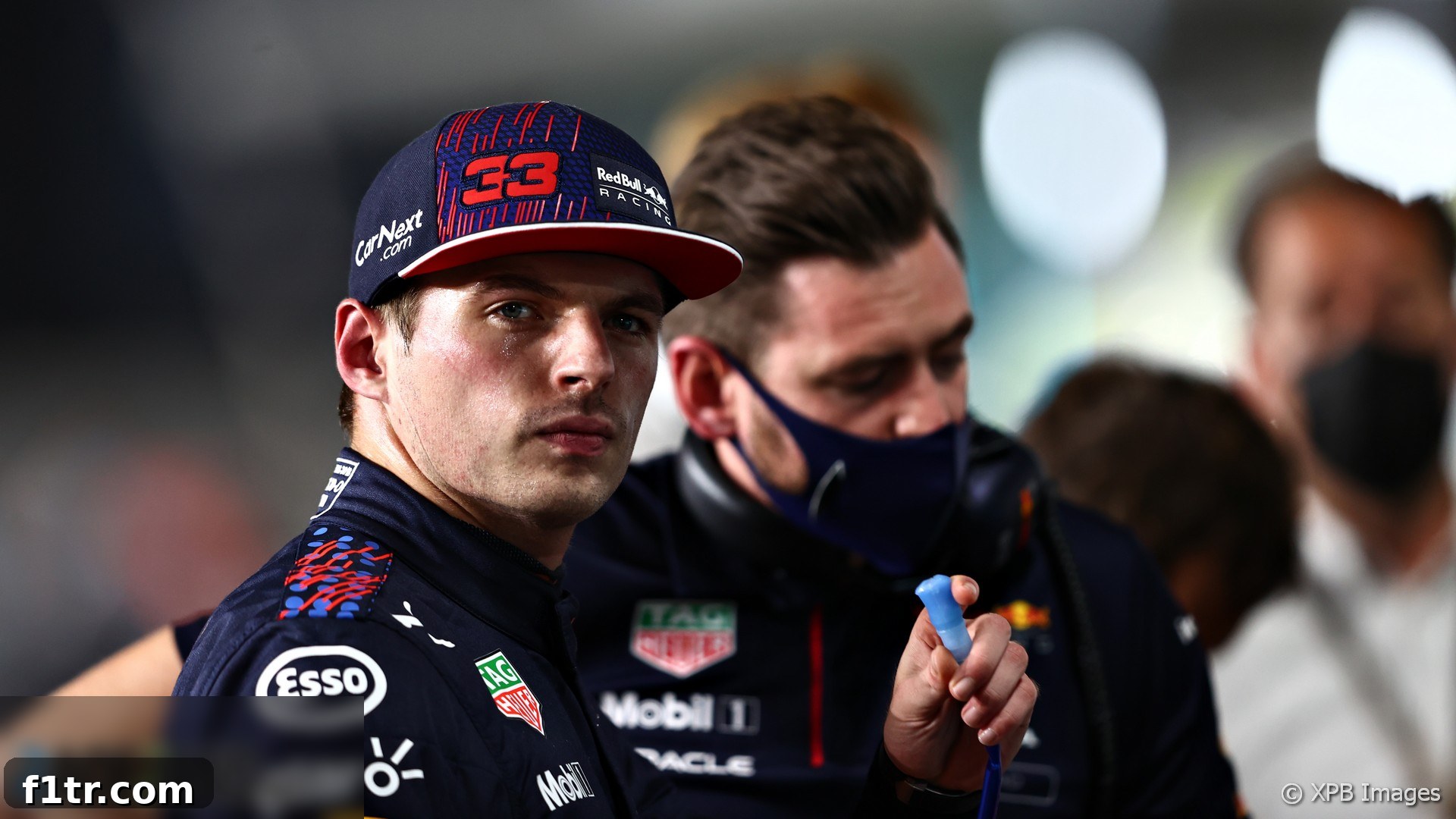
Leading the list of drivers facing potential penalties is Max Verstappen, who initially secured an impressive second place on the grid. However, his performance is now overshadowed by an ongoing investigation into allegations that he failed to adequately respect yellow flags during the tumultuous final moments of qualifying. The hearing, which will determine his fate, is scheduled for tomorrow morning, leaving fans and competitors alike in anxious anticipation.
Verstappen is not alone in this predicament. Two other prominent drivers, Valtteri Bottas, who qualified third, and Carlos Sainz Jnr, who secured seventh, are also under investigation for similar infractions. While all three face the prospect of grid penalties, a potentially significant distinction exists between their cases. Bottas and Sainz are being investigated for passing single waved yellow flags, a serious offense in itself. Verstappen, however, is alleged to have passed double waved yellow flags, which regulations deem a more severe infringement, often attracting harsher penalties due to the heightened danger indicated.
The Stakes are High: Verstappen Under Scrutiny for Double Waved Yellow Flag Infraction
The distinction between single and double waved yellow flags is fundamental to Formula 1 safety protocols. A single waved yellow flag indicates a hazard on or near the track, requiring drivers to slow down and be prepared to change direction. A double waved yellow flag, on the other hand, signals a significant hazard blocking part or all of the track, or marshals working nearby, demanding drivers to significantly reduce speed, be prepared to stop, and avoid overtaking. Disregarding these signals puts not only the driver in question at risk but also marshals, other competitors, and recovery personnel.
For Max Verstappen, a championship contender locked in a fierce battle, any grid penalty could have profound implications. Starting further back on the grid would compromise his race strategy, force him to make more overtakes, and potentially allow his championship rival to gain a crucial advantage. The scrutiny surrounding his case is particularly intense given the high stakes of the current season and his prior history with such infringements.
A Pattern of Infringement? Verstappen’s History with Yellow Flags
This is by no means the first time Verstappen has found himself under investigation for yellow flag violations. His past record, while not always leading to significant on-track consequences, provides valuable context for the current situation.
At the 2018 Russian Grand Prix, Verstappen was found to have not slowed sufficiently for a yellow flag at the end of Q2. He received a three-place grid drop for the infringement. However, this penalty proved to be immaterial as he was already destined to start at the very back of the grid due to pre-planned power unit element changes. Despite the lack of immediate impact on his race start, it marked an early instance of a pattern emerging regarding his interpretation of, or adherence to, yellow flag rules.
A more impactful incident occurred the following year at the 2019 Mexican Grand Prix. Verstappen famously failed to slow down for a yellow flag waved for the crashed car of Valtteri Bottas. Post-session, he even admitted to not having slowed in the final corner, a candid confession that stirred considerable debate. Subsequently, he was stripped of pole position after being handed a three-place grid drop, a severe blow to his race prospects. Although FIA Formula 1 Race Director Michael Masi later clarified that Verstappen’s admission did not directly prompt the penalty, the incident underscored the FIA’s firm stance on safety regulations, particularly when pole position is at stake. Losing pole position in Mexico was a clear demonstration that even the fastest drivers would be held accountable for safety breaches.
Conversely, Verstappen has also benefited from similar penalties imposed on his rivals. Just hours before the 2020 Austrian Grand Prix, he was promoted to second on the grid after Lewis Hamilton was demoted three places for failing to slow for yellow flags during qualifying. This particular case highlighted the procedural aspects of F1 governance; Red Bull successfully petitioned for a review of a prior decision by the race stewards not to penalize Hamilton, after new video footage came to light, leading to Hamilton’s ultimate demotion. This incident demonstrates the dynamic nature of steward reviews and the crucial role of evidence in determining outcomes, adding another layer of complexity to these investigations.
Defining Penalties: Precedents and Steward Discretion
While Verstappen’s past incidents predominantly involved single waved yellow flags, the current investigation concerning a double waved yellow flag presents a more serious challenge. These past cases, therefore, may offer better indicators for the penalties Bottas and Sainz are likely to receive, given their alleged single yellow flag infractions.
A highly relevant precedent for Verstappen’s current situation stems from last year’s season. At the 2020 Turkish Grand Prix, Lando Norris received a five-place grid drop for failing to slow sufficiently for double waved yellow flags. This serves as a strong indicator that Verstappen could face a similar, if not identical, penalty if found guilty of infringing the rules. The severity of the Turkish GP incident, coupled with the clear penalty applied to Norris, sets a benchmark for double waved yellow flag violations.
However, it is crucial to remember that stewards retain a significant degree of judgment in these cases. They assess each incident on its own merits, considering all available evidence, including telemetry data, video footage, and driver statements. This discretion means that a penalty is not always guaranteed, as other relevant cases from this season have shown.
One such instance involved Verstappen himself at his home grand prix in the Netherlands earlier this season. During second practice, a red flag was deployed due to Lewis Hamilton stopping on track. Moments after the red flag was shown, Verstappen overtook Lance Stroll. Initially, this led to an investigation. However, Verstappen was ultimately cleared of wrongdoing after the stewards ruled that he “immediately reduced speed in a safe manner at the earliest opportunity upon the first indication of the red flag.” This decision emphasized the importance of a driver’s immediate reaction and demonstrable effort to slow down, even if an initial reaction might appear to violate a rule.
Prior to that, at the 2021 Austrian Grand Prix, a staggering eight drivers were investigated after the race for failing to slow sufficiently in a double waved yellow flag zone. This zone was created by a final-lap crash between Sebastian Vettel and Kimi Räikkönen. After a thorough review, six drivers were cleared, but Nicholas Latifi and Nikita Mazepin were found not to have slowed sufficiently. As a consequence, they were each given 30-second time penalties after the race. This mass investigation and the subsequent selective penalties highlight the stringent enforcement of safety rules, even when multiple drivers are involved, and underscore the stewards’ ability to differentiate between various levels of non-compliance.
Evolving Regulations: How Yellow Flag Procedures Have Changed
The FIA has continuously refined its regulations to enhance safety and ensure fair play. Following an incident at the Turkish Grand Prix last month involving Fernando Alonso, Formula 1 changed its double waved yellow flag procedures. Alonso, on his first lap of a wet qualifying session, managed to set a lap time that was considerably more competitive than another driver who slowed more significantly for the exact same incident. This disparity highlighted a loophole where drivers might gain an unfair advantage if they did not sufficiently slow down for safety flags, even if they didn’t directly cause danger.
Since then, a stricter protocol has been implemented: drivers now have their lap times automatically deleted if they pass through a double waved yellow flag zone during qualifying. This immediate deletion aims to remove any sporting advantage gained from not slowing down sufficiently. However, it’s important to note that this doesn’t necessarily mean they won’t receive further sanctions, such as grid penalties, as the primary goal of the rule is safety and preventing a competitive edge through non-compliance. The lap deletion is an immediate sporting consequence, but the underlying safety infringement can still be penalized separately.
The Grid Shake-Up: Potential Consequences and Unforeseen Beneficiaries
Considering the precedents and the severity of the alleged infringement, the worst-case scenario for Max Verstappen appears to be a five-place grid penalty, aligning with the sanction handed to Lando Norris for a similar double waved yellow flag violation. Such a penalty would be a significant setback, dropping him further down the starting order.
Compounding the potential disruption, even if Valtteri Bottas receives the ‘standard’ three-place grid drop for a single yellow flag violation, this would still place the Red Bull driver behind the second Mercedes car. This outcome would further compromise Verstappen’s race strategy before it has even begun, making his task of challenging for victory considerably harder and potentially impacting his championship points haul.
Ironically, if Verstappen, Bottas, and Sainz all incur penalties, the driver who stands to benefit the most is none other than the one whose accident triggered the yellow flags in the first place: Pierre Gasly. Having originally qualified fourth, Gasly could find himself moving up to third or even second on the grid, depending on the combined penalties applied to those ahead of him. Either of these positions would represent the best starting position of his Formula 1 career, an unexpected boon from a qualifying session that ended prematurely for him.
Looking Ahead: The Verdict and Its Impact on F1 Fairness
The anticipation leading up to tomorrow’s hearing is palpable. The decisions made by the race stewards will not only reshape the starting grid for a crucial race but also send a clear message about the FIA’s commitment to safety and fair competition in Formula 1. Consistent and transparent enforcement of rules, especially those concerning safety, is paramount to maintaining the integrity of the sport and ensuring that drivers operate within clear boundaries. As the championship battle intensifies, every grid position, every penalty, and every decision holds immense weight, influencing not just individual race outcomes but potentially the destiny of the entire season.
More from the 2021 Qatar Grand Prix
- Pirelli’s investigation into Qatar tyre failures indicates kerbs caused punctures
- Horner rejects talk of title fight pressure after criticism over marshal comment
- “I don’t know how much slower I can go”: Inside Ricciardo’s unnecessary economy run
- ‘No regulator in the world will be popular’ with a title fight this intense – Masi
- Why drivers backed Hamilton’s call for clarity after meeting over Verstappen incident
Browse all 2021 Qatar Grand Prix articles