After a much-needed three-weekend hiatus, during which Formula 1 teams temporarily closed their factory doors and drivers recharged their batteries, the eagerly anticipated second half of the 2023 season roars back to life with the Dutch Grand Prix. This pivotal race at Zandvoort marks the beginning of a relentless final push, where championships are solidified, and reputations are made. While Red Bull’s dominant performance has seemingly decided the Constructors’ and Drivers’ titles, the midfield battle remains fiercely contested, promising plenty of thrilling on-track action and intriguing storylines. As the F1 paddock descends upon the challenging coastal circuit, several key talking points are set to define the weekend and potentially shape the remainder of the season. From record-breaking streaks to leadership changes and contract sagas, Zandvoort offers a dramatic backdrop for Formula 1’s return.
Here are the crucial narratives and developments to keep an eye on as the Dutch Grand Prix unfolds.
Will Verstappen Match Vettel’s Historic Streak?
Advert | Become a Supporter & go ad-free
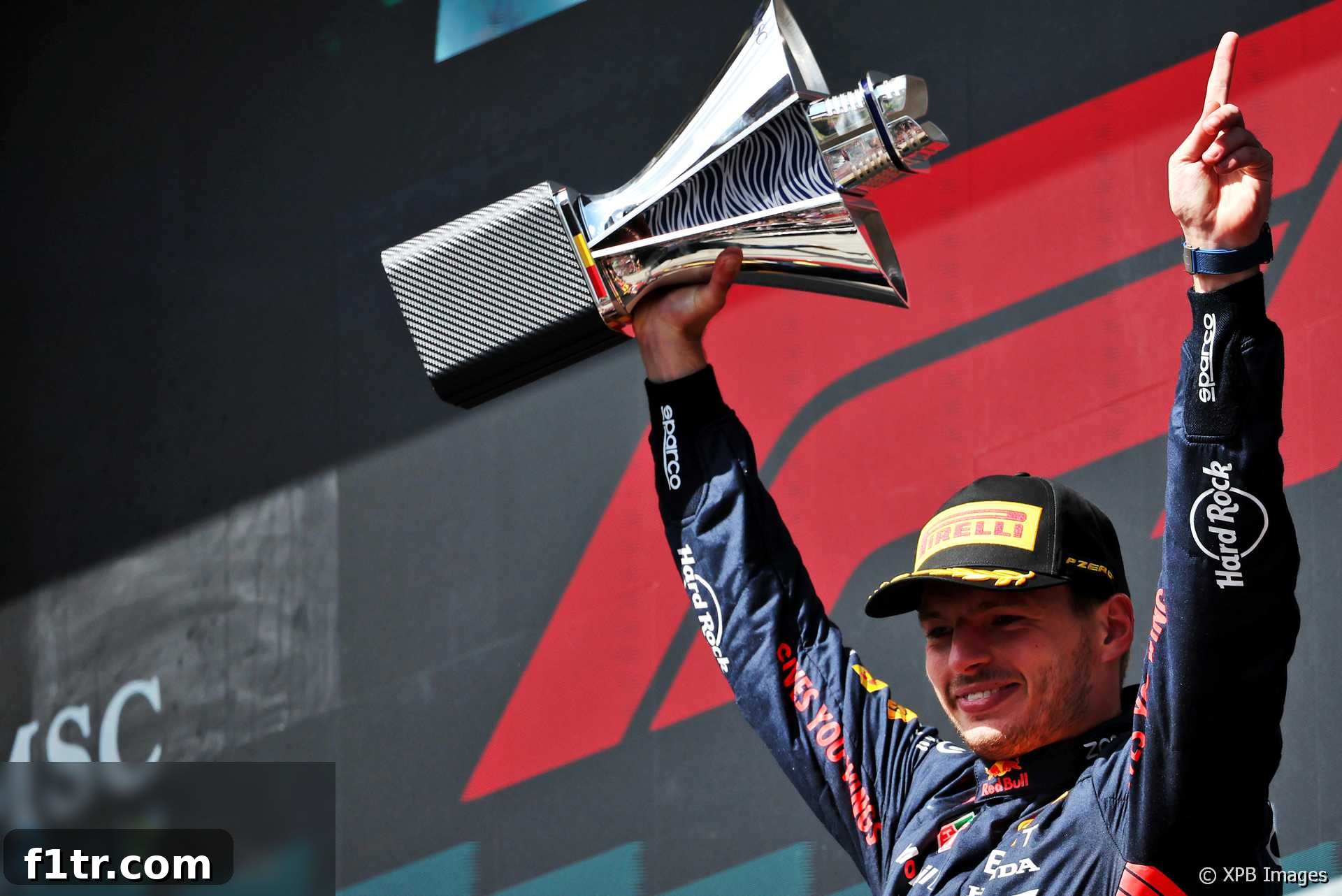
Max Verstappen is currently in the midst of an unparalleled winning streak, not only the longest of his illustrious Formula 1 career but also one of the most dominant in the sport’s extensive history. With his commanding victory at the Belgian Grand Prix just before the summer break, the reigning world champion has now clinched eight consecutive Grand Prix wins, an extraordinary feat that underscores his and Red Bull Racing’s absolute supremacy.
This remarkable run places Verstappen in an elite category, having surpassed the best individual streaks of legendary drivers like Michael Schumacher, Alberto Ascari, and even Nico Rosberg. His consistent performance and unyielding pace have set a new benchmark for sustained excellence in modern F1.
The stage is now set for a potentially historic moment at his home circuit, Zandvoort. If Verstappen can secure a victory this weekend, triumphing for the third consecutive season in front of his adoring orange army, he will officially equal Sebastian Vettel’s all-time record of nine consecutive Grand Prix wins. Vettel achieved this incredible milestone during his dominant 2013 championship-winning campaign, a season that saw him rewrite the record books. The pressure will be immense, but so will the motivation of a home crowd desperate to witness history.
Should Verstappen manage this incredible feat – and given the imperious form he has displayed throughout the 2023 season, betting against him seems a futile exercise – he will then have the opportunity to etch his name even deeper into Formula 1 folklore. The very next weekend, at the iconic Italian Grand Prix in Monza, he could set a new, unprecedented F1 record of ten consecutive wins. This potential achievement would be yet another significant milestone in the two-time world champion’s relentless march towards an almost certain third consecutive title, further solidifying his status as one of the sport’s greatest drivers.
Can Ferrari Extend Their Form Amidst Fierce Competition?
While Red Bull has enjoyed an astonishingly dominant opening half of the 2023 season, securing victories in every single Grand Prix and Sprint Race contested, the battle immediately behind them has been anything but predictable. The fight for the coveted ‘best of the rest’ position has seen a fascinating ebb and flow, with different teams emerging as Red Bull’s closest challengers at various stages.
At the very beginning of the year, it was Aston Martin who surprisingly claimed the mantle of ‘best of the rest’. Under the veteran leadership of Fernando Alonso, the team consistently challenged for podiums, with Alonso finishing third behind the Red Bulls in both of the opening two rounds and going on to secure four additional podium appearances within the first eight races. However, as the season has progressed and development battles intensified, the competition behind the leaders has become increasingly fierce and fluid.
Mercedes, Ferrari, and even McLaren have each experienced periods during the first half of the year where their package appeared to be the second-fastest on the grid. This dynamic illustrates the relentless development pace in Formula 1 and how quickly fortunes can shift. At the last round before the break, the Belgian Grand Prix at Spa-Francorchamps, it was Ferrari who demonstrated a notable uplift in performance. Charles Leclerc expertly guided his Scuderia machine to the final step on the podium, finishing behind only Verstappen and Sergio Perez. Although he was a significant half-minute adrift of the winner, it marked a positive trend for the Italian team.
There is absolutely no indication that the intense competition amongst Aston Martin, Mercedes, McLaren, and Ferrari will subside as the season enters its second phase. The pecking order has consistently been influenced by circuit characteristics, prevailing weather conditions, and crucially, which teams have successfully implemented performance-enhancing upgrades at specific rounds. Ferrari and their passionate Tifosi will be fervently hoping that their rivals have not made significant strides during the summer shutdown, and that their recent form at Spa can be successfully translated to the unique demands of Zandvoort, allowing them to solidify their position at the front of this thrilling midfield battle.
Advert | Become a RaceFans supporter andgo ad-free
A New Chapter for Alpine: Post-Szafnauer Era Begins
The summer break proved to be a period of significant upheaval for the Alpine F1 team, particularly at its leadership level. Although the announcement of his impending departure was made on the first day of running at the Belgian Grand Prix, Otmar Szafnauer’s tenure as Team Principal officially concluded over the summer shutdown. This marked a profound shift for the French outfit, signalling the end of one chapter and the beginning of another for their Formula 1 aspirations.
Szafnauer, who joined Alpine from Aston Martin prior to the 2022 season, enjoyed a measure of success in his inaugural year. Under his guidance, the team secured a commendable fourth place in the Constructors’ Championship, firmly positioning themselves behind the traditional ‘big three’ of Red Bull, Ferrari, and Mercedes, and crucially, ahead of fierce rivals McLaren. This achievement demonstrated the team’s potential and ability to execute against their targets.
However, the 2023 season has presented a different narrative. Alpine’s performance has remained relatively stagnant, failing to make significant gains, while McLaren, in contrast, has made a dramatic leap forward, catapulting themselves into the battle for ‘best of the rest’ contention. This disparity in development trajectory, combined with a broader strategic vision from Alpine’s new CEO, ultimately led to significant organizational changes. Not only did Szafnauer depart, but so did Sporting Director Alan Permane, a long-serving and highly respected stalwart of the Enstone team. These departures collectively signal the start of a wholesale new chapter for Alpine, with Bruno Famin stepping in as interim team principal to steer the ship.
This organizational overhaul comes at a particularly interesting time for Alpine. The F1 team recently secured a major investment from a high-profile consortium, notably including Hollywood owners of Wrexham FC, Ryan Reynolds and Rob McElhenney. This substantial financial injection, coupled with the new leadership, strongly suggests that the team is embarking on yet another ambitious cycle, hoping to rekindle their championship-winning pedigree and challenge for top honours in the years ahead. The crucial question that remains is whether this latest phase of restructuring and investment will prove more successful than its predecessors, finally enabling Alpine to unlock its full potential on the global Formula 1 stage.
Advert | Become a RaceFans supporter andgo ad-free
What’s Holding Up Lewis Hamilton’s Contract Extension?
The summer break has historically served as a pragmatic and often opportune period for Formula 1 teams to conduct critical negotiations and finalize contract extensions with key drivers they intend to retain for forthcoming seasons. It provides a window away from the immediate pressures of race weekends for all parties to focus on future plans.
At Mercedes-AMG Petronas F1 Team, the contract of Lewis Hamilton, the sport’s most successful driver, is set to expire at the conclusion of the current season. There is virtually no ambiguity regarding the seven-time world champion’s desire to remain with the team that has been his Formula 1 home for the past decade, a partnership that has yielded unprecedented success. Equally, there is absolutely no doubt that Mercedes are keen to secure the continued services of their talismanic driver, recognizing his unparalleled talent, experience, and marketability.
And yet, despite Team Principal Toto Wolff’s repeated assurances that securing an extension with Hamilton is merely a matter of meticulously sorting out minor details, an official confirmation of a new deal has yet to materialize. This prolonged silence, particularly after a dedicated break period, is beginning to raise eyebrows within the paddock and among fans. The longer both Mercedes and Hamilton proceed towards the final rounds of the season without an announcement, the more intense the media scrutiny will become. Both the team and the driver will inevitably face an increasing barrage of questions regarding the apparent hold-up, leading to mounting speculation about the exact nature of these “minor details” and whether they represent more significant sticking points than publicly acknowledged. Such prolonged uncertainty, while perhaps intended to avoid distraction, ironically risks becoming one as the championship draws to a close.
Advert | Become a RaceFans supporter andgo ad-free
The Elusive F1 Rookie Running Sessions
Last year, the FIA introduced a progressive new rule into the sporting regulations designed to foster the development of aspiring Formula 1 talent. This mandate compelled every team on the grid to field so-called ‘young drivers’ in at least one Friday first practice session for each of their two cars during the season. The primary intention behind this initiative was to provide promising upcoming drivers with invaluable opportunities to test current-specification Formula 1 machinery in representative competitive conditions, a significant upgrade from the previously common practice of running outdated cars in private, less relevant tests.
However, in stark contrast to last season, where many teams had already utilized these young driver sessions for at least one of their cars by the summer break, the 2023 season has seen a curious absence. To date, there have been no appearances in any of the season’s practice sessions by drivers who strictly meet the FIA’s criteria of having participated in fewer than two Grand Prix races. This unexpected delay has raised questions about the practicality of the rule within the current F1 calendar structure.
Technically, a handful of teams have already satisfied one of their two mandated requirements due to a specific quirk in the regulations. McLaren, Williams, and AlphaTauri have each fielded rookie drivers this season in their race seats – Oscar Piastri for McLaren, Logan Sargeant for Williams, and Nyck de Vries (and later Daniel Ricciardo) for AlphaTauri at the start of the year. The opening practice session of the season in Bahrain, which saw these drivers participate, retroactively counted as one of their two required instances. This means that while these three teams only have to fit a young driver into the cars typically driven by Lando Norris, Alexander Albon, and Yuki Tsunoda respectively, the other seven teams on the grid still face the challenge of scheduling young drivers into both of their cars for a practice session.
It is now widely anticipated that we will finally see the first of these dedicated ‘young driver’ appearances this very weekend at Zandvoort. Nevertheless, with three challenging sprint rounds still on the calendar and the introduction of a brand new, highly complex street circuit in Las Vegas amongst the remaining ten rounds of the season, teams face limited and increasingly difficult opportunities to realistically slot in these crucial practice sessions. Balancing the need to develop young talent with optimizing precious track time for championship pursuits remains a significant logistical and strategic challenge for every team.
Advert | Become a RaceFans supporter andgo ad-free
Are You Heading to the Dutch Grand Prix?
If you are planning to make the journey to the Netherlands for this weekend’s highly anticipated race at Zandvoort, we would love to hear from you and share your experiences:
- Forum: Going to the Dutch Grand Prix at Zandvoort
With so many intriguing storylines and potential records on the line, the 2023 Dutch Grand Prix promises to be an unmissable event. Who do you believe will emerge as the dominant force this weekend? Share your predictions and insights below!
2023 Dutch Grand Prix Insights and Analysis
- Azerbaijan GP defeat was key to record-equalling run of wins – Verstappen
- “Too early to say” if podium signals return to form for Aston Martin – Alonso
- Verstappen makes history with unbeaten hat-track in first home races
- Perez is ‘doing his job and will be our driver in 2024’, Horner insists
- Ferrari had the “sixth or seventh fastest car” at Zandvoort – Sainz
Browse all 2023 Dutch Grand Prix articles