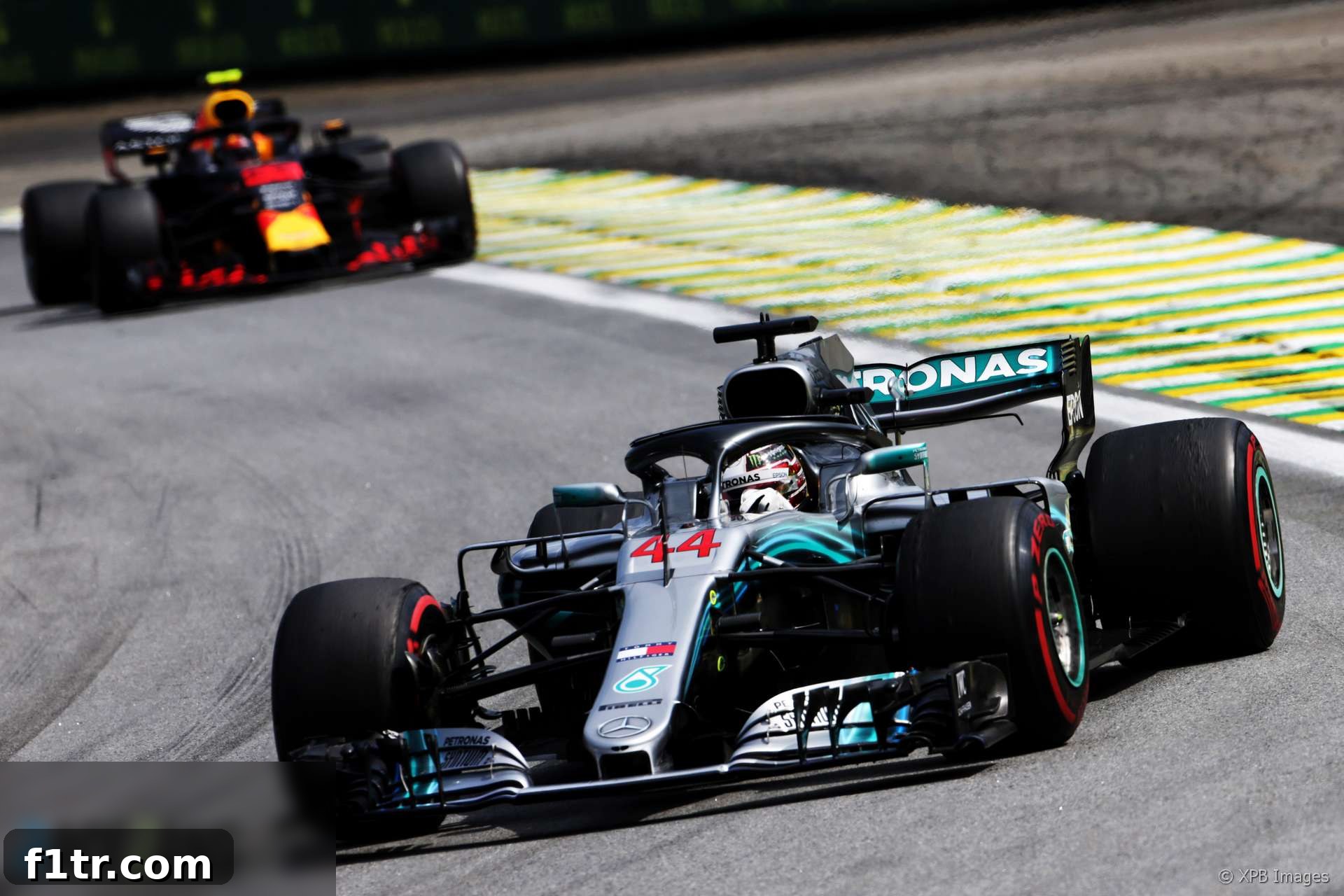
In the high-octane world of Formula 1, victories are often celebrated for the sheer speed, strategic brilliance, and the audacious overtakes that define a race. However, some wins transcend these metrics, revealing a deeper narrative of survival, resilience, and an unyielding will to conquer adversity. The 2018 Brazilian Grand Prix stands as a testament to such a victory for Lewis Hamilton. The F1 maestro secured his tenth win of the season and, crucially, clinched the constructors’ championship for Mercedes-AMG Petronas, all while battling a silent, yet potentially catastrophic, threat: an imminent engine failure that he sensed brewing beneath him.
As the final ten laps unfolded at the iconic Interlagos circuit, a palpable tension filled the cockpit of Hamilton’s Mercedes W09. While the world watched a gripping duel between the reigning champion and the relentless Max Verstappen, Hamilton was engaged in an equally intense, solitary struggle with his machine. He later confessed to shouting encouragement to his car, a desperate plea for his power unit to hold together. “Come on, come on you can do it baby, you can do it, keep it together,” he recalled urging, willing on the very heart of his race car.
The Driver’s Intuition: Sensing the Impending Doom
What makes Hamilton’s account particularly compelling is his profound connection with his car. Unlike many, he possesses an almost symbiotic relationship with his machinery, capable of detecting the most subtle changes in its performance. “I could feel it,” Hamilton stated, reflecting on the developing issue. “Obviously I’ve been driving this engine since the beginning so I know pretty much everything there is to know about the engine and how it feels. Pretty much every note of the engine I know like the back of my hand.” This deep-seated understanding allowed him to pinpoint an anomaly long before it escalated into a full-blown crisis, a testament to the experience and finely tuned senses of a multiple world champion.
Initially, the engine’s operation seemed within expected parameters. However, as the race progressed, a disquieting shift occurred. Hamilton noticed a subtle disharmony, a deviation from its usual, synchronous operation. For a lesser driver, such a revelation might invite panic or distraction. But for Hamilton, it triggered an immediate mental recalibration. His strategy was clear: “I can’t allow any negative or worrying thought get into my mind, so I just stay focused.” This unwavering mental discipline became as crucial as his driving skill, allowing him to maintain peak performance while simultaneously managing a severe mechanical threat.
The Race Against Time: Mercedes’ Engineering Marvel
While Hamilton was battling his internal concerns and external pressures on track, the Mercedes pit wall and the factory back in the UK were engaged in their own frantic race against time. Telemetry data confirmed Hamilton’s intuition: there was indeed an “imminent” risk of power unit failure. This wasn’t merely a minor glitch; it was a potential race-ending, championship-threatening catastrophe. The stakes were incredibly high – not just for Hamilton’s personal victory, but for Mercedes to clinch the prestigious constructors’ championship, a title that embodies the collective brilliance of the entire team.
The engineers immediately swung into action, an intricate ballet of data analysis and strategic decision-making unfolding in real-time. Their task was daunting: to understand the precise nature of the power unit’s distress and formulate a series of mitigating adjustments that Hamilton could execute from the cockpit. This collaboration between driver and team is a cornerstone of modern Formula 1, but under such extreme pressure, it takes on an entirely new dimension of urgency and precision. Every second counted, every instruction had to be crystal clear, and every adjustment crucial to keeping the ailing engine alive.
A Symphony of Commands: Juggling Settings Under Pressure
The solution devised by the Mercedes engineers involved a complex series of settings changes – a delicate balancing act to reduce the strain on the vulnerable components of the power unit. Hamilton described this process vividly: “There was a lot of great work that went on in the background with the engineers here and back in the UK who were really working on understanding what they’re going to turn down and tweak.” These weren’t simple button presses; they involved navigating multiple menus and executing precise adjustments to various engine parameters, all while maintaining blistering race pace and fending off a charging rival.
He likened the experience to “juggling all the other stuff” while “they threw a lot of balls at me.” This mental agility, the ability to process complex instructions and implement them flawlessly under immense physical and psychological strain, is a hallmark of an elite F1 driver. “So there’ll be switch change, you do a default setting so you go one switch and you go plus, plus, plus, and you go to another switch and go down, down, down. Juggling that and they just kept throwing them at me.” These instructions were designed to modify ignition timing, fuel mixture, energy recovery settings, and other critical parameters, all aimed at nursing the power unit to the finish line without pushing it past its breaking point. Hamilton also adapted his driving style, incorporating more “lift-and-coast” techniques and reducing full-throttle load, even part-throttle load, to minimize stress on the engine.
The Relentless Pursuit: Battling Max Verstappen
Adding another layer of intense pressure to this already fraught situation was the relentless pursuit of Max Verstappen. The young Dutchman, known for his aggressive and uncompromising driving style, was a constant threat in the final laps. His Red Bull machine, proving incredibly quick on the day, was hounding Hamilton, pushing him to the absolute limit. Hamilton found himself not only fighting his potentially failing engine but also struggling with rapidly degrading tires, making the task of keeping Verstappen out of DRS range a monumental challenge.
The battle was fierce, a true clash of titans. Hamilton had to balance the need to extract every ounce of performance from his car to maintain his lead against the critical necessity of preserving his ailing power unit. Every corner, every straight, was a delicate negotiation between speed and survival. The thought of losing the race, and potentially jeopardizing the constructors’ championship, after such a hard-fought effort must have been immense. His heart rate, he estimates, “must have been above 190 those last 10 laps I was flat-chat trying to hold onto the car,” a vivid illustration of the physical and mental demands placed upon him.
The Elation of Triumph: Crossing the Finish Line
When Lewis Hamilton finally guided his Mercedes across the finish line, securing his tenth victory of the season and clinching the constructors’ championship for his team, the emotion was overwhelming. It wasn’t just another win; it was a profound triumph over adversity. The relief, the sheer elation, was palpable. “I felt awesome at the end when I managed to pull it cross in the car didn’t fail and I just felt so elated and just so grateful,” he recounted.
This victory at the Brazilian Grand Prix was more than just points on a scoreboard; it was a powerful demonstration of Hamilton’s unparalleled skill, his mental fortitude, and the extraordinary collaborative effort of the Mercedes-AMG Petronas team. It showcased how, even at the pinnacle of motorsport, where technology pushes the boundaries, the human element – the driver’s intuition, resilience, and unwavering focus – remains absolutely paramount. It was a victory not just against his rivals, but against the very limits of his machine, solidifying his legacy as one of the sport’s all-time greats.
Don’t miss anything new from RaceFans
Follow RaceFans on social media:
- Join RaceFans on Facebook
- Follow RaceFans on Twitter
- Get daily email updates from RaceFans
2018 F1 season
- F1 feared “death knell” for Drive to Survive after Ferrari and Mercedes snub
- McLaren staff told us we were “totally crazy” to take Honda engines in 2018 – Tost
- ‘It doesn’t matter if we start last’: How Red Bull’s junior team aided Honda’s leap forward
- Honda’s jet division helped F1 engineers solve power unit problem
- McLaren Racing losses rise after Honda split
Browse all 2018 F1 season articles