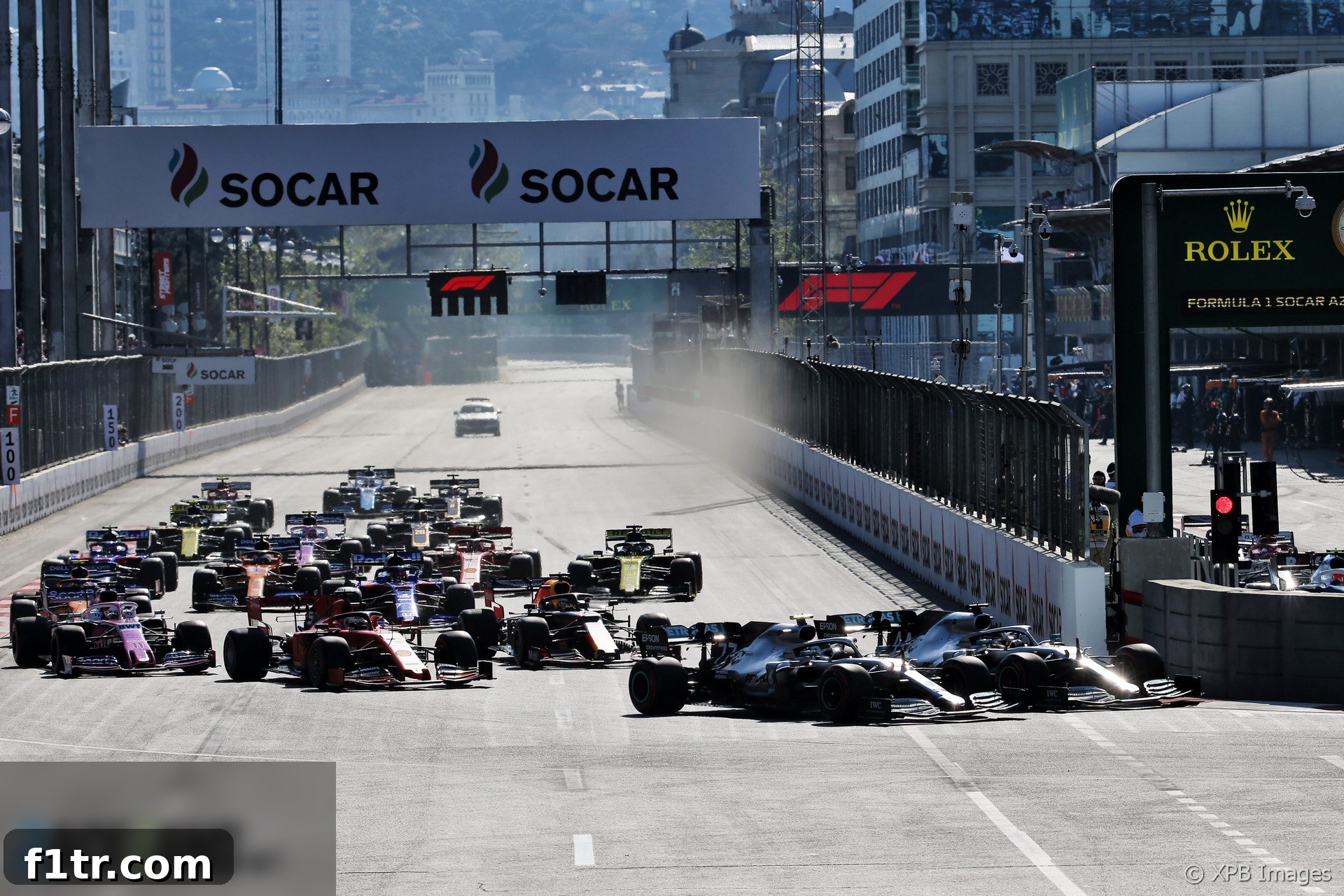
The highly anticipated 2020 Formula 1 season has been plunged into an unprecedented state of flux, with its start now delayed until June 14th at the absolute earliest. This significant shift comes as the Azerbaijan Grand Prix, originally slated for June 7th, has been officially pulled from the calendar due to the escalating global crisis. This decision marks yet another major blow to the championship, reflecting the widespread impact of health concerns on international sporting events.
Advert | Become a Supporter & go ad-free
Organizers of the Baku City Circuit have expressed their firm intention to secure a replacement date for their race later in the 2020 season. The postponement of the Baku event makes it the eighth race to be struck from the original Formula 1 schedule, creating a growing backlog of events seeking new slots. This succession of postponements has cast a long shadow over the championship, forcing F1 management, teams, and fans to navigate a period of intense uncertainty and adapt to a constantly evolving landscape.
Azerbaijan Grand Prix: Prioritizing Health and Safety Amidst Global Challenges
In a comprehensive statement released on Monday, the promoters of the Baku race detailed the collaborative process behind the difficult decision. They confirmed that “the postponement was agreed upon after extensive discussions with Formula 1 as well as the Federation Internationale de l’Automobile (FIA) and the Government of the Azerbaijan Republic.” This multi-party consensus underscores the gravity of the situation and the unified approach taken by all stakeholders to address the health risks posed by the global pandemic that had swept across continents.
The statement further emphasized that Baku City Circuit (BCC)’s “primary concern throughout has been the health and well-being of the Azerbaijani people as well as all visiting F1 fans, staff and championship participants.” This commitment to public health and safety aligns with the global efforts to contain the spread of the virus and highlights the responsible stance taken by the organizers. The unique nature of a street circuit, which inherently brings large crowds into close proximity within a bustling city environment, undoubtedly factored heavily into this safety-first decision, making it impossible to guarantee the necessary health protocols.
BCC acknowledged the profound disappointment felt by fans who were eagerly anticipating witnessing the pinnacle of motorsport race through the historic and challenging streets of Baku this June. However, they reassured all stakeholders of their ongoing efforts: “To that end, we will continue to work closely with Formula 1, the FIA and the Government of the Azerbaijan Republic to monitor the situation with a view to announcing a new race date later in the 2020 season.” The prospect of rescheduling rather than outright cancellation offers a glimmer of hope for fans and teams alike, though the logistical hurdles of finding a suitable slot in an already truncated calendar remain considerable.
Ticket Validity and Information for Concerned Fans
Addressing immediate concerns for ticket holders, BCC provided clear guidance designed to alleviate stress and ensure fairness: “All tickets for the Formula 1 Azerbaijan Grand Prix 2020 will continue to be valid, without any additional formality.” This proactive measure aims to simplify the process for those who have already invested in attending the prestigious event. The organizers further pledged transparency and timely updates, stating: “As soon as the new date of the Grand Prix is confirmed, all spectators will be informed accordingly about the available options, both for those who have purchased their tickets through the Baku City Circuit’s website and through other channels.” Such clarity is crucial in maintaining fan confidence and engagement during these turbulent and uncertain times for international travel and large public gatherings.
The Canadian Grand Prix: The Next Hurdle and a Glimmer of Hope
With the Azerbaijan Grand Prix officially postponed, the collective focus of the Formula 1 community now shifts firmly to the Canadian Grand Prix. Originally designated as the ninth round of the championship, the electrifying event at the iconic Circuit Gilles Villeneuve in Montreal, scheduled for June 12th-14th, now stands as the earliest potential start to the beleaguered 2020 F1 season. This makes it a pivotal event, not just for the drivers and teams eager to commence racing, but for the entire sport yearning to get back on track and reclaim some semblance of normalcy.
Despite the prevailing global uncertainty and the rapidly changing public health landscape, the organizers of the Canadian Grand Prix have maintained a cautiously optimistic and pragmatic stance. In their recent official statement, they affirmed: “The preparations for the Formula 1 Canadian Grand Prix 2020 slated in the Formula 1 world championship for June 12th, 13th and 14th are going well and are following their course.” This indication of continued progress and meticulous planning offers a small but significant boost to hopes for the season’s eventual commencement, suggesting that behind the scenes, all efforts are being made.
However, the organizers are acutely aware of the dynamic and unpredictable nature of the global situation. They stated, with appropriate caution, “This is a situation that we are constantly monitoring and that is evolving rapidly.” Their approach is rooted in continuous communication and reliance on expert guidance: “Please note that we are in constant communication with members of Formula 1, the FIA and public authorities.” This collaborative framework is absolutely essential for making informed decisions that prioritize the health and safety of everyone involved above all else. They unequivocally reiterated: “Our priority remains to host a safe event for both spectators and personnel.”
Acknowledging the potential for further developments and the need for flexibility, the Canadian GP organizers concluded their statement with a commitment to adaptability: “Should the situation continue to evolve we will lean on the expertise of public health professionals and will keep you updated.” This transparent and flexible approach highlights the immense challenges faced by all event promoters in planning during a global health crisis, emphasizing that while preparations continue, the ultimate decision rests on external circumstances and the recommendations of health experts.
Advert | Become a RaceFans supporter andgo ad-free
The Unprecedented Restructuring of the 2020 F1 Calendar: A Global Challenge
The postponement of the Azerbaijan Grand Prix is merely the latest in a series of dramatic and unprecedented changes that have thoroughly reshaped the initial structure of the 2020 Formula 1 calendar. What began as a highly anticipated 22-race championship has quickly transformed into a complex puzzle of rescheduled and cancelled events, reflecting the truly global nature of the crisis. The sheer scale of the disruption is unparalleled in recent F1 history, underscoring the severity of the global health crisis and its profound impact on international sports and logistics worldwide.
The following table provides a clear overview of how the 2020 F1 calendar has been altered thus far, illustrating the ongoing domino effect of the global situation on what was meant to be an exciting season of racing:
| Round | Event | Original Dates | Notes on Status |
|---|---|---|---|
| Cancelled outright just hours before practice was due to begin; will not be rescheduled for 2020, setting a somber precedent for other major events. | |||
| Postponed; organizers are actively seeking a replacement date within the revised calendar, hoping to host a night race later in the year. | |||
| Postponed; a highly anticipated new street circuit event, now hopes to find a suitable slot later in the year to make its F1 debut. | |||
| Postponed; one of the first races impacted by the outbreak in its region, currently seeking a new date, possibly in the latter half of the season. | |||
| Postponed; a highly anticipated return to the F1 calendar after decades, now seeking a new slot to host Max Verstappen’s home race. | |||
| Postponed; traditionally an early European race, now awaiting a revised date as Spain battles significant health challenges. | |||
| Cancelled outright; a historical and iconic event, its cancellation for the first time since 1954 is a significant blow to the season’s prestige. | |||
| Postponed; the latest event to be affected, organizers are actively seeking a replacement date to host their exciting street race. | |||
| 9 | Canadian Grand Prix | Jun 12-14 | Currently scheduled; now considered the earliest potential start to the season, under close watch by global health authorities. |
| 10 | French Grand Prix | Jun 26-28 | Currently scheduled; its status remains contingent on the evolving health situation in Europe. |
| 11 | Austrian Grand Prix | Jul 3-5 | Currently scheduled. |
| 12 | British Grand Prix | Jul 17-19 | Currently scheduled. |
| 13 | Hungarian Grand Prix | Jul 31-Aug 2 | Currently scheduled. |
| 14 | Belgian Grand Prix | Aug 28-30 | Currently scheduled. |
| 15 | Italian Grand Prix | Sep 4-6 | Currently scheduled. |
| 16 | Singapore Grand Prix | Sep 18-20 | Currently scheduled. |
| 17 | Russian Grand Prix | Sep 25-27 | Currently scheduled. |
| 18 | Japanese Grand Prix | Oct 9-11 | Currently scheduled. |
| 19 | United States Grand Prix | Oct 23-25 | Currently scheduled. |
| 20 | Mexican Grand Prix | Oct 30-Nov 1 | Currently scheduled. |
| 21 | Brazilian Grand Prix | Nov 13-15 | Currently scheduled. |
| 22 | Abu Dhabi Grand Prix | Nov 27-29 | Currently scheduled as the season finale, traditionally marking the end of the F1 year. |
Logistical Challenges, Financial Strain, and the Road Ahead for F1
The monumental task of compressing numerous postponed races into the latter half of the year presents an enormous logistical and operational challenge for Formula 1, the FIA, and all ten competing teams. Finding suitable dates that successfully avoid conflicts with existing events, respect diverse national travel restrictions and quarantine policies, and allow for adequate preparation time for teams will require unprecedented flexibility and cooperation across the entire paddock. This could lead to a highly condensed schedule, potentially featuring multiple triple-headers (three races on consecutive weekends), pushing the limits of team personnel, equipment, and endurance.
Furthermore, the financial implications of these widespread postponements and outright cancellations are profound and far-reaching. Race promoters face significant revenue losses from ticket sales, corporate hospitality, and sponsorship agreements. Teams, in turn, grapple with reduced prize money distributions, compromised sponsorship commitments, and the increased operational costs associated with a revised, potentially extended and more intense calendar. Liberty Media, Formula 1’s commercial rights holder, also faces substantial financial challenges, impacting the sport’s overall economic health and future investments.
Beyond the immediate financial and logistical concerns, there are broader questions about the sporting integrity of the 2020 championship. A significantly shorter season, with potentially fewer races than initially planned and an irregular rhythm of events, may impact the championship battle and the validity of any eventual title for drivers and constructors. However, in these extraordinary circumstances, the overwhelming priority for Formula 1 remains the safe return to racing and the completion of a viable, even if altered, championship season, ensuring the health of all participants.
Formula 1 is a global spectacle that fundamentally thrives on international travel, intricate logistics, and large gatherings of passionate fans. The ongoing crisis has forced the sport to critically re-evaluate its operational model, emphasizing adaptability, resilience, and a greater reliance on technology for communication and planning. The decisions made and lessons learned in 2020 will likely influence future season planning, potentially leading to greater calendar flexibility, robust contingency measures, and a renewed focus on sustainability and efficiency in a post-crisis world.
Advert | Become a RaceFans supporter andgo ad-free
Further Insights and Analysis on the 2020 F1 Season
- Grosjean to make F1 test return tomorrow for first time since Bahrain horror crash
- Pictures: Wrecked chassis from Grosjean’s Bahrain fireball crash to go on display
- Bottas vs Rosberg: Hamilton’s Mercedes team mates compared after 78 races each
- F1 revenues fell by $877 million in Covid-struck 2020 season
- Hamilton and Mercedes finally announce new deal for 2021 season
Browse all 2020 F1 season articles